Mallinson Joanne E, Marimuthu Kanagaraj, Murton Andrew, Selby Anna, Smith Kenneth, Constantin-Teodosiu Dumitru, Rennie Michael J, Greenhaff Paul L
MRC/Arthritis Research UK Centre for Musculoskeletal Ageing Research, University of Nottingham, Nottingham, NG7 2UH, UK.
J Physiol. 2015 Mar 1;593(5):1239-57. doi: 10.1113/jphysiol.2014.285577. Epub 2015 Jan 26.
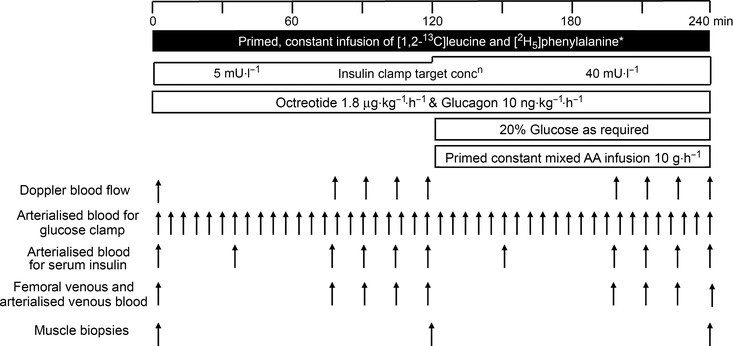
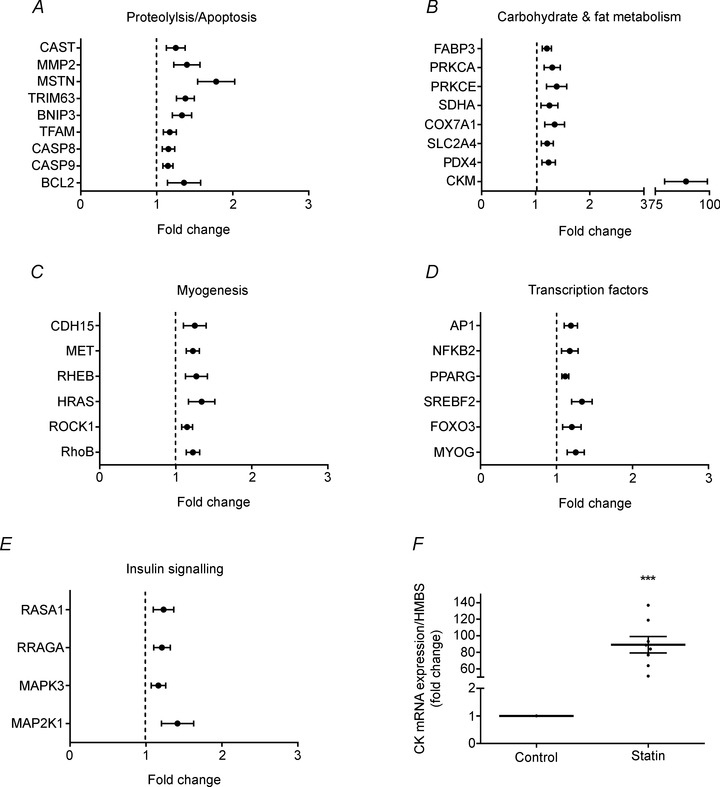
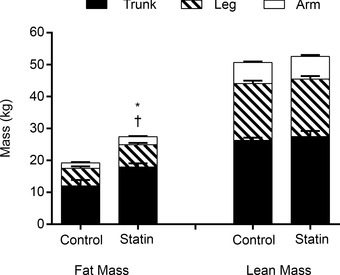
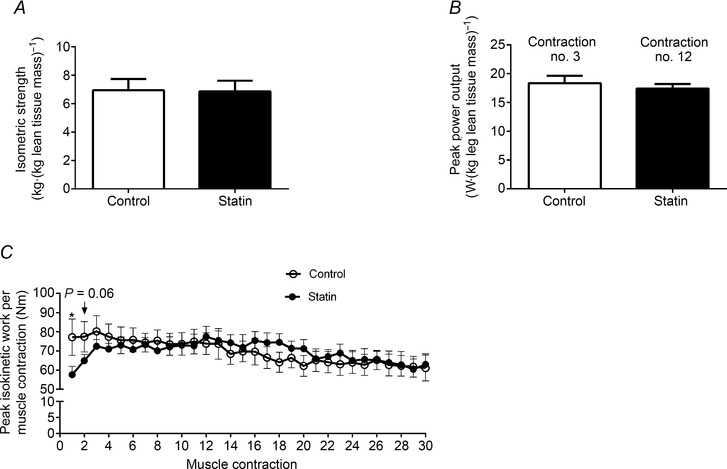
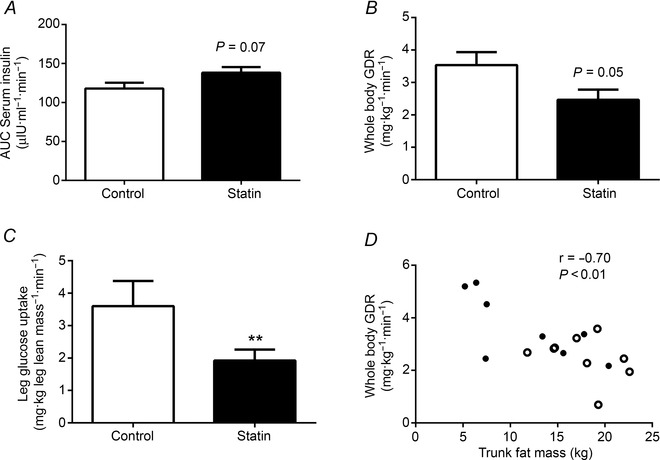
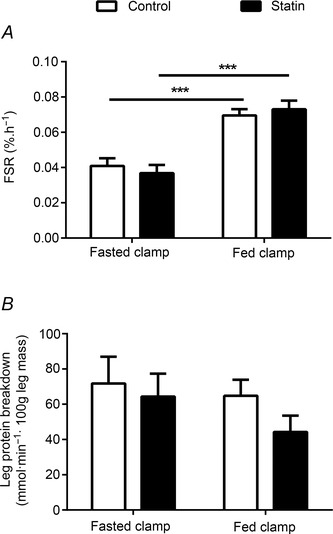
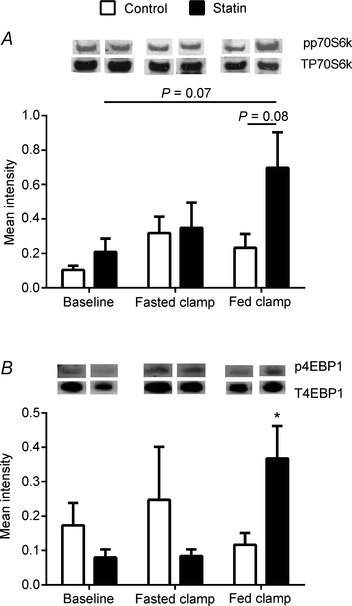
Statins are associated with muscle myalgia and myopathy, which probably reduce habitual physical activity. This is particularly relevant to older people who are less active, sarcopaenic and at increased risk of statin myalgia. We hypothesised that statin myalgia would be allied to impaired strength and work capacity in older people, and determined whether differences aligned with divergences in lean mass, protein turnover, insulin sensitivity and the molecular regulation of these processes. Knee extensor strength and work output during 30 maximal isokinetic contractions were assessed in healthy male volunteers, nine with no statin use (control 70.4 ± 0.7 years) and nine with statin myalgia (71.5 ± 0.9 years). Whole body and leg glucose disposal, muscle myofibrillar protein synthesis (MPS) and leg protein breakdown (LPB) were measured during fasting (≈5 mU l(-1) insulin) and fed (≈40 mU l(-1) insulin + hyperaminoacidaemia) euglyceamic clamps. Muscle biopsies were taken before and after each clamp. Lean mass, MPS, LPB and strength were not different but work output during the initial three isokinetic contractions was 19% lower (P < 0.05) in statin myalgic subjects due to a delay in time to reach peak power output. Statin myalgic subjects had reduced whole body (P = 0.05) and leg (P < 0.01) glucose disposal, greater abdominal adiposity (P < 0.05) and differential expression of 33 muscle mRNAs (5% false discovery rate (FDR)), six of which, linked to mitochondrial dysfunction and apoptosis, increased at 1% FDR. Statin myalgia was associated with impaired muscle function, increased abdominal adiposity, whole body and leg insulin resistance, and evidence of mitochondrial dysfunction and apoptosis.
他汀类药物与肌肉疼痛和肌病有关,这可能会降低日常身体活动。这对于活动较少、患有肌肉减少症且他汀类药物性肌痛风险增加的老年人尤为重要。我们假设他汀类药物性肌痛与老年人力量和工作能力受损有关,并确定这些差异是否与瘦体重、蛋白质周转、胰岛素敏感性以及这些过程的分子调节差异一致。在健康男性志愿者中评估了30次最大等速收缩期间的膝伸肌力量和工作输出,其中9名未使用他汀类药物(对照组,年龄70.4±0.7岁),9名患有他汀类药物性肌痛(年龄71.5±0.9岁)。在空腹(约5 mU l(-1)胰岛素)和进食(约40 mU l(-1)胰岛素+高氨基酸血症)正常血糖钳夹期间,测量了全身和腿部的葡萄糖处置、肌肉肌原纤维蛋白合成(MPS)和腿部蛋白质分解(LPB)。在每次钳夹前后进行肌肉活检。瘦体重、MPS、LPB和力量没有差异,但由于达到峰值功率输出的时间延迟,他汀类药物性肌痛受试者在最初三次等速收缩期间的工作输出降低了19%(P<0.05)。他汀类药物性肌痛受试者的全身(P = 0.05)和腿部(P<0.01)葡萄糖处置减少,腹部脂肪增多(P<0.05),33种肌肉mRNA有差异表达(错误发现率(FDR)为5%),其中6种与线粒体功能障碍和细胞凋亡相关,在FDR为1%时增加。他汀类药物性肌痛与肌肉功能受损、腹部脂肪增多、全身和腿部胰岛素抵抗以及线粒体功能障碍和细胞凋亡的证据有关。