Kim Ko-Un, Huh Namjung, Jang Yunsil, Lee Daeyeol, Jung Min Whan
1] Center for Synaptic Brain Dysfunctions, Institute for Basic Science, Korea Advanced Institute of Science and Technology, Daejeon 305-701, Korea [2] Neuroscience Laboratory, Institute for Medical Sciences, Ajou University School of Medicine, Suwon 443-721, Korea [3] Neuroscience Graduate Program, Ajou University School of Medicine, Suwon 443-721, Korea.
1] Center for Synaptic Brain Dysfunctions, Institute for Basic Science, Korea Advanced Institute of Science and Technology, Daejeon 305-701, Korea [2] Neuroscience Laboratory, Institute for Medical Sciences, Ajou University School of Medicine, Suwon 443-721, Korea.
Sci Rep. 2015 Jan 27;5:8040. doi: 10.1038/srep08040.
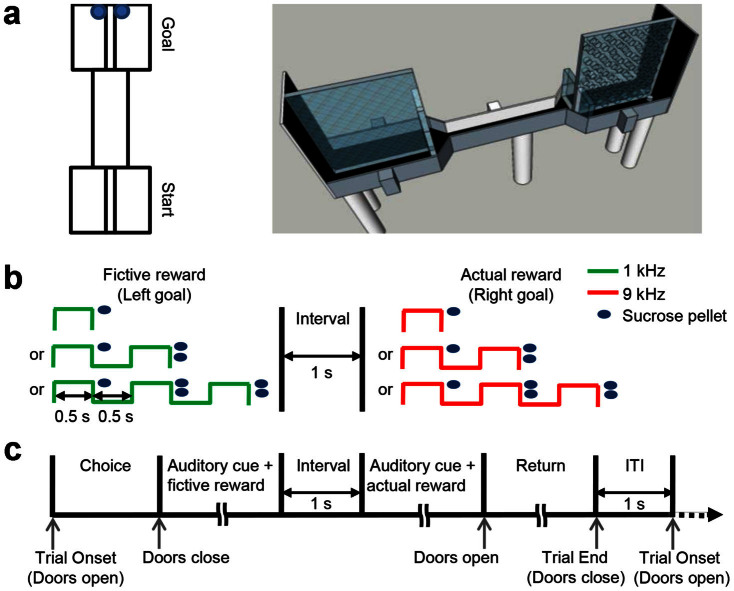
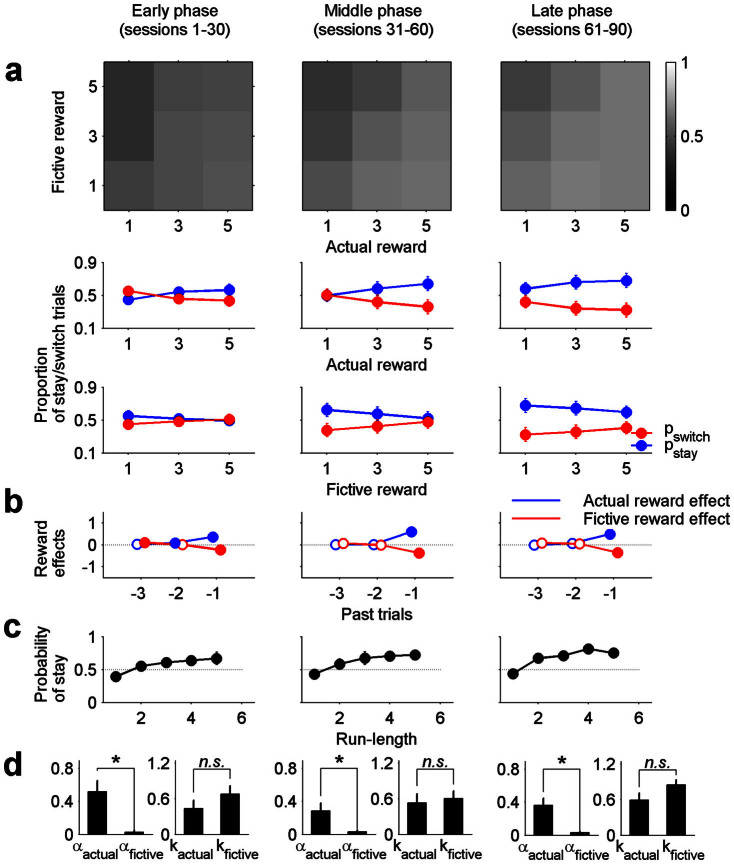
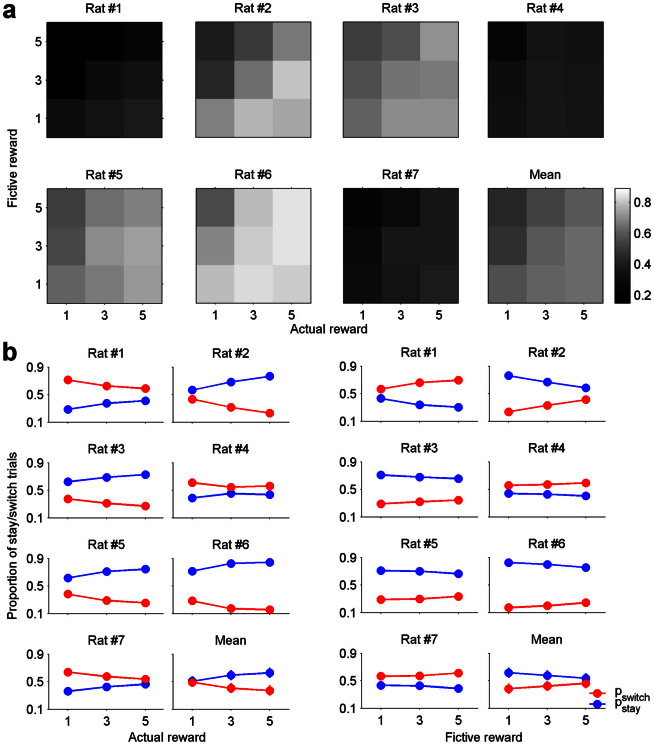
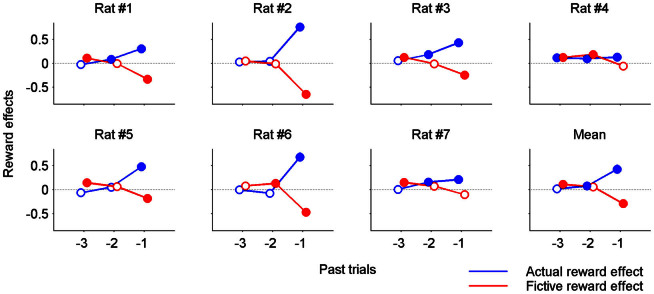
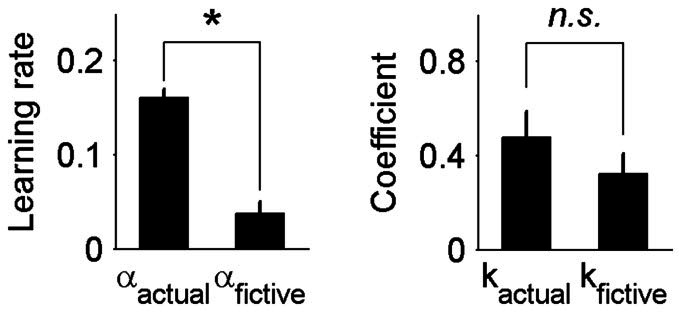
Choices of humans and non-human primates are influenced by both actually experienced and fictive outcomes. To test whether this is also the case in rodents, we examined rat's choice behavior in a binary choice task in which variable magnitudes of actual and fictive rewards were delivered. We found that the animal's choice was significantly influenced by the magnitudes of both actual and fictive rewards in the previous trial. A model-based analysis revealed, however, that the effect of fictive reward was more transient and influenced mostly the choice in the next trial, whereas the effect of actual reward was more sustained, consistent with incremental learning of action values. Our results suggest that the capacity to modify future choices based on fictive outcomes might be shared by many different animal species, but fictive outcomes are less effective than actual outcomes in the incremental value learning system.
人类和非人类灵长类动物的选择受到实际经历和虚拟结果的影响。为了测试啮齿动物是否也是如此,我们在一个二元选择任务中检查了大鼠的选择行为,在该任务中会给予不同大小的实际奖励和虚拟奖励。我们发现,动物的选择在前一次试验中受到实际奖励和虚拟奖励大小的显著影响。然而,基于模型的分析表明,虚拟奖励的影响更短暂,主要影响下一次试验中的选择,而实际奖励的影响更持久,这与动作值的增量学习一致。我们的结果表明,基于虚拟结果修改未来选择的能力可能为许多不同动物物种所共有,但在增量价值学习系统中,虚拟结果不如实际结果有效。