Graduate Program in Neuroscience, University of Minnesota, Minneapolis, Minnesota, USA.
Department of Neuroscience, University of Minnesota, Minneapolis, Minnesota, USA.
Nat Neurosci. 2014 Jul;17(7):995-1002. doi: 10.1038/nn.3740. Epub 2014 Jun 8.
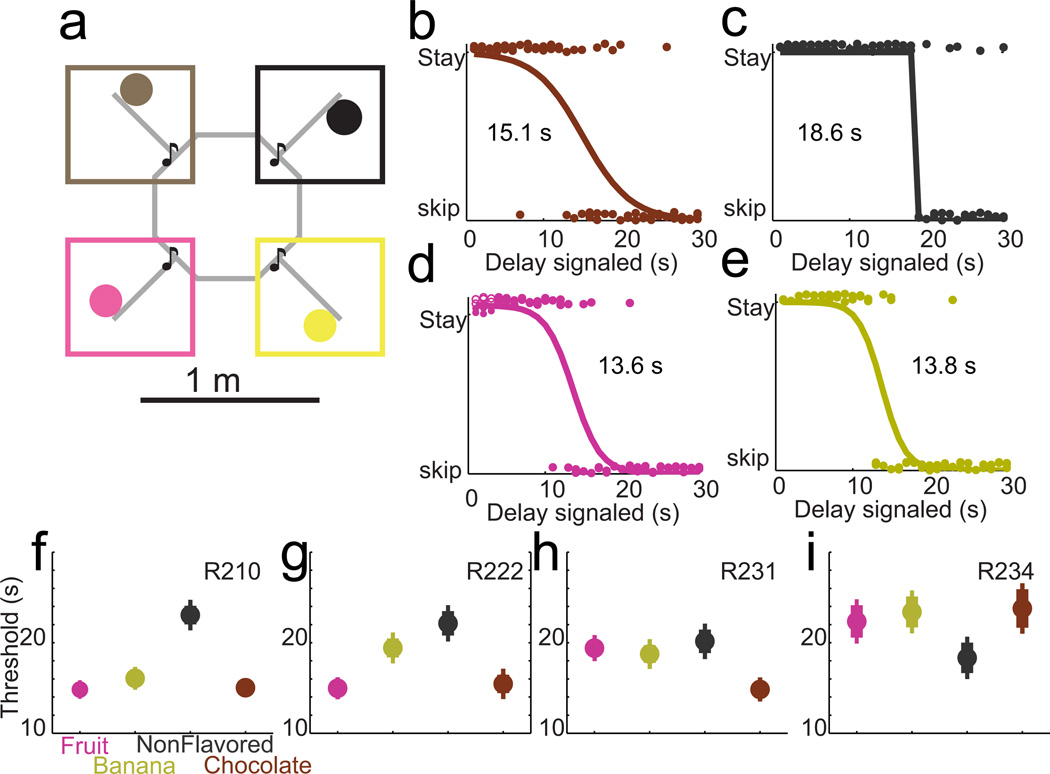
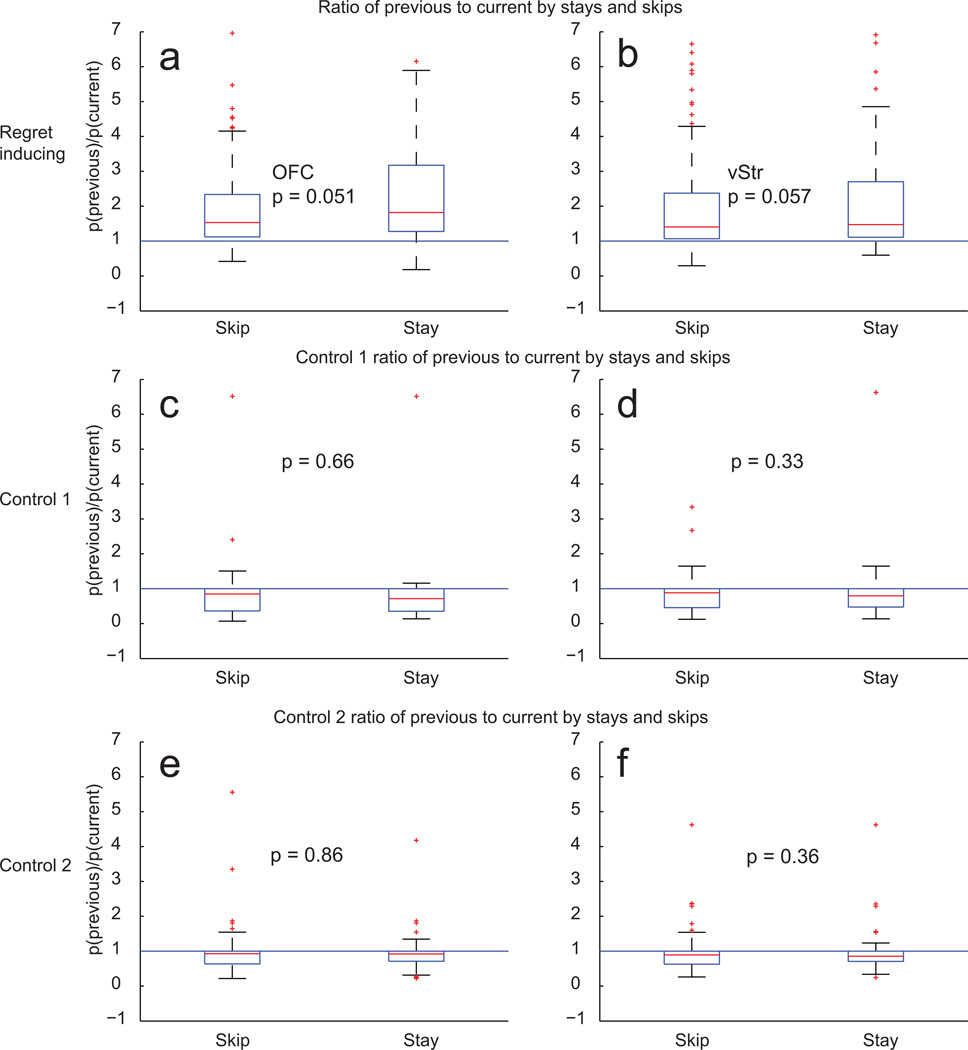
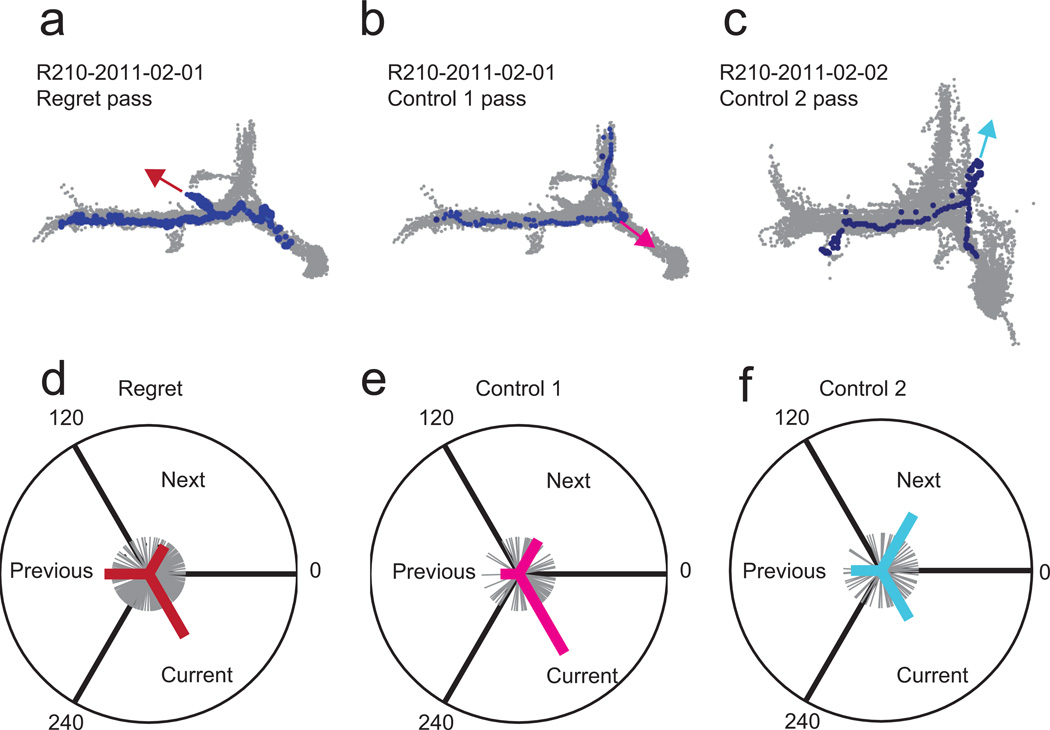
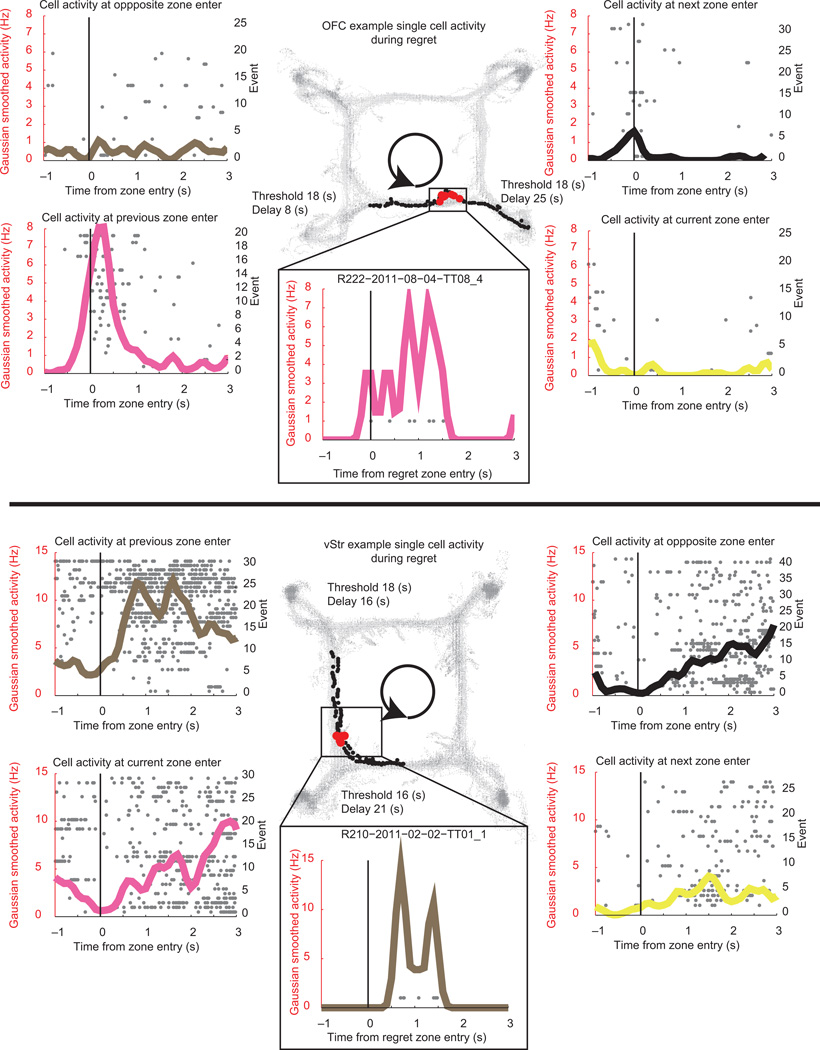
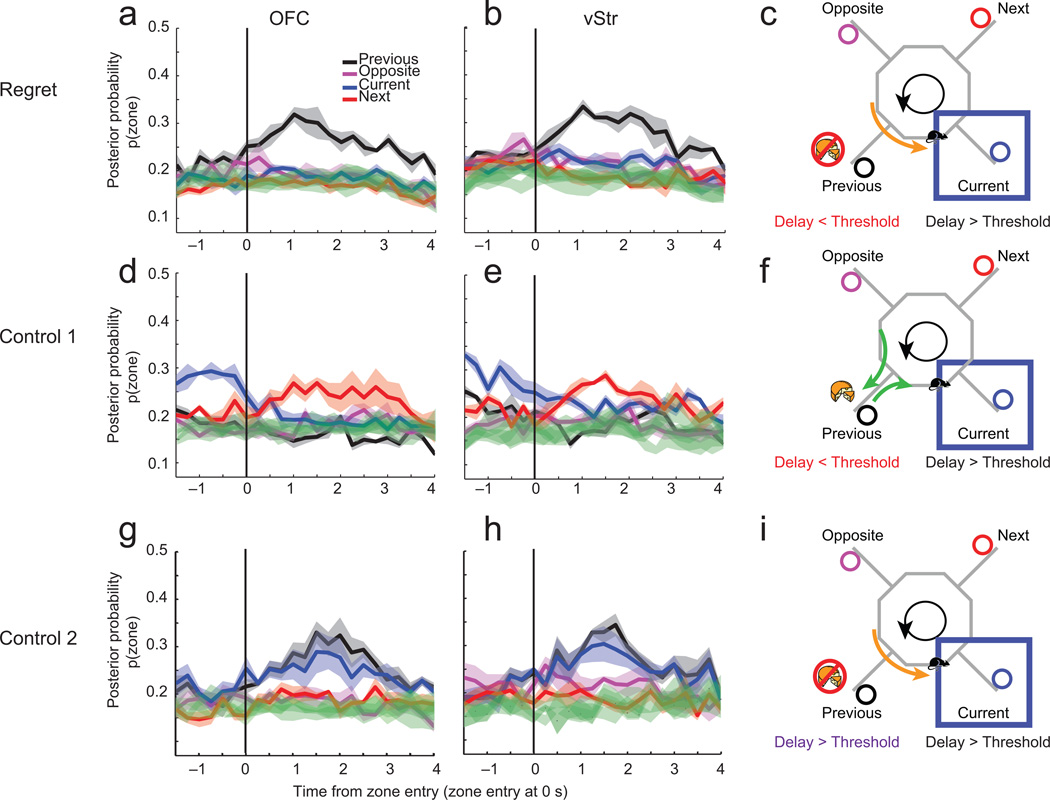
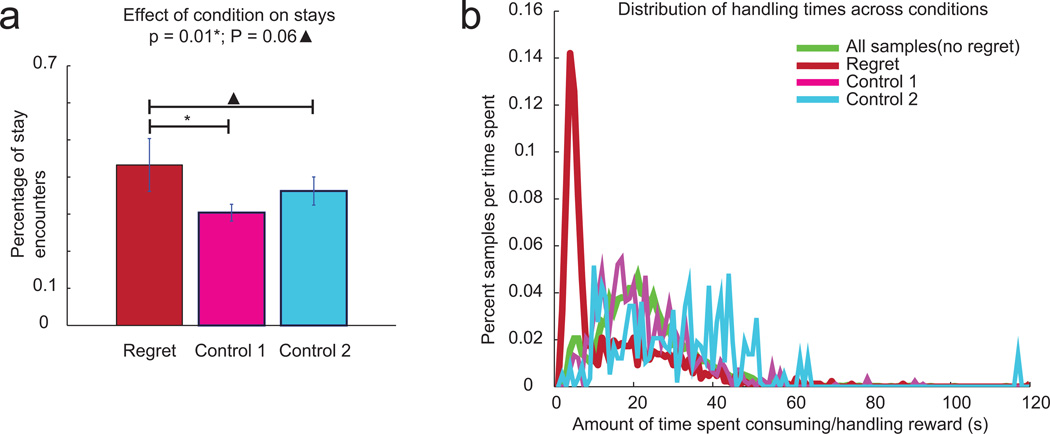
Disappointment entails the recognition that one did not get the value expected. In contrast, regret entails recognition that an alternative (counterfactual) action would have produced a more valued outcome. In humans, the orbitofrontal cortex is active during expressions of regret, and humans with damage to the orbitofrontal cortex do not express regret. In rats and nonhuman primates, both the orbitofrontal cortex and the ventral striatum have been implicated in reward computations. We recorded neural ensembles from orbitofrontal cortex and ventral striatum in rats encountering wait or skip choices for delayed delivery of different flavors using an economic framework. Economically, encountering a high-cost choice after skipping a low-cost choice should induce regret. In these situations, rats looked backwards toward the lost option, cells within orbitofrontal cortex and ventral striatum represented the missed action, rats were more likely to wait for the long delay, and rats rushed through eating the food after that delay.
失望意味着人们认识到自己没有得到预期的价值。相比之下,后悔意味着人们认识到,如果采取另一种(反事实)行动,可能会产生更有价值的结果。在人类中,眶额皮层在表达后悔时会活跃,而眶额皮层受损的人则不会表达后悔。在大鼠和非人类灵长类动物中,眶额皮层和腹侧纹状体都与奖励计算有关。我们在大鼠中记录了眶额皮层和腹侧纹状体的神经集合,大鼠在遇到延迟不同口味的延迟交付时会选择等待或跳过选择,使用经济框架。从经济角度来看,在跳过低成本选择后遇到高成本选择应该会引起后悔。在这些情况下,大鼠会向后看,寻找错过的选项,眶额皮层和腹侧纹状体中的细胞代表着错过的动作,大鼠更有可能等待长延迟,并且在延迟后匆忙吃掉食物。