Pothirat Chaicharn, Chaiwong Warawut, Phetsuk Nittaya, Liwsrisakun Chalerm, Bumroongkit Chaiwat, Deesomchok Athavudh, Theerakittikul Theerakorn, Limsukon Atikun
Division of Pulmonary, Critical Care and Allergy, Department of Internal Medicine, Faculty of Medicine, Chiang Mai University, Chiang Mai, Thailand.
Int J Chron Obstruct Pulmon Dis. 2015 Jan 12;10:133-44. doi: 10.2147/COPD.S73398. eCollection 2015.
Exercise training has been incorporated into the international guidelines for the treatment of chronic obstructive pulmonary disease (COPD). However, the long-term efficacy of the training program for patients with advanced COPD has never been evaluated in Thailand.
To determine the long-term efficacy of intensive cycle ergometer exercise program on various clinical parameters of patients with advanced COPD.
The patients with advanced COPD were separated into two groups: the intensive ergometer exercise program group and the control group. The clinical parameters of all the patients were assessed at baseline, every month for the first 3 months, and then every 3 months until they had completed the 24-month follow-up. Mann-Whitney U test was used to compare baseline mean differences between the groups. Repeated measure analysis was applied to determine the progress in all parameters during the entire follow-up period. Mean incase imputation method was applied to estimate the parameters of dropout cases.
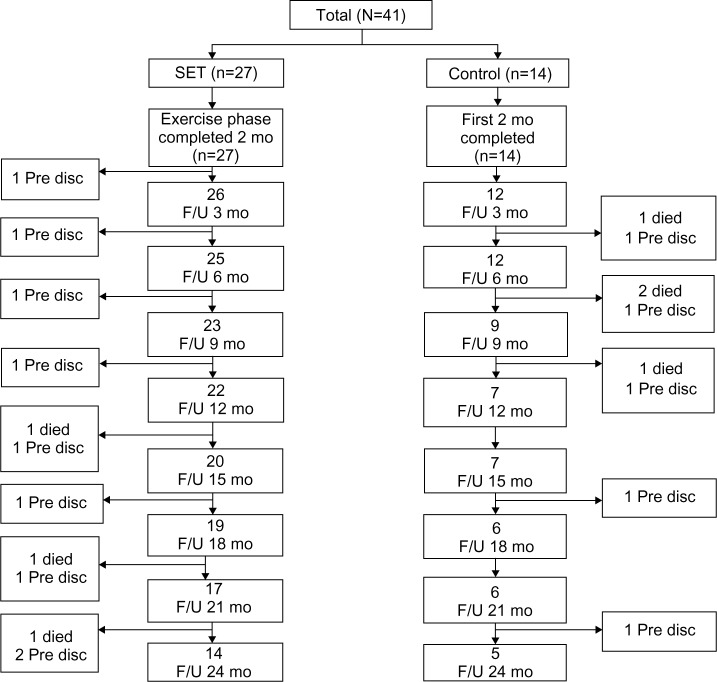
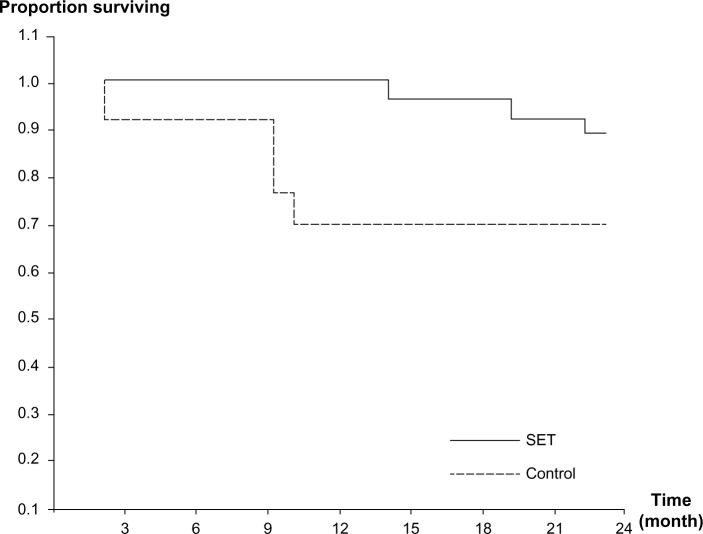
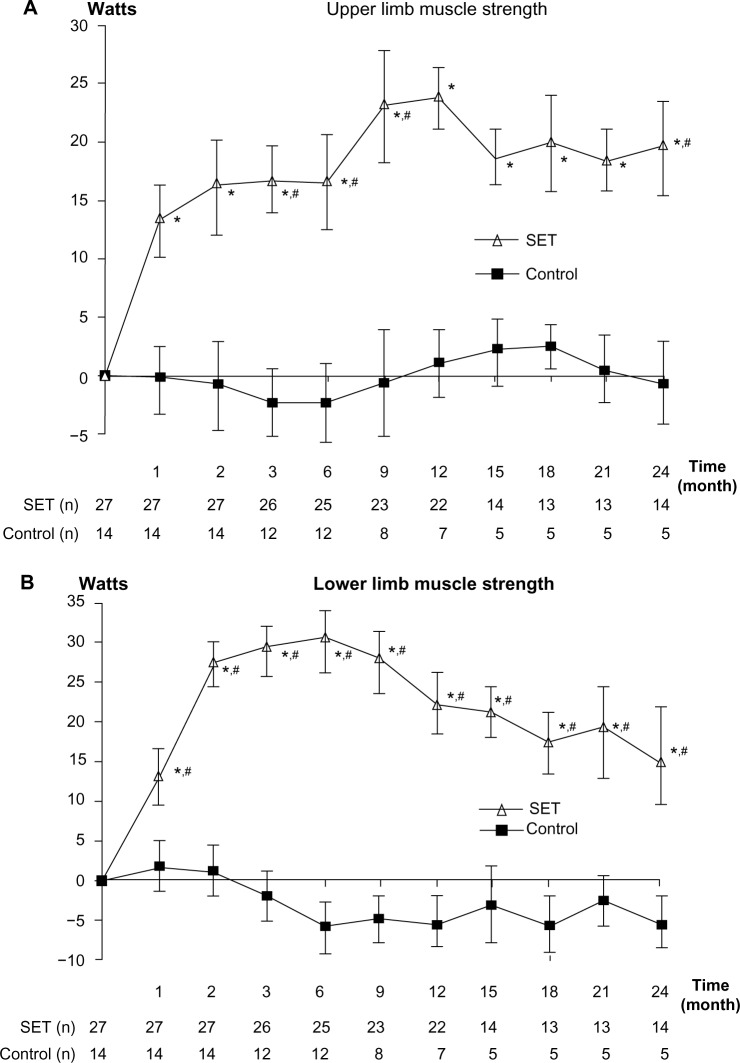
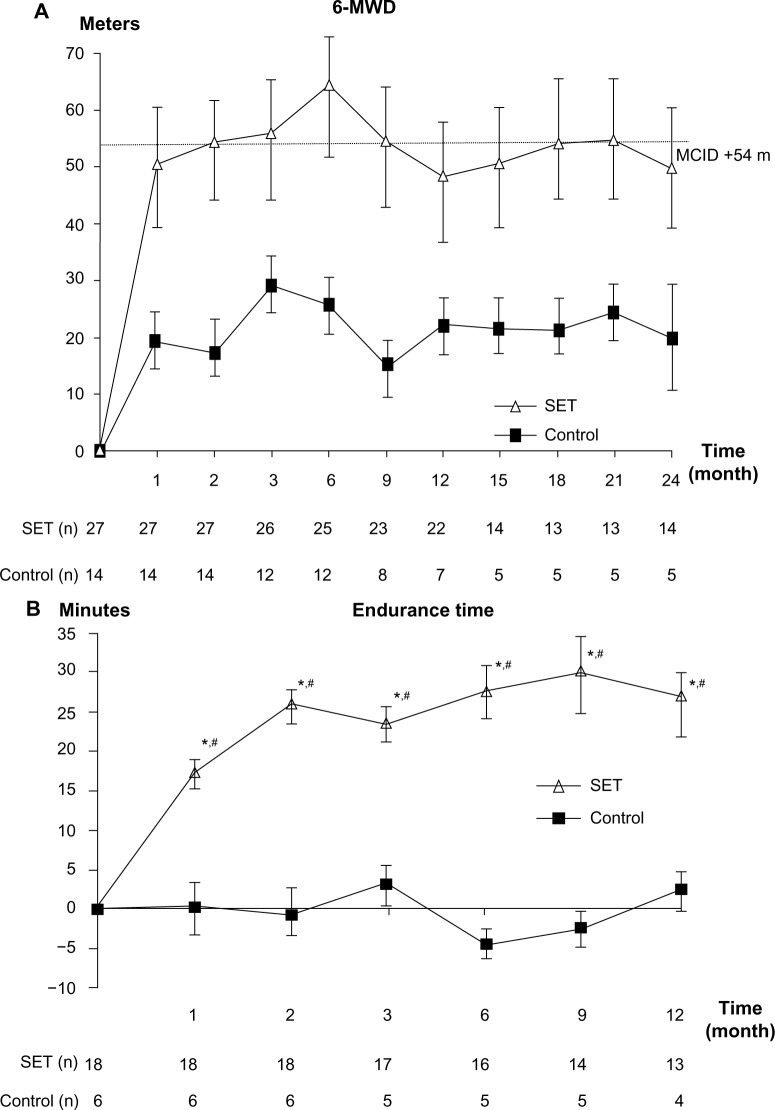
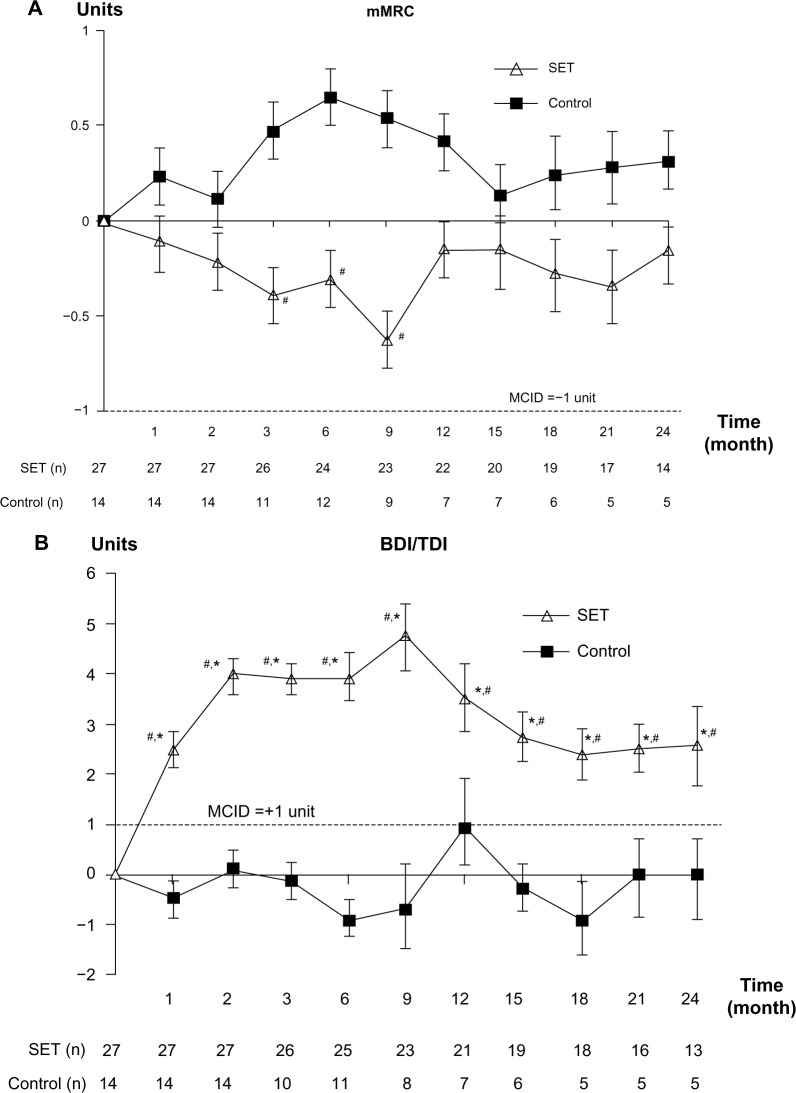
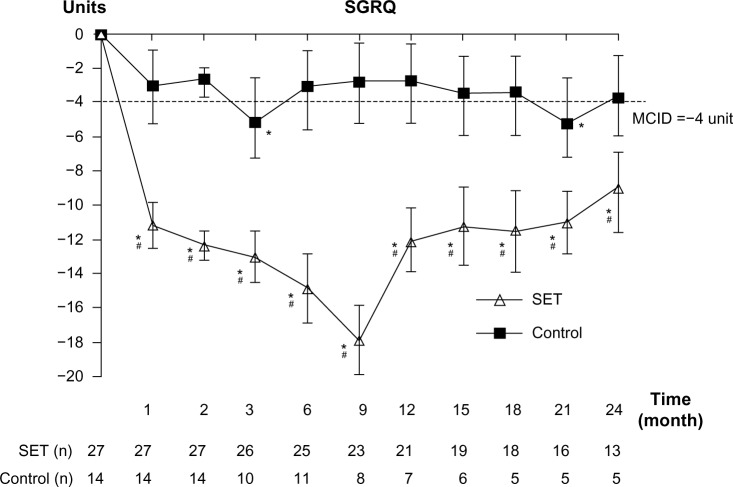
A total of 41 patients were enrolled: 27 in the intensive ergometer exercise program group and 14 in the control group. The intensive cycle ergometer exercise program group showed statistically significant improvements in muscle strength (from month 1 till the end of the study, month 24), endurance time (from month 1 till the end of measurement, month 12) and clinically significant improvements in 6-minute walk distance (from month 2 until month 9), dyspnea severity by transitional dyspnea index (from month 1 till the end of the study, month 24), and quality of life (from month 1 till the end of the study, month 24). There was no significant difference in survival rates between the groups.
The intensive ergometer exercise training program revealed meaningful long-term improvements in various clinical parameters for up to 2 years. These promising results should encourage health care professionals to promote exercise training for patients with advanced COPD who have limited daily activities despite optimal medication control.
运动训练已被纳入慢性阻塞性肺疾病(COPD)的国际治疗指南。然而,泰国从未评估过针对晚期COPD患者的训练计划的长期疗效。
确定强化自行车测力计运动计划对晚期COPD患者各项临床参数的长期疗效。
将晚期COPD患者分为两组:强化测力计运动计划组和对照组。在基线时、前3个月每月以及之后每3个月对所有患者的临床参数进行评估,直至完成24个月的随访。采用曼-惠特尼U检验比较两组之间的基线平均差异。应用重复测量分析来确定整个随访期间所有参数的进展情况。采用均值条件插补法估计失访病例的参数。
共纳入41例患者:强化测力计运动计划组27例,对照组14例。强化自行车测力计运动计划组在肌肉力量(从第1个月直至研究结束,第24个月)、耐力时间(从第1个月直至测量结束,第12个月)方面有统计学意义的改善,在6分钟步行距离(从第2个月至第9个月)、通过过渡性呼吸困难指数评估的呼吸困难严重程度(从第1个月直至研究结束,第24个月)以及生活质量(从第1个月直至研究结束,第24个月)方面有临床意义的改善。两组之间的生存率无显著差异。
强化测力计运动训练计划在长达2年的时间里,在各项临床参数方面显示出有意义的长期改善。这些令人鼓舞的结果应促使医护人员为尽管药物控制良好但日常活动受限的晚期COPD患者推广运动训练。