Wang Chong-Zhi, Zhang Zhiyu, Wan Jin-Yi, Zhang Chun-Feng, Anderson Samantha, He Xin, Yu Chunhao, He Tong-Chuan, Qi Lian-Wen, Yuan Chun-Su
Tang Center for Herbal Medicine Research, University of Chicago, Chicago, IL 60637, USA.
Department of Orthopedic Surgery, University of Chicago, Chicago, IL 60637, USA.
Nutrients. 2015 Jan 23;7(2):799-814. doi: 10.3390/nu7020799.
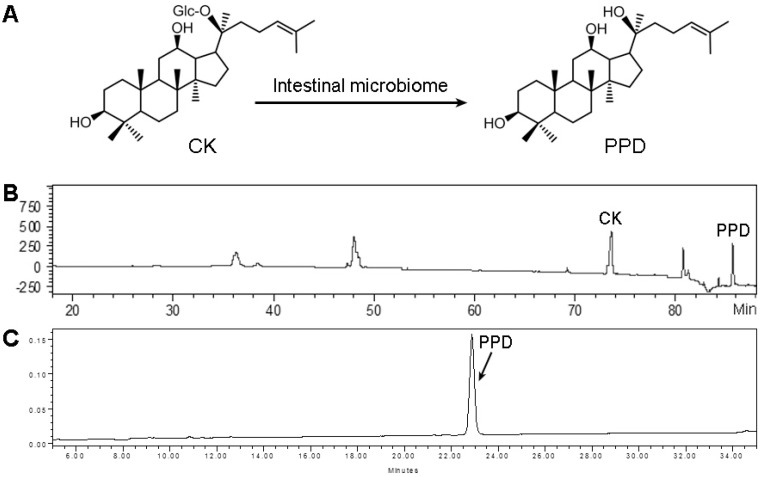
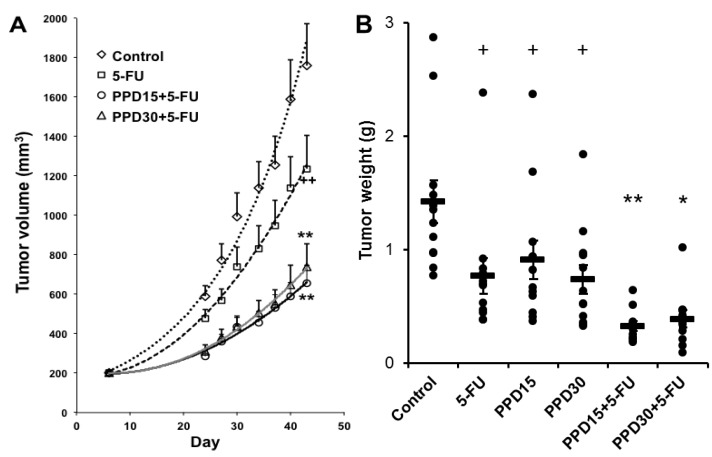
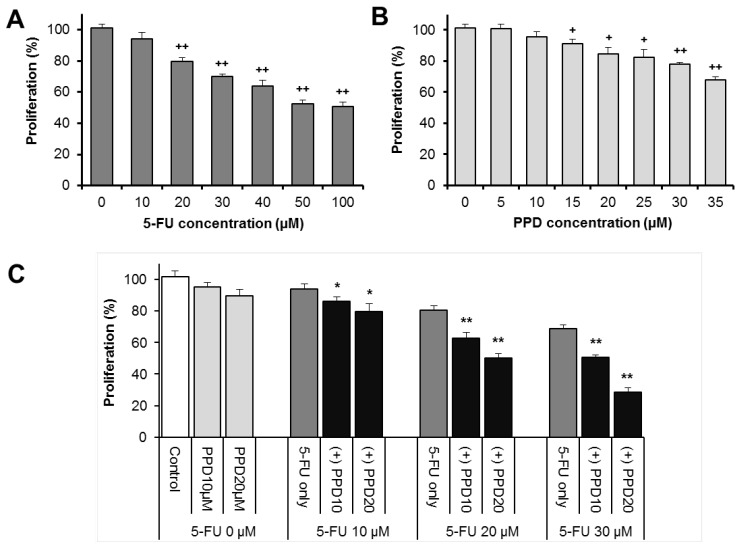
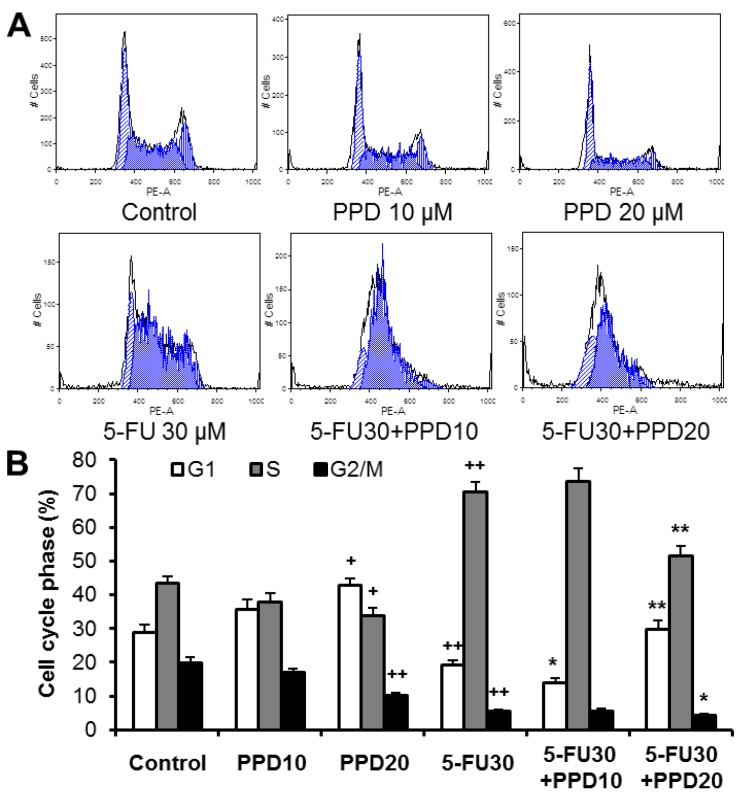
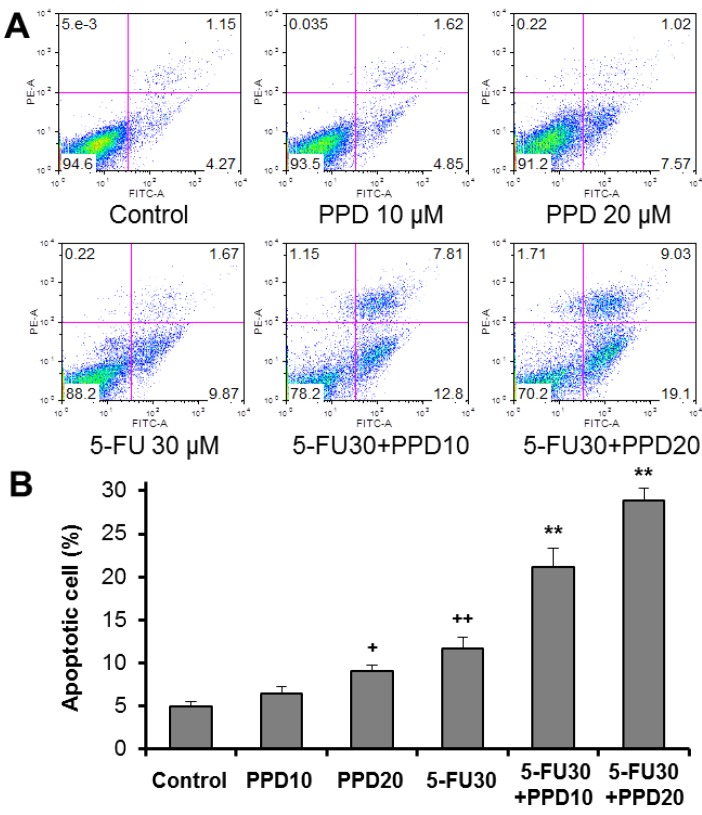
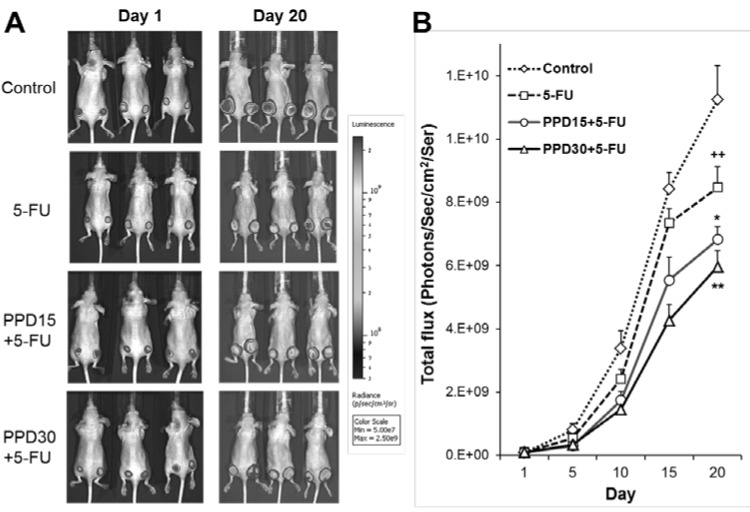
In this study, we evaluated the effects of protopanaxadiol (PPD), a gut microbiome induced ginseng metabolite, in increasing the anticancer effects of a chemotherapeutic agent fluorouracil (5-FU) on colorectal cancer. An in vitro HCT-116 colorectal cancer cell proliferation test was conducted to observe the effects of PPD, 5-FU and their co-administration and the related mechanisms of action. Then, an in vivo xenografted athymic mouse model was used to confirm the in vitro data. Our results showed that the human gut microbiome converted ginsenoside compound K to PPD as a metabolite. PPD and 5-FU significantly inhibited HCT-116 cell proliferation in a concentration-dependent manner (both p<0.01), and the effects of 5-FU were very significantly enhanced by combined treatment with PPD (p<0.01). Cell cycle evaluation demonstrated that 5-FU markedly induced the cancer cell S phase arrest, while PPD increased arrest in G1 phase. Compared to the control, 5-FU and PPD increased apoptosis, and their co-administration significantly increased the number of apoptotic cells (p<0.01). Using bioluminescence imaging, in vivo data revealed that 5-FU significantly reduced the tumor growth up to Day 20 (p<0.05). PPD and 5-FU co-administration very significantly reduced the tumor size in a dose-related manner (p<0.01 compared to the 5-FU alone). The quantification of the tumor size and weight changes for 43 days supported the in vivo imaging data. Our results demonstrated that the co-administration of PPD and 5-FU significantly inhibited the tumor growth, indicating that PPD significantly enhanced the anticancer action of 5-FU, a commonly used chemotherapeutic agent. PPD may have a clinical value in 5-FU's cancer therapeutics.
在本研究中,我们评估了原人参二醇(PPD)(一种肠道微生物群诱导产生的人参代谢产物)对增强化疗药物氟尿嘧啶(5-FU)对结直肠癌的抗癌作用的影响。进行了体外HCT-116结肠癌细胞增殖试验,以观察PPD、5-FU及其联合使用的效果以及相关作用机制。然后,使用体内异种移植裸鼠模型来证实体外数据。我们的结果表明,人体肠道微生物群将人参皂苷Compound K转化为代谢产物PPD。PPD和5-FU均以浓度依赖性方式显著抑制HCT-116细胞增殖(均p<0.01),并且PPD联合治疗可非常显著地增强5-FU的作用(p<0.01)。细胞周期评估表明,5-FU显著诱导癌细胞S期停滞,而PPD使G1期停滞增加。与对照组相比,5-FU和PPD均增加了细胞凋亡,且它们联合使用显著增加了凋亡细胞数量(p<0.01)。使用生物发光成像,体内数据显示5-FU在第20天时显著降低了肿瘤生长(p<0.05)。PPD与5-FU联合使用以剂量相关方式非常显著地减小了肿瘤大小(与单独使用5-FU相比,p<0.01)。对43天内肿瘤大小和重量变化的定量分析支持了体内成像数据。我们的结果表明,PPD与5-FU联合使用显著抑制了肿瘤生长,表明PPD显著增强了常用化疗药物5-FU的抗癌作用。PPD在5-FU的癌症治疗中可能具有临床价值。