Liu Tao, Zhu Lu, Wang Li
Department of Pediatrics, The Affiliated Hospital of Southwest Medical University, Luzhou, China.
Sichuan Clinical Research Center for Birth Defects, Luzhou, China.
Ann Transl Med. 2022 Feb;10(4):234. doi: 10.21037/atm-22-501.
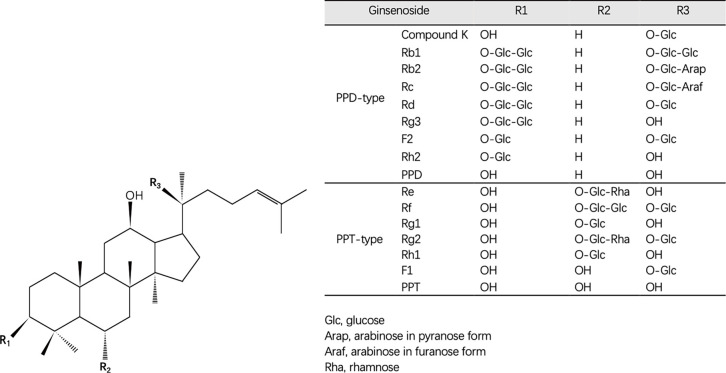
The ginsenoside compound K [20-o-beta-dglucopyranosyl-20 (S)-protopanaxadiol; CK] is the main deglycosylated metabolite of ginsenoside. As a rare ginsenoside converted from the active substance of ginseng by intestinal bacteria, CK has higher biological activity than other ginsenosides. It has demonstrated diverse and intriguing biological activities, including anti-carcinogenic, anti-diabetic, anti-inflammation, anti-allergy, anti-angiogenesis, anti-aging, neuroprotective, and hepatoprotective effects. The purpose of this review was to elucidate the rich pharmacological activities and related mechanisms of ginsenoside CK and , as well as the potential therapeutic value of CK as a drug in a variety of systemically related diseases.
The PubMed database was searched for articles published in English from February 2008 to December 2021 using related keywords such as "Ginsenoside compound K", "compound K", and "CK". About 140 research papers and reports written in English were identified. These papers mainly concentrated on the pharmacological activities of CK in cancer prevention, immune regulation, diabetic improvement, central nervous system (CNS) protection, cardiovascular protection, skin improvement, and hepatoprotection.
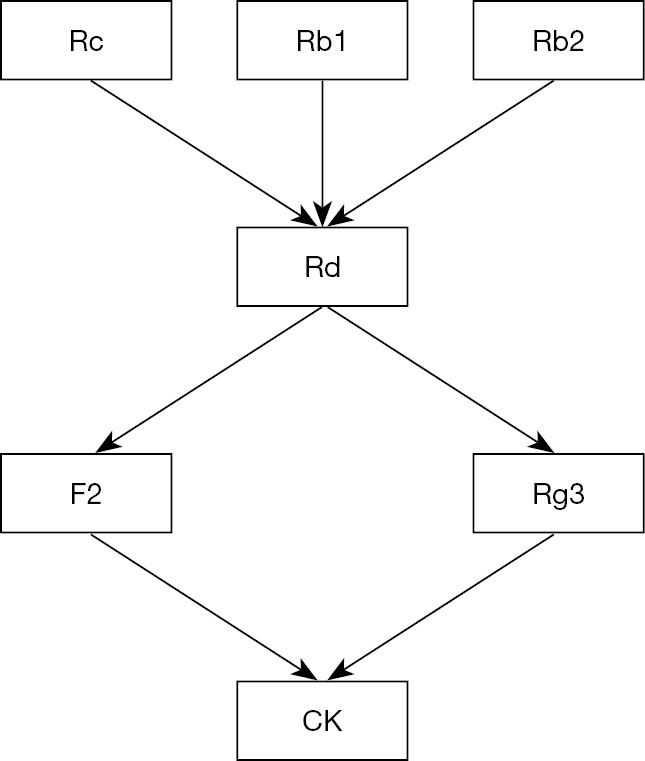
This paper describes the synthesis, pharmacokinetics, and adverse reactions of CK, as well as great detailed summarized of the relevant pharmacological activities. Such diverse intriguing biological properties of CK have been found.
On account of CK's numerous pharmacological activities and anti-carcinogenic, anti-inflammation, antiallergic, anti-diabetic, anti-angiogenesis, anti-aging, neuroprotective, and hepatoprotective effects, strong evidence is available for CK as a preventive or therapeutic agent for various diseases. However, further studies are needed to evaluate the safety and effectiveness of CK as a drug and its application in the medical field.
人参皂苷Compound K [20 - O - β - D - 吡喃葡萄糖基 - 20(S) - 原人参二醇;CK] 是人参皂苷的主要去糖基化代谢产物。作为一种由肠道细菌将人参活性物质转化而来的稀有皂苷,CK 具有比其他皂苷更高的生物活性。它已展现出多样且引人关注的生物活性,包括抗癌、抗糖尿病、抗炎、抗过敏、抗血管生成、抗衰老、神经保护和肝脏保护作用。本综述的目的是阐明人参皂苷 CK 的丰富药理活性及相关机制,以及 CK 作为药物在各种全身性相关疾病中的潜在治疗价值。
在PubMed数据库中检索2008年2月至2021年12月期间发表的英文文章,使用“人参皂苷Compound K”“Compound K”和“CK”等相关关键词。共识别出约140篇英文研究论文和报告。这些论文主要集中在CK在癌症预防、免疫调节、糖尿病改善、中枢神经系统(CNS)保护、心血管保护、皮肤改善和肝脏保护方面的药理活性。
本文描述了CK的合成、药代动力学和不良反应,以及对相关药理活性的详细总结。已发现CK具有如此多样且引人关注的生物学特性。
鉴于CK具有众多药理活性以及抗癌、抗炎、抗过敏、抗糖尿病、抗血管生成、抗衰老、神经保护和肝脏保护作用,有充分证据表明CK可作为各种疾病的预防或治疗药物。然而,需要进一步研究来评估CK作为药物的安全性和有效性及其在医学领域的应用。