Salunkhe V A, Esguerra J L S, Ofori J K, Mollet I G, Braun M, Stoffel M, Wendt A, Eliasson L
Unit of Islet Cell Exocytosis, Department of Clinical Sciences in Malmö, Lund University Diabetes Centre, Clinical Research Centre, Lund University, SUS Malmö, Malmö, Sweden.
Acta Physiol (Oxf). 2015 Apr;213(4):882-92. doi: 10.1111/apha.12460. Epub 2015 Feb 15.
MiR-375 has been implicated in insulin secretion and exocytosis through incompletely understood mechanisms. Here we aimed to investigate the role of miR-375 in the regulation of voltage-gated Na(+) channel properties and glucose-stimulated insulin secretion in insulin-secreting cells.
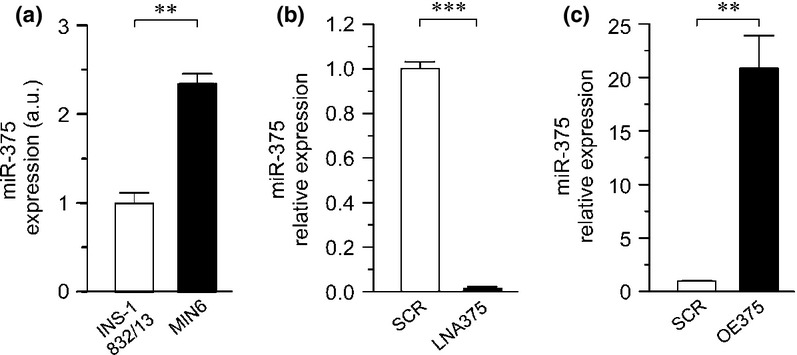
MiR-375 was overexpressed using double-stranded mature miR-375 in INS-1 832/13 cells (OE375) or downregulated using locked nucleic acid (LNA)-based anti-miR against miR-375 (LNA375). Insulin secretion was determined using RIA. Exocytosis and ion channel properties were measured using the patch-clamp technique in INS-1 832/13 cells and beta-cells from miR-375KO mice. Gene expression was analysed by RT-qPCR, and protein levels were determined by Western blot.
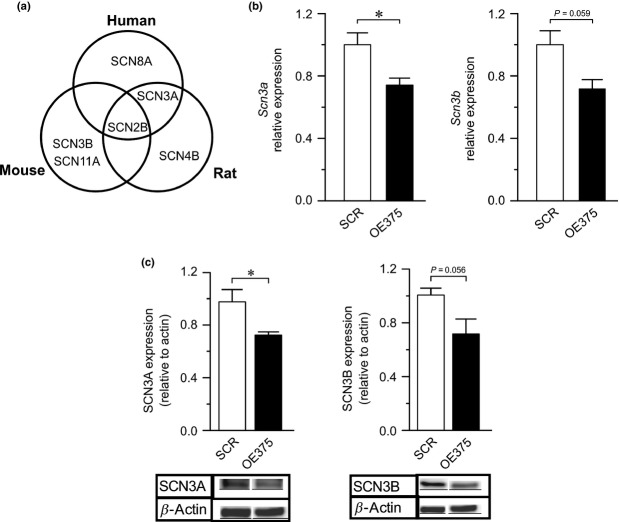
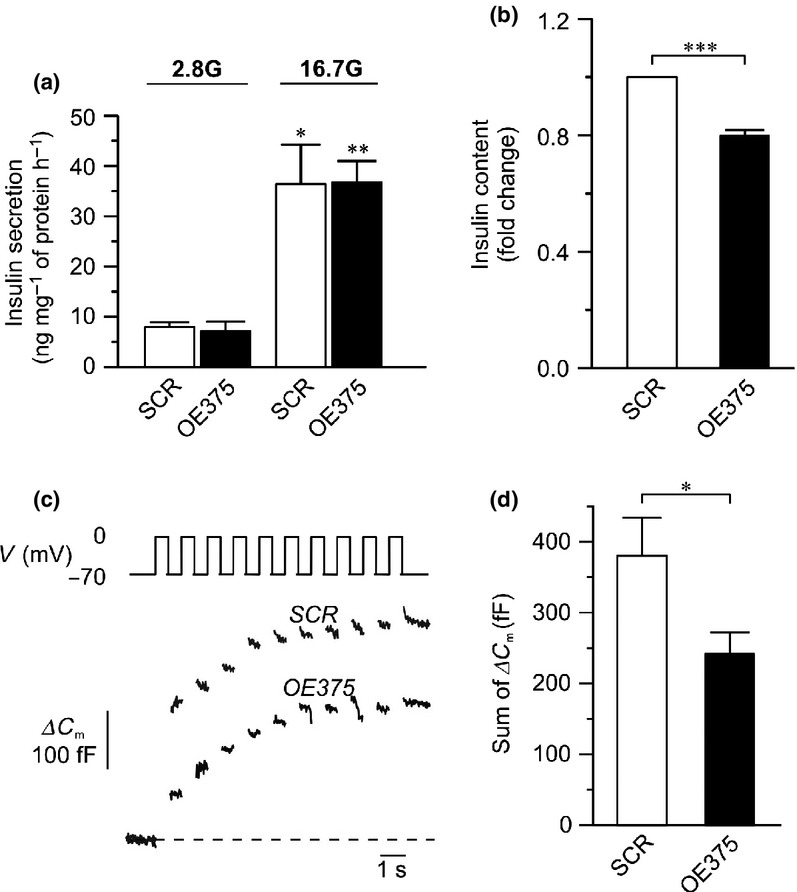
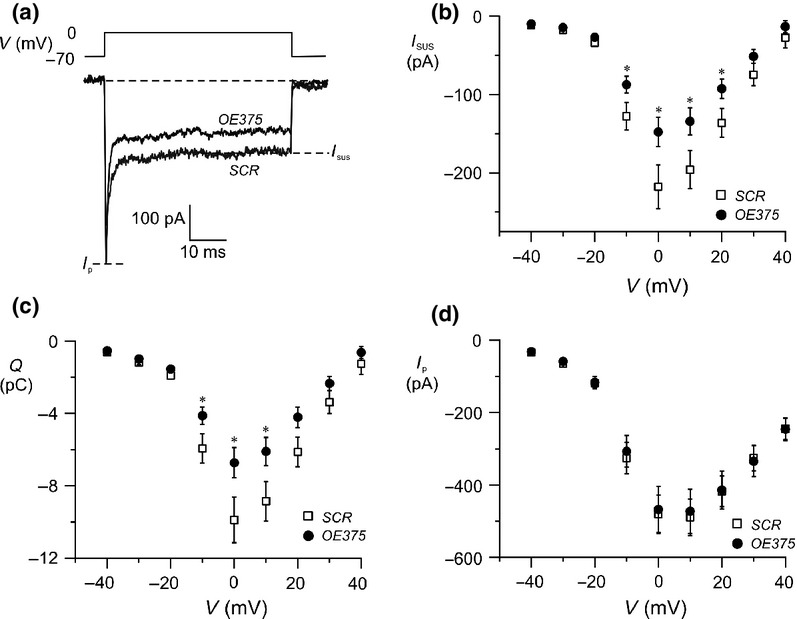
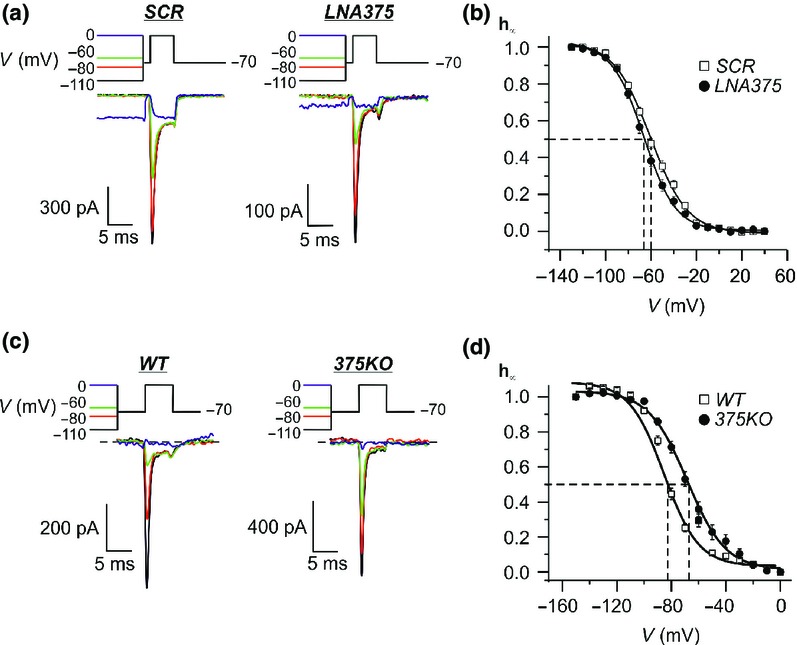
Voltage-gated Na(+) channels were found to be regulated by miR-375. In INS-1 832/13 cells, steady-state inactivation of the voltage-gated Na(+) channels was shifted by approx. 6 mV to a more negative membrane potential upon down-regulation of miR-375. In the miR-375 KO mouse, voltage-gated Na(+) channel inactivation was instead shifted by approx. 14 mV to a more positive membrane potential. Potential targets differed among species and expression of suggested targets Scn3a and Scn3b in INS-1 832/13 cells was only slightly moderated by miR-375. Modulation of miR-375 levels in INS-1-832/13 cells did not significantly affect insulin release. However, Ca(2+) dependent exocytosis was significantly reduced in OE375 cells.
We conclude that voltage-gated Na(+) channels are regulated by miR-375 in insulin-secreting cells, and validate that the exocytotic machinery is controlled by miR-375 also in INS-1 832/13 cells. Altogether we suggest miR-375 to be involved in a complex multifaceted network controlling insulin secretion and its different components.
miR - 375通过尚未完全明确的机制参与胰岛素分泌和胞吐作用。在此,我们旨在研究miR - 375在调节胰岛素分泌细胞中电压门控钠通道特性及葡萄糖刺激的胰岛素分泌方面的作用。
在INS - 1 832/13细胞中使用双链成熟miR - 375过表达miR - 375(OE375),或使用基于锁核酸(LNA)的抗miR - 375(LNA375)下调miR - 375。使用放射免疫分析法测定胰岛素分泌。在INS - 1 832/13细胞和来自miR - 375基因敲除小鼠的β细胞中,使用膜片钳技术测量胞吐作用和离子通道特性。通过逆转录定量聚合酶链反应分析基因表达,通过蛋白质印迹法测定蛋白质水平。
发现电压门控钠通道受miR - 375调节。在INS - 1 832/13细胞中,下调miR - 375后,电压门控钠通道的稳态失活向更负的膜电位偏移约6 mV。在miR - 375基因敲除小鼠中,电压门控钠通道失活却向更正的膜电位偏移约14 mV。潜在靶点在不同物种间存在差异,并且在INS - 1 832/13细胞中,推测靶点Scn3a和Scn3b的表达仅受到miR - 375的轻微调节。调节INS - 1 - 832/13细胞中miR - 375水平对胰岛素释放没有显著影响。然而,在OE375细胞中,钙依赖性胞吐作用显著降低。
我们得出结论,在胰岛素分泌细胞中,电压门控钠通道受miR - 375调节,并且证实miR - 375在INS - 1 832/13细胞中也控制胞吐机制。总之,我们认为miR - 375参与了一个控制胰岛素分泌及其不同组分的复杂多方面网络。