Rebello Celso Moura, Precioso Alexander Roberto, Mascaretti Renata Suman
Hospital Israelita Albert Einstein, São Paulo, SP, Brazil.
Instituto da Criança, Hospital das Clínicas, Faculdade de Medicina, Universidade de São Paulo, São Paulo, SP, Brazil.
Einstein (Sao Paulo). 2014 Oct-Dec;12(4):397-404. doi: 10.1590/S1679-45082014AO3095.
To compare the efficacy and safety of a new porcine-derived pulmonary surfactant developed by Instituto Butantan with those of animal-derived surfactants commercially available in Brazil, regarding neonatal mortality and the major complications of prematurity in preterm newborns with birth weight up to 1500g and diagnosed with respiratory distress syndrome.
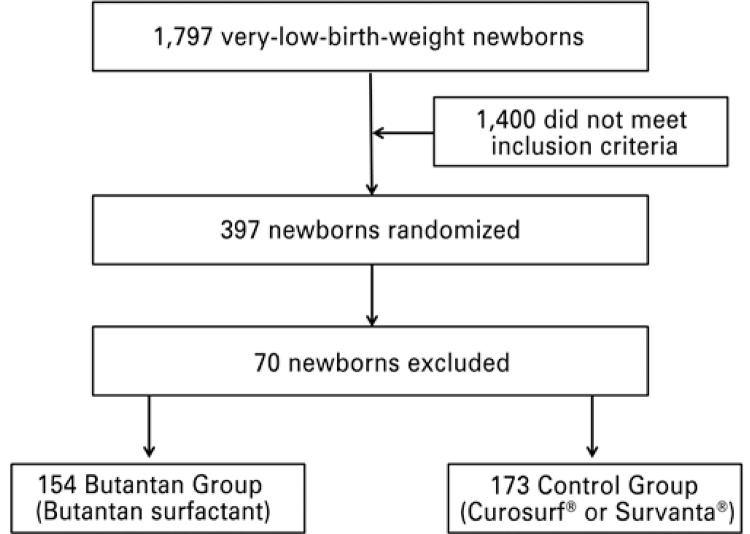
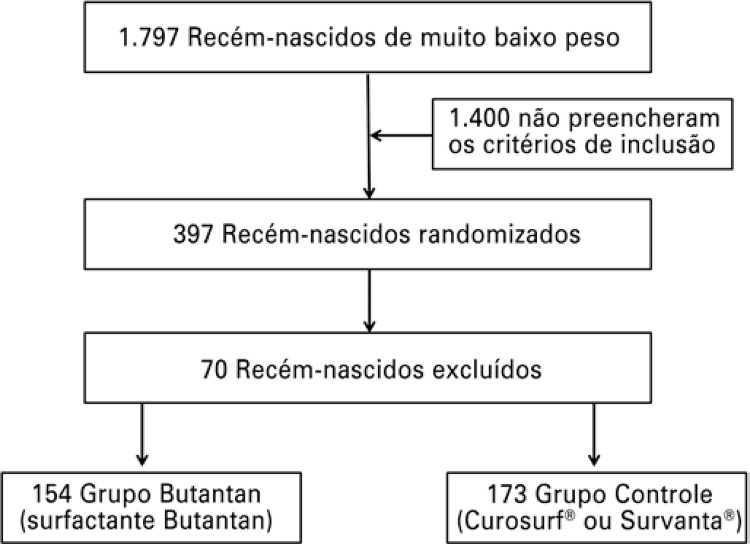
Neonates diagnosed with respiratory distress syndrome were randomized to receive either Butantan surfactant (Butantan group) or one of the following surfactants: Survanta® or Curosurf®. Newborns receiving Survanta® or Curosurf® comprised the control group. The main outcome measures were mortality rates at 72 hours and at 28 days of life; the typical complications of prematurity as evaluated on the 28th day of life were defined as secundary outcomes.
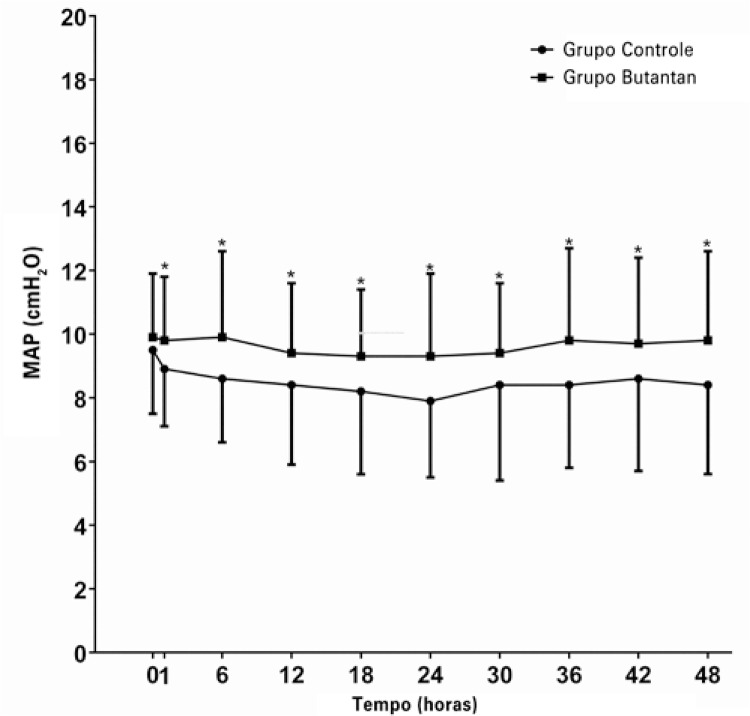
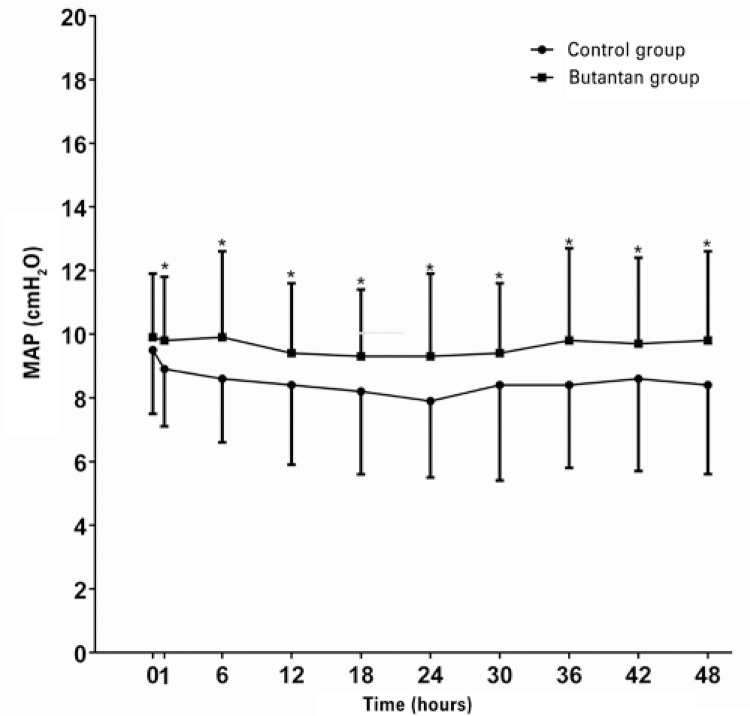
No differences were observed between the Butantan (n=154) and control (n=173) groups in relation to birth weight, gestational age, sex, and prenatal use of corticosteroids, or in mortality rates both at 72 hours (14.19% versus 14.12%; p=0.98) and at 28 days (39.86% versus 33.33%; p=0.24) of life. Higher 1- and 5-minute Apgar scores were observed among control group newborns. No differences were observed as regards the secondary outcomes, except for greater need for supplemental oxygen and a higher incidence of interstitial pulmonary emphysema in the Butantan group.
The mortality rates at 72 hours and 28 days of life and the incidence of major complications of prematurity were comparable to those found with the animal-derived surfactants commercially available in Brazil, showing the efficacy and safety of the new surfactant in the treatment of respiratory distress syndrome in newborns.
比较布坦坦研究所研发的一种新型猪源肺表面活性物质与巴西市场上可买到的动物源肺表面活性物质,在出生体重达1500g且诊断为呼吸窘迫综合征的早产新生儿的新生儿死亡率及早产主要并发症方面的疗效和安全性。
将诊断为呼吸窘迫综合征的新生儿随机分为接受布坦坦肺表面活性物质(布坦坦组)或以下肺表面活性物质之一:固尔苏®或珂立苏®。接受固尔苏®或珂立苏®的新生儿组成对照组。主要结局指标为出生后72小时和28天的死亡率;出生后第28天评估的早产典型并发症被定义为次要结局指标。
布坦坦组(n = 154)和对照组(n = 173)在出生体重、胎龄、性别、产前使用糖皮质激素方面,以及出生后72小时(14.19%对14.12%;p = 0.98)和28天(39.86%对33.33%;p = 0.24)的死亡率方面均未观察到差异。对照组新生儿的1分钟和5分钟阿氏评分更高。除布坦坦组补充氧气需求更大和间质性肺气肿发生率更高外,次要结局指标方面未观察到差异。
出生后72小时和28天的死亡率以及早产主要并发症的发生率与巴西市场上可买到的动物源肺表面活性物质相当,表明这种新型肺表面活性物质在治疗新生儿呼吸窘迫综合征方面具有疗效和安全性。