Manohar Murli, Tian Miaoying, Moreau Magali, Park Sang-Wook, Choi Hyong Woo, Fei Zhangjun, Friso Giulia, Asif Muhammed, Manosalva Patricia, von Dahl Caroline C, Shi Kai, Ma Shisong, Dinesh-Kumar Savithramma P, O'Doherty Inish, Schroeder Frank C, van Wijk Klass J, Klessig Daniel F
Boyce Thompson Institute for Plant Research, Cornell University Ithaca, NY, USA.
Boyce Thompson Institute for Plant Research, Cornell University Ithaca, NY, USA ; Plant, Soil, and Nutrition Laboratory, United States Department of Agriculture Ithaca, NY, USA.
Front Plant Sci. 2015 Jan 12;5:777. doi: 10.3389/fpls.2014.00777. eCollection 2014.
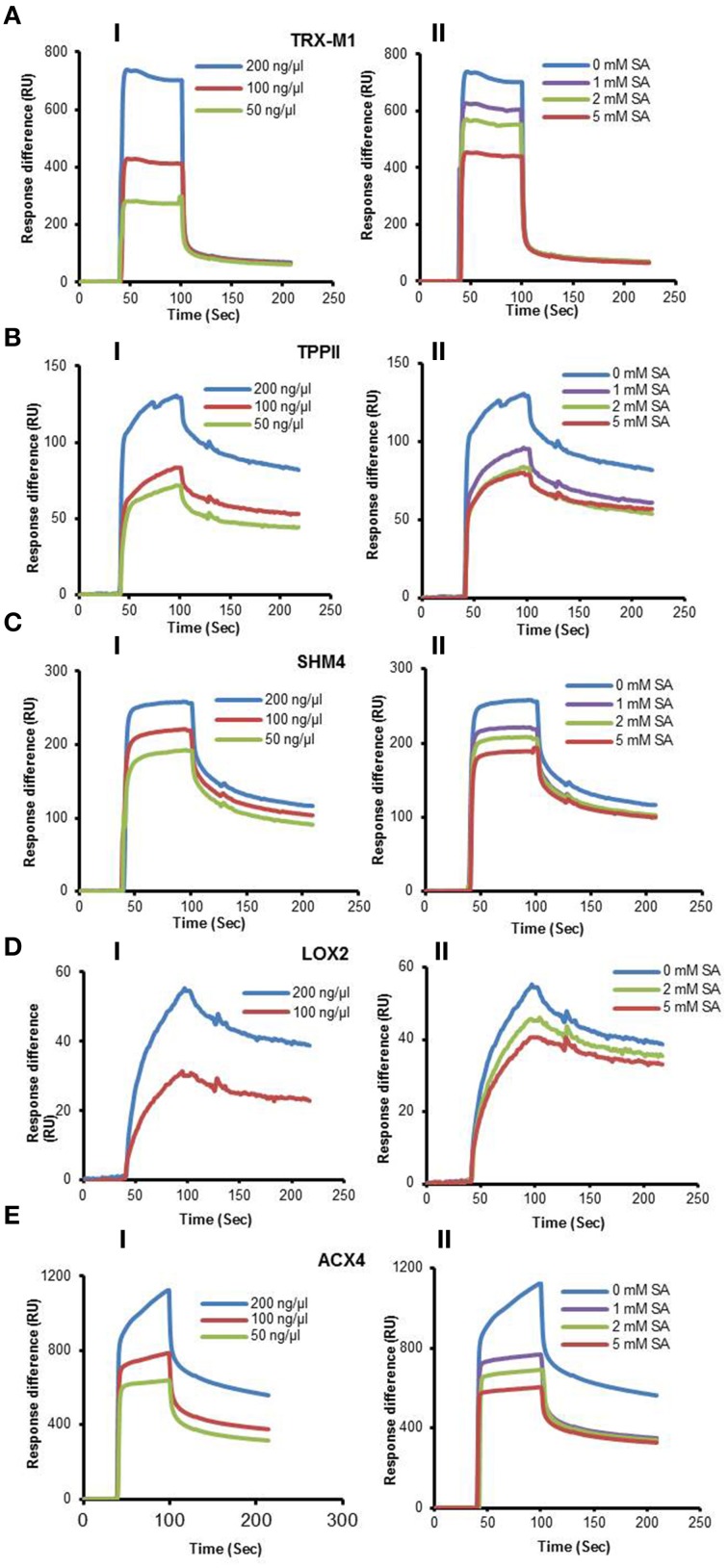
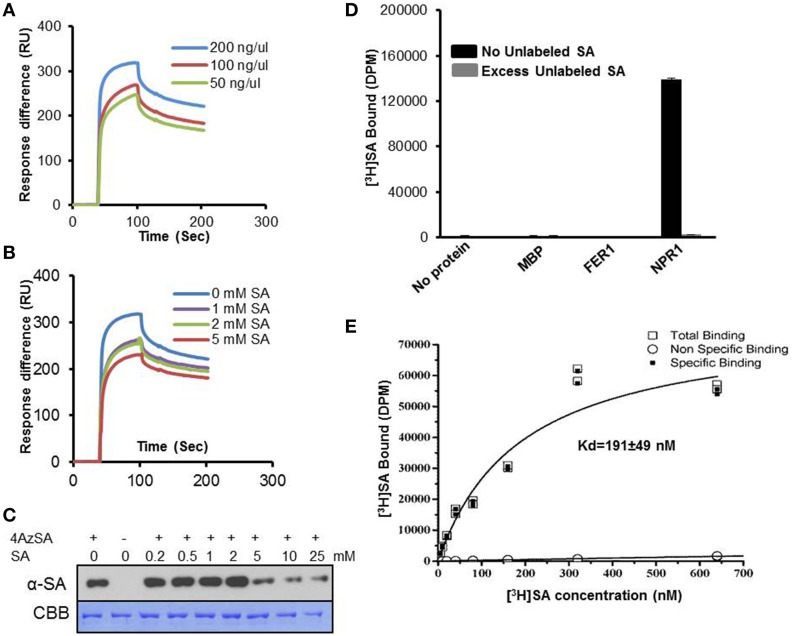
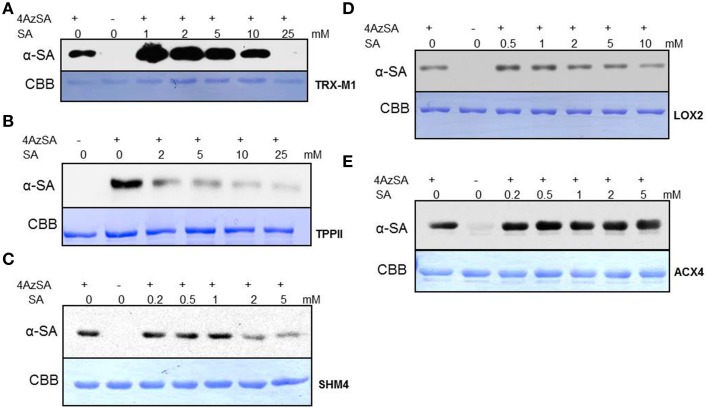
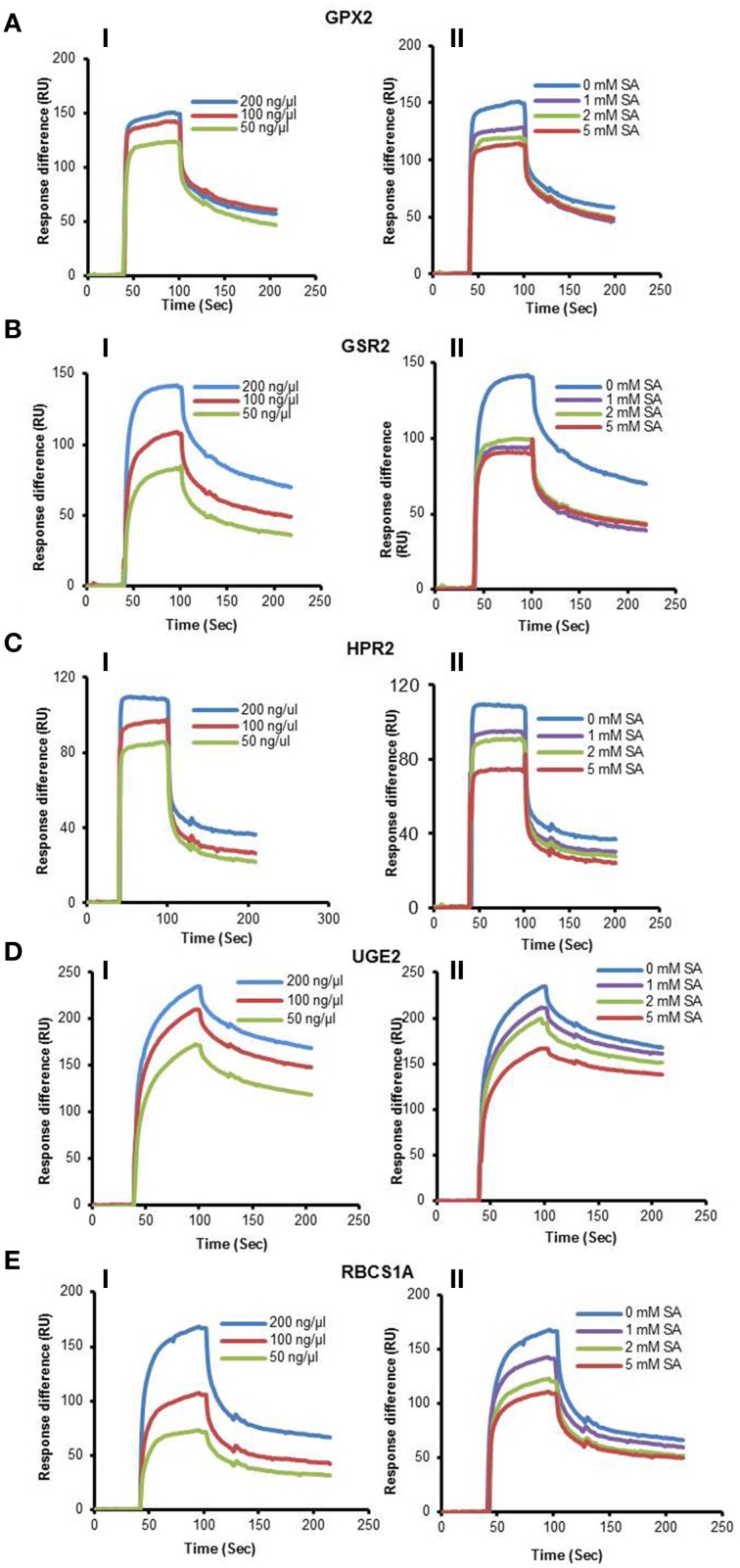
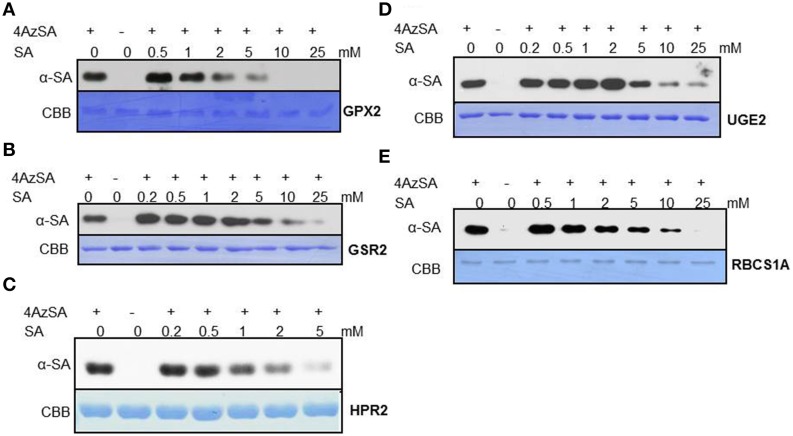
Salicylic acid (SA) is an important hormone involved in many diverse plant processes, including floral induction, stomatal closure, seed germination, adventitious root initiation, and thermogenesis. It also plays critical functions during responses to abiotic and biotic stresses. The role(s) of SA in signaling disease resistance is by far the best studied process, although it is still only partially understood. To obtain insights into how SA carries out its varied functions, particularly in activating disease resistance, two new high throughput screens were developed to identify novel SA-binding proteins (SABPs). The first utilized crosslinking of the photo-reactive SA analog 4-AzidoSA (4AzSA) to proteins in an Arabidopsis leaf extract, followed by immuno-selection with anti-SA antibodies and then mass spectroscopy-based identification. The second utilized photo-affinity crosslinking of 4AzSA to proteins on a protein microarray (PMA) followed by detection with anti-SA antibodies. To determine whether the candidate SABPs (cSABPs) obtained from these screens were true SABPs, recombinantly-produced proteins were generated and tested for SA-inhibitable crosslinking to 4AzSA, which was monitored by immuno-blot analysis, SA-inhibitable binding of the SA derivative 3-aminoethylSA (3AESA), which was detected by a surface plasmon resonance (SPR) assay, or SA-inhibitable binding of [(3)H]SA, which was detected by size exclusion chromatography. Based on our criteria that true SABPs must exhibit SA-binding activity in at least two of these assays, nine new SABPs are identified here; nine others were previously reported. Approximately 80 cSABPs await further assessment. In addition, the conflicting reports on whether NPR1 is an SABP were addressed by showing that it bound SA in all three of the above assays.
水杨酸(SA)是一种重要的激素,参与多种不同的植物生理过程,包括成花诱导、气孔关闭、种子萌发、不定根起始和产热。它在植物对非生物和生物胁迫的响应过程中也发挥着关键作用。尽管目前对其了解仍不全面,但SA在抗病信号传导中的作用是研究最为深入的过程。为深入了解SA如何发挥其多样的功能,特别是在激活抗病性方面的功能,我们开发了两种新的高通量筛选方法来鉴定新型SA结合蛋白(SABP)。第一种方法利用光反应性SA类似物4-叠氮水杨酸(4AzSA)与拟南芥叶提取物中的蛋白质进行交联,随后用抗SA抗体进行免疫选择,然后基于质谱进行鉴定。第二种方法利用4AzSA与蛋白质微阵列(PMA)上的蛋白质进行光亲和交联,随后用抗SA抗体进行检测。为了确定从这些筛选中获得的候选SABP(cSABP)是否为真正的SABP,我们制备了重组蛋白,并测试其与4AzSA的SA抑制性交联(通过免疫印迹分析监测)、SA衍生物3-氨基乙基水杨酸(3AESA)的SA抑制性结合(通过表面等离子体共振(SPR)测定检测)或[³H]SA的SA抑制性结合(通过尺寸排阻色谱检测)。根据我们制定的标准,即真正的SABP必须在至少两种上述测定中表现出SA结合活性,我们在此鉴定出9种新的SABP;另外9种此前已有报道。大约80种cSABP有待进一步评估。此外,通过证明NPR1在上述所有三种测定中均能结合SA,解决了关于NPR1是否为SABP的相互矛盾的报道。