Zhao Qian, Zhang Chao, Jia Zhenhua, Huang Yali, Li Haili, Song Shuishan
Department of Bioengineering, Biology Institute, Hebei Academy of Sciences Shijiazhuang, China ; Hebei Engineering and Technology Center of Microbiological Control on Main Crop Disease Shijiazhuang, China.
Department of Bioengineering, Biology Institute, Hebei Academy of Sciences Shijiazhuang, China.
Front Plant Sci. 2015 Jan 13;5:807. doi: 10.3389/fpls.2014.00807. eCollection 2014.
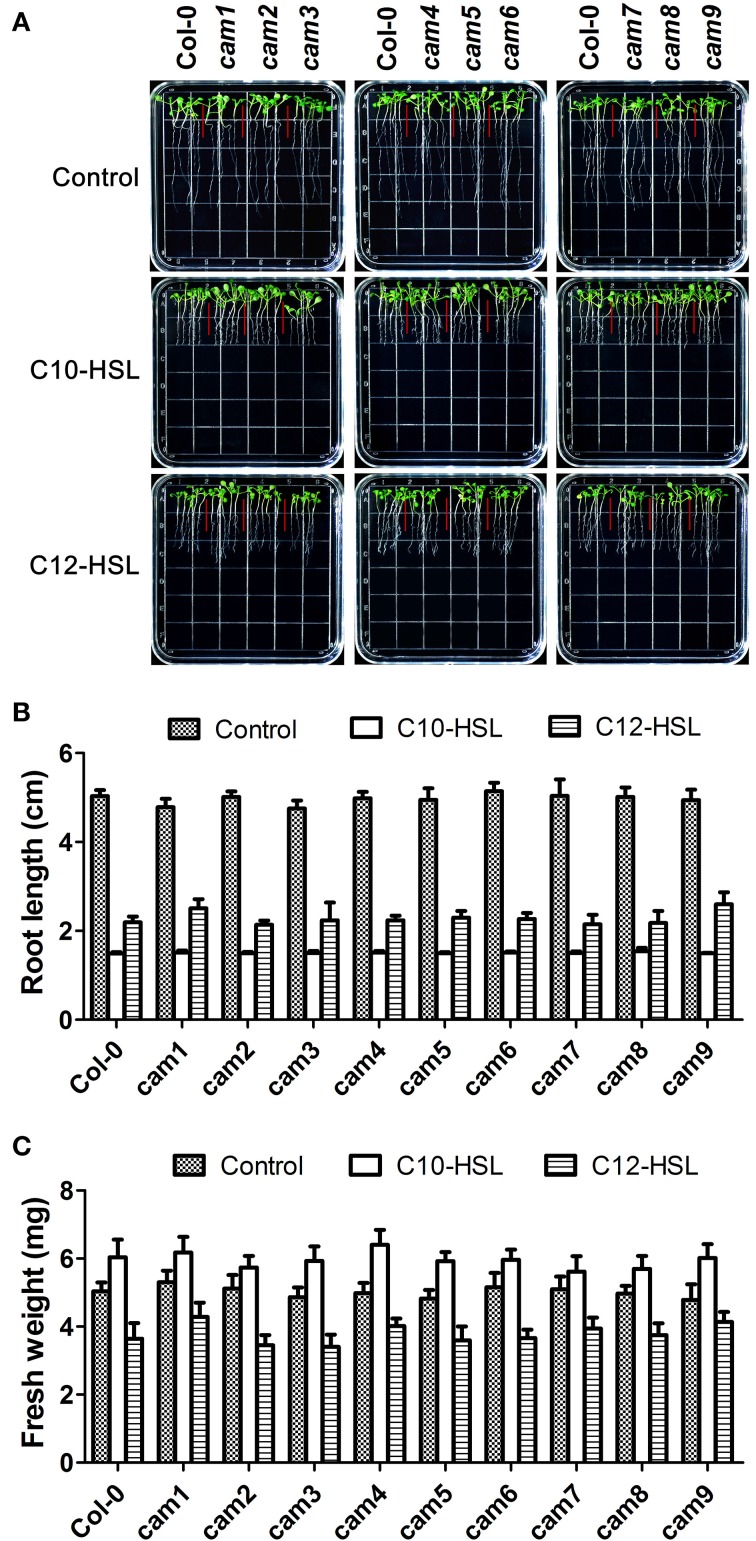
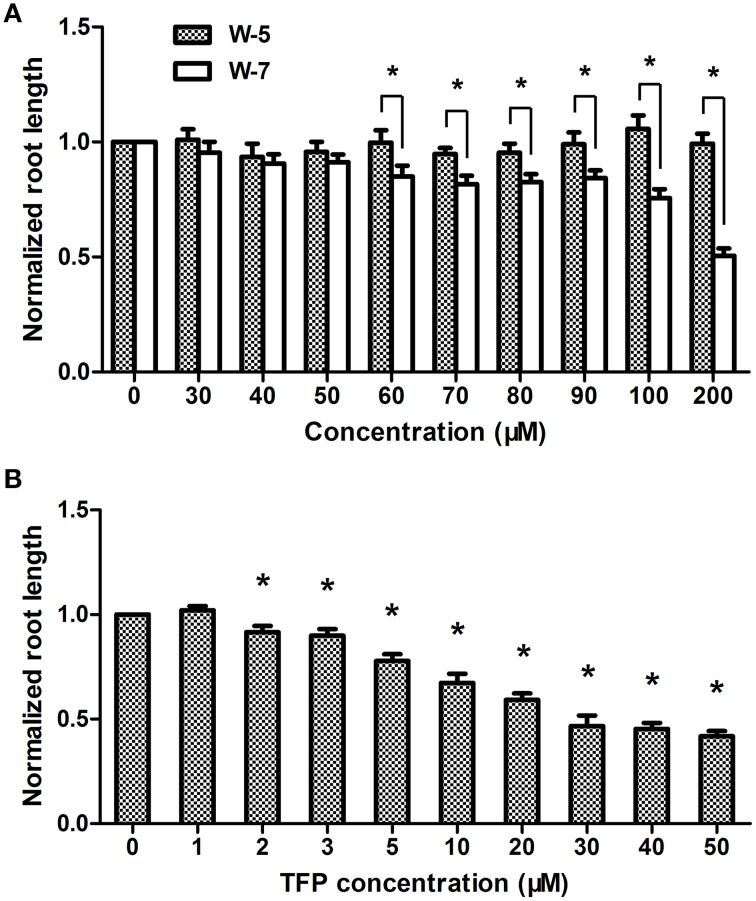
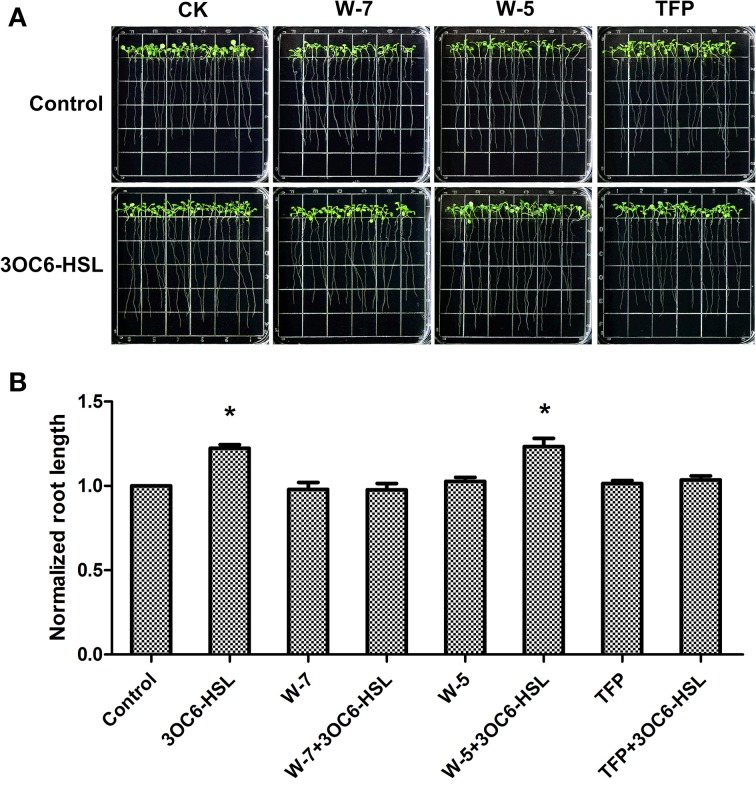
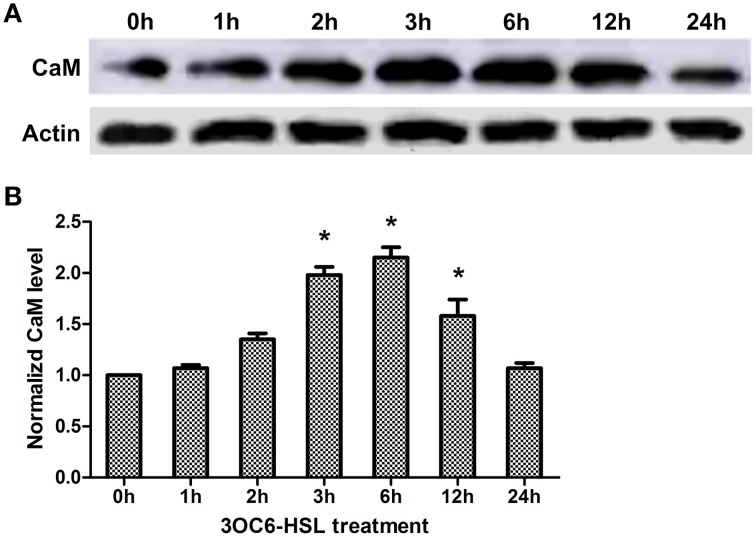
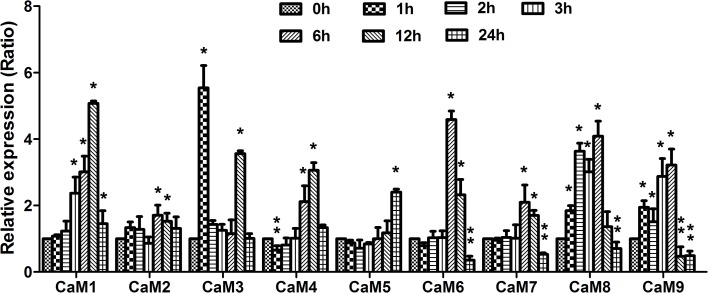
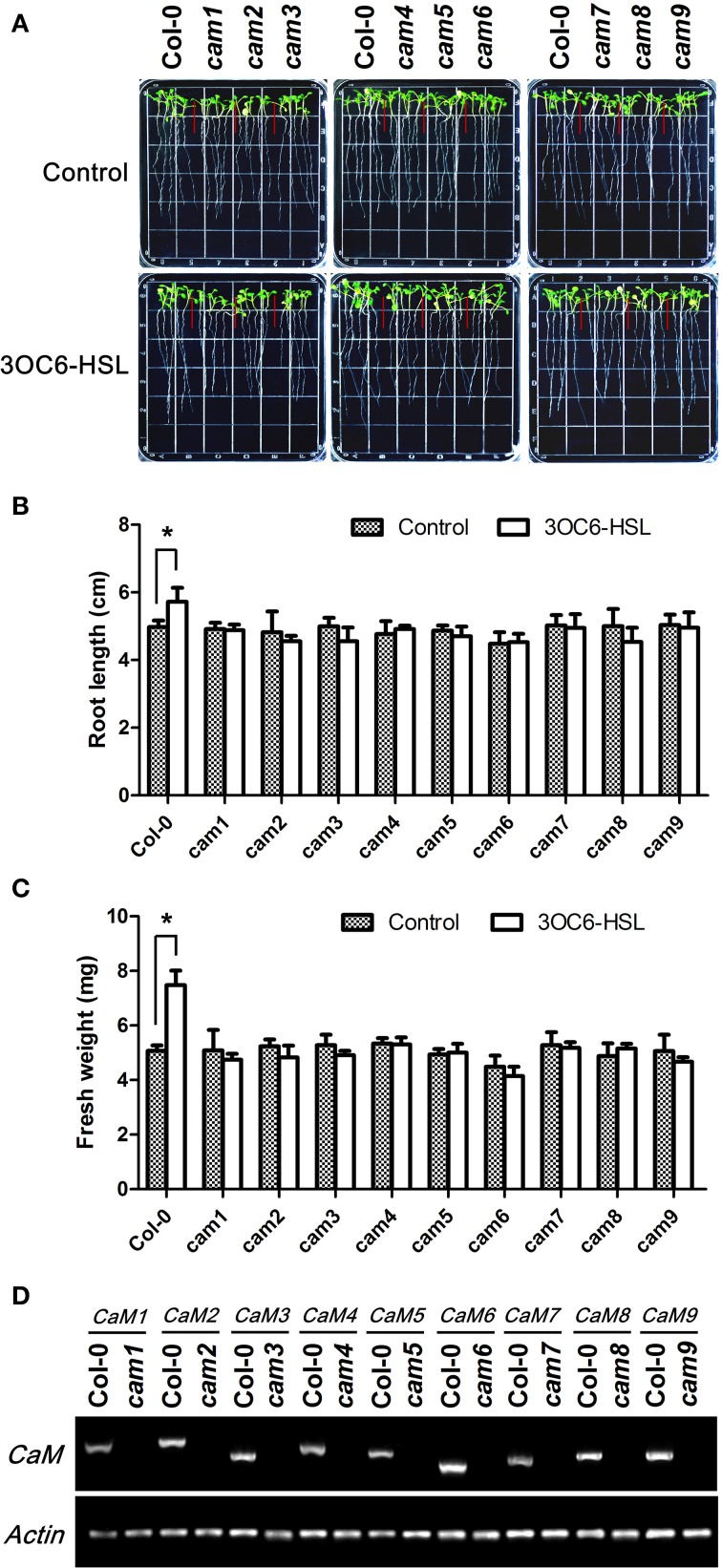
Many bacteria use signal molecules of low molecular weight to monitor their local population density and to coordinate their collective behavior in a process called "quorum sensing" (QS). N-acyl-homoserine lactones (AHLs) are the primary QS signals among Gram-negative bacteria. AHL-mediated QS plays an essential role in diverse bacterial physiological processes. Recent evidence shows that plants are able to sense bacterial AHLs and respond to them appropriately. However, little is known about the mechanism by which plants perceive and transduce the bacterial AHLs within cells. In this study, we found that the stimulatory effect of N-3-oxo-hexanoyl homoserine lactone (3OC6-HSL) on primary root elongation of Arabidopsis was abolished by the calmodulin (CaM) antagonists N-(6-aminohexyl)-5-chloro-1-naphthalene sulfonamide (W-7) and trifluoperazine (TFP). Western-blot and ELISA analysis revealed that the concentration of CaM protein in Arabidopsis roots increased after treatment with 1 μM 3OC6-HSL. Results from quantitative RT-PCR demonstrated that the transcription of all nine CaM genes in Arabidopsis genome was up-regulated in the plants treated with 3OC6-HSL. The loss-of-function mutants of each AtCaM gene (AtCaM1-9) were insensitive to 3OC6-HSL-stimulation of primary root elongation. On the other hand, the genetic evidence showed that CaM may not participates the inhibition of primary root length caused by application of long-chained AHLs such as C10-HSL and C12-HSL. Nevertheless, our results suggest that CaM is involved in the bacterial 3OC6-HSL signaling in plant cells. These data offer new insight into the mechanism of plant response to bacterial QS signals.
许多细菌利用低分子量信号分子来监测其局部种群密度,并在一个称为“群体感应”(QS)的过程中协调它们的群体行为。N-酰基高丝氨酸内酯(AHLs)是革兰氏阴性菌中主要的群体感应信号。AHL介导的群体感应在多种细菌生理过程中起着至关重要的作用。最近的证据表明,植物能够感知细菌AHLs并做出适当反应。然而,关于植物在细胞内感知和转导细菌AHLs的机制知之甚少。在本研究中,我们发现钙调蛋白(CaM)拮抗剂N-(6-氨基己基)-5-氯-1-萘磺酰胺(W-7)和三氟拉嗪(TFP)消除了N-3-氧代己酰高丝氨酸内酯(3OC6-HSL)对拟南芥初生根伸长的刺激作用。蛋白质免疫印迹和酶联免疫吸附分析表明,用1μM 3OC6-HSL处理后,拟南芥根中CaM蛋白的浓度增加。定量逆转录聚合酶链反应结果表明,在3OC6-HSL处理的植物中,拟南芥基因组中所有9个CaM基因的转录均上调。每个AtCaM基因(AtCaM1-9)的功能缺失突变体对3OC6-HSL刺激的初生根伸长不敏感。另一方面,遗传学证据表明,CaM可能不参与长链AHLs(如C10-HSL和C12-HSL)对初生根长度的抑制作用。尽管如此,我们的结果表明CaM参与了植物细胞中细菌3OC6-HSL信号传导。这些数据为植物对细菌群体感应信号的反应机制提供了新的见解。