Zhao Qian, Yang Xiang-Yun, Li Yao, Liu Fang, Cao Xiang-Yu, Jia Zhen-Hua, Song Shui-Shan
Biology Institute, Hebei Academy of Sciences, 46th South Street of Friendship, Shijiazhuang, 050051, Hebei, China.
Hebei Engineering and Technology Center of Microbiological Control on Main Crop Disease, 46th South Street of Friendship, Shijiazhuang, China.
Bot Stud. 2020 Mar 10;61(1):8. doi: 10.1186/s40529-020-00283-5.
N-acyl-homoserine lactones (AHLs) are the quorum sensing (QS) signal molecules to coordinate the collective behavior in a population in Gram-negative bacteria. Recent evidences demonstrate their roles in plant growth and defense responses.
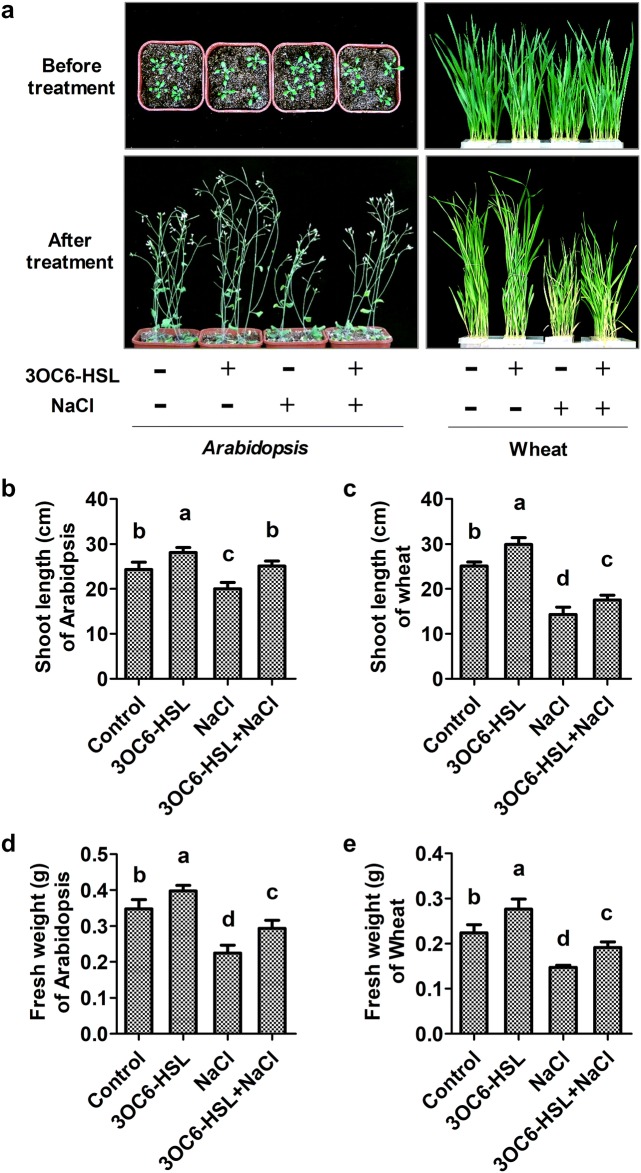
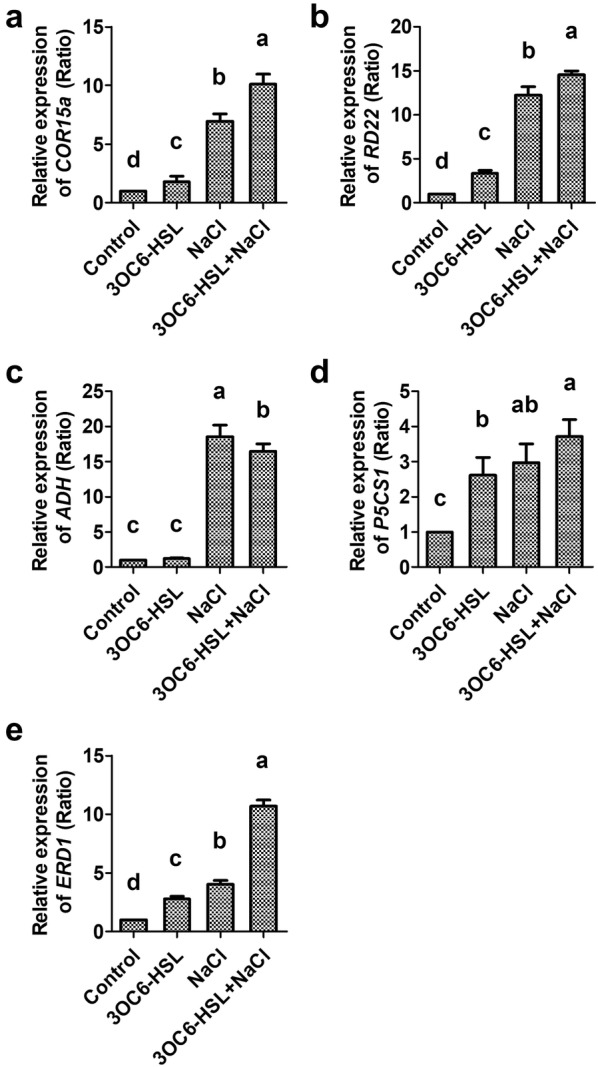
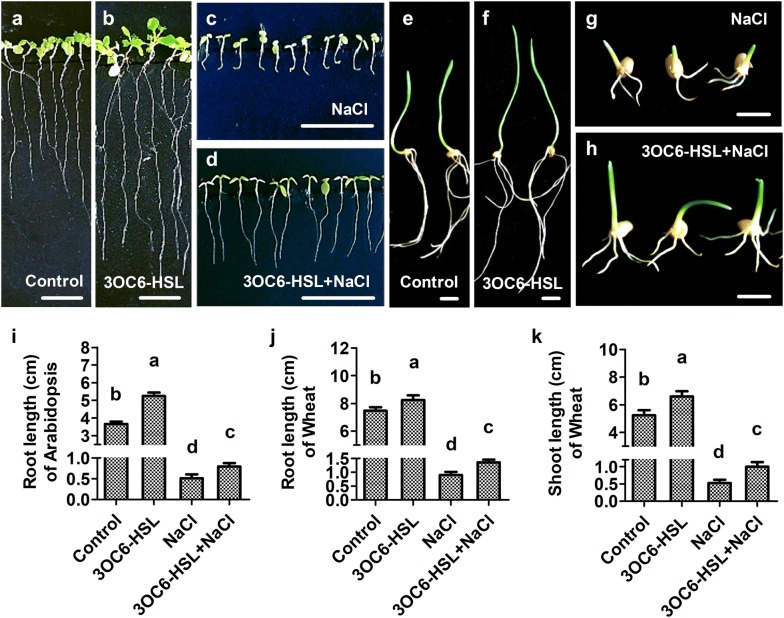
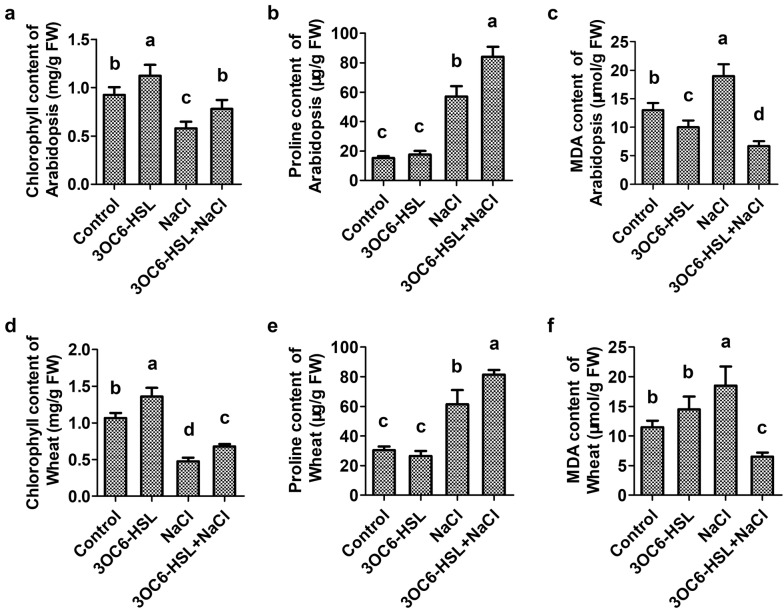
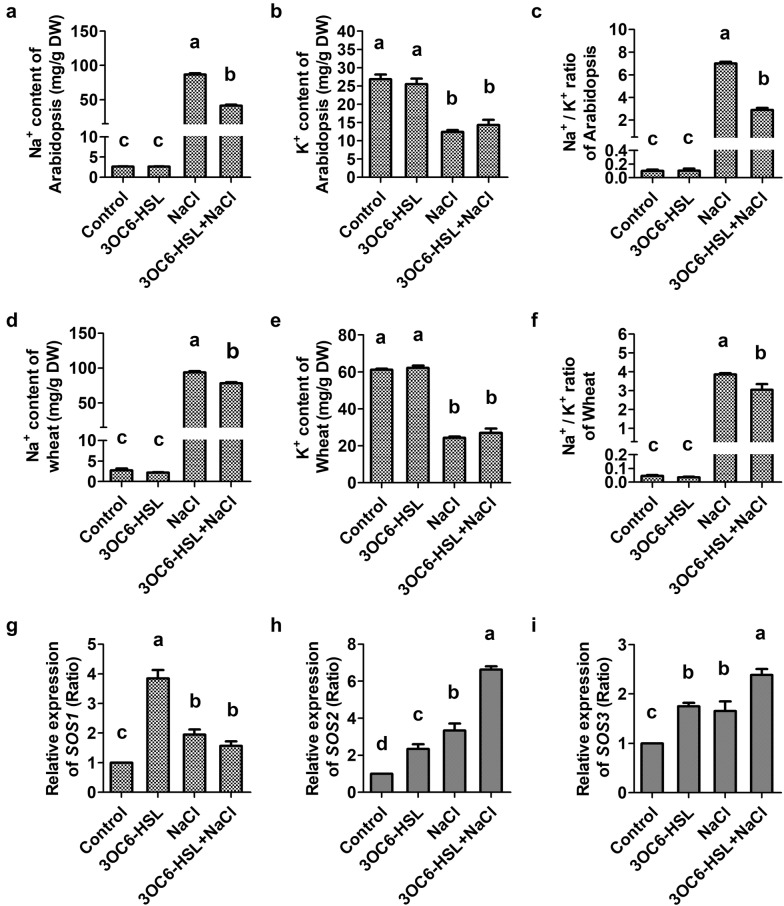
In present study, we show that the treatment of plant roots with N-3-oxo-hexanoyl-homoserine lactone (3OC6-HSL), one molecule of AHLs family, resulted in enhanced salt tolerance in Arabidopsis and wheat. We found that the growth inhibition phenotype including root length, shoot length and fresh weight were significantly improved by 3OC6-HSL under salt stress condition. The physiological and biochemical analysis revealed that the contents of chlorophyll and proline were increased and the contents of MDA and Na and Na/K ratios were decreased after 3OC6-HSL treatment in Arabidopsis and wheat under salt stress condition. Molecular analysis showed that 3OC6-HSL significantly upregulated the expression of salt-responsive genes including ABA-dependent osmotic stress responsive genes COR15a, RD22, ADH and P5CS1, ABA-independent gene ERD1, and ion-homeostasis regulation genes SOS1, SOS2 and SOS3 in Arabidopsis under salt stress condition.
These results indicated that 3OC6-HSL enhanced plant salt tolerance and ABA-dependent and ABA-independent signal pathways and SOS signaling might be involved in the induction of salt resistance by 3OC6-HSL in plants. Our data provide a new insight into the plant-microbe inter-communication.
N-酰基高丝氨酸内酯(AHLs)是革兰氏阴性菌中用于协调群体内集体行为的群体感应(QS)信号分子。最近的证据表明它们在植物生长和防御反应中发挥作用。
在本研究中,我们发现用AHLs家族的一种分子N-3-氧代己酰高丝氨酸内酯(3OC6-HSL)处理植物根部,可提高拟南芥和小麦的耐盐性。我们发现,在盐胁迫条件下,3OC6-HSL显著改善了包括根长、茎长和鲜重在内的生长抑制表型。生理生化分析表明,盐胁迫条件下,3OC6-HSL处理拟南芥和小麦后,叶绿素和脯氨酸含量增加,丙二醛、钠含量以及钠/钾比值降低。分子分析表明,在盐胁迫条件下,3OC6-HSL显著上调了拟南芥中盐响应基因的表达,包括ABA依赖的渗透胁迫响应基因COR15a、RD22、ADH和P5CS1,ABA非依赖基因ERD1,以及离子稳态调节基因SOS1、SOS2和SOS3。
这些结果表明,3OC6-HSL增强了植物的耐盐性,ABA依赖和ABA非依赖信号通路以及SOS信号可能参与了3OC6-HSL诱导植物抗盐性的过程。我们的数据为植物-微生物相互交流提供了新的见解。