Ro Ju-Ye, Ryu Jin-Hyeob, Park Hwa-Jin, Cho Hyun-Jeong
Department of Biomedical Laboratory Science, College of Medical Science, Konyang University, 685, Gasuwon-dong, Seo-gu, Daejeon 302-718 Korea.
Present address: Department of Microbiology and Immunology, Institute of Medical Science, Tokyo University, Minato-ku, Tokyo, 108-8639 Japan.
Springerplus. 2015 Jan 13;4:17. doi: 10.1186/s40064-015-0786-0. eCollection 2015.
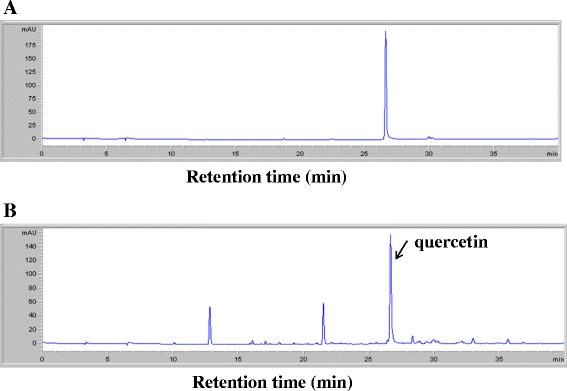
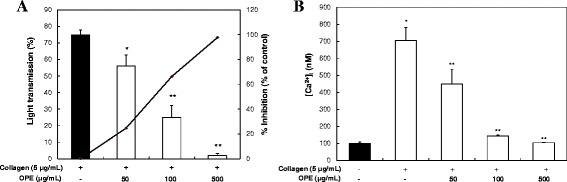
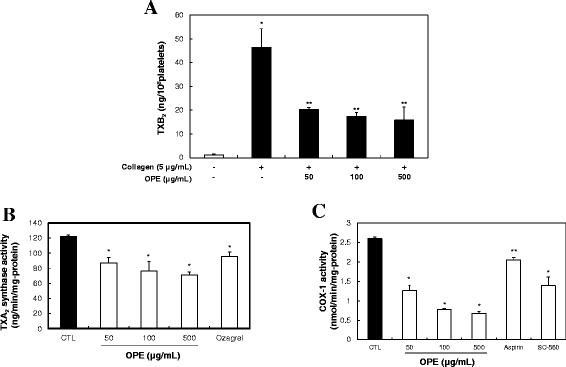
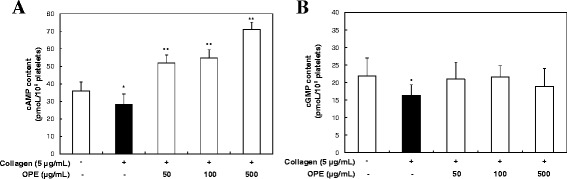
The effects of onion peel extract (OPE) in collagen (5 μg/mL)-stimulated washed rat platelet aggregation were investigated. OPE inhibited platelet aggregation via inhibition of aggregation-inducing molecules, intracellular Ca(2+) and thromboxane A2 (TXA2) by blocking cyclooxygenase-1 (COX-1) and TXA2 synthase (TXAS) activities in a dose-dependent manner. In addition, OPE elevated the formation of cyclic adenosine monophosphate (cAMP), aggregation-inhibiting molecule, but not cyclic guanosine monophosphate (cGMP). High performance liquid chromatography (HPLC) analysis of OPE revealed that OPE contains quercetin, one of the major flavonoids, which has anti-platelet effect. In conclusion, we suggest that OPE is an effective inhibitor of collagen-stimulated platelet aggregation in vitro. Therefore, it can be a promising and safe strategy for anti-cardiovascular diseases.
研究了洋葱皮提取物(OPE)对胶原蛋白(5μg/mL)刺激的洗涤大鼠血小板聚集的影响。OPE通过抑制聚集诱导分子、细胞内Ca(2+)和血栓素A2(TXA2),以剂量依赖的方式阻断环氧合酶-1(COX-1)和TXA2合酶(TXAS)的活性,从而抑制血小板聚集。此外,OPE提高了聚集抑制分子环磷酸腺苷(cAMP)的生成,但没有提高环磷酸鸟苷(cGMP)的生成。对OPE的高效液相色谱(HPLC)分析表明,OPE含有主要黄酮类化合物之一的槲皮素,其具有抗血小板作用。总之,我们认为OPE是体外胶原蛋白刺激的血小板聚集的有效抑制剂。因此,它可能是一种有前景且安全的抗心血管疾病策略。