Weber Carolyn F, King Gary M, Aho Ken
Department of Biological Sciences, Idaho State University, Pocatello, Idaho, United States of America.
Department of Biological Sciences, Louisiana State University, Baton Rouge, Louisiana, United States of America.
PLoS One. 2015 Jan 28;10(1):e0117026. doi: 10.1371/journal.pone.0117026. eCollection 2015.
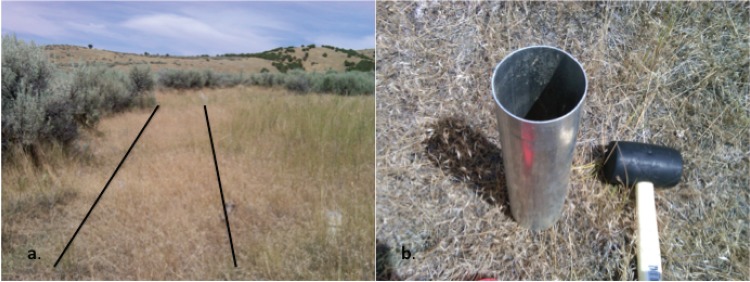
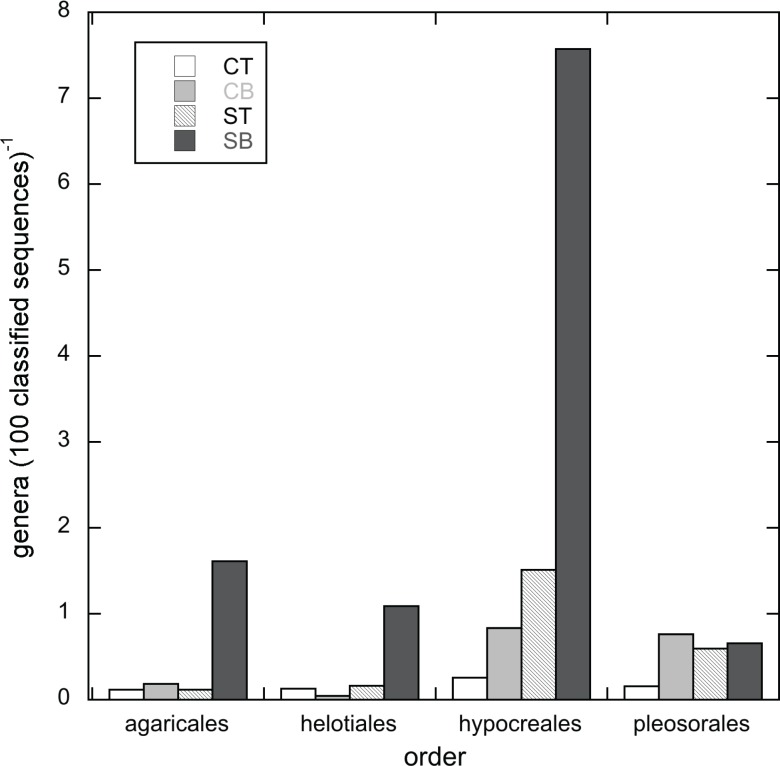
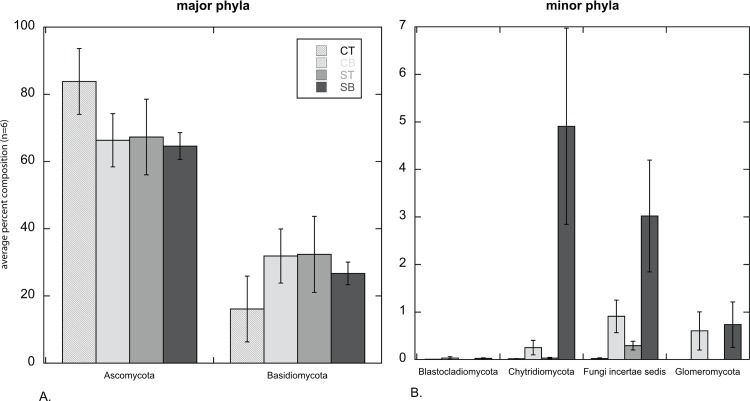
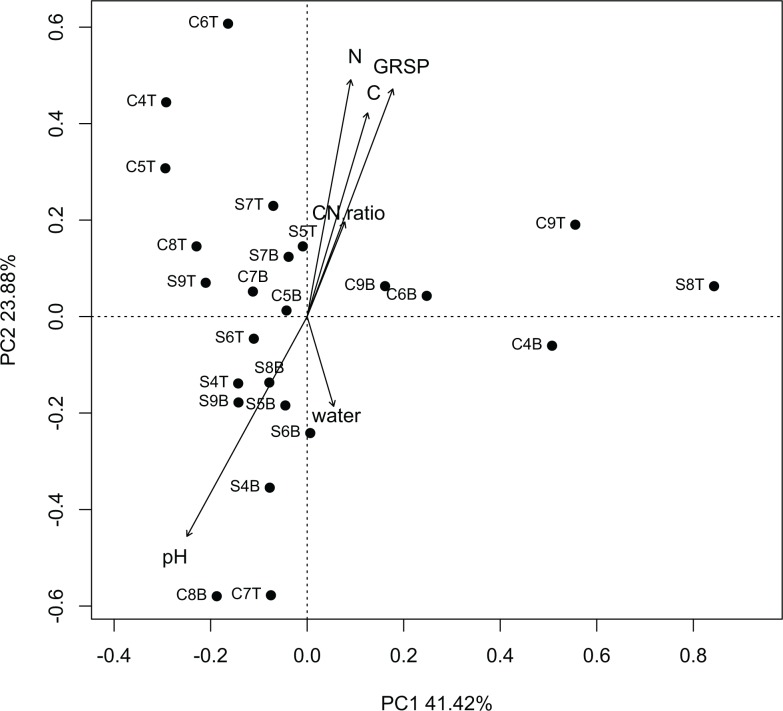
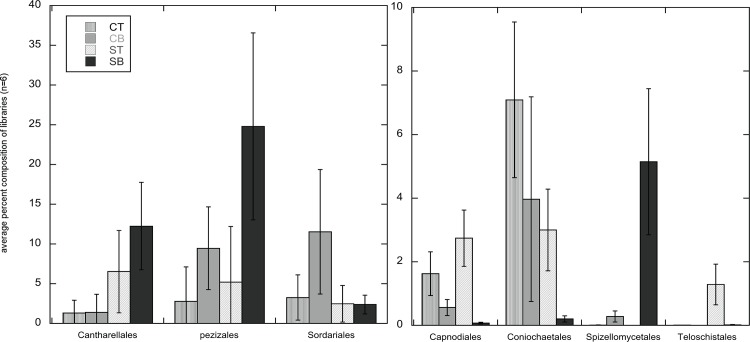
Nonnative Bromus tectorum (cheatgrass) is decimating sagebrush steppe, one of the largest ecosystems in the Western United States, and is causing regional-scale shifts in the predominant plant-fungal interactions. Sagebrush, a native perennial, hosts arbuscular mycorrhizal fungi (AMF), whereas cheatgrass, a winter annual, is a relatively poor host of AMF. This shift is likely intertwined with decreased carbon (C)-sequestration in cheatgrass-invaded soils and alterations in overall soil fungal community composition and structure, but the latter remain unresolved. We examined soil fungal communities using high throughput amplicon sequencing (ribosomal large subunit gene) in the 0-4 cm and 4-8 cm depth intervals of six cores from cheatgrass- and six cores from sagebrush-dominated soils. Sagebrush core surfaces (0-4 cm) contained higher nitrogen and total C than cheatgrass core surfaces; these differences mirrored the presence of glomalin related soil proteins (GRSP), which has been associated with AMF activity and increased C-sequestration. Fungal richness was not significantly affected by vegetation type, depth or an interaction of the two factors. However, the relative abundance of seven taxonomic orders was significantly affected by vegetation type or the interaction between vegetation type and depth. Teloschistales, Spizellomycetales, Pezizales and Cantharellales were more abundant in sagebrush libraries and contain mycorrhizal, lichenized and basal lineages of fungi. Only two orders (Coniochaetales and Sordariales), which contain numerous economically important pathogens and opportunistic saprotrophs, were more abundant in cheatgrass libraries. Pleosporales, Agaricales, Helotiales and Hypocreales were most abundant across all libraries, but the number of genera detected within these orders was as much as 29 times lower in cheatgrass relative to sagebrush libraries. These compositional differences between fungal communities associated with cheatgrass- and sagebrush-dominated soils warrant future research to examine soil fungal community composition across more sites and time points as well as in association with native grass species that also occupy cheatgrass-invaded ecosystems.
外来的雀麦草(也叫 cheatgrass)正在破坏美国西部最大的生态系统之一——蒿属植物草原,并且正在导致区域尺度上主要植物 - 真菌相互作用的转变。蒿属植物是一种本土多年生植物,能宿主丛枝菌根真菌(AMF),而雀麦草是一种冬季一年生植物,是 AMF 相对较差的宿主。这种转变可能与雀麦草入侵土壤中碳(C)固存的减少以及土壤真菌群落整体组成和结构的改变相互交织,但后者仍未得到解决。我们使用高通量扩增子测序(核糖体大亚基基因)在来自雀麦草占主导的土壤的六个土芯以及来自蒿属植物占主导的土壤的六个土芯的 0 - 4 厘米和 4 - 8 厘米深度区间内检测了土壤真菌群落。蒿属植物土芯表面(0 - 4 厘米)的氮和总碳含量高于雀麦草土芯表面;这些差异反映了球囊霉素相关土壤蛋白(GRSP)的存在,其与 AMF 活性和碳固存增加有关。真菌丰富度不受植被类型、深度或这两个因素的相互作用的显著影响。然而,七个分类目(注:分类学上比科小一级的单位)的相对丰度受到植被类型或植被类型与深度之间相互作用的显著影响。茶渍目、被孢霉目、盘菌目和鸡油菌目在蒿属植物文库中更为丰富,并且包含真菌的菌根、地衣化和基部谱系。只有两个目(座囊菌目和粪壳菌目),其中包含许多具有经济重要性的病原体和机会性腐生菌,在雀麦草文库中更为丰富。格孢腔菌目、伞菌目、锤舌菌目和肉座菌目在所有文库中最为丰富,但相对于蒿属植物文库,在雀麦草文库中这些目内检测到的属的数量低至 29 倍。与雀麦草占主导和蒿属植物占主导的土壤相关的真菌群落之间的这些组成差异,需要未来开展研究,以考察更多地点和时间点的土壤真菌群落组成,以及与同样占据雀麦草入侵生态系统的本土草种相关的情况。