Soul Jamie, Hardingham Timothy E, Boot-Handford Raymond P, Schwartz Jean-Marc
Wellcome Trust Centre for Cell-Matrix Research, Faculty of Life Sciences, University of Manchester, Manchester M13 9PT, UK.
Sci Rep. 2015 Jan 29;5:8117. doi: 10.1038/srep08117.
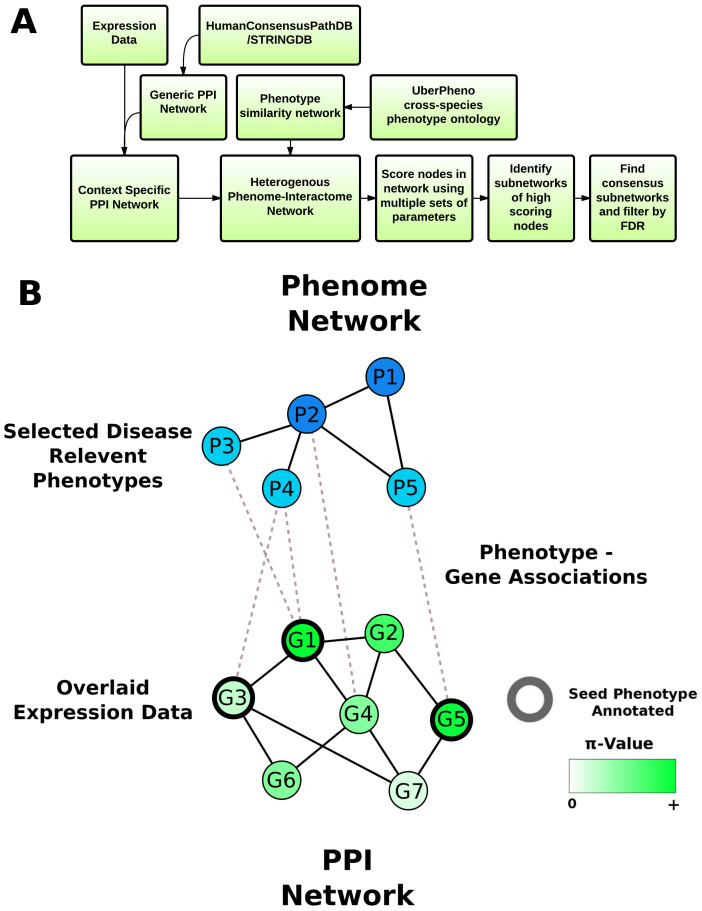
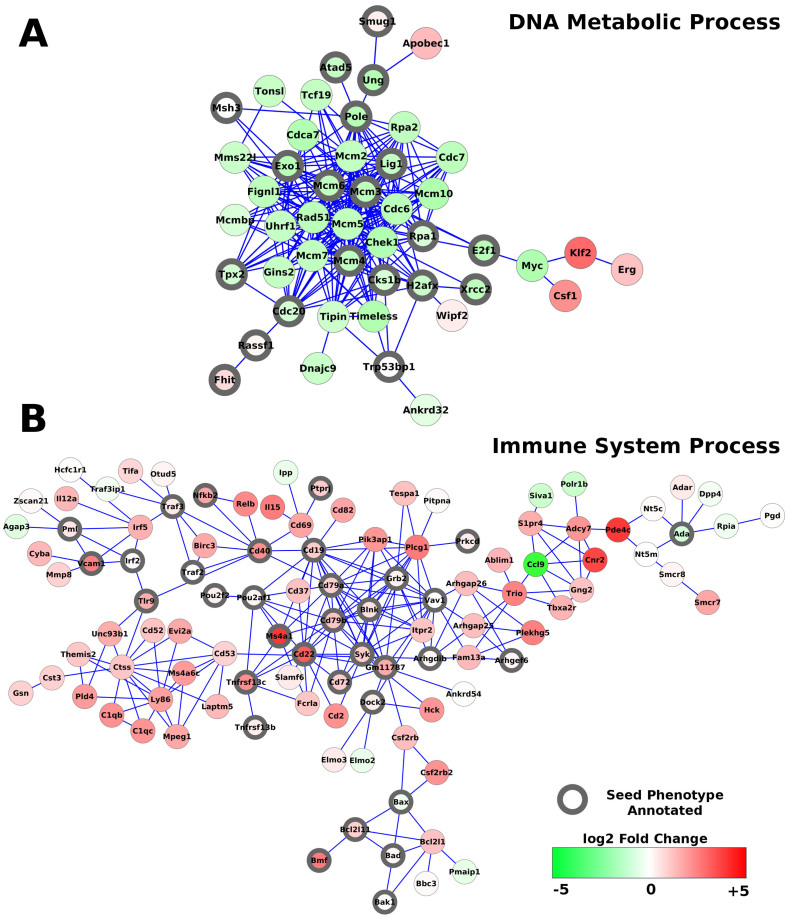
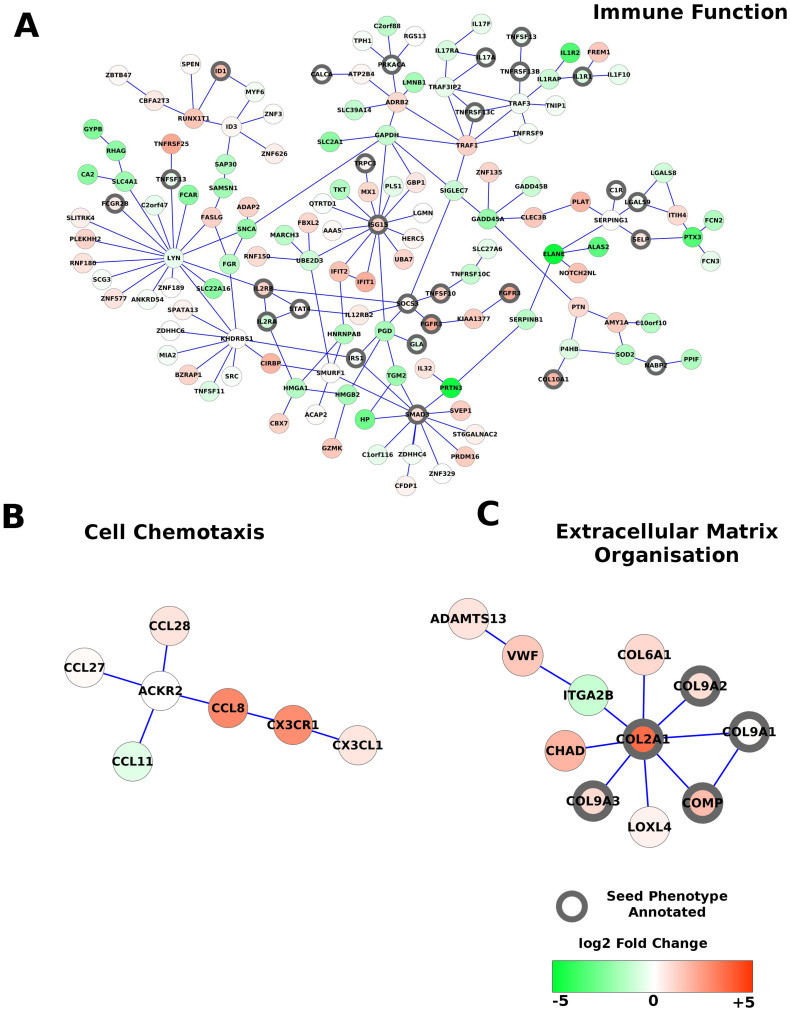
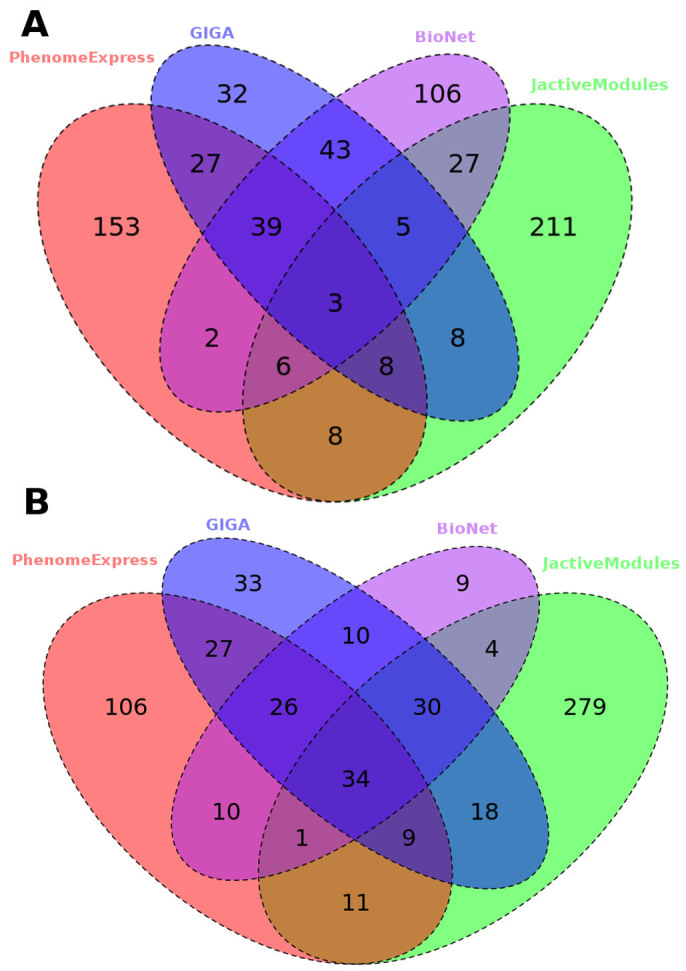
We describe a new method, PhenomeExpress, for the analysis of transcriptomic datasets to identify pathogenic disease mechanisms. Our analysis method includes input from both protein-protein interaction and phenotype similarity networks. This introduces valuable information from disease relevant phenotypes, which aids the identification of sub-networks that are significantly enriched in differentially expressed genes and are related to the disease relevant phenotypes. This contrasts with many active sub-network detection methods, which rely solely on protein-protein interaction networks derived from compounded data of many unrelated biological conditions and which are therefore not specific to the context of the experiment. PhenomeExpress thus exploits readily available animal model and human disease phenotype information. It combines this prior evidence of disease phenotypes with the experimentally derived disease data sets to provide a more targeted analysis. Two case studies, in subchondral bone in osteoarthritis and in Pax5 in acute lymphoblastic leukaemia, demonstrate that PhenomeExpress identifies core disease pathways in both mouse and human disease expression datasets derived from different technologies. We also validate the approach by comparison to state-of-the-art active sub-network detection methods, which reveals how it may enhance the detection of molecular phenotypes and provide a more detailed context to those previously identified as possible candidates.
我们描述了一种名为PhenomeExpress的新方法,用于分析转录组数据集以识别致病疾病机制。我们的分析方法包括来自蛋白质-蛋白质相互作用和表型相似性网络的输入。这引入了与疾病相关表型的有价值信息,有助于识别在差异表达基因中显著富集且与疾病相关表型相关的子网。这与许多活跃子网检测方法形成对比,后者仅依赖于从许多不相关生物学条件的复合数据中得出的蛋白质-蛋白质相互作用网络,因此并非特定于实验背景。因此,PhenomeExpress利用了现成的动物模型和人类疾病表型信息。它将这种疾病表型的先验证据与实验得出的疾病数据集相结合,以提供更具针对性的分析。两项案例研究,一项针对骨关节炎的软骨下骨,另一项针对急性淋巴细胞白血病中的Pax5,表明PhenomeExpress在源自不同技术的小鼠和人类疾病表达数据集中都能识别核心疾病途径。我们还通过与最先进的活跃子网检测方法进行比较来验证该方法,这揭示了它如何增强分子表型的检测,并为那些先前被确定为可能候选者的表型提供更详细的背景信息。