Core Research for Evolutionary Science and Technology (CREST), Japan Science and Technology Agency (JST), Okayama 700-8530, Japan.
Research Institute for Biological Sciences, Okayama 700-8530, Japan.
Biology (Basel). 2015 Jan 27;4(1):50-66. doi: 10.3390/biology4010050.
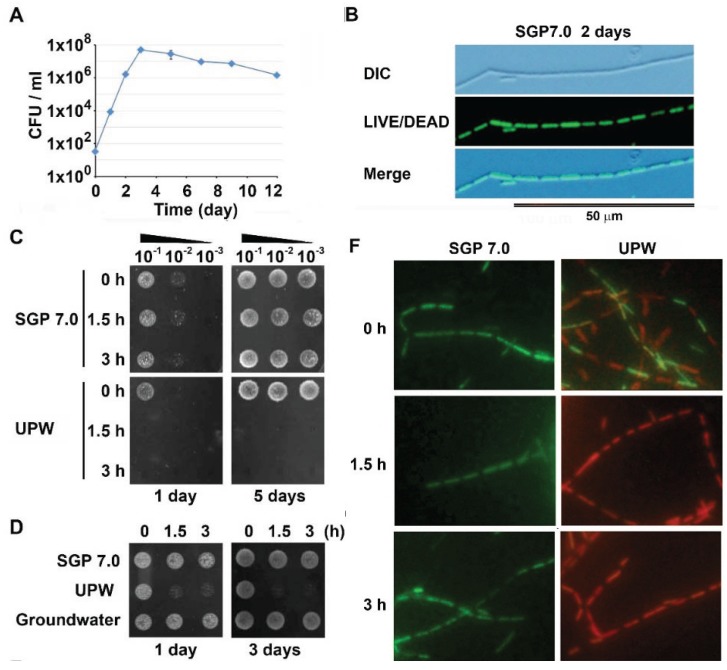
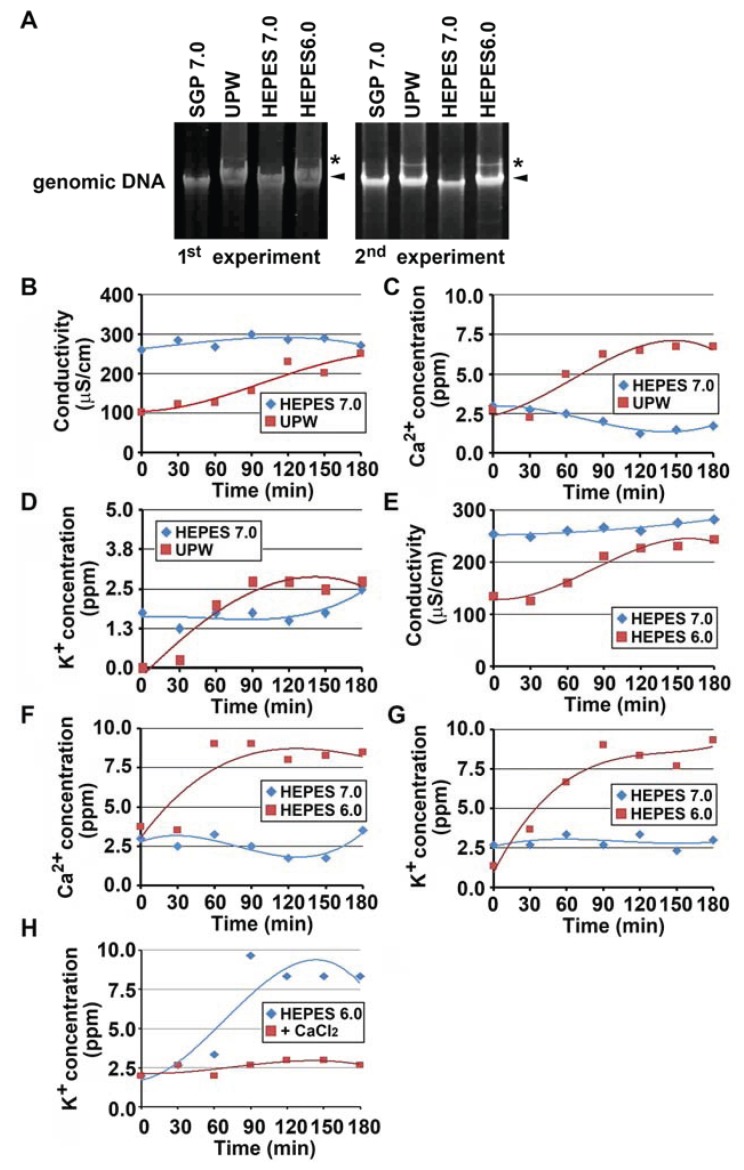
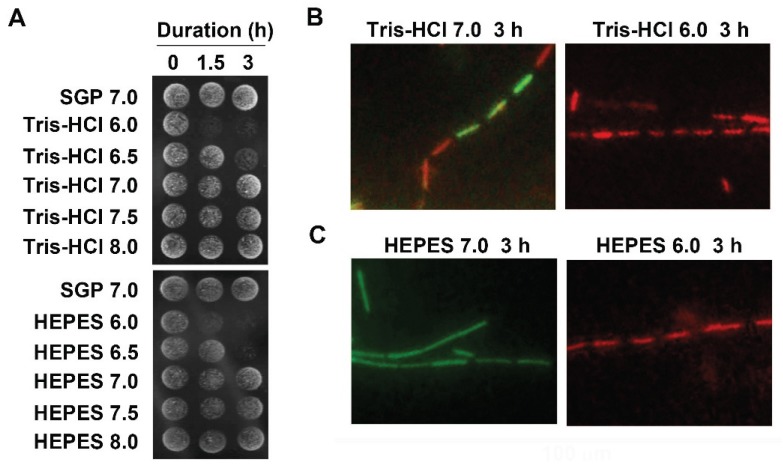
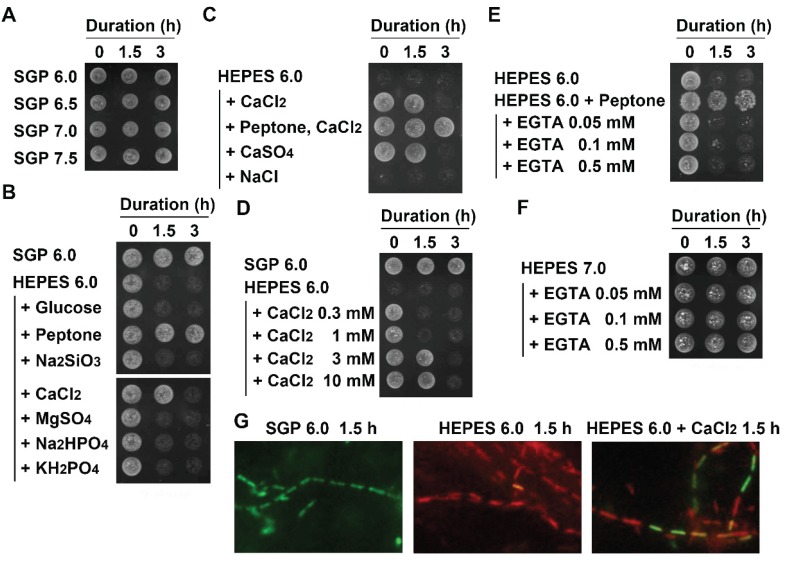
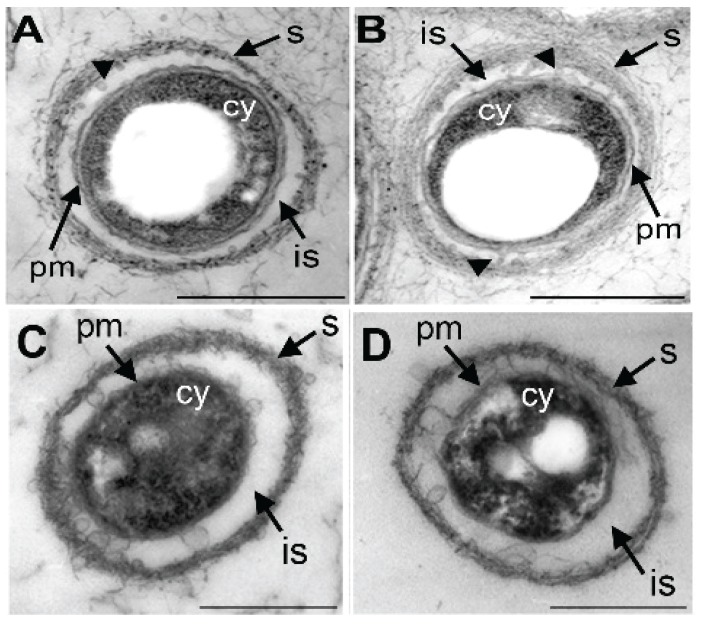
The genus Leptothrix, a type of Fe/Mn-oxidizing bacteria, is characterized by its formation of an extracellular and microtubular sheath. Although almost all sheaths harvested from natural aquatic environments are hollow, a few chained bacterial cells are occasionally seen within some sheaths of young stage. We previously reported that sheaths of Leptothrix sp. strain OUMS1 cultured in artificial media became hollow with aging due to spontaneous autolysis within the sheaths. In this study, we investigated environmental conditions that lead the OUMS1 cells to die. Treatment of the cells with ultrapure water or acidic buffers (pH 6.0) caused autolysis of the cells. Under these conditions, the plasma membrane and cytoplasm of cells were drastically damaged, resulting in leakage of intracellular electrolytes and relaxation of genomic DNA. The autolysis was suppressed by the presence of Ca2+. The hydrolysis of peptidoglycan by the lysozyme treatment similarly caused autolysis of the cells and was suppressed also by the presence of Ca2+. However, it remains unclear whether the acidic pH-dependent autolysis is attributable to damage of peptidoglycan. It was observed that L. discophora strain SP-6 cells also underwent autolysis when suspended in ultrapure water; it is however, uncertain whether this phenomenon is common among other members of the genus Leptothrix.
鞘铁细菌属(Leptothrix)是一种能够氧化铁和锰的细菌,其特征是形成细胞外微管鞘。尽管从自然水生环境中采集到的几乎所有鞘都是空心的,但在一些年轻阶段的鞘中偶尔会看到一些链状细菌细胞。我们之前曾报道过,在人工培养基中培养的鞘铁细菌属(Leptothrix)菌株 OUMS1 会随着老化而自发自溶,导致鞘变成空心。在这项研究中,我们研究了导致 OUMS1 细胞死亡的环境条件。用超纯水或酸性缓冲液(pH 值 6.0)处理细胞会导致细胞自溶。在这些条件下,细胞膜和细胞质受到严重破坏,导致细胞内电解质泄漏和基因组 DNA 松弛。钙离子的存在抑制了自溶。溶菌酶处理也会导致肽聚糖水解,从而导致细胞自溶,钙离子的存在也抑制了自溶。然而,尚不清楚酸性 pH 值依赖性自溶是否归因于肽聚糖的损伤。观察到 L. discophora 菌株 SP-6 细胞在悬浮于超纯水中时也会发生自溶;然而,尚不确定这种现象是否在鞘铁细菌属的其他成员中普遍存在。