O'Leary Brianne R, Fath Melissa A, Bellizzi Andrew M, Hrabe Jennifer E, Button Anna M, Allen Bryan G, Case Adam J, Altekruse Sean, Wagner Brett A, Buettner Garry R, Lynch Charles F, Hernandez Brenda Y, Cozen Wendy, Beardsley Robert A, Keene Jeffery, Henry Michael D, Domann Frederick E, Spitz Douglas R, Mezhir James J
Department of Surgery, University of Iowa, Iowa City, Iowa.
Department of Radiation Oncology, University of Iowa, Iowa City, Iowa.
Clin Cancer Res. 2015 Apr 1;21(7):1741-51. doi: 10.1158/1078-0432.CCR-14-1959. Epub 2015 Jan 29.
Pancreatic ductal adenocarcinoma (PDA) cells are known to produce excessive amounts of reactive oxygen species (ROS), particularly superoxide, which may contribute to the aggressive and refractory nature of this disease. Extracellular superoxide dismutase (EcSOD) is an antioxidant enzyme that catalyzes the dismutation of superoxide in the extracellular environment. This study tests the hypothesis that EcSOD modulates PDA growth and invasion by modifying the redox balance in PDA.
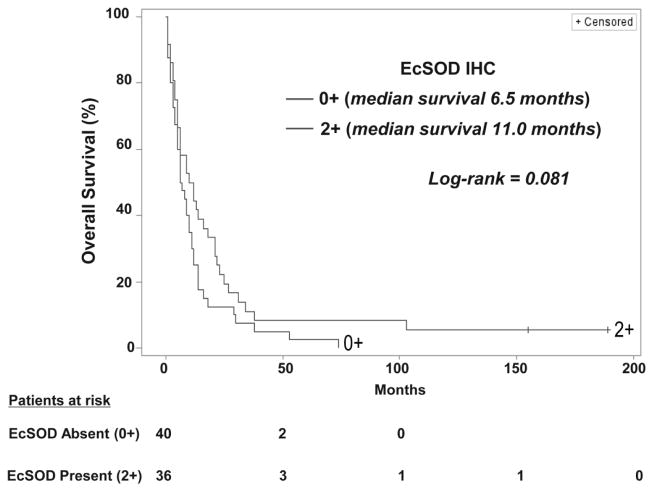
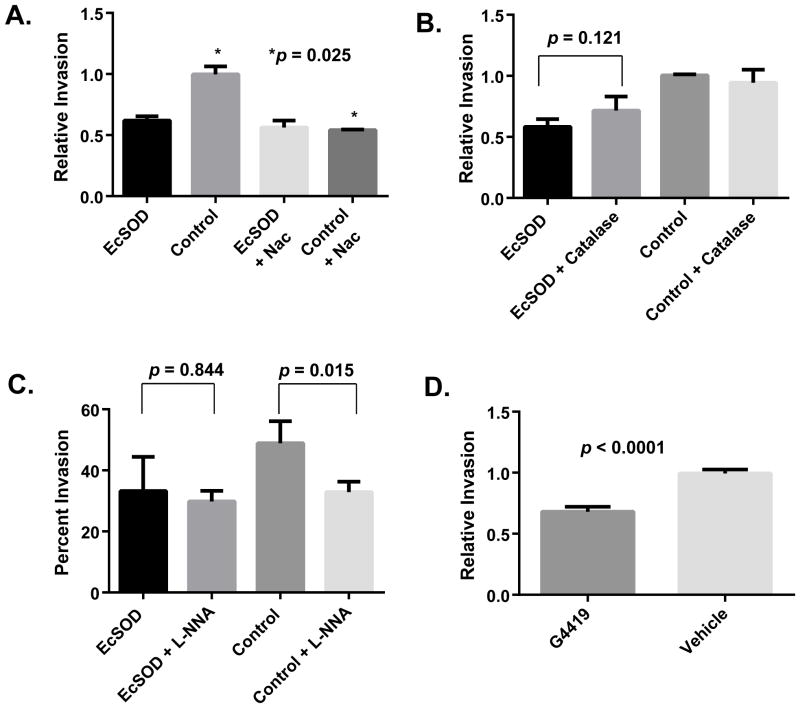
We evaluated the prognostic significance of EcSOD in a human tissue microarray (TMA) of patients with PDA. EcSOD overexpression was performed in PDA cell lines and animal models of disease. The impact of EcSOD on PDA cell lines was evaluated with Matrigel invasion in combination with a superoxide-specific SOD mimic and a nitric oxide synthase (NOS) inhibitor to determine the mechanism of action of EcSOD in PDA.
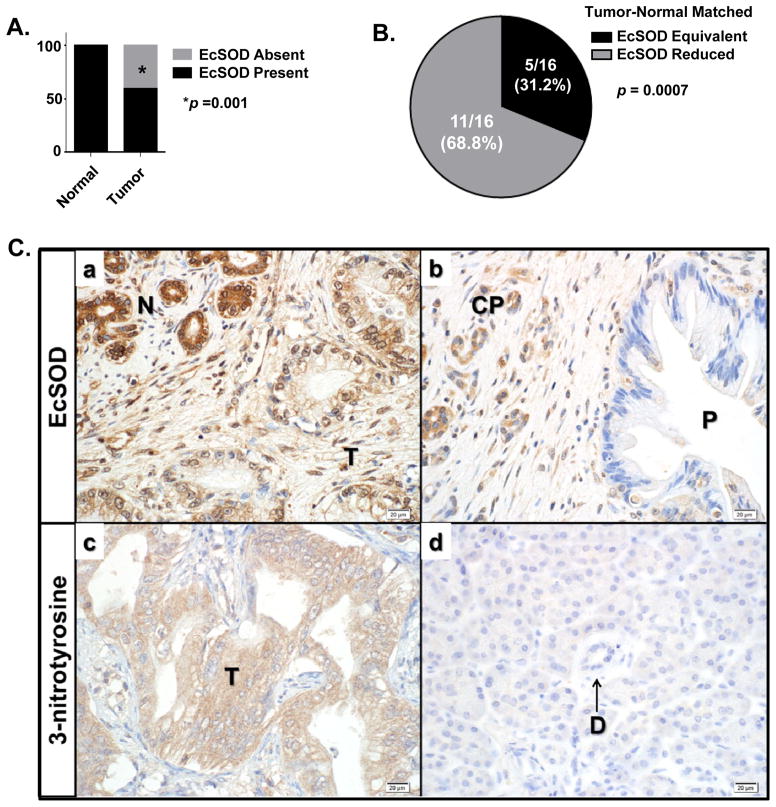
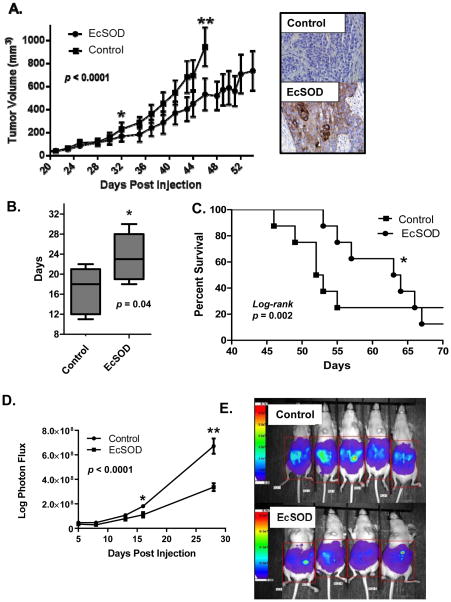
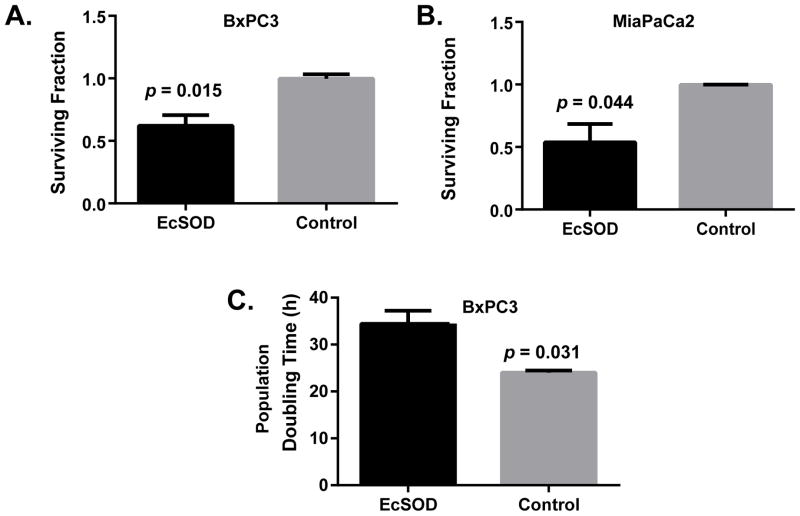
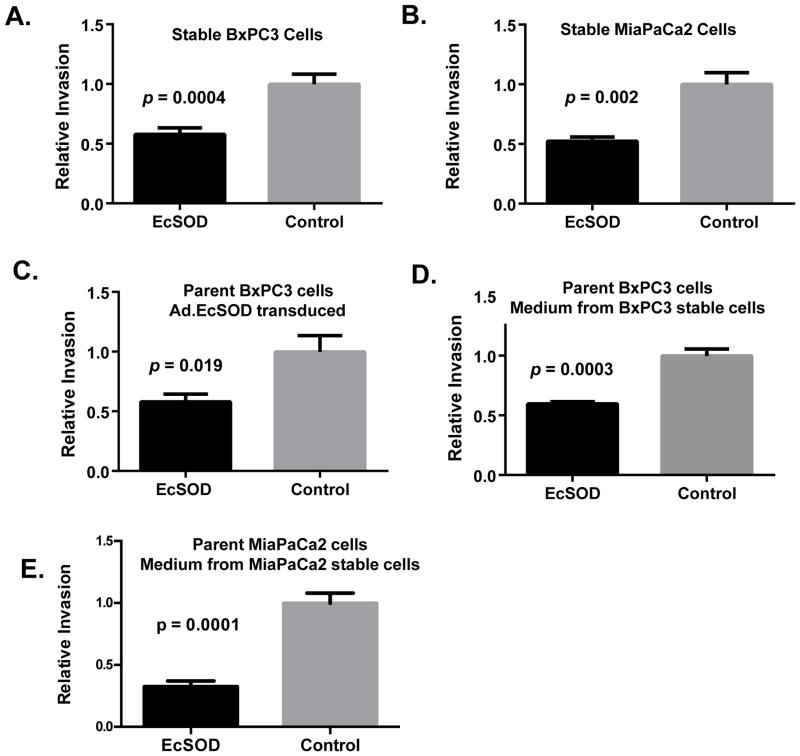
Loss of EcSOD expression is a common event in PDA, which correlated with worse disease biology. Overexpression of EcSOD in PDA cell lines resulted in decreased invasiveness that appeared to be related to reactions of superoxide with nitric oxide. Pancreatic cancer xenografts overexpressing EcSOD also demonstrated slower growth and peritoneal metastasis. Overexpression of EcSOD or treatment with a superoxide-specific SOD mimic caused significant decreases in PDA cell invasive capacity.
These results support the hypothesis that loss of EcSOD leads to increased reactions of superoxide with nitric oxide, which contributes to the invasive phenotype. These results allow for the speculation that superoxide dismutase mimetics might inhibit PDA progression in human clinical disease.
已知胰腺导管腺癌(PDA)细胞会产生过量的活性氧(ROS),尤其是超氧化物,这可能导致该疾病具有侵袭性和难治性。细胞外超氧化物歧化酶(EcSOD)是一种抗氧化酶,可催化细胞外环境中超氧化物的歧化反应。本研究检验了EcSOD通过改变PDA中的氧化还原平衡来调节PDA生长和侵袭的假说。
我们评估了EcSOD在PDA患者的人组织微阵列(TMA)中的预后意义。在PDA细胞系和疾病动物模型中进行了EcSOD的过表达。结合基质胶侵袭实验,使用超氧化物特异性SOD模拟物和一氧化氮合酶(NOS)抑制剂评估EcSOD对PDA细胞系的影响,以确定EcSOD在PDA中的作用机制。
EcSOD表达缺失在PDA中是常见现象,这与更差的疾病生物学行为相关。PDA细胞系中EcSOD的过表达导致侵袭性降低,这似乎与超氧化物和一氧化氮的反应有关。过表达EcSOD的胰腺癌异种移植瘤也显示出生长和腹膜转移较慢。EcSOD的过表达或用超氧化物特异性SOD模拟物处理导致PDA细胞侵袭能力显著降低。
这些结果支持了以下假说,即EcSOD的缺失导致超氧化物与一氧化氮的反应增加,这有助于形成侵袭性表型。这些结果使人推测超氧化物歧化酶模拟物可能会抑制人类临床疾病中PDA的进展。