Bhan Urvashi, Podsiad Amy B, Kovach Melissa A, Ballinger Megan N, Keshamouni Venkateshwar, Standiford Theodore J
Division of Pulmonary and Critical Care Medicine, Department of Medicine, University of Michigan Medical Center, Ann Arbor, Michigan, United States of America.
Division of Pulmonary and Critical Care Medicine, Department of Medicine, Ohio State University, Columbus, Ohio, United States of America.
PLoS One. 2015 Jan 30;10(1):e0114574. doi: 10.1371/journal.pone.0114574. eCollection 2015.
Post influenza pneumonia is a leading cause of mortality and morbidity, with mortality rates approaching 60% when bacterial infections are secondary to multi-drug resistant (MDR) pathogens. Staphylococcus aureus, in particular community acquired MRSA (cMRSA), has emerged as a leading cause of post influenza pneumonia.
Linezolid (LZD) prevents acute lung injury in murine model of post influenza bacterial pneumonia.
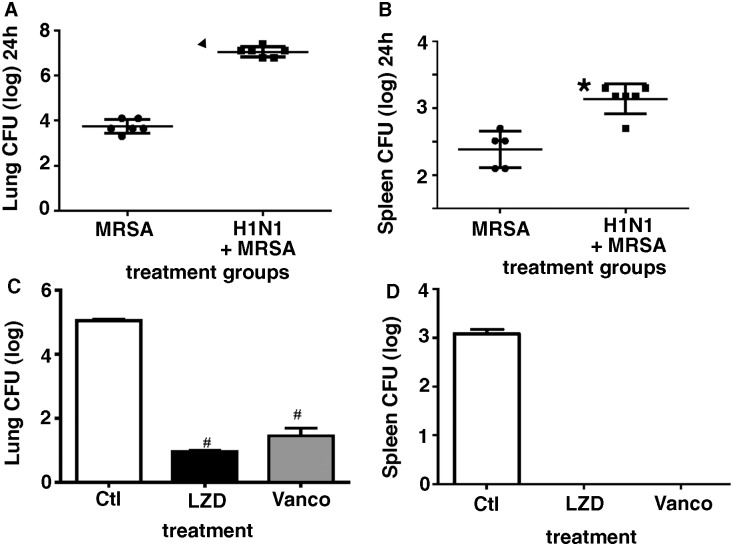
Mice were infected with HINI strain of influenza and then challenged with cMRSA at day 7, treated with antibiotics (LZD or Vanco) or vehicle 6 hours post bacterial challenge and lungs and bronchoalveolar lavage fluid (BAL) harvested at 24 hours for bacterial clearance, inflammatory cell influx, cytokine/chemokine analysis and assessment of lung injury.
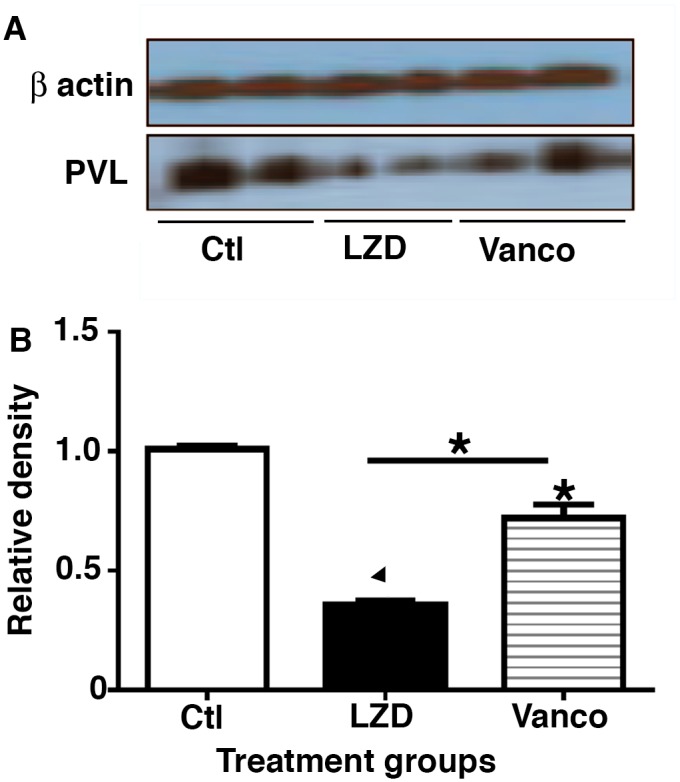
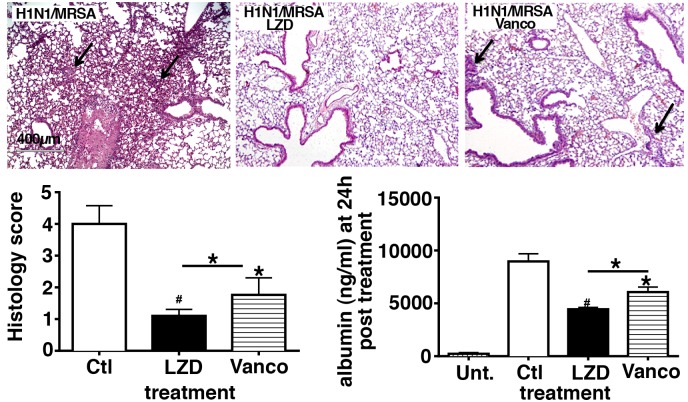
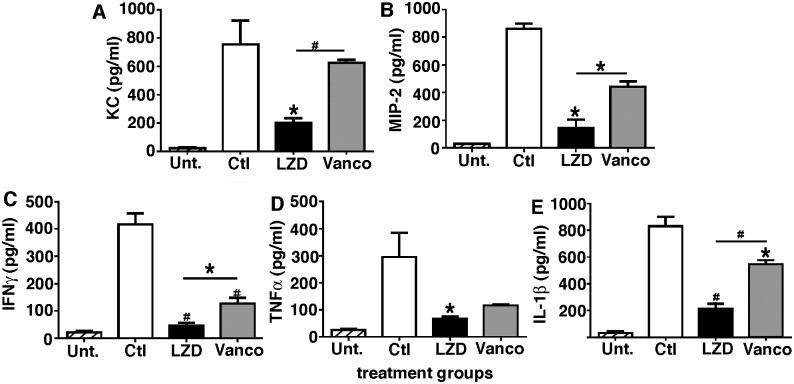
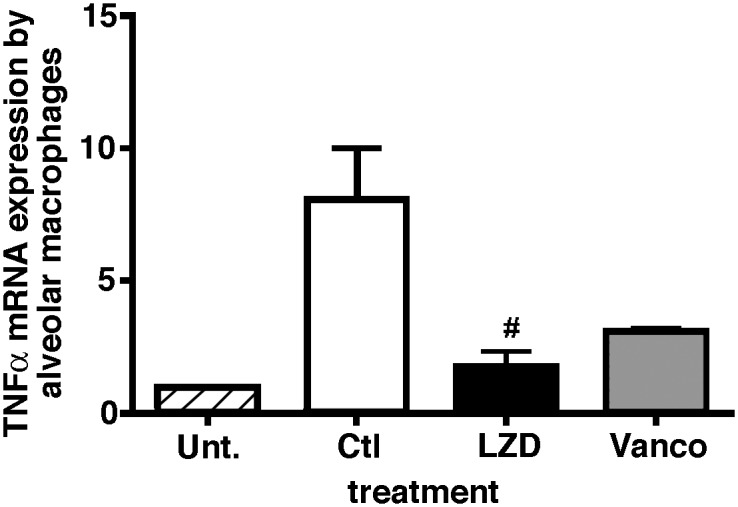
Mice treated with LZD or Vanco had lower bacterial burden in the lung and no systemic dissemination, as compared to the control (no antibiotic) group at 24 hours post bacterial challenge. As compared to animals receiving Vanco, LZD group had significantly lower numbers of neutrophils in the BAL (9×10(3) vs. 2.3×10(4), p < 0.01), which was associated with reduced levels of chemotactic chemokines and inflammatory cytokines KC, MIP-2, IFN-γ, TNF-α and IL-1β in the BAL. Interestingly, LZD treatment also protected mice from lung injury, as assessed by albumin concentration in the BAL post treatment with H1N1 and cMRSA when compared to vanco treatment. Moreover, treatment with LZD was associated with significantly lower levels of PVL toxin in lungs.
Linezolid has unique immunomodulatory effects on host inflammatory response and lung injury in a murine model of post-viral cMRSA pneumonia.
流感后肺炎是导致死亡和发病的主要原因,当继发于多重耐药(MDR)病原体的细菌感染时,死亡率接近60%。金黄色葡萄球菌,尤其是社区获得性耐甲氧西林金黄色葡萄球菌(cMRSA),已成为流感后肺炎的主要病因。
利奈唑胺(LZD)可预防流感后细菌性肺炎小鼠模型中的急性肺损伤。
用HINI流感病毒株感染小鼠,然后在第7天用cMRSA进行攻击,在细菌攻击后6小时用抗生素(LZD或万古霉素)或赋形剂治疗,并在24小时时采集肺和支气管肺泡灌洗液(BAL),用于细菌清除、炎症细胞流入、细胞因子/趋化因子分析以及肺损伤评估。
与细菌攻击后24小时的对照组(未用抗生素)相比,用LZD或万古霉素治疗的小鼠肺内细菌负荷较低,且无全身播散。与接受万古霉素的动物相比,LZD组BAL中的中性粒细胞数量显著减少(9×10³对2.3×10⁴,p<0.01),这与BAL中趋化趋化因子和炎症细胞因子KC、MIP-2、IFN-γ、TNF-α和IL-1β水平降低有关。有趣的是,与万古霉素治疗相比,通过H1N1和cMRSA治疗后BAL中的白蛋白浓度评估,LZD治疗还可保护小鼠免受肺损伤。此外,LZD治疗与肺内PVL毒素水平显著降低有关。
在病毒后cMRSA肺炎小鼠模型中,利奈唑胺对宿主炎症反应和肺损伤具有独特的免疫调节作用。