Institute of Medical Microbiology, University Hospital of Münster, Germany.
J Infect Dis. 2012 Oct 1;206(7):1138-48. doi: 10.1093/infdis/jis468. Epub 2012 Jul 26.
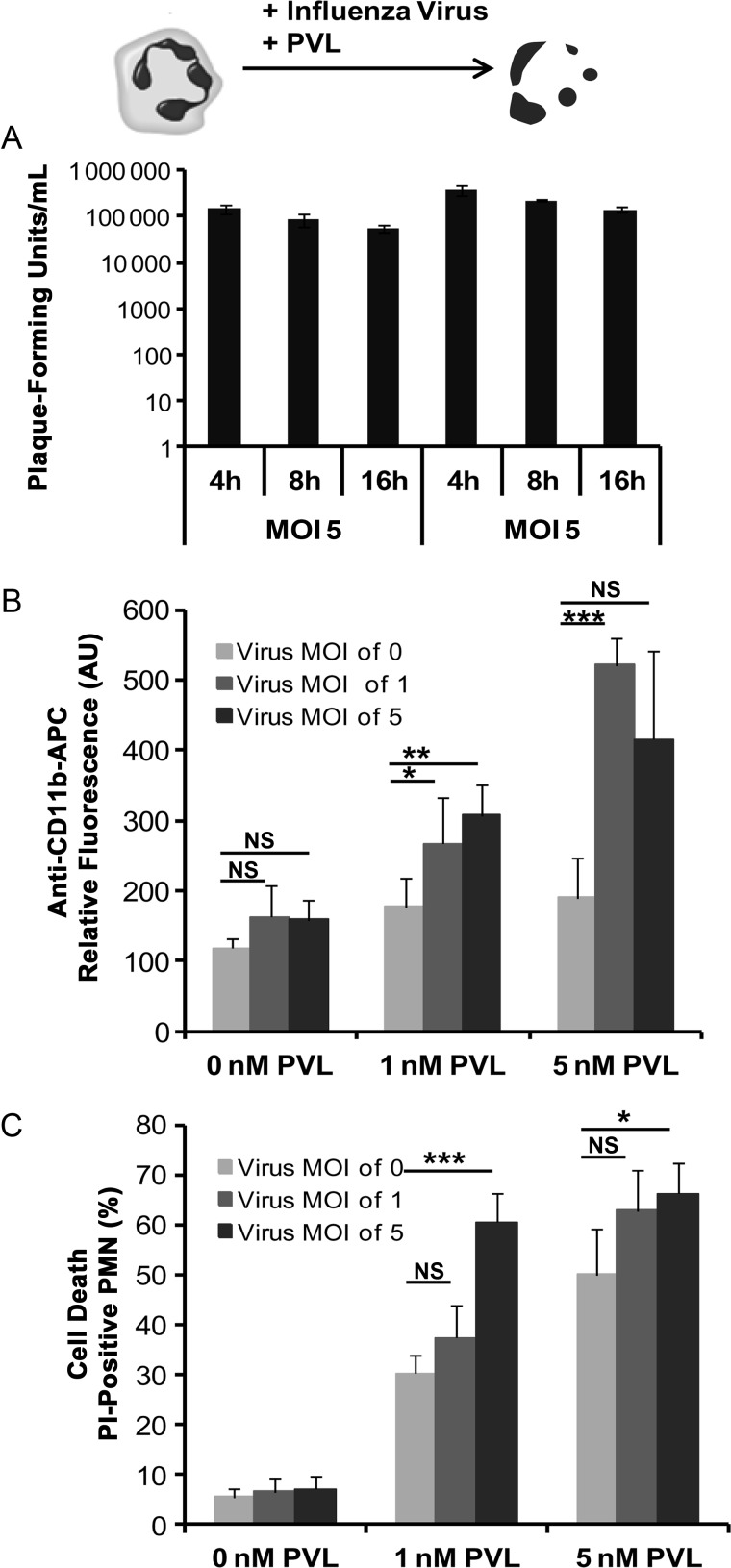
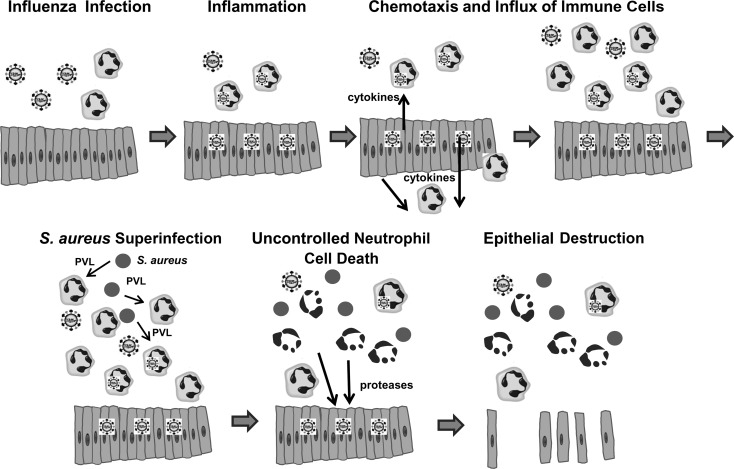
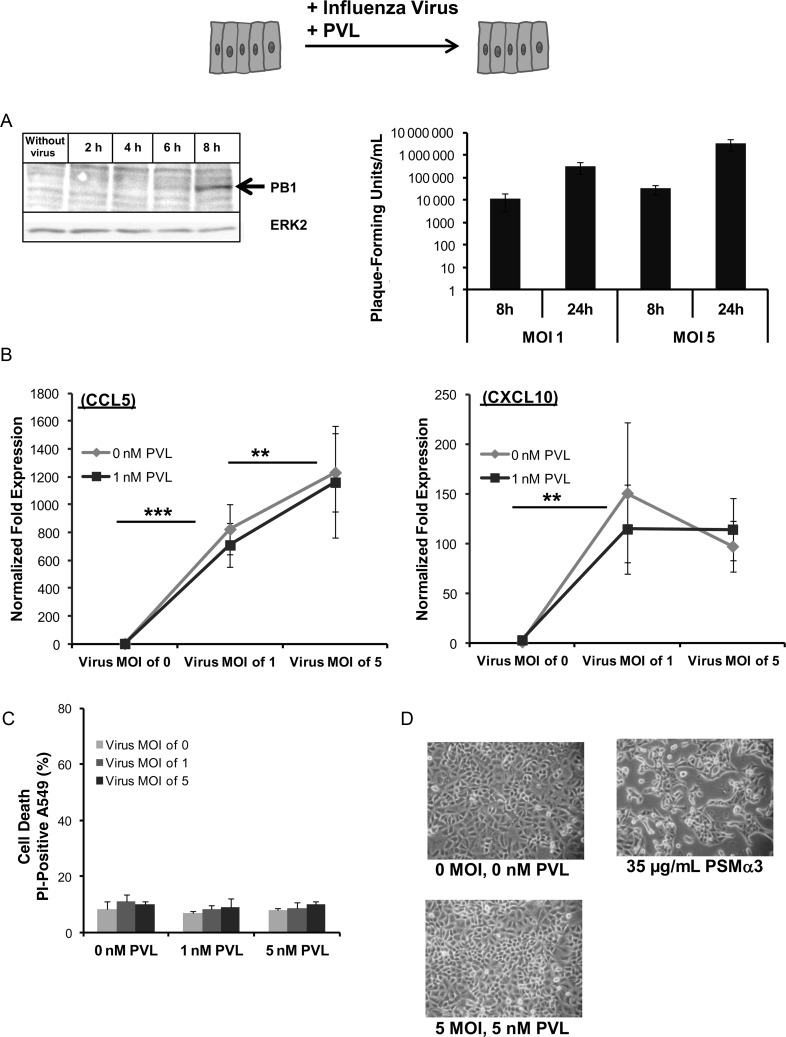
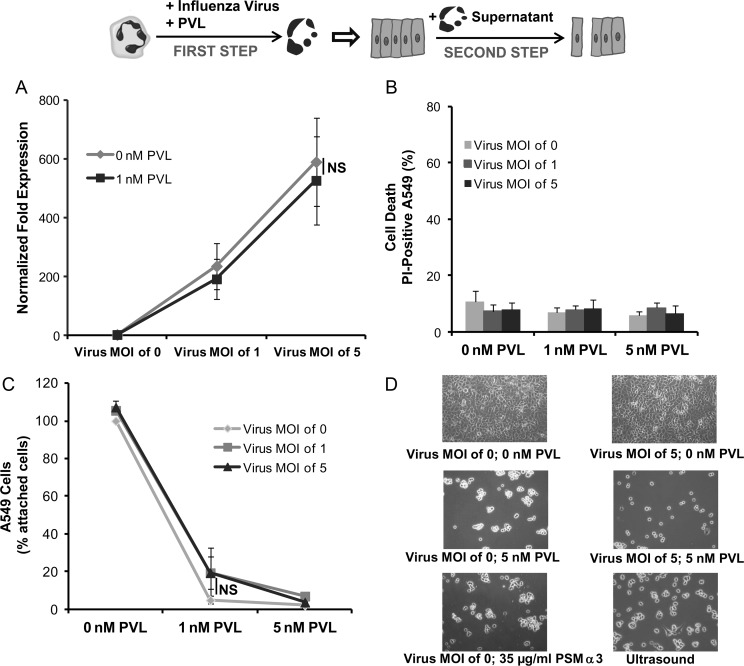
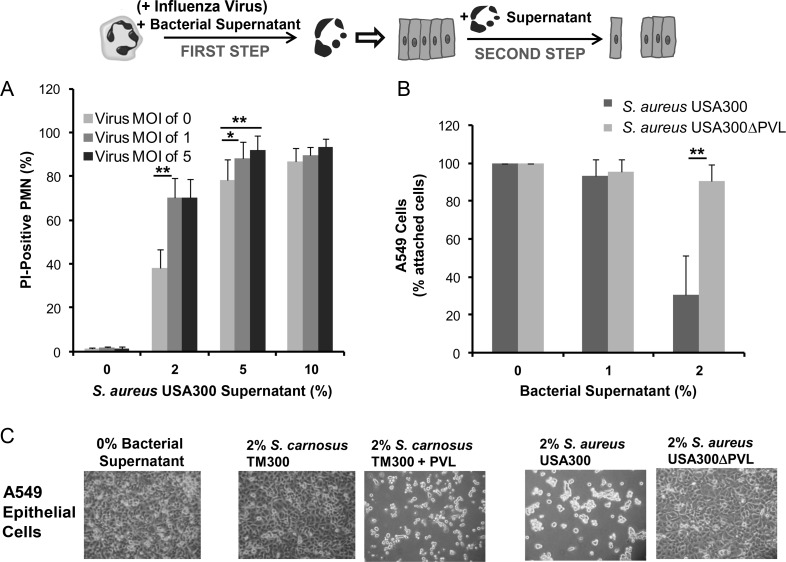
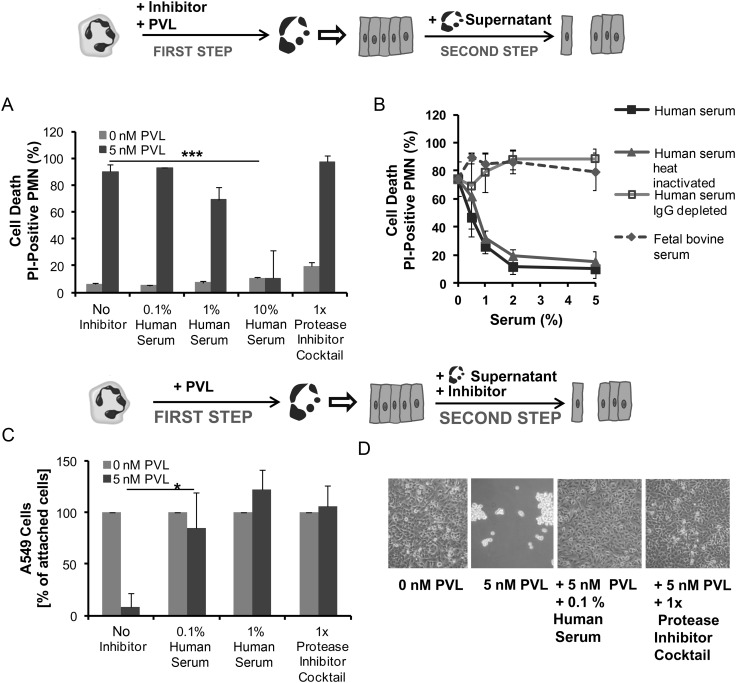
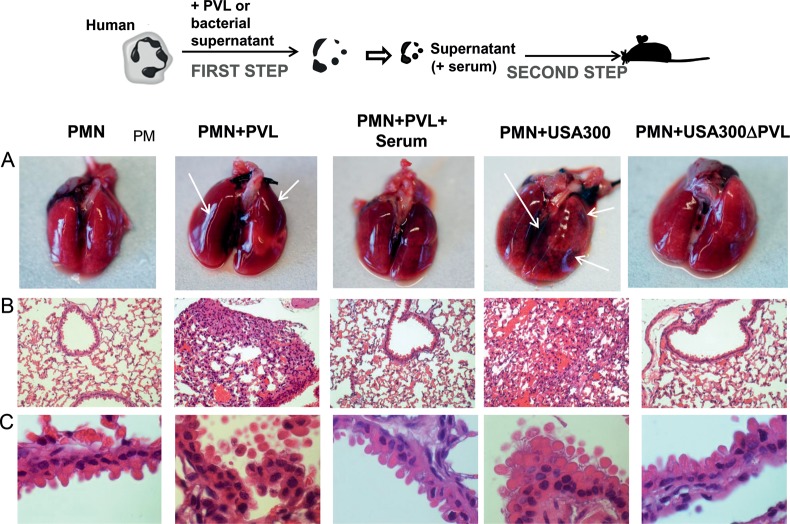
Staphylococcus aureus necrotizing pneumonia is a life-threatening disease that is frequently preceded by influenza infection. The S. aureus toxin Panton-Valentine leukocidin (PVL) is most likely causative for necrotizing diseases, but the precise pathogenic mechanisms of PVL and a possible contribution of influenza virus remain to be elucidated. In this study, we present a model that explains how influenza virus and PVL act together to cause necrotizing pneumonia: an influenza infection activates the lung epithelium to produce chemoattractants for neutrophils. Upon superinfection with PVL-expressing S. aureus, the recruited neutrophils are rapidly killed by PVL, resulting in uncontrolled release of neutrophil proteases that damage the airway epithelium. The host counteracts this pathogen strategy by generating PVL-neutralizing antibodies and by neutralizing the released proteases via protease inhibitors present in the serum. These findings explain why necrotizing infections mainly develop in serum-free spaces (eg, pulmonary alveoli) and open options for new therapeutic approaches.
金黄色葡萄球菌坏死性肺炎是一种危及生命的疾病,常由流感感染引起。金黄色葡萄球菌毒素潘顿-瓦伦丁白细胞素(PVL)很可能是导致坏死性疾病的原因,但 PVL 的确切发病机制以及流感病毒的可能作用仍有待阐明。在本研究中,我们提出了一个模型,解释了流感病毒和 PVL 如何协同作用导致坏死性肺炎:流感感染激活肺上皮细胞产生趋化因子吸引中性粒细胞。在表达 PVL 的金黄色葡萄球菌继发感染时,募集的中性粒细胞被 PVL 迅速杀死,导致中性粒细胞蛋白酶失控释放,破坏气道上皮。宿主通过产生 PVL 中和抗体以及通过血清中存在的蛋白酶抑制剂中和释放的蛋白酶来对抗这种病原体策略。这些发现解释了为什么坏死性感染主要发生在无血清空间(例如,肺泡)中,并为新的治疗方法提供了选择。