Montagna Matteo, Chouaia Bessem, Mazza Giuseppe, Prosdocimi Erica Maria, Crotti Elena, Mereghetti Valeria, Vacchini Violetta, Giorgi Annamaria, De Biase Alessio, Longo Santi, Cervo Rita, Lozzia Giuseppe Carlo, Alma Alberto, Bandi Claudio, Daffonchio Daniele
Dipartimento di Scienze Agrarie e Ambientali, Università degli Studi di Milano, Milano, Italy.
Dipartimento di Scienze per gli Alimenti, la Nutrizione, l'Ambiente, Università degli Studi di Milano, Milano, Italy.
PLoS One. 2015 Jan 30;10(1):e0117439. doi: 10.1371/journal.pone.0117439. eCollection 2015.
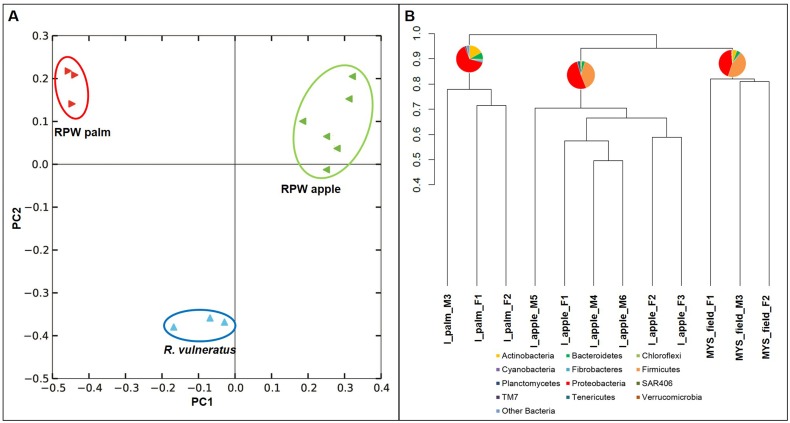
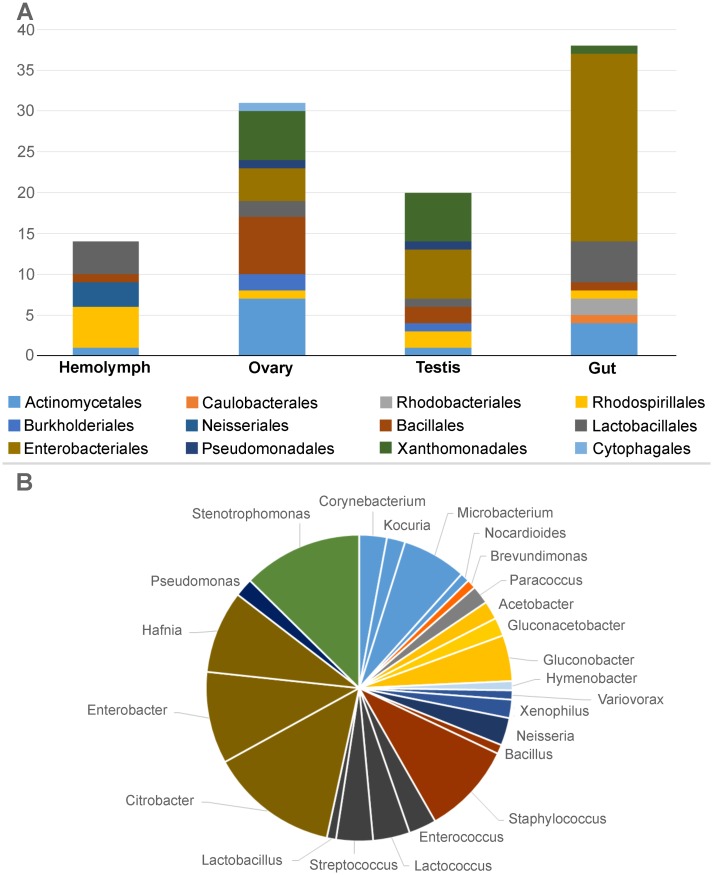
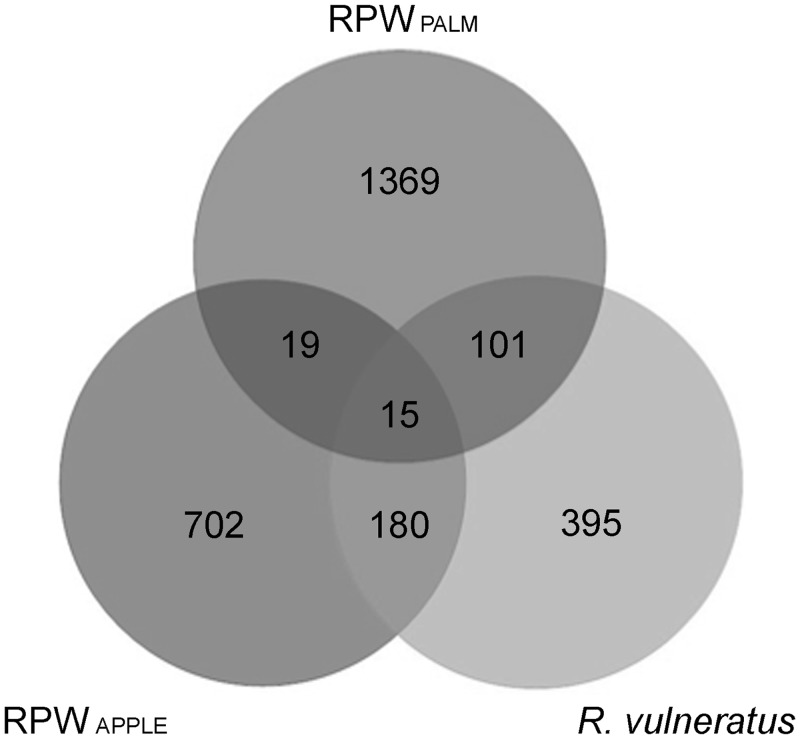
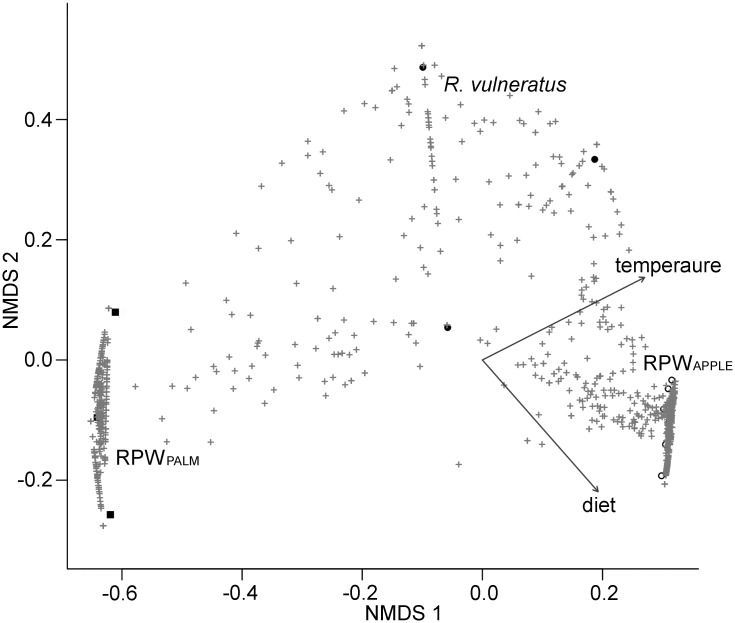
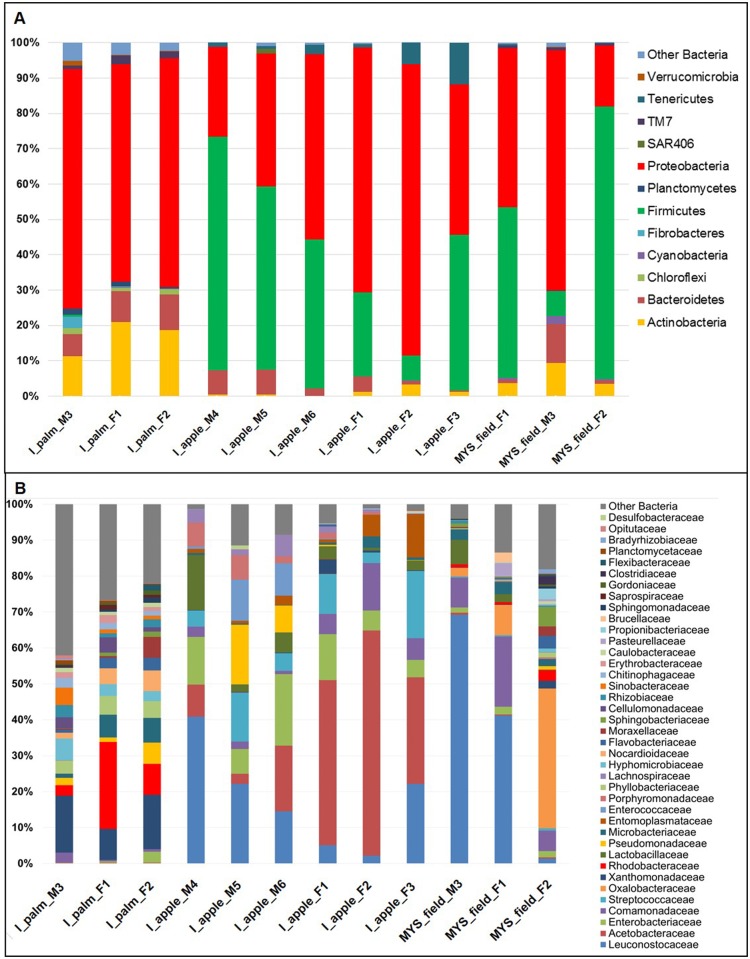
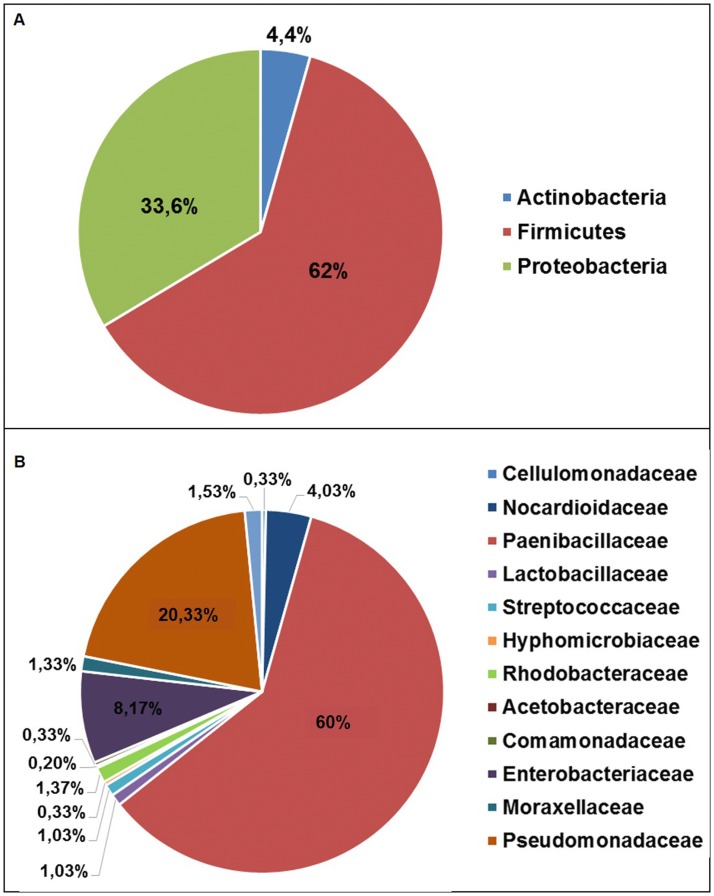
Rhynchophorus ferrugineus, also known as the red palm weevil, is regarded as the major pest of palm trees. Although studies of the microbiota associated with this species have been performed in recent years, little attention has been dedicated to the influence of the diet in shaping the host bacterial community. Here, we investigated the influence of food sources (i.e. palm tissues vs apple based substrate) on the microbial diversity associated with RPW, which was compared with the microbiota associated with wild individuals of the sister species Rhynchophorus vulneratus. The bacterial characterization was performed using a culture independent approach, i.e. the 16S rRNA pyrotag, and a culture dependent approach for a subset of the samples, in order to obtain bacterial isolates from RPW tissues. The bacterial community appeared significantly influenced by diet. Proteobacteria resulted to be the most abundant clade and was present in all the specimens of the three examined weevil groups. Within Proteobacteria, Enterobacteriaceae were identified in all the organs analysed, including hemolymph and reproductive organs. The apple-fed RPWs and the wild R. vulneratus showed a second dominant taxon within Firmicutes that was scarcely present in the microbiota associated with palm-fed RPWs. A comparative analysis on the bacteria associated with the palm tissues highlighted that 12 bacterial genera out of the 13 identified in the plant tissues were also present in weevils, thus indicating that palm tissues may present a source for bacterial acquisition.
红棕象甲,也被称为红棕榈象虫,被视为棕榈树的主要害虫。尽管近年来已经对与该物种相关的微生物群进行了研究,但对于饮食在塑造宿主细菌群落方面的影响却很少有人关注。在这里,我们研究了食物来源(即棕榈组织与苹果基底物)对与红棕象甲相关的微生物多样性的影响,并将其与姊妹物种锈色棕榈象野生个体相关的微生物群进行了比较。使用非培养方法,即16S rRNA焦磷酸测序标签,以及对一部分样本采用培养方法来进行细菌特征分析,以便从红棕象甲组织中获得细菌分离株。细菌群落似乎受到饮食的显著影响。变形菌门是最丰富的进化枝,存在于所检查的三个象甲类群的所有标本中。在变形菌门中,在包括血淋巴和生殖器官在内的所有分析器官中都鉴定出了肠杆菌科。以苹果为食的红棕象甲和野生锈色棕榈象在厚壁菌门中显示出第二个优势分类群,而在以棕榈为食的红棕象甲相关的微生物群中几乎不存在。对与棕榈组织相关的细菌进行的比较分析突出表明,在植物组织中鉴定出的13个细菌属中有12个也存在于象甲中,因此表明棕榈组织可能是细菌获取的一个来源。