Hayakawa Tomohisa, Iwai Mika, Aoki Satoshi, Takimoto Koichi, Maruyama Mitsuo, Maruyama Wakako, Motoyama Noboru
Department of Cognitive Brain Science, Research Institute, National Center for Geriatrics and Gerontology, Obu, Aichi, Japan; Department of Aging Research, Nagoya University Graduate School of Medicine, Nagoya, Aichi, Japan.
Department of Cognitive Brain Science, Research Institute, National Center for Geriatrics and Gerontology, Obu, Aichi, Japan.
PLoS One. 2015 Jan 30;10(1):e0116480. doi: 10.1371/journal.pone.0116480. eCollection 2015.
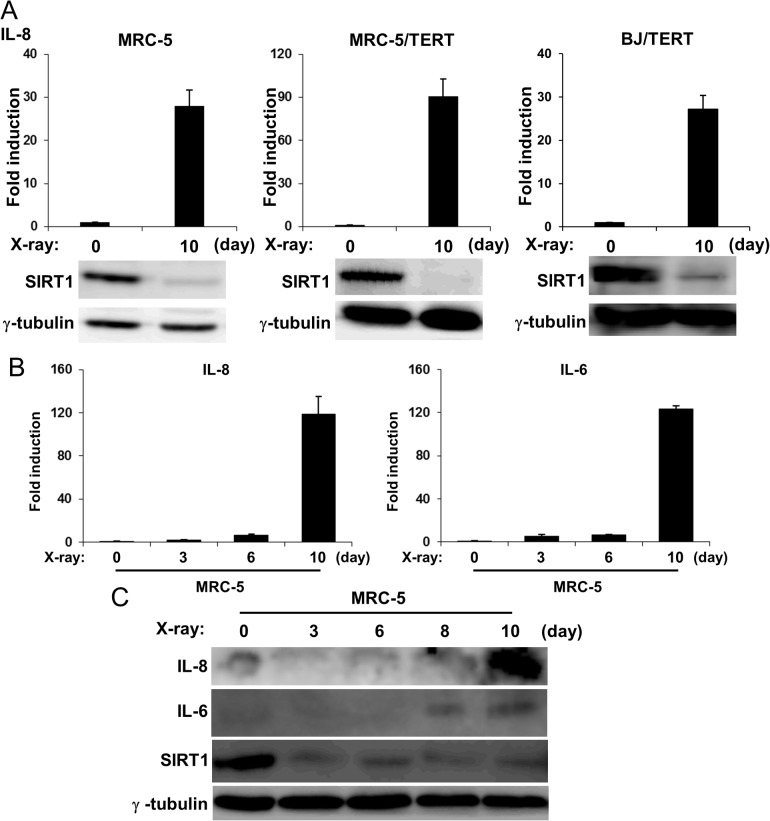
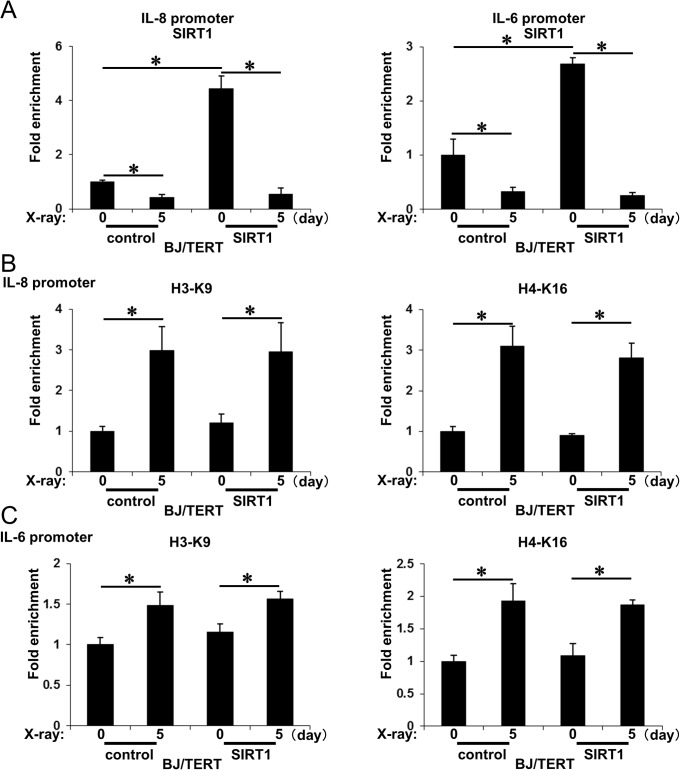
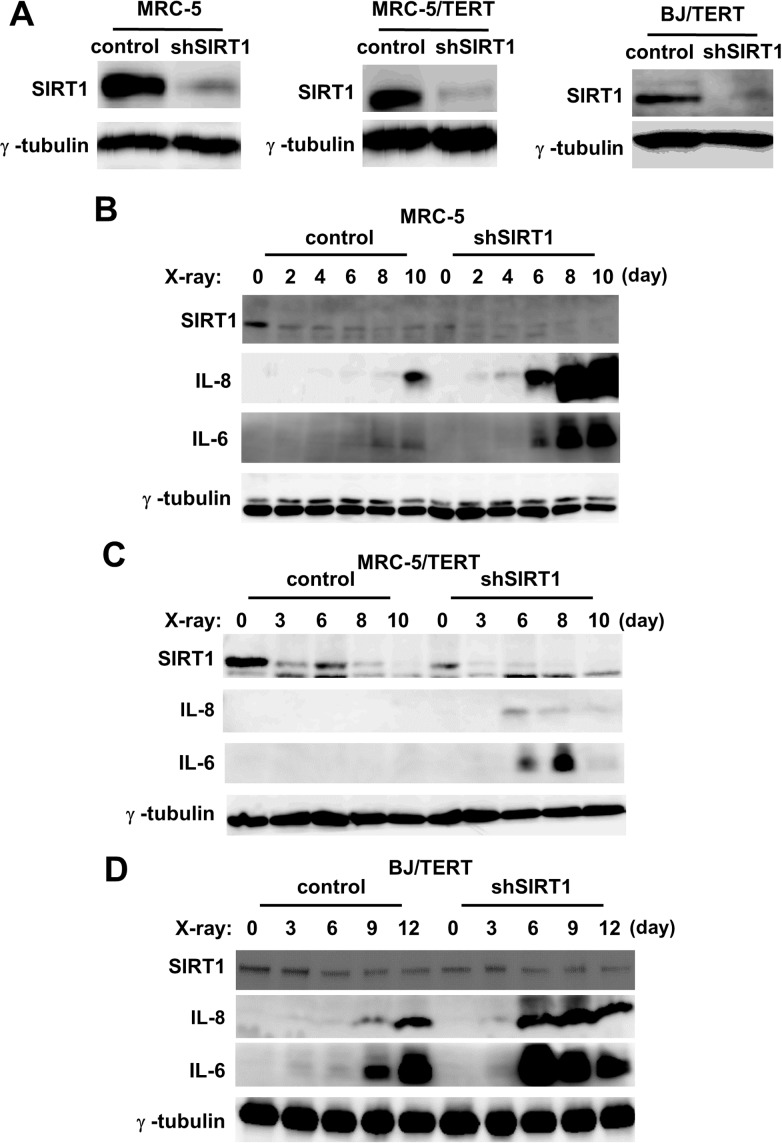
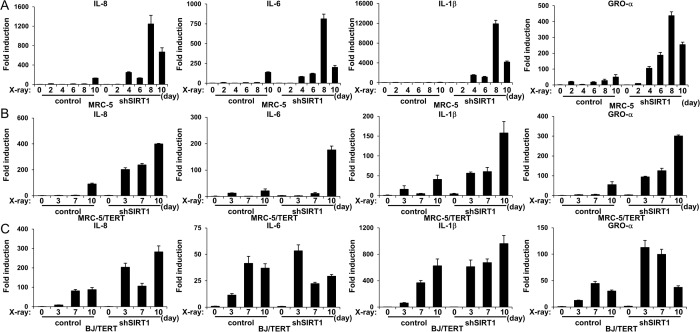
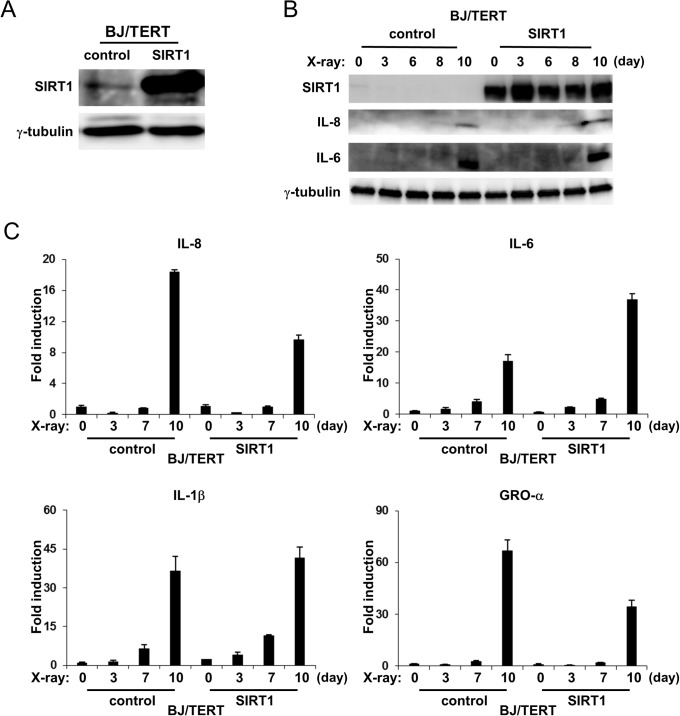
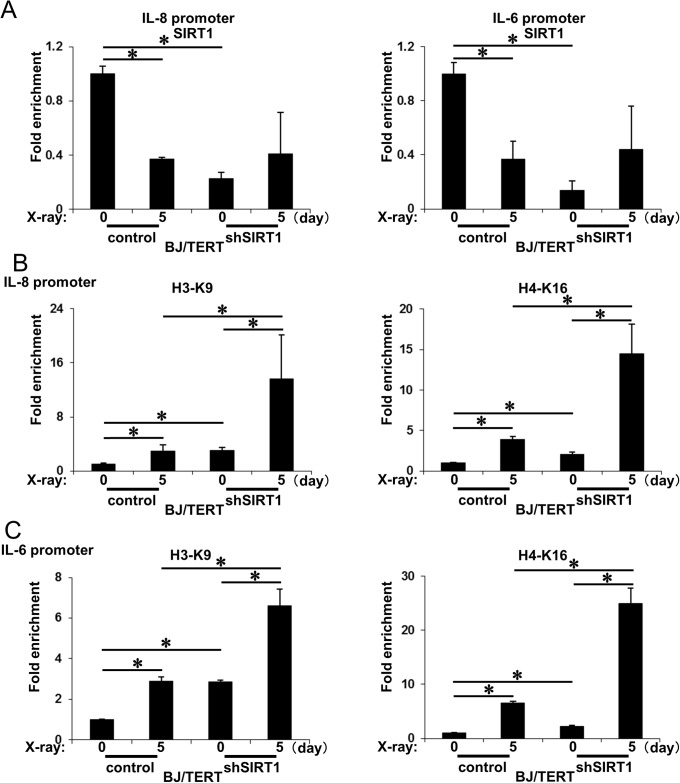
Senescent cells develop a pro-inflammatory response termed the senescence-associated secretory phenotype (SASP). As many SASP components affect surrounding cells and alter their microenvironment, SASP may be a key phenomenon in linking cellular senesence with individual aging and age-related diseases. We herein demonstrated that the expression of Sirtuin1 (SIRT1) was decreased and the expression of SASP components was reciprocally increased during cellular senescence. The mRNAs and proteins of SASP components, such as IL-6 and IL-8, quickly accumulated in SIRT1-depleted cells, and the levels of these factors were also higher than those in control cells, indicating that SIRT1 negatively regulated the expression of SASP factors at the transcriptional level. SIRT1 bound to the promoter regions of IL-8 and IL-6, but dissociated from them during cellular senescence. The acetylation of Histone H3 (K9) and H4 (K16) of the IL-8 and IL-6 promoter regions gradually increased during cellular senescence. In SIRT1-depleted cells, the acetylation levels of these regions were already higher than those in control cells in the pre-senescent stage. Moreover, these acetylation levels in SIRT1-depleted cells were significantly higher than those in control cells during cellular senescence. These results suggest that SIRT1 repressed the expression of SASP factors through the deacetylation of histones in their promoter regions.
衰老细胞会产生一种称为衰老相关分泌表型(SASP)的促炎反应。由于许多SASP成分会影响周围细胞并改变其微环境,SASP可能是将细胞衰老与个体衰老及年龄相关疾病联系起来的关键现象。我们在此证明,在细胞衰老过程中,沉默调节蛋白1(SIRT1)的表达降低,而SASP成分的表达则相应增加。SASP成分如白细胞介素-6(IL-6)和白细胞介素-8(IL-8)的mRNA和蛋白质在SIRT1缺失的细胞中迅速积累,且这些因子的水平也高于对照细胞,这表明SIRT1在转录水平上负向调节SASP因子的表达。SIRT1与IL-8和IL-6的启动子区域结合,但在细胞衰老过程中与之解离。在细胞衰老过程中,IL-8和IL-6启动子区域的组蛋白H3(K9)和H4(K16)的乙酰化逐渐增加。在SIRT1缺失的细胞中,这些区域的乙酰化水平在衰老前期就已经高于对照细胞。此外,在细胞衰老过程中,SIRT1缺失细胞中的这些乙酰化水平显著高于对照细胞。这些结果表明,SIRT1通过去乙酰化其启动子区域的组蛋白来抑制SASP因子的表达。