Liu Nan, Zhang Zhuqiang, Wu Hui, Jiang Yonghua, Meng Lingjun, Xiong Jun, Zhao Zuodong, Zhou Xiaohua, Li Jia, Li Hong, Zheng Yong, Chen She, Cai Tao, Gao Shaorong, Zhu Bing
College of Life Sciences, Beijing Normal University, Beijing 100875, China; National Institute of Biological Sciences, Beijing 102206, China; National Laboratory of Biomacromolecules, Institute of Biophysics, Chinese Academy of Sciences, Beijing 100101, China;
National Laboratory of Biomacromolecules, Institute of Biophysics, Chinese Academy of Sciences, Beijing 100101, China;
Genes Dev. 2015 Feb 15;29(4):379-93. doi: 10.1101/gad.254425.114. Epub 2015 Jan 30.
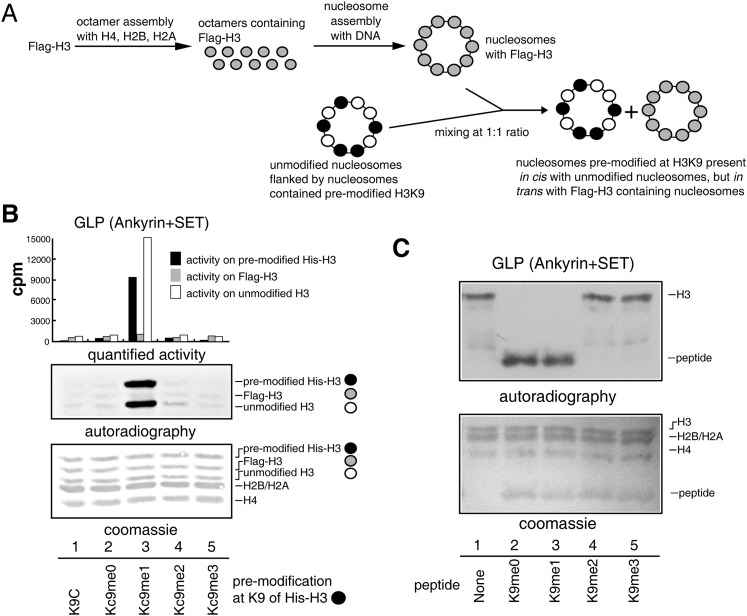
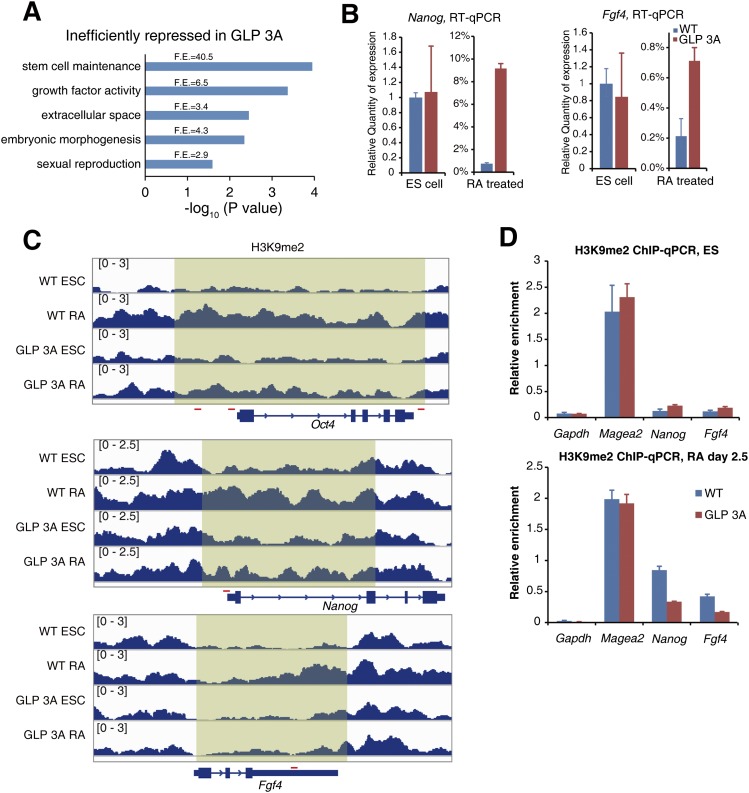
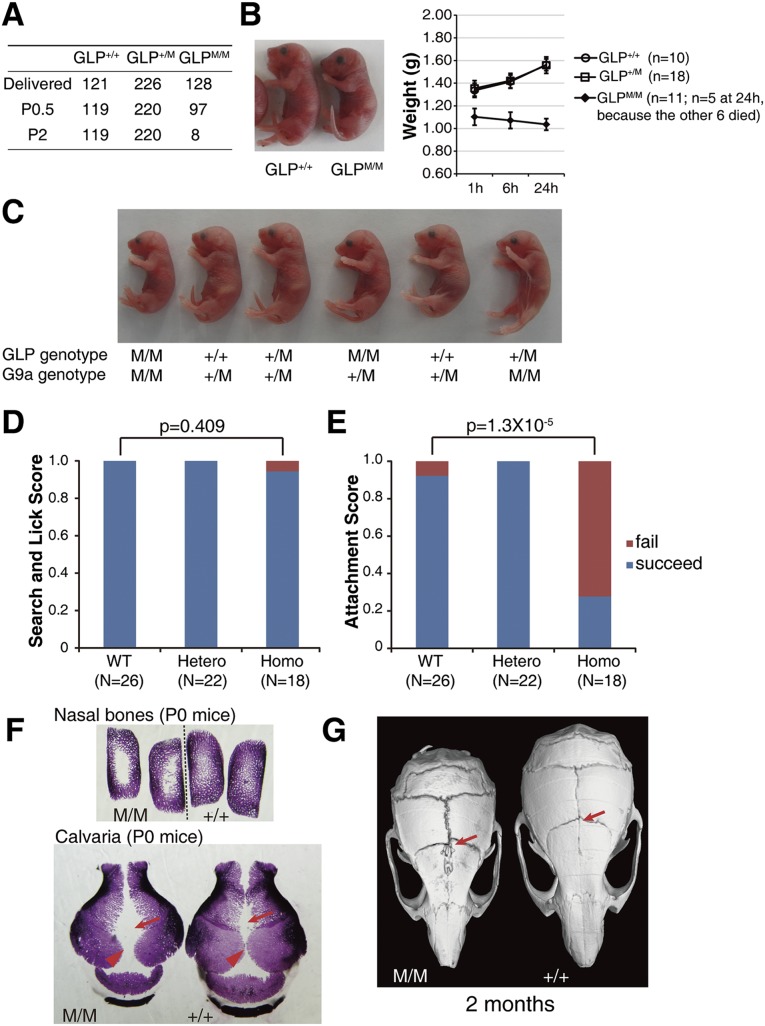
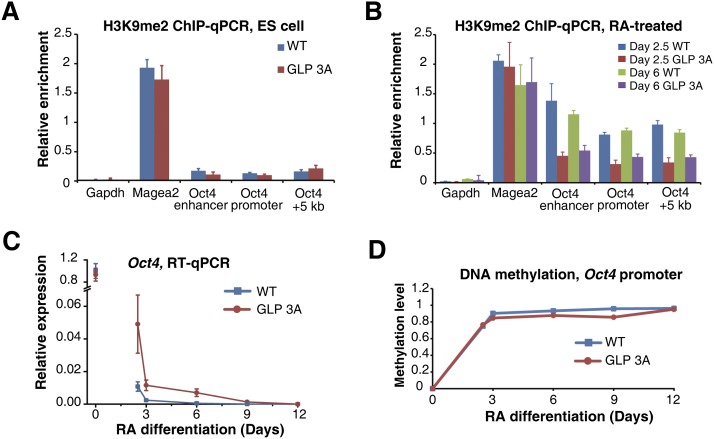
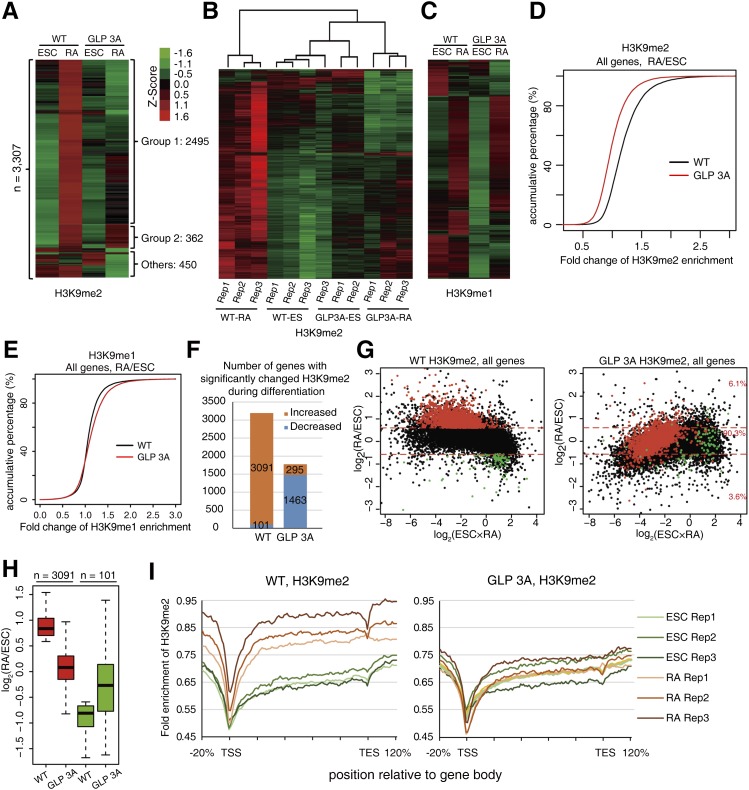
GLP and G9a are major H3K9 dimethylases and are essential for mouse early embryonic development. GLP and G9a both harbor ankyrin repeat domains that are capable of binding H3K9 methylation. However, the functional significance of their recognition of H3K9 methylation is unknown. Here, we report that the histone methyltransferase activities of GLP and G9a are stimulated by neighboring nucleosomes that are premethylated at H3K9. These stimulation events function in cis and are dependent on the H3K9 methylation binding activities of ankyrin repeat domains of GLP and G9a. Disruption of the H3K9 methylation-binding activity of GLP in mice causes growth retardation of embryos, ossification defects of calvaria, and postnatal lethality due to starvation of the pups. In mouse embryonic stem cells (ESCs) harboring a mutant GLP that lacks H3K9me1-binding activity, critical pluripotent genes, including Oct4 and Nanog, display inefficient establishment of H3K9me2 and delayed gene silencing during differentiation. Collectively, our study reveals a new activation mechanism for GLP and G9a that plays an important role in ESC differentiation and mouse viability.
GLP和G9a是主要的H3K9二甲基化酶,对小鼠早期胚胎发育至关重要。GLP和G9a都含有能够结合H3K9甲基化的锚蛋白重复结构域。然而,它们识别H3K9甲基化的功能意义尚不清楚。在此,我们报道GLP和G9a的组蛋白甲基转移酶活性受到在H3K9处预先甲基化的相邻核小体的刺激。这些刺激事件以顺式发挥作用,并依赖于GLP和G9a的锚蛋白重复结构域的H3K9甲基化结合活性。破坏小鼠中GLP的H3K9甲基化结合活性会导致胚胎生长迟缓、颅盖骨化缺陷以及幼崽因饥饿而产后死亡。在携带缺乏H3K9me1结合活性的突变GLP的小鼠胚胎干细胞(ESC)中,包括Oct4和Nanog在内的关键多能基因在分化过程中显示出H3K9me2建立效率低下和基因沉默延迟。总的来说,我们的研究揭示了GLP和G9a的一种新的激活机制,该机制在ESC分化和小鼠生存能力中起重要作用。