Takahashi Tetsuyuki, Uehara Hisanori, Ogawa Hirohisa, Umemoto Hitomi, Bando Yoshimi, Izumi Keisuke
Department of Molecular and Environmental Pathology, Institute of Health Biosciences, University of Tokushima Graduate School, Tokushima, Japan.
Division of Pathology, Tokushima University Hospital, Tokushima, Japan.
Oncotarget. 2015 Mar 10;6(7):4829-44. doi: 10.18632/oncotarget.3104.
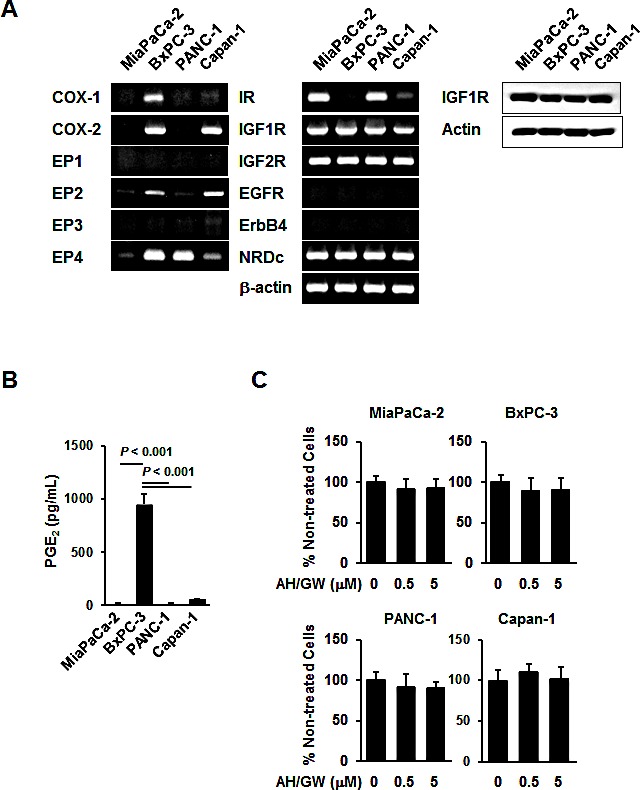
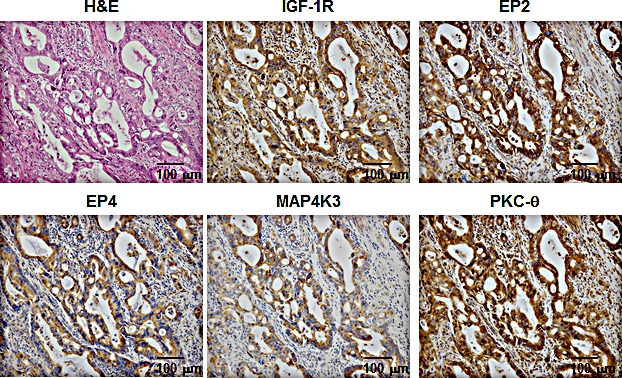
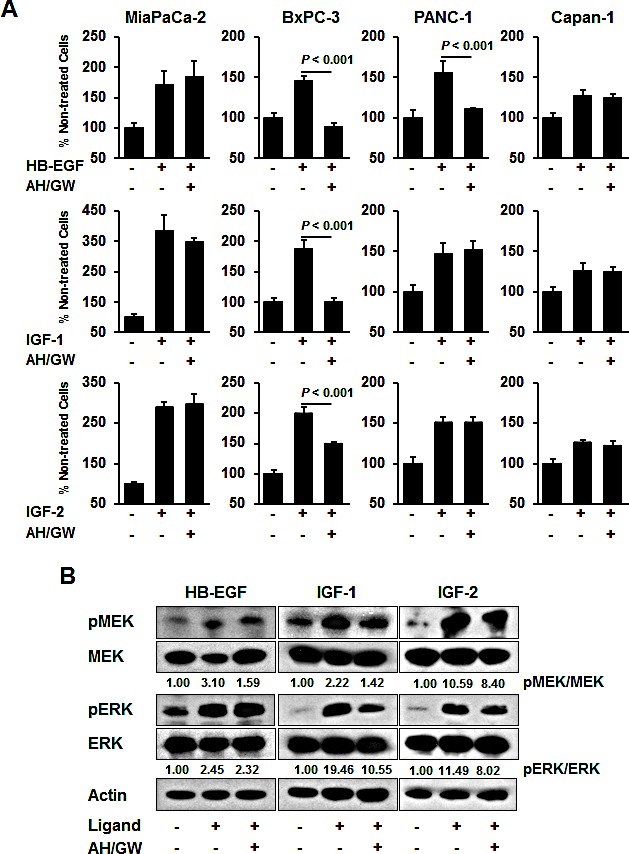
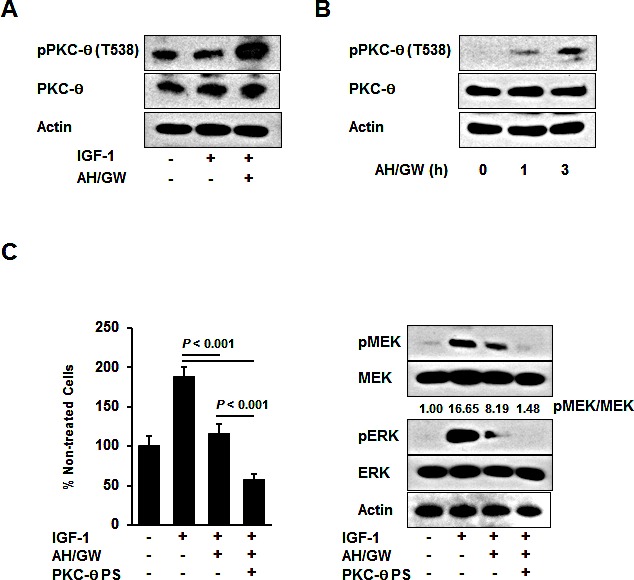
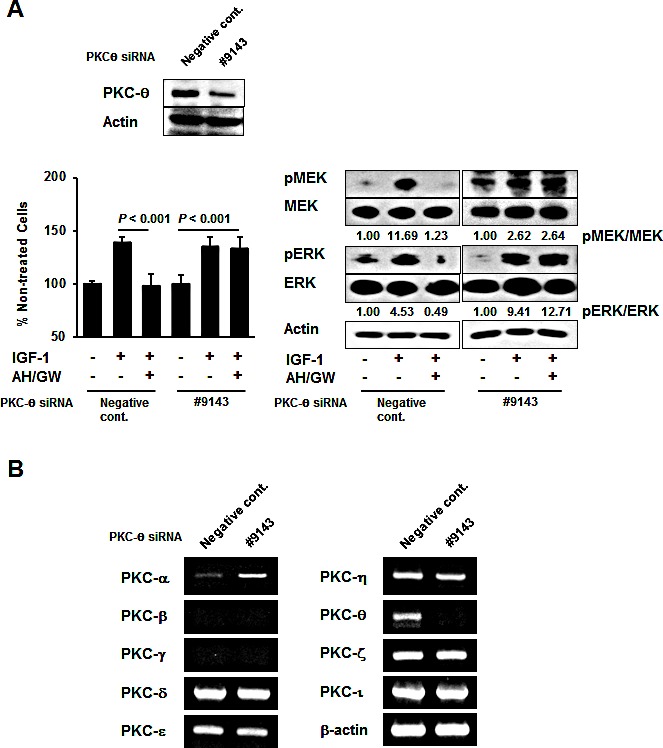
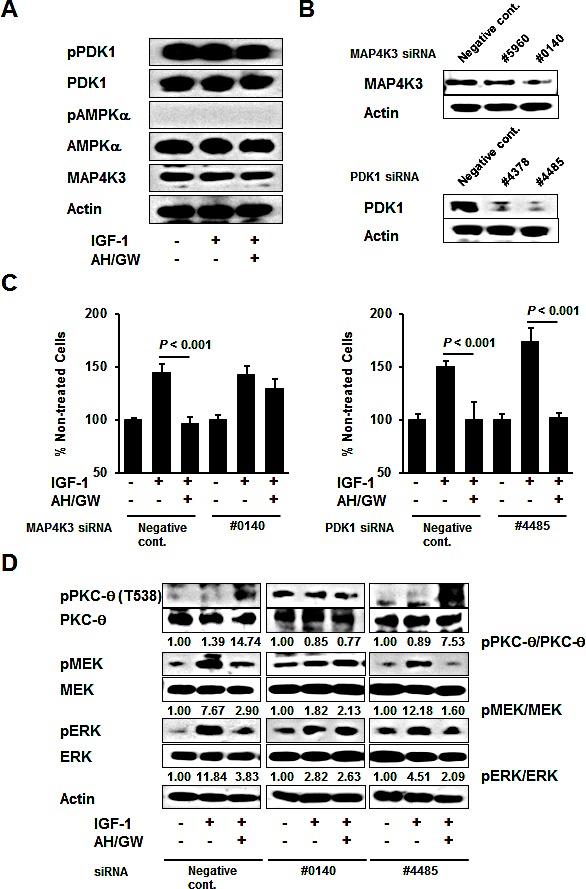
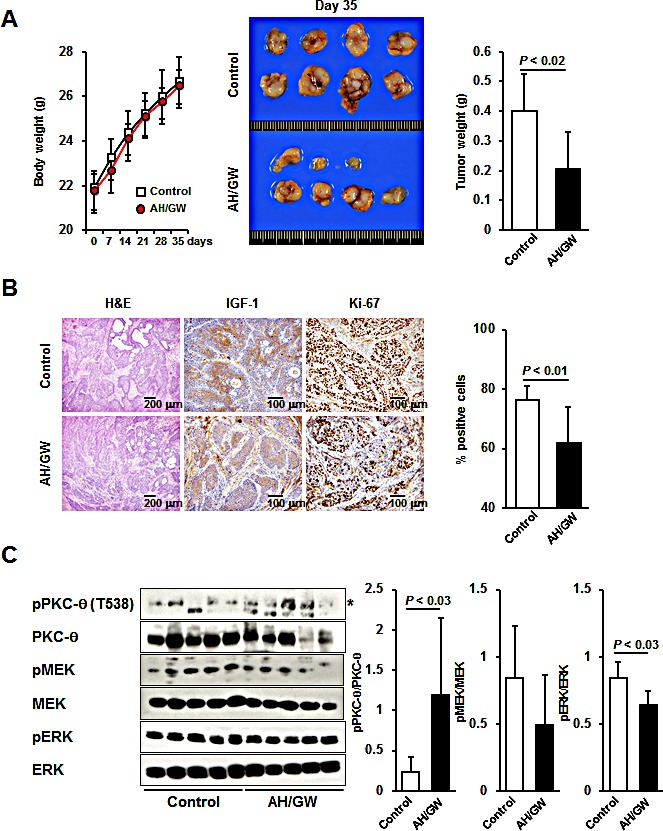
Associations between growth factor receptor-mediated cell signaling and cancer cell growth have been previously characterized. Receptors for prostaglandin E2, such as EP2, and EP4, play roles in cancer growth, progression and invasion. Thus, we examined the interactions between EP2/EP4- and IGF-1R-mediated cellular signaling in human pancreatic cancer cells. Selective antagonists against EP2 and EP4 abrogated IGF-1-stimulated cell growth and suppressed MEK/ERK phosphorylation. In subsequent experiments, phospho-antibody arrays indicated increased phosphorylation levels of protein kinase C-θ (PKC-θ) at the Thr538 position following the inhibition of EP2/EP4-mediated signaling. Inhibition of PKC-θ activity impaired cell viability compared with EP2/EP4-antagonized IGF-1-stimulated cells. PKC-θ kinase MAP4K3, which plays a pivotal role in PKC-θ activation, also affected growth signaling in the presence of EP2/EP4 antagonists. Administration of EP2 and EP4 antagonists significantly inhibited the growth of an orthotopic xenograft of IGF-1-secreting pancreatic cancer cells, with increased phospho-PKC-θ and decreased phospho-ERK. Clinico-pathological analyses showed that 17.4% of surgical pancreatic cancer specimens were quadruple-positive for IGF-1R, EP2 (or EP4), MAP4K3, and PKC-θ. These results indicate a novel signaling crosstalk between EP2/EP4 and IGF-1R in cancer cells, and suggest that the MAP4K3-PKC-θ axis is central and could be exploited as a molecular target for cancer therapy.
生长因子受体介导的细胞信号传导与癌细胞生长之间的关联此前已有描述。前列腺素E2的受体,如EP2和EP4,在癌症生长、进展和侵袭中发挥作用。因此,我们研究了人胰腺癌细胞中EP2/EP4和IGF-1R介导的细胞信号传导之间的相互作用。针对EP2和EP4的选择性拮抗剂消除了IGF-1刺激的细胞生长,并抑制了MEK/ERK磷酸化。在随后的实验中,磷酸化抗体阵列显示,在抑制EP2/EP4介导的信号传导后,蛋白激酶C-θ(PKC-θ)在Thr538位置的磷酸化水平增加。与EP2/EP4拮抗剂处理的IGF-1刺激细胞相比,抑制PKC-θ活性损害了细胞活力。在PKC-θ激活中起关键作用的PKC-θ激酶MAP4K3,在存在EP2/EP4拮抗剂的情况下也影响生长信号传导。给予EP2和EP4拮抗剂显著抑制了分泌IGF-1的胰腺癌细胞原位异种移植瘤的生长,磷酸化PKC-θ增加,磷酸化ERK减少。临床病理分析表明,17.4%的手术切除胰腺癌标本中IGF-1R、EP2(或EP4)、MAP4K3和PKC-θ均呈四重阳性。这些结果表明癌细胞中EP2/EP4和IGF-1R之间存在一种新的信号串扰,并提示MAP4K3-PKC-θ轴是核心,可作为癌症治疗的分子靶点加以利用。