Schrepf Andrew, Thaker Premal H, Goodheart Michael J, Bender David, Slavich George M, Dahmoush Laila, Penedo Frank, DeGeest Koen, Mendez Luis, Lubaroff David M, Cole Steven W, Sood Anil K, Lutgendorf Susan K
Department of Psychology, University of Iowa, E11 Seashore Hall, Iowa City, IA 52242, USA.
Division of Gynecologic Oncology, Washington University School of Medicine, Maternity Building-660 South Euclid, Campus Box 8064, St. Louis, MO 63110, USA.
Psychoneuroendocrinology. 2015 Mar;53:256-67. doi: 10.1016/j.psyneuen.2015.01.010. Epub 2015 Jan 20.
Hypothalamic-pituitary-adrenal (HPA) deregulation is commonly observed in cancer patients, but its clinical significance is not well understood. We prospectively examined the association between HPA activity, tumor-associated inflammation, and survival in ovarian cancer patients prior to treatment.
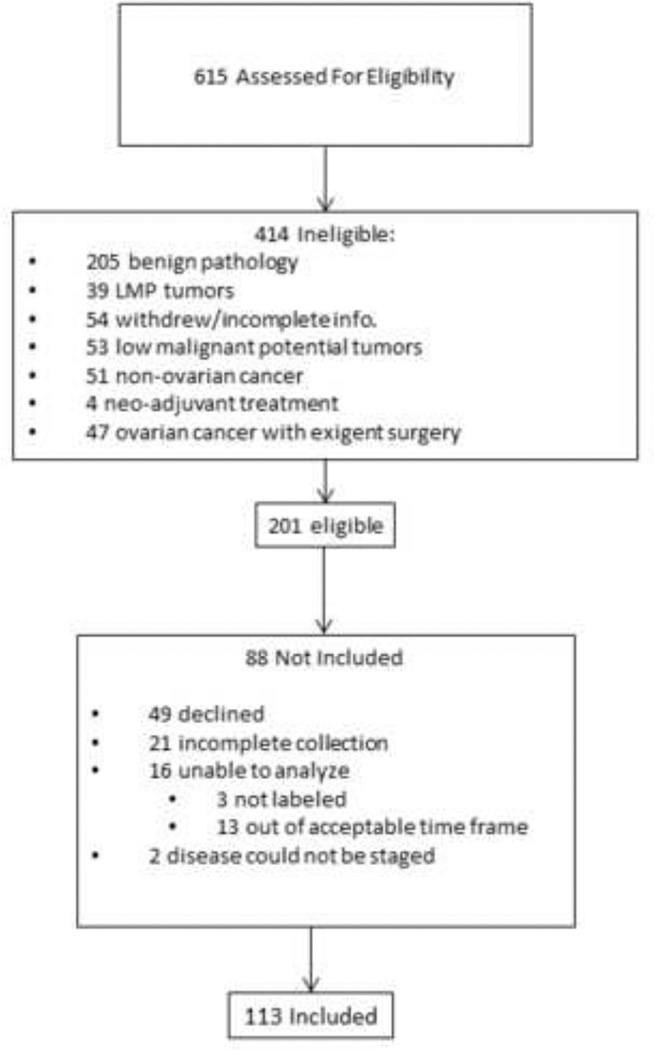
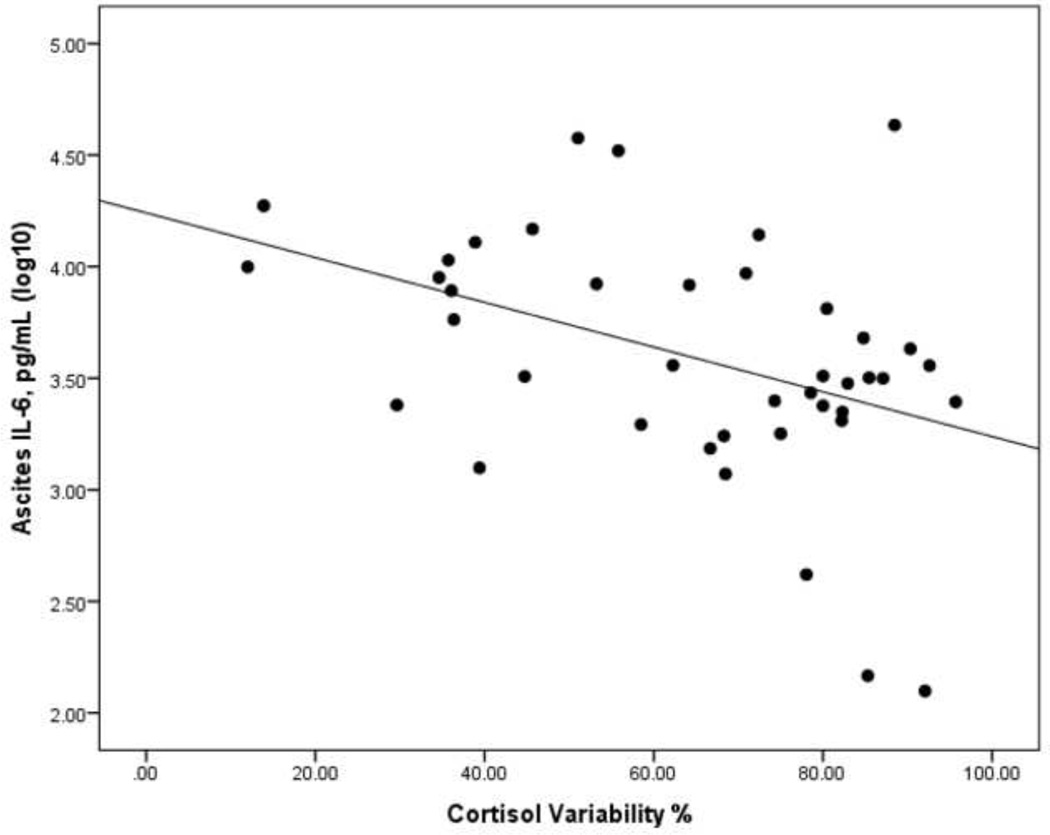
Participants were 113 women with ovarian cancer who provided salivary cortisol for three days prior to treatment for calculation of cortisol slope, variability, and night cortisol. Cox proportional hazard regression analyses were used to examine associations between cortisol and survival in models adjusting for disease stage, tumor grade, cytoreduction and age. On a subsample of 41 patients with advanced disease ascites fluid was assayed for levels of interleukin-6 (IL-6) and correlated with cortisol variables.
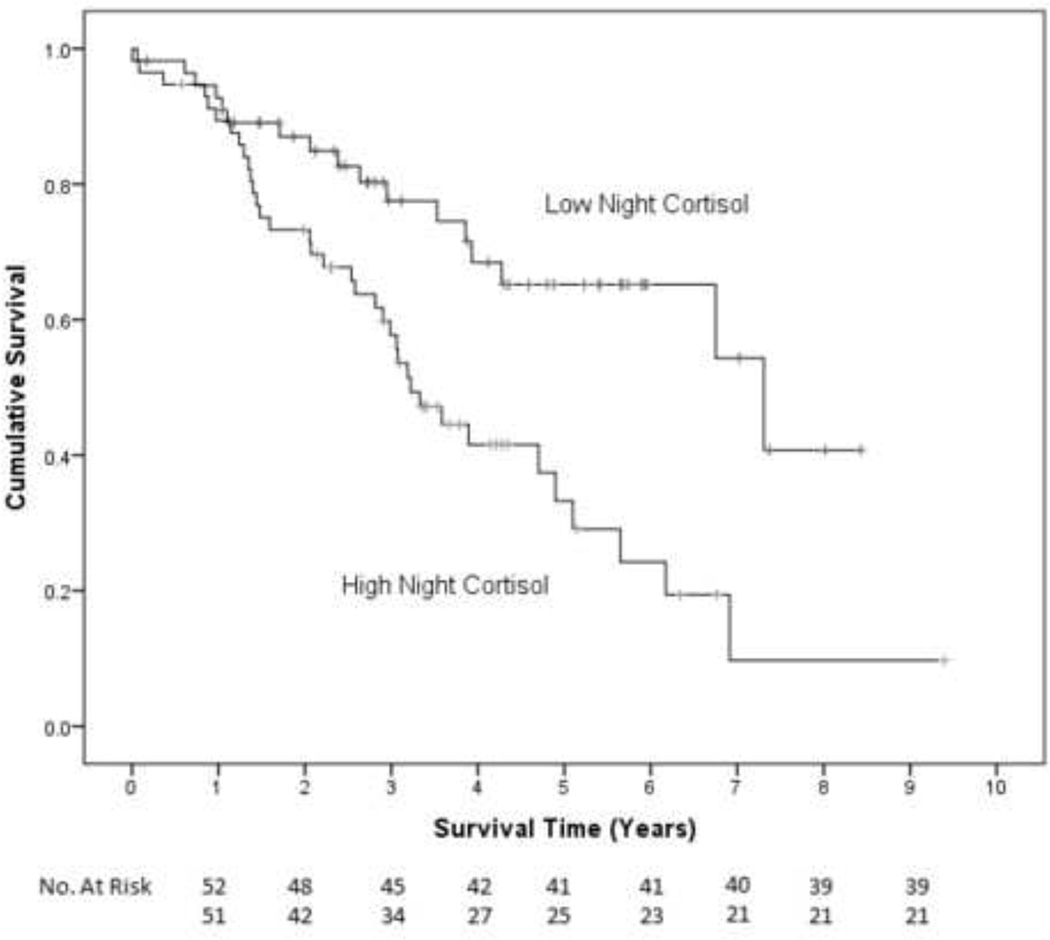
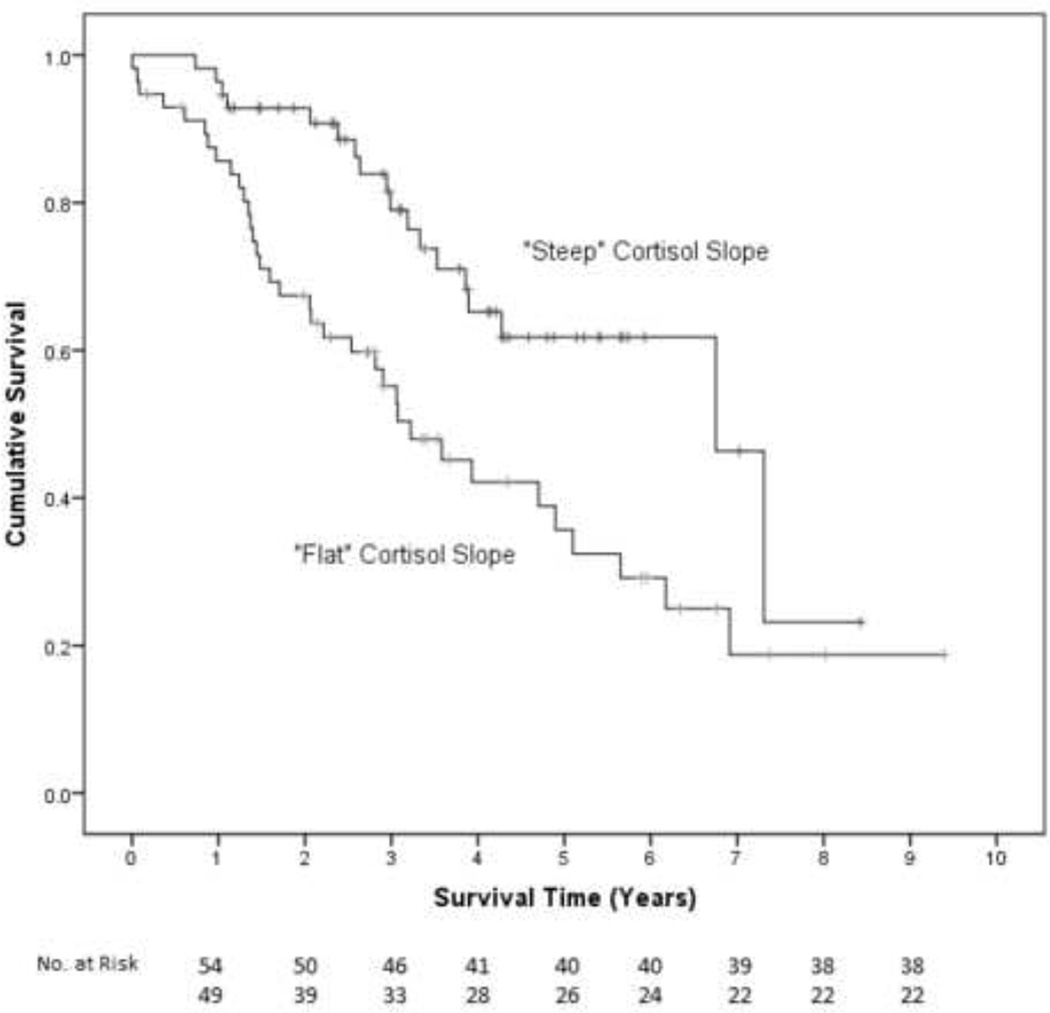
Each cortisol measure was associated with decreased survival time, adjusting for covariates (all p<.041). A one standard deviation increase in night cortisol was associated with a 46% greater likelihood of death. Patients in the high night cortisol group survived an estimated average of 3.3 years compared to 7.3 years for those in the low night cortisol group. Elevated ascites IL-6 was associated with each cortisol measure (all r>36, all p<.017).
Abnormal cortisol rhythms assessed prior to treatment are associated with decreased survival in ovarian cancer and increased inflammation in the vicinity of the tumor. HPA abnormalities may reflect poor endogenous control of inflammation, dysregulation caused by tumor-associated inflammation, broad circadian disruption, or some combination of these factors. Nocturnal cortisol may have utility as a non-invasive measure of HPA function and/or disease severity.
下丘脑 - 垂体 - 肾上腺(HPA)轴失调在癌症患者中普遍存在,但其临床意义尚未完全明确。我们前瞻性地研究了HPA活性、肿瘤相关炎症与卵巢癌患者治疗前生存率之间的关联。
研究对象为113名卵巢癌女性患者,她们在治疗前三天提供唾液样本以计算皮质醇斜率、变异性和夜间皮质醇水平。采用Cox比例风险回归分析来检验在调整疾病分期、肿瘤分级、肿瘤细胞减灭术和年龄的模型中皮质醇与生存率之间的关联。在41例晚期疾病患者的亚样本中,检测腹水中白细胞介素 - 6(IL - 6)水平,并与皮质醇变量进行相关性分析。
在调整协变量后,每项皮质醇测量指标均与生存时间缩短相关(所有p <.041)。夜间皮质醇增加一个标准差与死亡可能性增加46%相关。夜间皮质醇水平高的组患者估计平均存活3.3年,而夜间皮质醇水平低的组患者为7.3年。腹水IL - 6升高与每项皮质醇测量指标相关(所有r > 0.36,所有p <.017)。
治疗前评估的异常皮质醇节律与卵巢癌患者生存率降低及肿瘤附近炎症增加相关。HPA异常可能反映了炎症的内源性控制不佳、肿瘤相关炎症引起的失调、广泛的昼夜节律紊乱或这些因素的某种组合。夜间皮质醇可能作为一种非侵入性的HPA功能和/或疾病严重程度的测量指标。