Austin C R, Goodyear A W, Bartek I L, Stewart A, Sutherland M D, Silva E B, Zweifel A, Vitko N P, Tuanyok A, Highnam G, Mittelman D, Keim P, Schweizer H P, Vázquez-Torres A, Dow S W C, Voskuil M I
Department of Biological Sciences and Virginia Bioinformatics Institute, Virginia Tech, Blacksburg, Virginia, USA.
Northern Arizona University, Department of Biological Sciences, Flagstaff, Arizona, USA.
mBio. 2015 Feb 3;6(1):e02462-14. doi: 10.1128/mBio.02462-14.
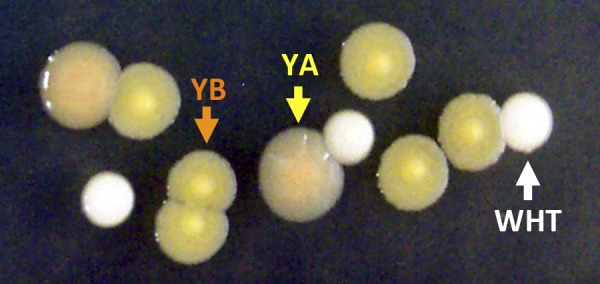
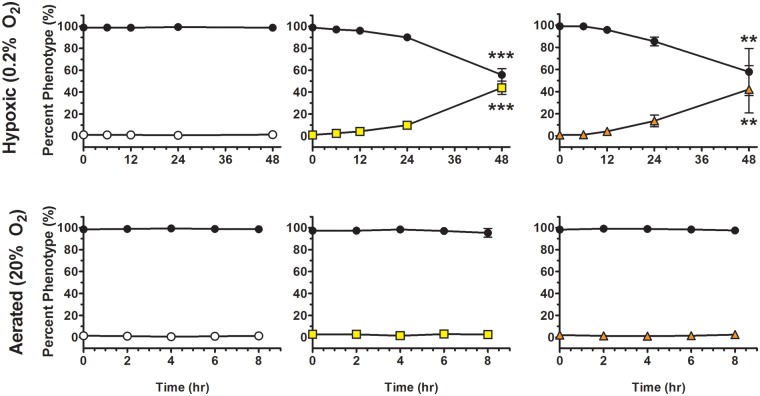
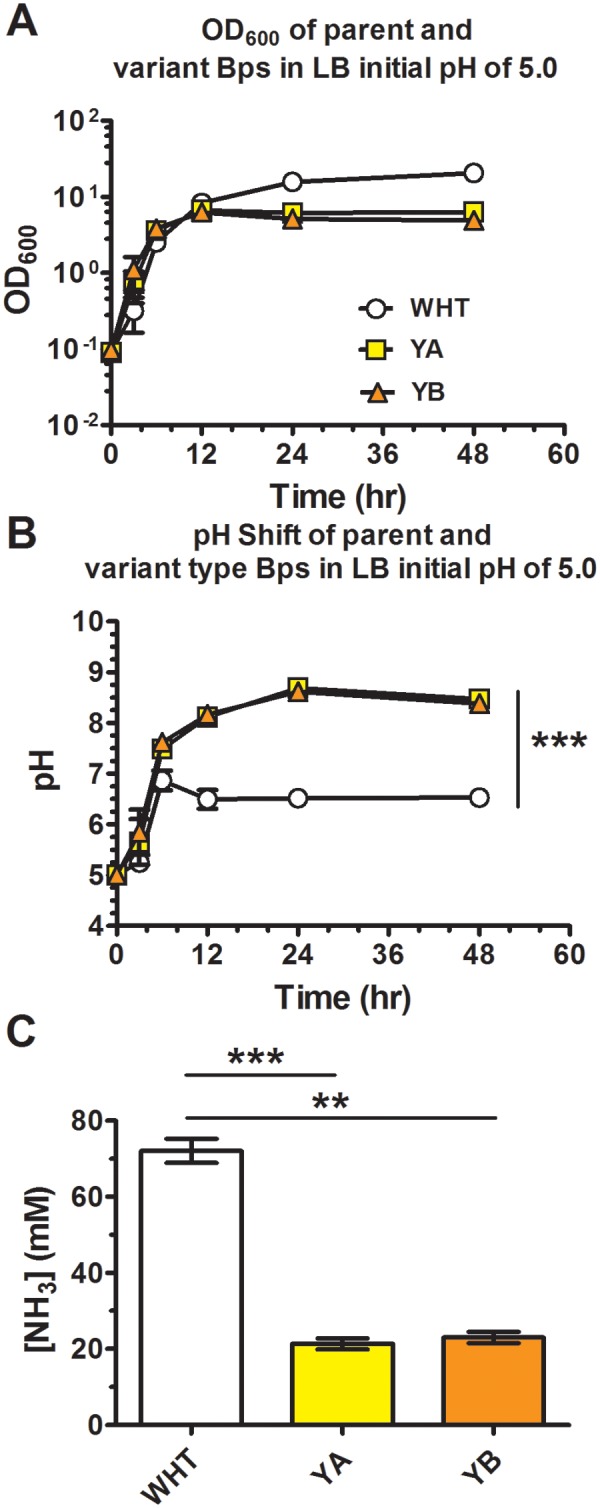
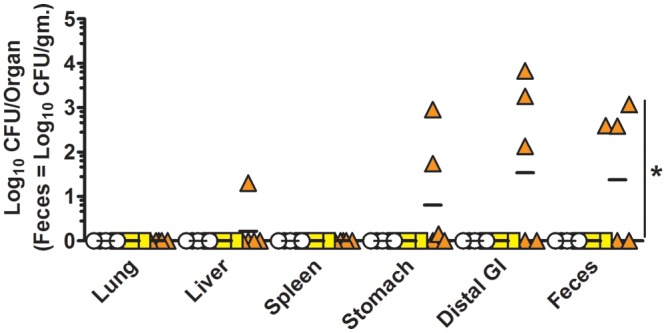
Diverse colony morphologies are a hallmark of Burkholderia pseudomallei recovered from infected patients. We observed that stresses that inhibit aerobic respiration shifted populations of B. pseudomallei from the canonical white colony morphotype toward two distinct, reversible, yet relatively stable yellow colony variants (YA and YB). As accumulating evidence supports the importance of B. pseudomallei enteric infection and gastric colonization, we tested the response of yellow variants to hypoxia, acidity, and stomach colonization. Yellow variants exhibited a competitive advantage under hypoxic and acidic conditions and alkalized culture media. The YB variant, although highly attenuated in acute virulence, was the only form capable of colonization and persistence in the murine stomach. The accumulation of extracellular DNA (eDNA) was a characteristic of YB as observed by 4',6-diamidino-2-phenylindole (DAPI) staining of gastric tissues, as well as in an in vitro stomach model where large amounts of eDNA were produced without cell lysis. Transposon mutagenesis identified a transcriptional regulator (BPSL1887, designated YelR) that when overexpressed produced the yellow phenotype. Deletion of yelR blocked a shift from white to the yellow forms. These data demonstrate that YB is a unique B. pseudomallei pathovariant controlled by YelR that is specifically adapted to the harsh gastric environment and necessary for persistent stomach colonization.
Seemingly uniform populations of bacteria often contain subpopulations that are genetically identical but display unique characteristics which offer advantages when the population is faced with infrequent but predictable stresses. The pathogen Burkholderia pseudomallei is capable of forming several reversible colony types, and it interconverted between one white type and two yellow types under certain environmental stresses. The two yellow forms exhibited distinct advantages in low-oxygen and acidic environments. One yellow colony variant was the only form capable of chronic stomach colonization. Areas of gastric infection were marked by bacteria encased in a DNA matrix, and the yellow forms were able to produce large amounts of extracellular DNA in vitro. We also identified the regulator in control of yellow colony variant formation. These findings demonstrate a role in infection for colony variation and provide a mechanism for chronic stomach colonization-a frequently overlooked niche in melioidosis.
从感染患者体内分离出的伯克霍尔德菌呈现出多种菌落形态。我们观察到,抑制有氧呼吸的应激条件会使伯克霍尔德菌群体从典型的白色菌落形态转变为两种不同的、可逆但相对稳定的黄色菌落变体(YA和YB)。由于越来越多的证据支持伯克霍尔德菌肠道感染和胃部定植的重要性,我们测试了黄色变体对缺氧、酸性环境和胃部定植的反应。黄色变体在缺氧和酸性条件下以及使培养基碱化方面表现出竞争优势。YB变体虽然急性毒力高度减弱,但却是唯一能够在小鼠胃部定植并持续存在的形式。通过对胃组织进行4',6-二脒基-2-苯基吲哚(DAPI)染色,以及在体外胃部模型中观察到大量细胞外DNA(eDNA)在无细胞裂解的情况下产生,发现eDNA的积累是YB的一个特征。转座子诱变鉴定出一种转录调节因子(BPSL1887,命名为YelR),当该因子过表达时会产生黄色表型。删除yelR会阻止从白色形态向黄色形态的转变。这些数据表明,YB是一种由YelR控制的独特的伯克霍尔德菌致病变体,它特别适应恶劣的胃部环境,是胃部持续定植所必需的。
看似均匀的细菌群体通常包含基因相同但表现出独特特征的亚群体,当群体面临不常见但可预测的应激时,这些特征会提供优势。病原体伯克霍尔德菌能够形成几种可逆的菌落类型,并且在某些环境应激下会在一种白色类型和两种黄色类型之间相互转换。这两种黄色形态在低氧和酸性环境中表现出明显优势。一种黄色菌落变体是唯一能够进行慢性胃部定植的形式。胃部感染区域以包裹在DNA基质中的细菌为特征,并且黄色形态能够在体外产生大量细胞外DNA。我们还鉴定出了控制黄色菌落变体形成的调节因子。这些发现证明了菌落变异在感染中的作用,并为慢性胃部定植提供了一种机制——这是类鼻疽病中一个经常被忽视的生态位。