Niess Hanno, Camaj Peter, Mair Ruth, Renner Andrea, Zhao Yue, Jäckel Carsten, Nelson Peter J, Jauch Karl-Walter, Bruns Christiane J
Department of Surgery, Medical Center of the Ludwig-Maximilians-University, Campus Grosshadern, Munich, Germany.
Department of Surgery, Medical Center of the Otto-von-Guericke-University, Magdeburg, Germany.
Oncotarget. 2015 Feb 20;6(5):3306-18. doi: 10.18632/oncotarget.2494.
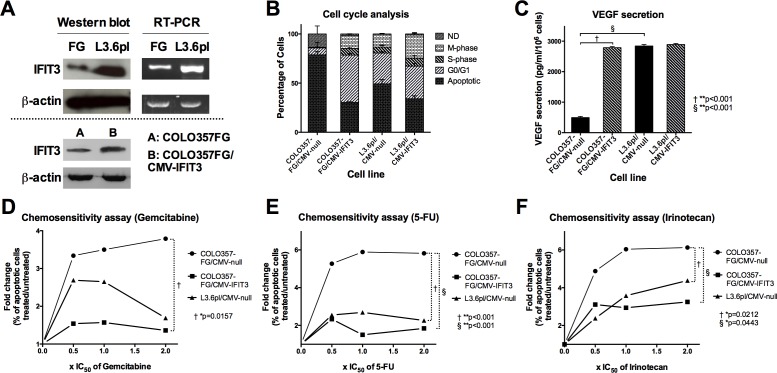
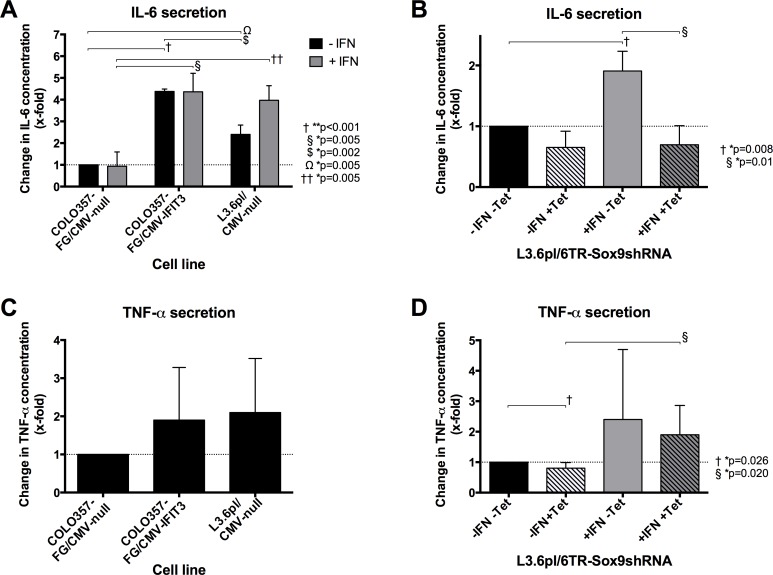
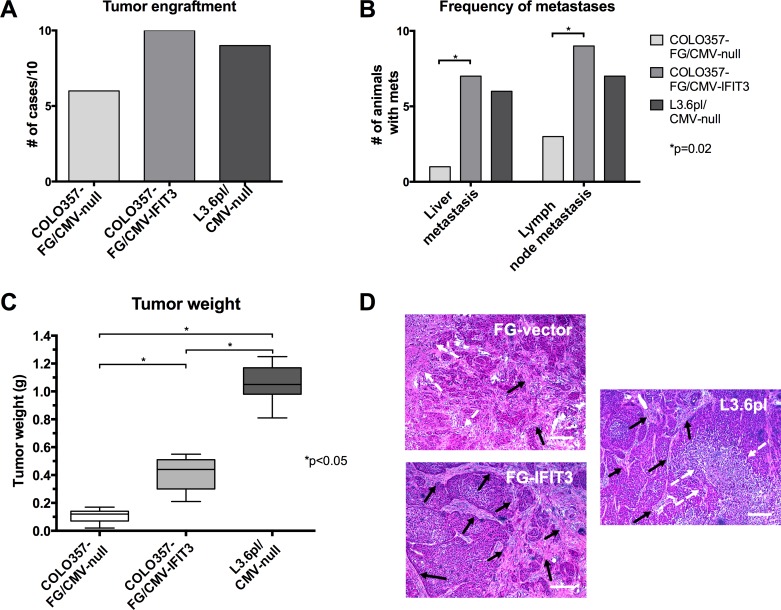
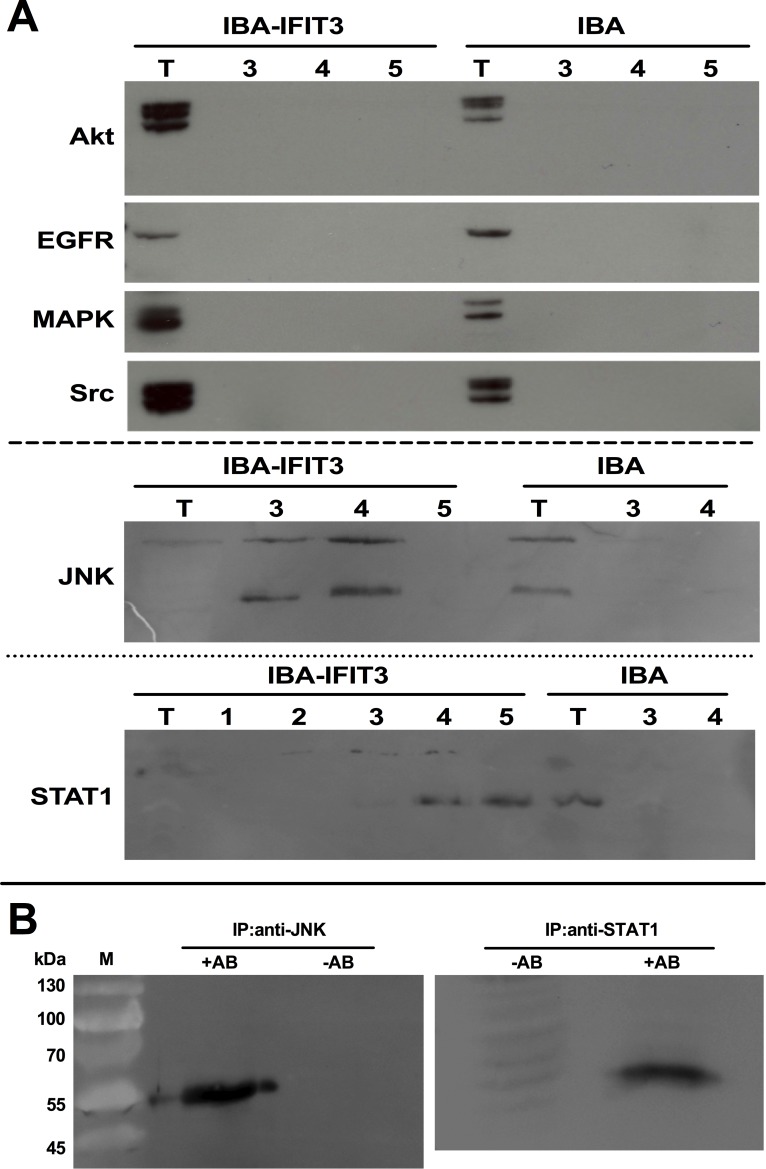
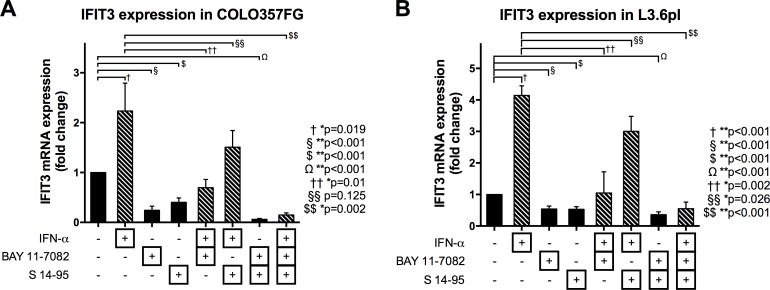
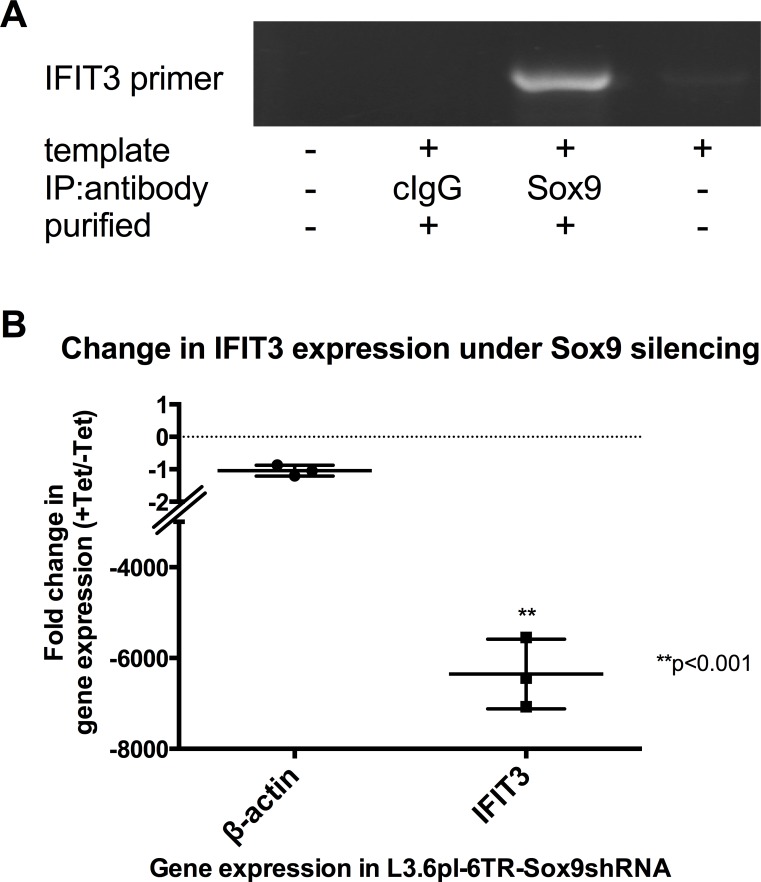
Inflammation contributes to important traits that cancer cells acquire during malignant progression. Gene array data recently identified upregulation of interferon-induced protein with tetratricopeptide repeats 3 (IFIT3) in aggressive pancreatic cancer cells. IFIT3 belongs to the group of interferon stimulated genes (ISG), can be induced by several cellular stress stimuli and by its tetratricopeptide repeats interacts with a multitude of cellular proteins. Upregulation of IFIT3 was confirmed in the aggressive pancreatic cancer cell line L3.6pl compared with its less aggressive cell line of origin, COLO357FG. Transgenic induction of IFIT3 expression in COLO357FG resulted in greater mass of orthotopic tumors and higher prevalence of metastases. Several important traits that mediate malignancy were altered by IFIT3: increased VEGF and IL-6 secretion, chemoresistance and decreased starvation-induced apoptosis. IFIT3 showed binding to JNK and STAT1, the latter being an important inducer of IFIT3 expression. Despite still being alterable by "classical" IFN or NFκB signaling, our findings indicate constitutive - possibly auto-regulated - upregulation of IFIT3 in L3.6pl without presence of an adequate inflammatory stimulus. The transcription factor SOX9, which is linked to regulation of hypoxia-related genes, was identified as a key mediator of upregulation of the oncogene IFIT3 and thereby sustaining a "pseudoinflammatory" cellular condition.
炎症促成了癌细胞在恶性进展过程中获得的重要特征。基因阵列数据最近发现,侵袭性胰腺癌细胞中含四肽重复序列的干扰素诱导蛋白3(IFIT3)上调。IFIT3属于干扰素刺激基因(ISG)家族,可被多种细胞应激刺激诱导,且通过其四肽重复序列与多种细胞蛋白相互作用。与侵袭性较弱的起源细胞系COLO357FG相比,侵袭性胰腺癌细胞系L3.6pl中IFIT3上调得到证实。在COLO357FG中通过转基因诱导IFIT3表达,导致原位肿瘤体积更大且转移发生率更高。IFIT3改变了介导恶性肿瘤的几个重要特征:增加血管内皮生长因子(VEGF)和白细胞介素-6(IL-6)分泌、产生化学抗性以及减少饥饿诱导的细胞凋亡。IFIT3显示与JNK和STAT1结合,后者是IFIT3表达的重要诱导因子。尽管IFIT3的表达仍可被“经典”的干扰素或核因子κB(NFκB)信号传导改变,但我们的研究结果表明,在没有适当炎症刺激的情况下,L3.6pl中IFIT3呈组成性上调,可能是自我调节的上调。转录因子SOX9与缺氧相关基因的调控有关,被确定为癌基因IFIT3上调的关键介质,从而维持一种“假炎症”细胞状态。