Hirashima Kyotaro, Seimiya Hiroyuki
Division of Molecular Biotherapy, Cancer Chemotherapy Center, Japanese Foundation for Cancer Research, Koto-ku, Tokyo 135-8550, Japan.
Division of Molecular Biotherapy, Cancer Chemotherapy Center, Japanese Foundation for Cancer Research, Koto-ku, Tokyo 135-8550, Japan
Nucleic Acids Res. 2015 Feb 27;43(4):2022-32. doi: 10.1093/nar/gkv063. Epub 2015 Feb 4.
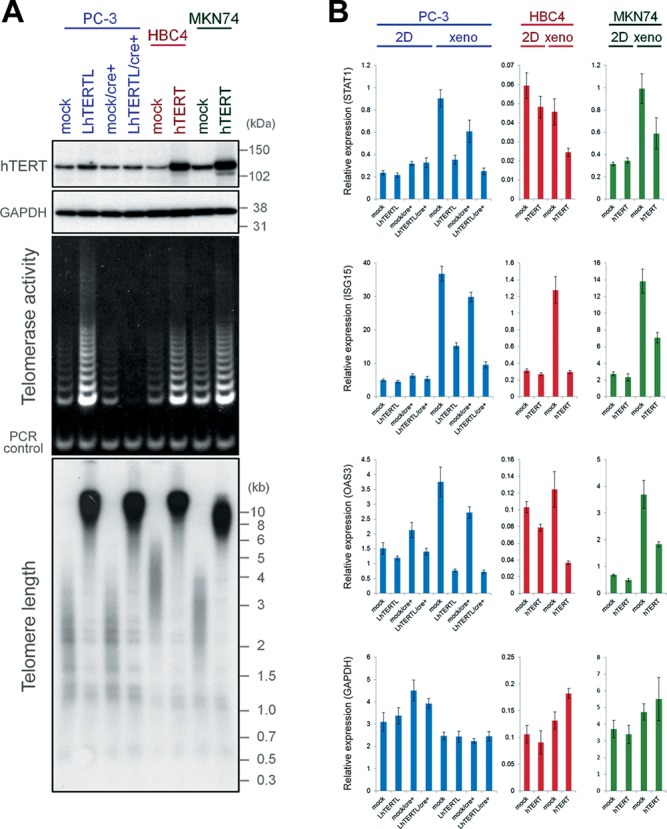
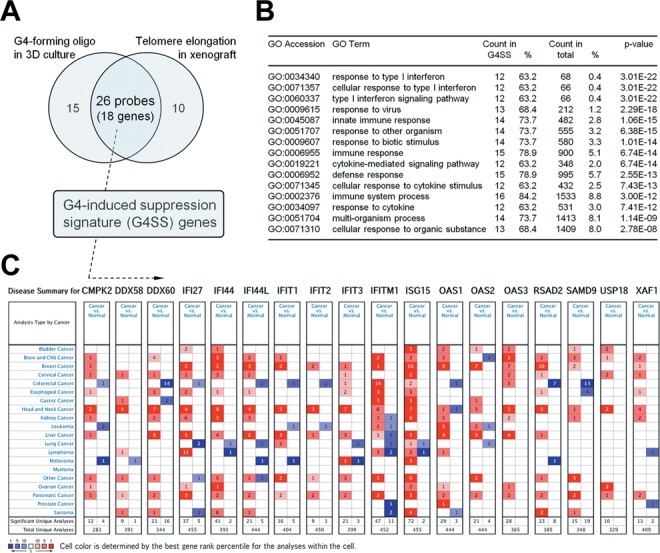
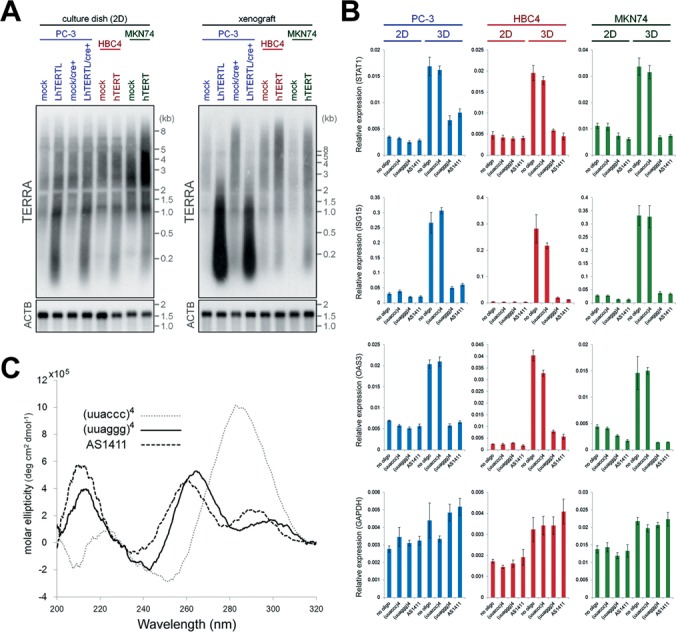
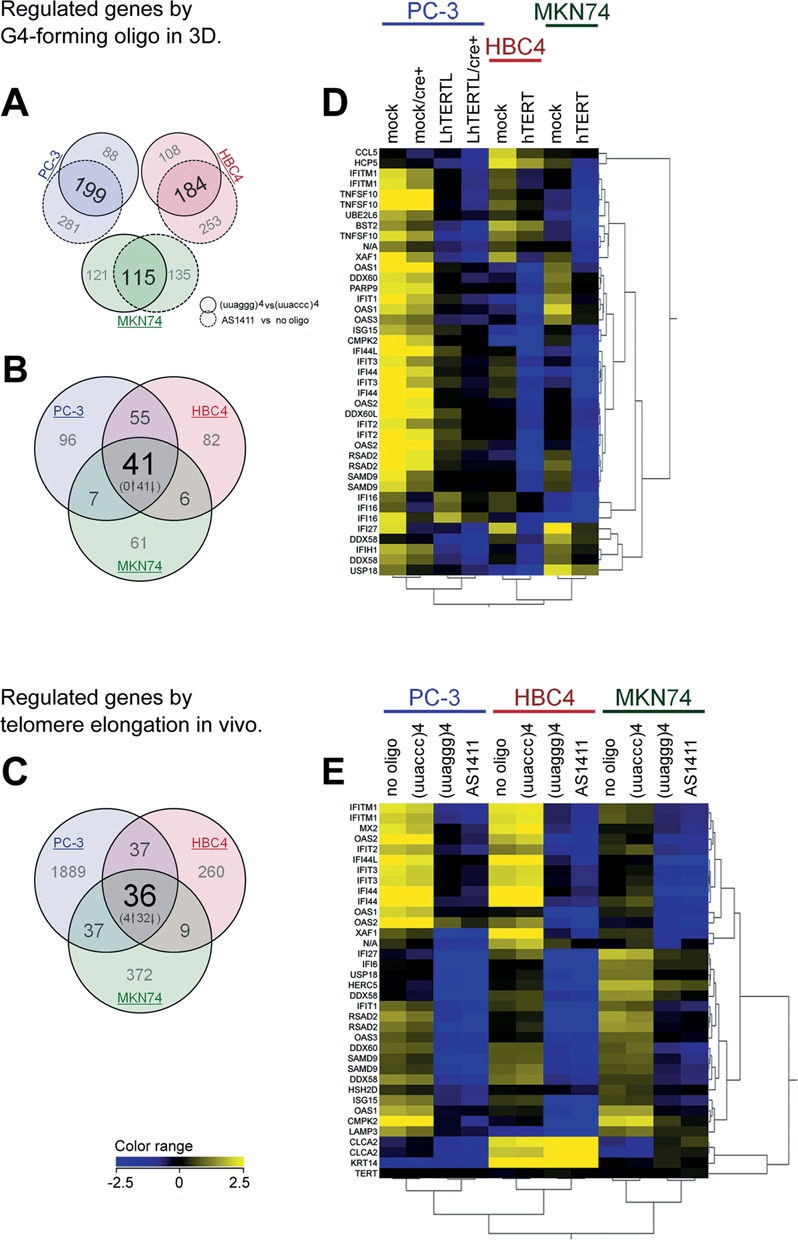
Telomere erosion causes cell mortality, suggesting that longer telomeres enable more cell divisions. In telomerase-positive human cancer cells, however, telomeres are often kept shorter than those of surrounding normal tissues. Recently, we showed that cancer cell telomere elongation represses innate immune genes and promotes their differentiation in vivo. This implies that short telomeres contribute to cancer malignancy, but it is unclear how such genetic repression is caused by elongated telomeres. Here, we report that telomeric repeat-containing RNA (TERRA) induces a genome-wide alteration of gene expression in telomere-elongated cancer cells. Using three different cell lines, we found that telomere elongation up-regulates TERRA signal and down-regulates innate immune genes such as STAT1, ISG15 and OAS3 in vivo. Ectopic TERRA oligonucleotides repressed these genes even in cells with short telomeres under three-dimensional culture conditions. This appeared to occur from the action of G-quadruplexes (G4) in TERRA, because control oligonucleotides had no effect and a nontelomeric G4-forming oligonucleotide phenocopied the TERRA oligonucleotide. Telomere elongation and G4-forming oligonucleotides showed similar gene expression signatures. Most of the commonly suppressed genes were involved in the innate immune system and were up-regulated in various cancers. We propose that TERRA G4 counteracts cancer malignancy by suppressing innate immune genes.
端粒缩短会导致细胞死亡,这表明更长的端粒能使细胞进行更多次分裂。然而,在端粒酶阳性的人类癌细胞中,端粒往往比周围正常组织的端粒更短。最近,我们发现癌细胞端粒延长会抑制体内的先天免疫基因并促进其分化。这意味着短端粒有助于癌症的恶性发展,但尚不清楚延长的端粒是如何导致这种基因抑制的。在此,我们报告含端粒重复序列的RNA(TERRA)会在端粒延长的癌细胞中诱导全基因组范围的基因表达改变。使用三种不同的细胞系,我们发现端粒延长在体内会上调TERRA信号并下调先天免疫基因,如STAT1、ISG15和OAS3。在三维培养条件下,异位的TERRA寡核苷酸即使在端粒短的细胞中也能抑制这些基因。这似乎是由TERRA中的G-四链体(G4)的作用引起的,因为对照寡核苷酸没有效果,而非端粒形成G4的寡核苷酸能模拟TERRA寡核苷酸的作用。端粒延长和形成G4的寡核苷酸表现出相似的基因表达特征。大多数共同被抑制的基因都参与先天免疫系统,并且在各种癌症中上调。我们提出TERRA G4通过抑制先天免疫基因来对抗癌症的恶性发展。