Department of Clinical Pathology, Hospital de Clínicas, Universidade Federal do Paraná , Curitiba , Brazil.
Department of Genetics, Universidade Federal do Paraná , Curitiba , Brazil.
Front Pediatr. 2015 Jan 21;2:148. doi: 10.3389/fped.2014.00148. eCollection 2014.
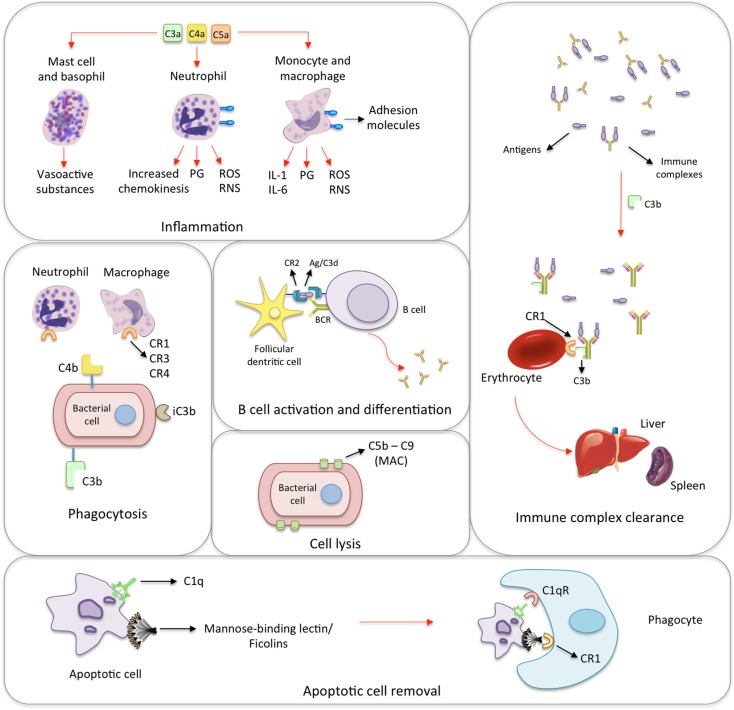
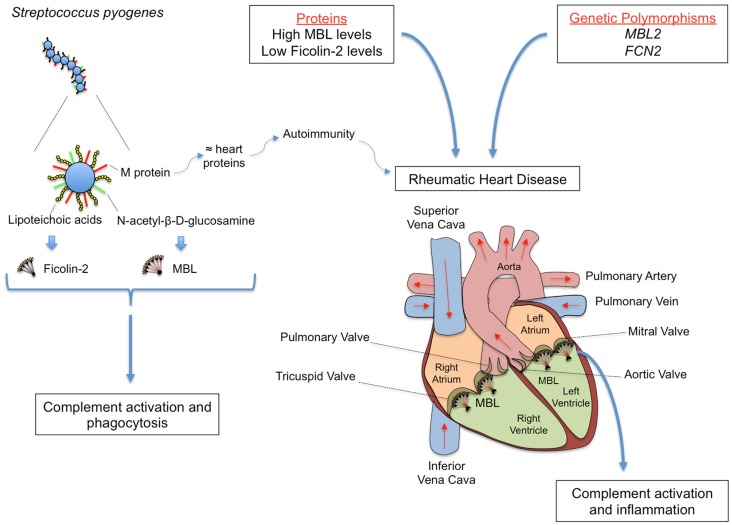
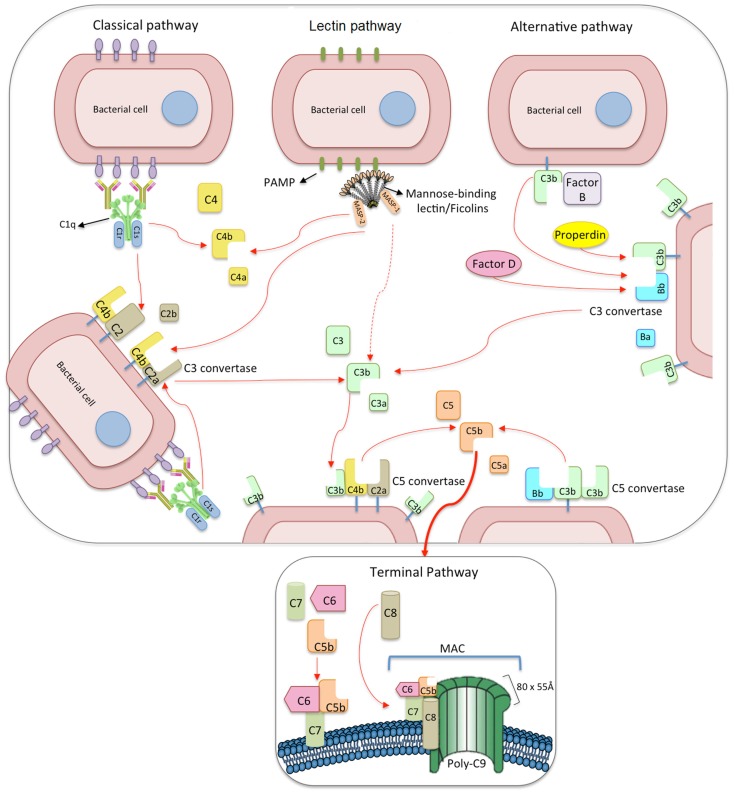
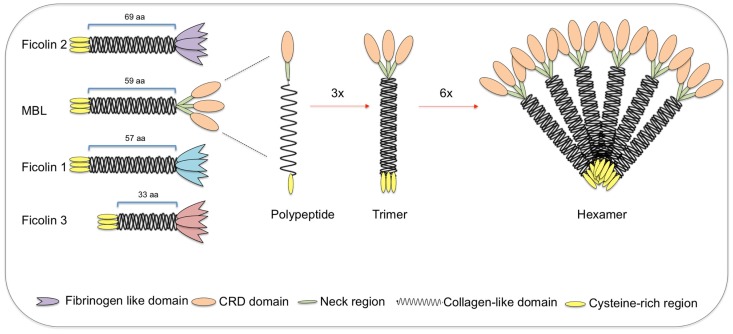
The innate immune system is the first line of host defense against infection and is comprised of humoral and cellular mechanisms that recognize potential pathogens within minutes or hours of entry. The effector components of innate immunity include epithelial barriers, phagocytes, and natural killer cells, as well as cytokines and the complement system. Complement plays an important role in the immediate response against microorganisms, including Streptococcus sp. The lectin pathway is one of three pathways by which the complement system can be activated. This pathway is initiated by the binding of mannose-binding lectin (MBL), collectin 11 (CL-K1), and ficolins (Ficolin-1, Ficolin-2, and Ficolin-3) to microbial surface oligosaccharides and acetylated residues, respectively. Upon binding to target molecules, MBL, CL-K1, and ficolins form complexes with MBL-associated serine proteases 1 and 2 (MASP-1 and MASP-2), which cleave C4 and C2 forming the C3 convertase (C4b2a). Subsequent activation of complement cascade leads to opsonization, phagocytosis, and lysis of target microorganisms through the formation of the membrane-attack complex. In addition, activation of complement may induce several inflammatory effects, such as expression of adhesion molecules, chemotaxis and activation of leukocytes, release of reactive oxygen species, and secretion of cytokines and chemokines. In this chapter, we review the general aspects of the structure, function, and genetic polymorphism of lectin-pathway components and discuss most recent understanding on the role of the lectin pathway in the predisposition and clinical progression of Rheumatic Fever.
固有免疫系统是宿主抵御感染的第一道防线,由体液和细胞机制组成,可在微生物进入体内数分钟或数小时内识别潜在的病原体。固有免疫的效应成分包括上皮屏障、吞噬细胞和自然杀伤细胞,以及细胞因子和补体系统。补体在针对微生物(包括链球菌属)的即刻反应中发挥重要作用。凝集素途径是补体系统激活的三种途径之一。该途径由甘露聚糖结合凝集素 (MBL)、胶原凝集素 11 (CL-K1) 和纤维胶凝素 (Ficolin-1、Ficolin-2 和 Ficolin-3) 分别与微生物表面寡糖和乙酰化残基结合而启动。与靶分子结合后,MBL、CL-K1 和纤维胶凝素与 MBL 相关丝氨酸蛋白酶 1 和 2 (MASP-1 和 MASP-2) 形成复合物,该复合物裂解 C4 和 C2 形成 C3 转化酶 (C4b2a)。随后补体级联的激活导致通过形成膜攻击复合物对靶微生物进行调理、吞噬和溶解。此外,补体的激活可能诱导几种炎症效应,例如粘附分子的表达、白细胞趋化性和激活、活性氧物质的释放以及细胞因子和趋化因子的分泌。在本章中,我们回顾了凝集素途径成分的结构、功能和遗传多态性的一般方面,并讨论了关于凝集素途径在风湿热易感性和临床进展中的作用的最新理解。