Department of Immunology, Fukushima Medical University, Fukushima, Japan.
Fukushima Prefectural General Hygiene Institute, Fukushima, Japan.
Front Immunol. 2018 May 28;9:1191. doi: 10.3389/fimmu.2018.01191. eCollection 2018.
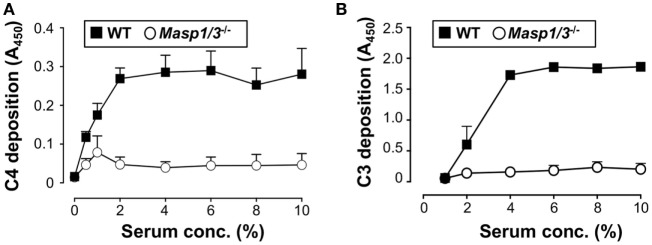
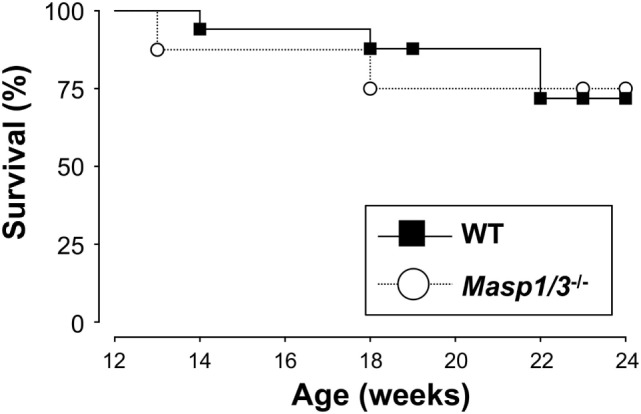
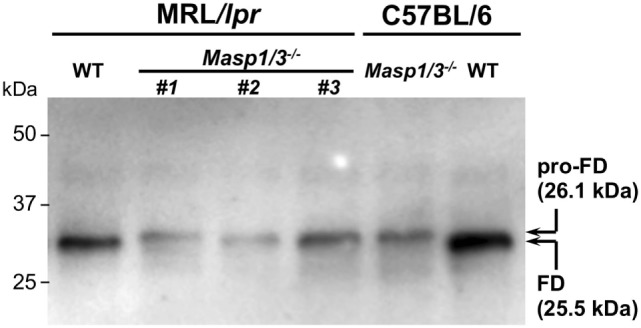
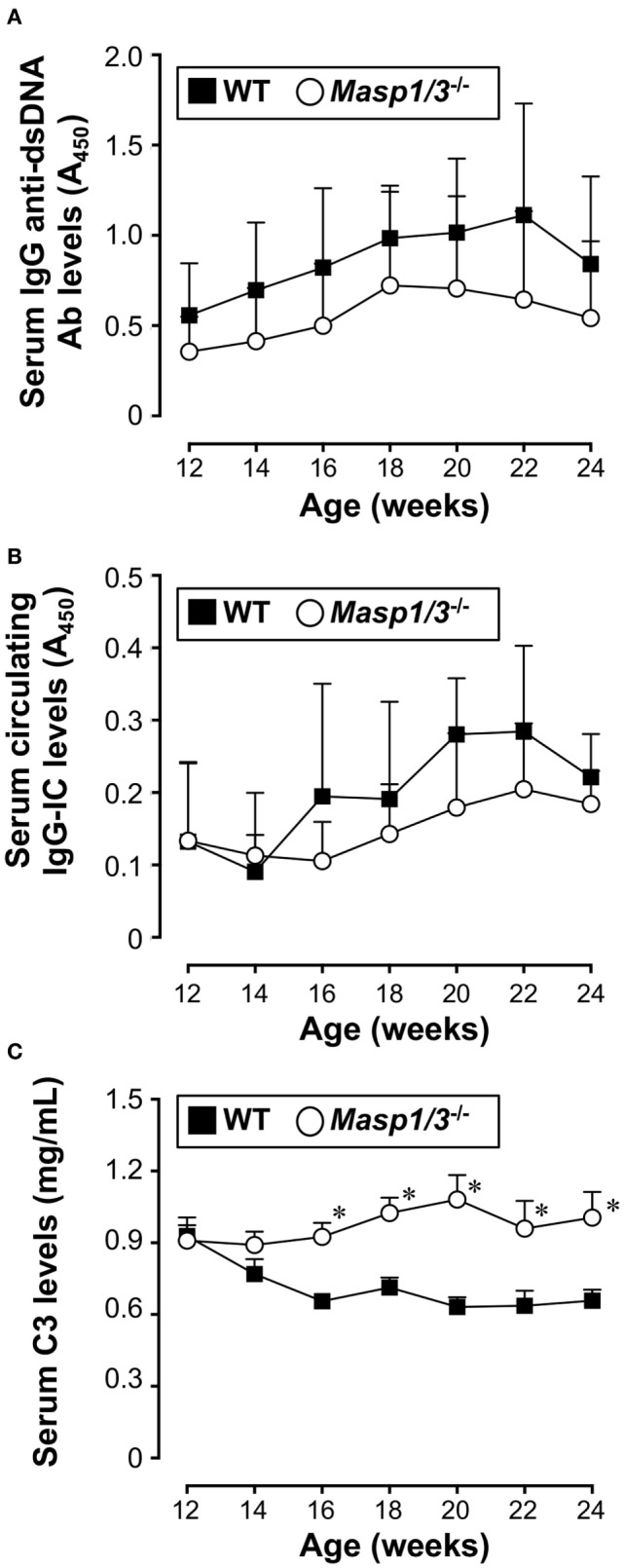
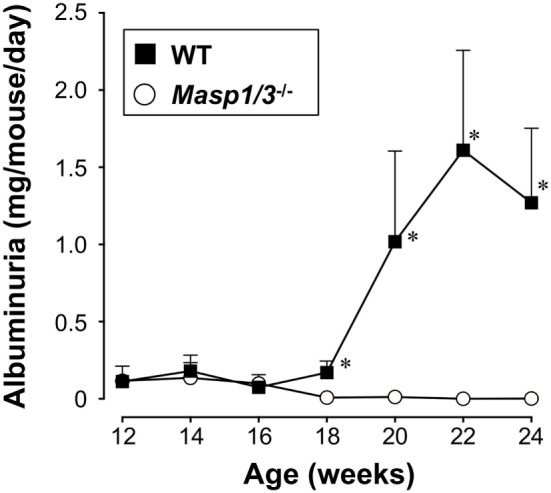
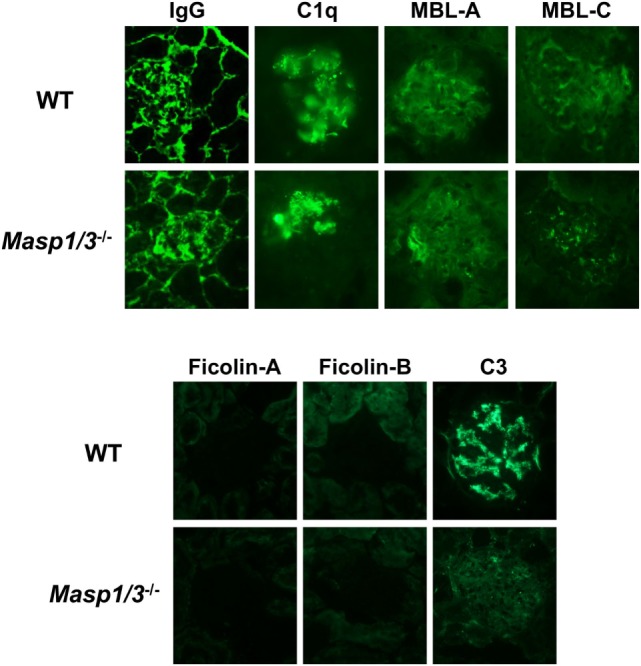
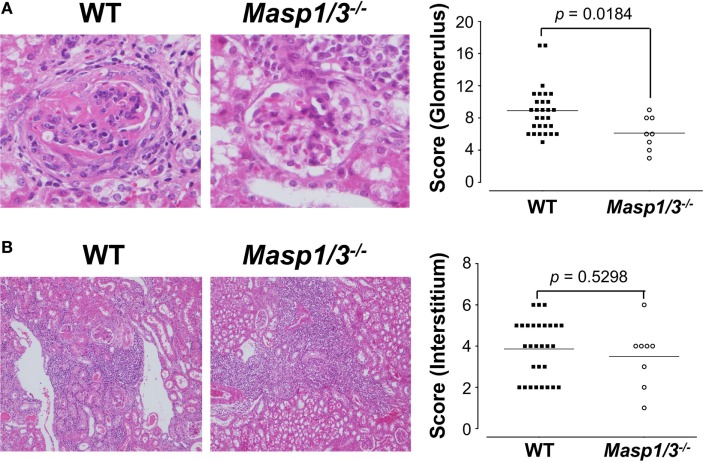
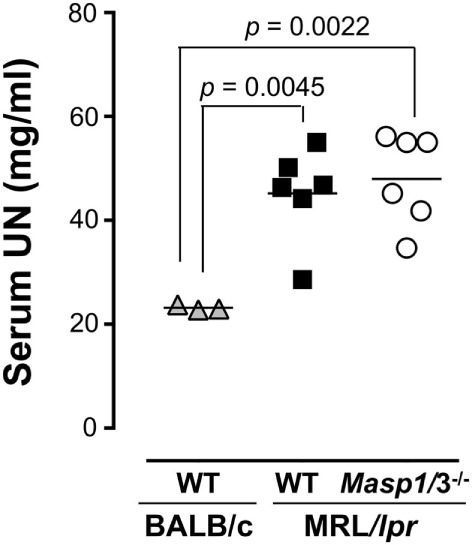
The complement system, composed of the three activation pathways, has both protective and pathogenic roles in the development of systemic lupus erythematosus (or lupus), a prototypic autoimmune disease. The classical pathway contributes to the clearance of immune complexes (ICs) and apoptotic cells, whereas the alternative pathway (AP) exacerbates renal inflammation. The role of the lectin pathway (LP) in lupus has remained largely unknown. Mannose-binding lectin (MBL)-associated serine proteases (MASPs), which are associated with humoral pattern recognition molecules (MBL or ficolins), are the enzymatic constituents of the LP and AP. MASP-1 encoded by the gene significantly contributes to the activation of the LP. After the binding of MBL/ficolins to pathogens or self-altered cells, MASP-1 autoactivates first, then activates MASP-2, and both participate in the formation of the LP C3 convertase C4b2a, whereas, MASP-3, the splice variant of the gene, is required for the activation of the zymogen of factor D (FD), and finally participates in the formation of the AP C3 convertase C3bBb. To investigate the roles of MASP-1 and MASP-3 in lupus, we generated gene knockout lupus-prone MRL/ mice ( MRL/ mice), lacking both MASP-1 and MASP-3, and analyzed their renal disease. As expected, sera from MRL/ mice had no or markedly reduced activation of the LP and AP with zymogen forms of complement FD. Compared to their wild-type littermates, the MRL/ mice had maintained serum C3 levels, little-to-no albuminuria, as well as significantly reduced glomerular C3 deposition levels and glomerular pathological score. On the other hand, there were no significant differences in the levels of serum anti-dsDNA antibody, circulating ICs, glomerular IgG and MBL/ficolins deposition, renal interstitial pathological score, urea nitrogen, and mortality between the wild-type and MRL/ mice. Our data indicate that MASP-1/3 plays essential roles in the development of lupus-like glomerulonephritis in MRL/ mice, most likely activation of the LP and/or AP.
补体系统由三条激活途径组成,在系统性红斑狼疮(或狼疮)的发生发展中具有保护和致病作用,狼疮是一种典型的自身免疫性疾病。经典途径有助于清除免疫复合物(IC)和凋亡细胞,而替代途径(AP)则加重肾脏炎症。凝集素途径(LP)在狼疮中的作用在很大程度上仍不清楚。与体液模式识别分子(MBL 或纤维胶凝素)相关的甘露糖结合凝集素(MBL)相关丝氨酸蛋白酶(MASPs)是 LP 和 AP 的酶组成部分。由 基因编码的 MASP-1 显著有助于 LP 的激活。MBL/纤维胶凝素与病原体或自身改变的细胞结合后,MASP-1 首先自动激活,然后激活 MASP-2,两者共同参与 LP C3 转化酶 C4b2a 的形成,而 基因的剪接变异体 MASP-3 则需要 FD 酶原的激活,最终参与 AP C3 转化酶 C3bBb 的形成。为了研究 MASP-1 和 MASP-3 在狼疮中的作用,我们生成了缺乏 MASP-1 和 MASP-3 的 基因敲除狼疮易感 MRL/小鼠(MRL/小鼠),并分析了它们的肾脏疾病。正如预期的那样,来自 MRL/小鼠的血清没有或明显减少了补体 FD 酶原形式的 LP 和 AP 的激活。与野生型同窝仔相比, MRL/小鼠维持了血清 C3 水平,几乎没有白蛋白尿,肾小球 C3 沉积水平和肾小球病理评分显著降低。另一方面,野生型和 MRL/小鼠之间血清抗 dsDNA 抗体、循环 ICs、肾小球 IgG 和 MBL/纤维胶凝素沉积、肾间质病理评分、尿素氮和死亡率没有显著差异。我们的数据表明,MASP-1/3 在 MRL/小鼠狼疮样肾小球肾炎的发展中起着至关重要的作用,可能是 LP 和/或 AP 的激活。