Thuita John K, Wolf Kristina K, Murilla Grace A, Bridges Arlene S, Boykin David W, Mutuku James N, Liu Qiang, Jones Susan K, Gem Charles O, Ching Shelley, Tidwell Richard R, Wang Michael Z, Paine Mary F, Brun Reto
Trypanosomiasis Research Centre, Kenya Agricultural Research Institute (TRC-KARI), Kikuyu, Kenya.
University of North Carolina Eshelman School of Pharmacy, The University of North Carolina at Chapel Hill, Chapel Hill, North Carolina, United States of America.
PLoS Negl Trop Dis. 2015 Feb 5;9(2):e0003409. doi: 10.1371/journal.pntd.0003409. eCollection 2015 Feb.
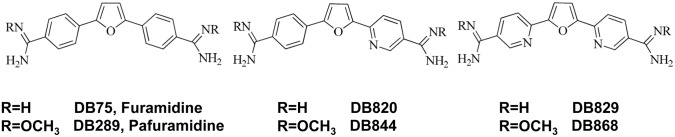
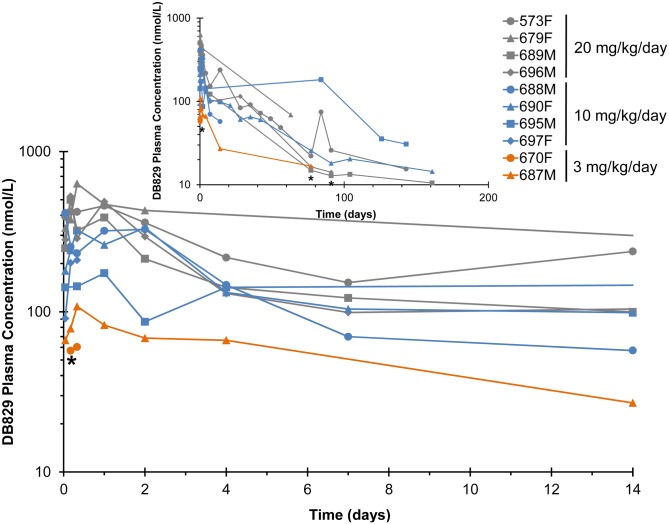
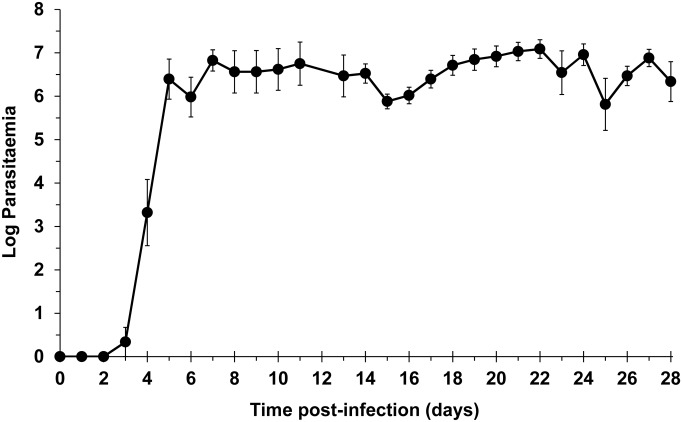
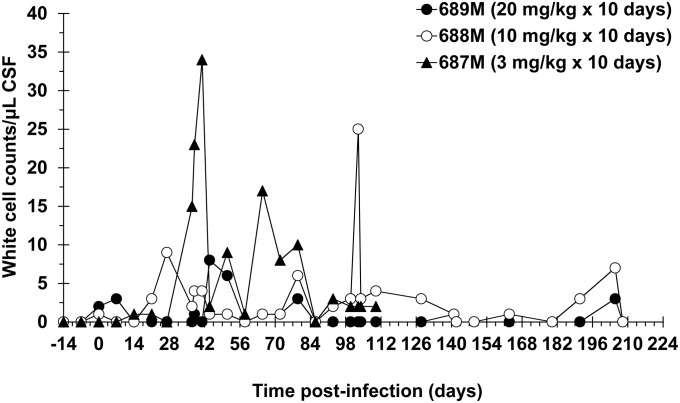
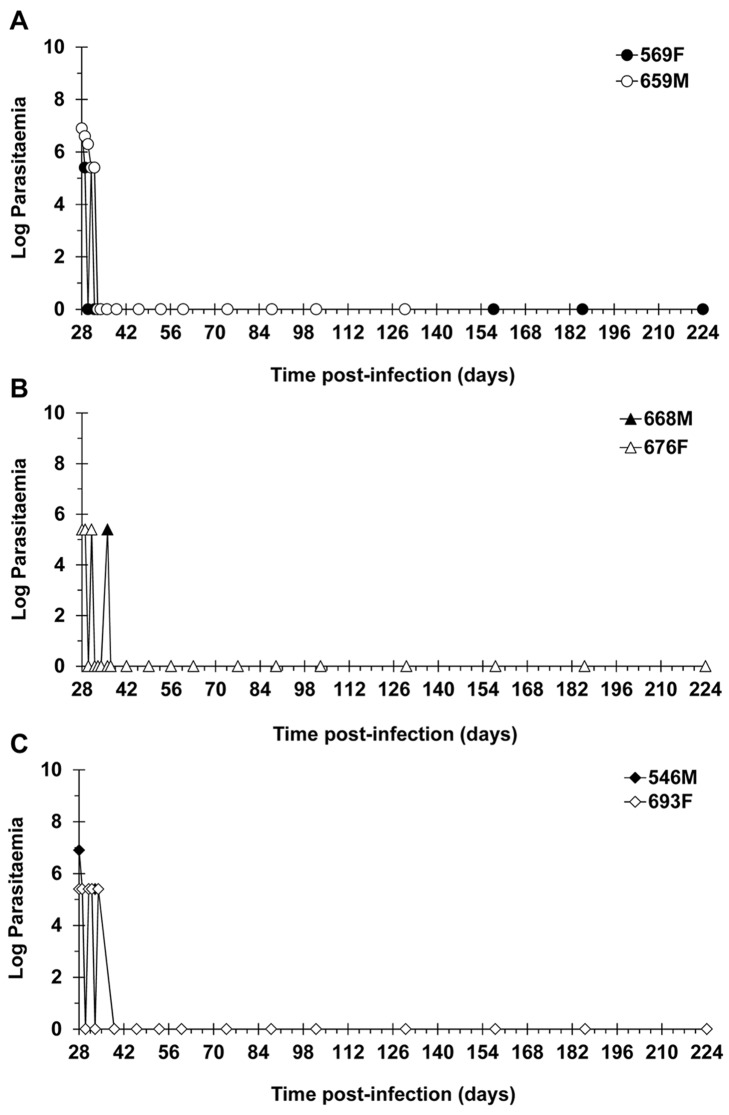
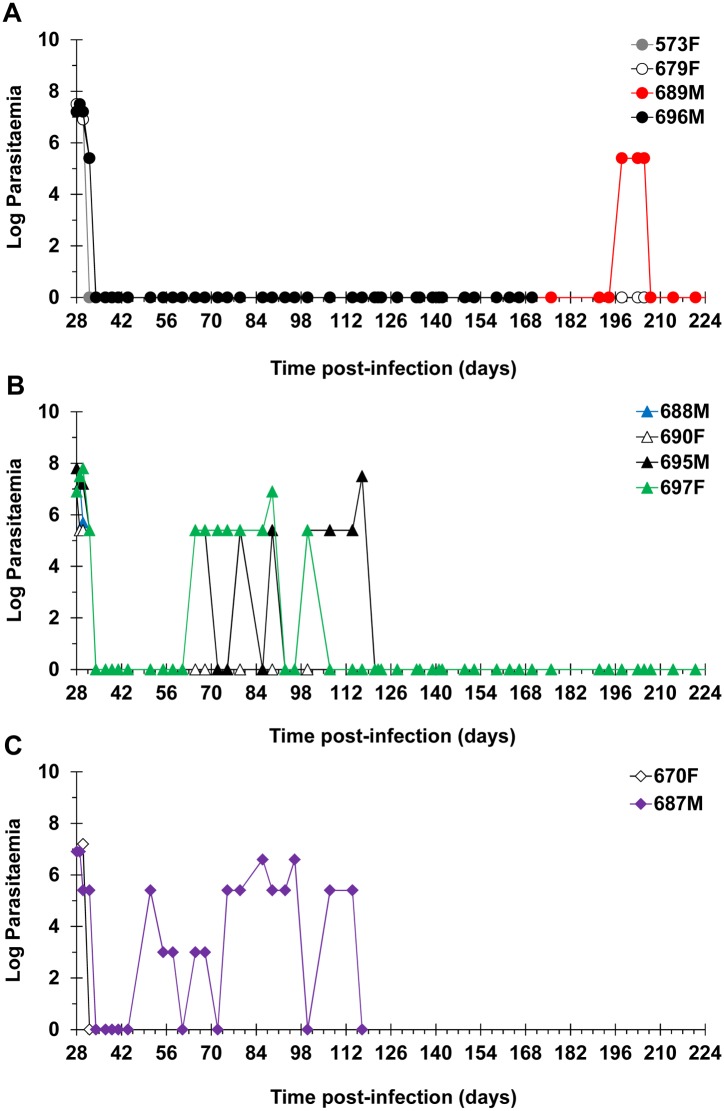
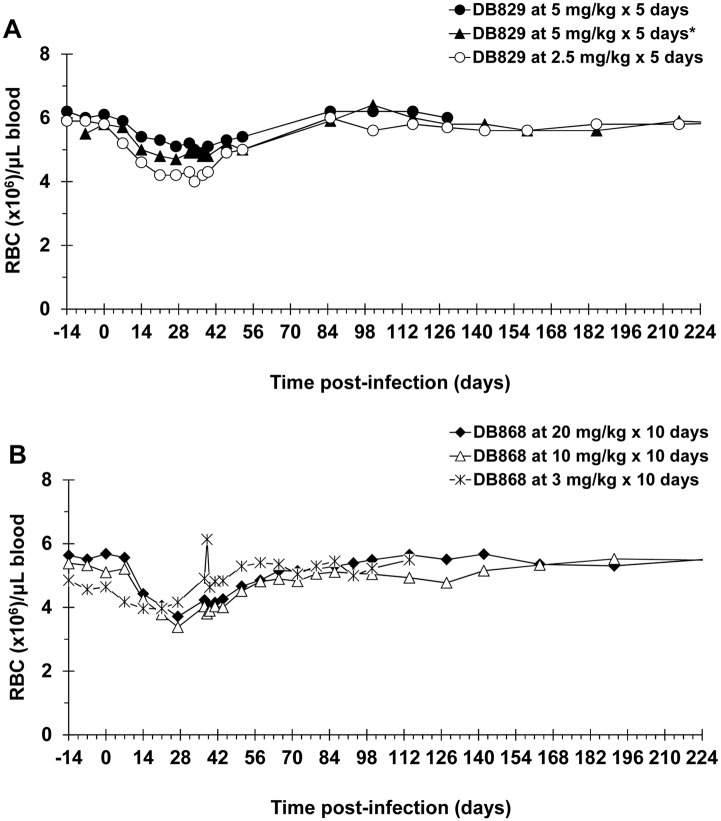
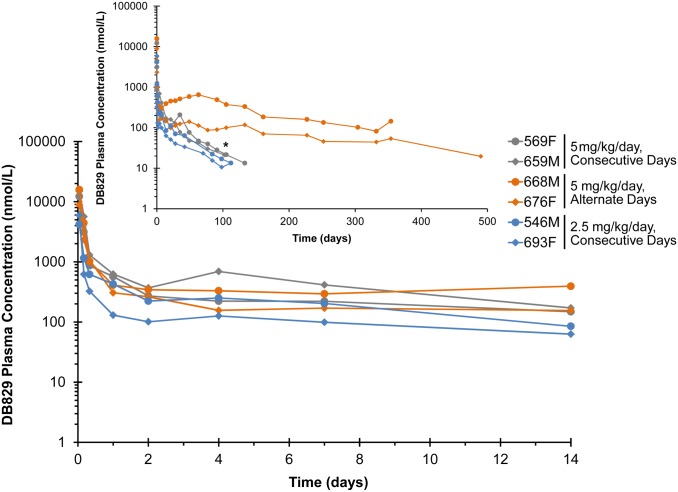
Human African trypanosomiasis (HAT, sleeping sickness) ranks among the most neglected tropical diseases based on limited availability of drugs that are safe and efficacious, particularly against the second stage (central nervous system [CNS]) of infection. In response to this largely unmet need for new treatments, the Consortium for Parasitic Drug Development developed novel parenteral diamidines and corresponding oral prodrugs that have shown cure of a murine model of second stage HAT. As a rationale for selection of one of these compounds for further development, the pharmacokinetics and efficacy of intramuscular (IM) active diamidine 2,5-bis(5-amidino-2-pyridyl)furan (DB829; CPD-0802) and oral prodrug2,5-bis[5-(N-methoxyamidino)-2-pyridyl]furan (DB868) were compared in the vervet monkey model of second stage HAT. Treatment was initiated 28 days post-infection of monkeys with T. b. rhodesiense KETRI 2537. Results showed that IM DB829 at 5 mg/kg/day for 5 consecutive days, 5 mg/kg/day every other day for 5 doses, or 2.5 mg/kg/day for 5 consecutive days cured all monkeys (5/5). Oral DB868 was less successful, with no cures (0/2) at 3 mg/kg/day for 10 days and cure rates of 1/4 at 10 mg/kg/day for 10 days and 20 mg/kg/day for 10 days; in total, only 2/10 monkeys were cured with DB868 dose regimens. The geometric mean plasma Cmax of IM DB829 at 5 mg/kg following the last of 5 doses was 25-fold greater than that after 10 daily oral doses of DB868 at 20 mg/kg. These data suggest that the active diamidine DB829, administered IM, should be considered for further development as a potential new treatment for second stage HAT.
人类非洲锥虫病(HAT,昏睡病)是最被忽视的热带疾病之一,原因是安全有效的药物供应有限,尤其是针对感染第二阶段(中枢神经系统[CNS])的药物。为了应对对新治疗方法这一未得到满足的巨大需求,寄生虫药物开发联盟研发了新型胃肠外二脒及相应的口服前药,这些药物已在第二阶段HAT小鼠模型中显示出治愈效果。作为选择其中一种化合物进行进一步开发的依据,在第二阶段HAT的黑长尾猴模型中比较了肌肉注射(IM)活性二脒2,5-双(5-脒基-2-吡啶基)呋喃(DB829;CPD-0802)和口服前药2,5-双[5-(N-甲氧基脒基)-2-吡啶基]呋喃(DB868)的药代动力学和疗效。在猴子感染罗德西亚锥虫KETRI 2537后28天开始治疗。结果显示,连续5天以5mg/kg/天的剂量、每隔一天以5mg/kg/天的剂量给药5次或连续5天以2.5mg/kg/天的剂量肌肉注射DB829可治愈所有猴子(5/5)。口服DB868的效果较差,在10天内以3mg/kg/天的剂量给药未治愈任何猴子(0/2),在10天内以10mg/kg/天的剂量给药治愈率为1/4,在10天内以20mg/kg/天的剂量给药治愈率为1/4;总的来说,使用DB868给药方案仅治愈了2/10只猴子。在5次给药中的最后一次以5mg/kg的剂量肌肉注射DB829后,其几何平均血浆Cmax比以20mg/kg的剂量每日口服10次DB868后的几何平均血浆Cmax高25倍。这些数据表明,肌肉注射活性二脒DB829应被考虑进一步开发,作为第二阶段HAT的一种潜在新疗法。