Mishra Divya, Nair Sunita R
Associate Medical Director, Oncology, Asia Medical Sciences Group, Quintiles Research (India) Private Limited (QRPL), New Delhi, India.
Head, Knowledge Services, Capita India Private Limited, Mumbai, Maharashtra, India.
Perspect Clin Res. 2015 Jan-Mar;6(1):20-33. doi: 10.4103/2229-3485.148802.
This systematic literature review was conducted to identify, evaluate, and characterize the variety, quality, and intent of the health economics and outcomes research studies being conducted in India.
Studies published in English language between 1999 and 2012 were retrieved from Embase and PubMed databases using relevant search strategies. Two researchers independently reviewed the studies as per Cochrane methodology; information on the type of research and the outcomes were extracted. Quality of reporting was assessed for model-based health economic studies using a published 100-point Quality of Health Economic Studies (QHES) instrument.
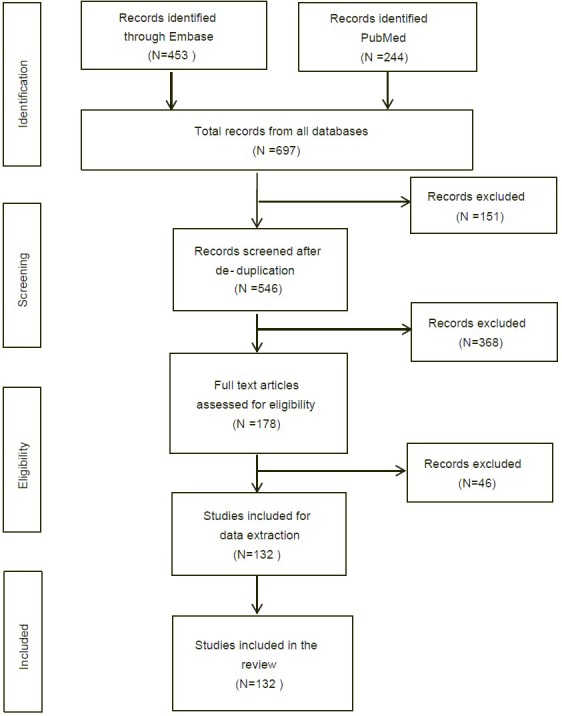
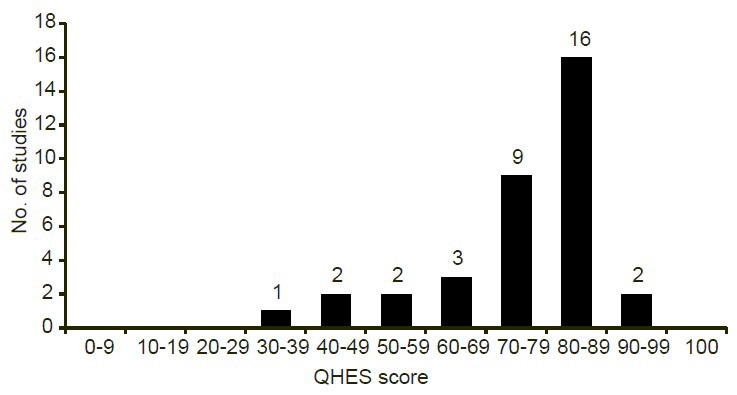
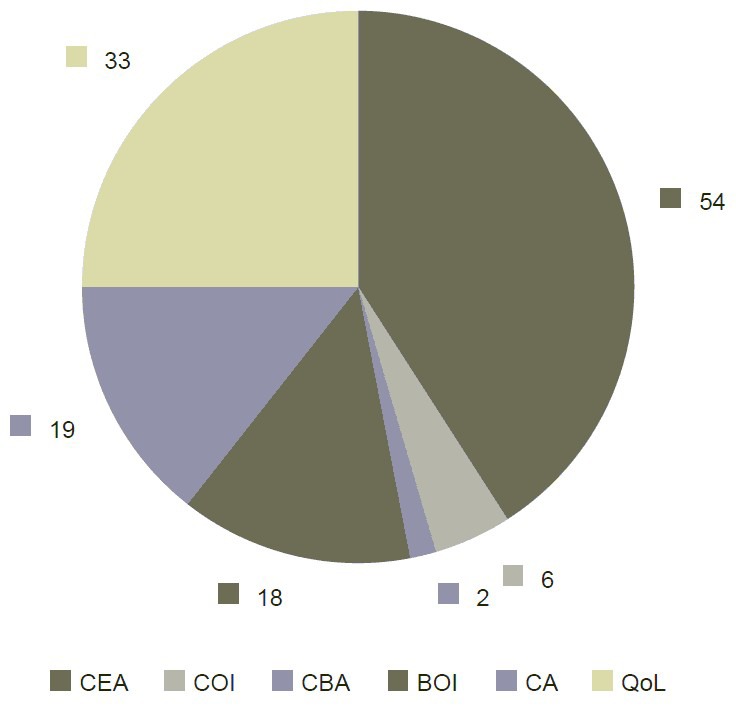
Of 546 studies screened, 132 were included in the review. The broad study categories were cost-effectiveness analyses [(CEA) 54 studies], cost analyses (19 studies), and burden of illness [(BOI) 18 studies]. The outcomes evaluated were direct and indirect costs, and incremental cost-effectiveness ratio (ICER), quality-adjusted life years (QALYs), and disability-adjusted life years (DALYs). Direct medical costs assessed cost of medicines, monitoring costs, consultation and hospital charges, along with direct non-medical costs (travel and food for patients and care givers). Loss of productivity and loss of income of patients and care givers were identified as the components of indirect cost. Overall, 33 studies assessed the quality of life (QoL), and the WHO Quality of Life-BREF (WHOQOL-BREF) was the most commonly used instrument. Quality assessment for modeling studies showed that most studies were of high quality [mean (range) QHES score to be 75.5 (34-93)].
This review identified various patterns of pharmacoeconomic studies and good-quality CEA studies. However, there is a need for better assessment of utilization of healthcare resources in India.
进行这项系统文献综述,以识别、评估和描述印度正在开展的卫生经济学与结果研究的种类、质量和意图。
采用相关检索策略,从Embase和PubMed数据库中检索1999年至2012年期间以英文发表的研究。两名研究人员按照Cochrane方法独立评审这些研究;提取有关研究类型和结果的信息。使用已发表的100分制卫生经济研究质量(QHES)工具,对基于模型的卫生经济研究的报告质量进行评估。
在筛选的546项研究中,132项被纳入综述。广泛的研究类别包括成本效益分析[(CEA)54项研究]、成本分析(19项研究)以及疾病负担[(BOI)18项研究]。评估的结果包括直接和间接成本、增量成本效益比(ICER)、质量调整生命年(QALY)和伤残调整生命年(DALY)。直接医疗成本评估了药品成本、监测成本、会诊和住院费用,以及直接非医疗成本(患者和护理人员的交通和饮食费用)。患者和护理人员的生产力损失和收入损失被确定为间接成本的组成部分。总体而言,33项研究评估了生活质量(QoL),世界卫生组织生活质量简表(WHOQOL-BREF)是最常用的工具。建模研究的质量评估表明,大多数研究质量较高[平均(范围)QHES评分为75.5(34-93)]。
本综述确定了药物经济学研究的各种模式以及高质量的CEA研究。然而,印度需要更好地评估医疗保健资源的利用情况。