Fukuyama Y, Yuki Y, Katakai Y, Harada N, Takahashi H, Takeda S, Mejima M, Joo S, Kurokawa S, Sawada S, Shibata H, Park E J, Fujihashi K, Briles D E, Yasutomi Y, Tsukada H, Akiyoshi K, Kiyono H
Division of Mucosal Immunology, The Institute of Medical Science, The University of Tokyo, Minato-ku, Tokyo, Japan.
1] Division of Mucosal Immunology, The Institute of Medical Science, The University of Tokyo, Minato-ku, Tokyo, Japan [2] International Research and Development Center for Mucosal Vaccine, The Institute of Medical Science, The University of Tokyo, Minato-ku, Tokyo, Japan.
Mucosal Immunol. 2015 Sep;8(5):1144-53. doi: 10.1038/mi.2015.5. Epub 2015 Feb 11.
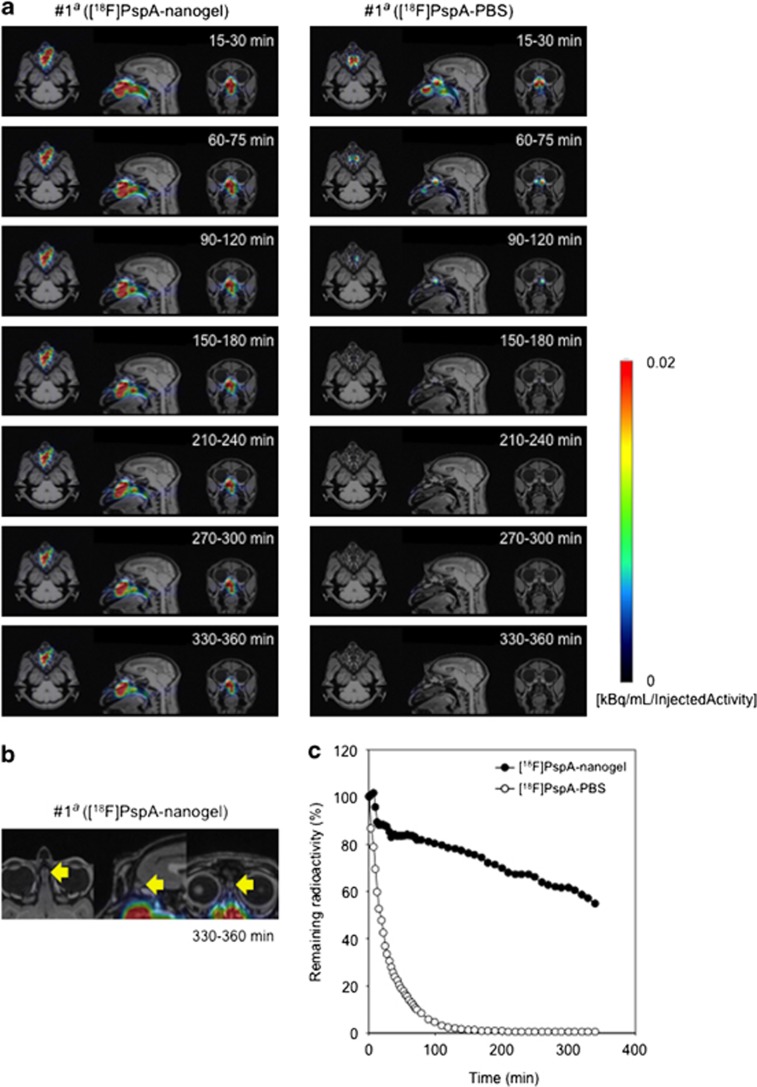
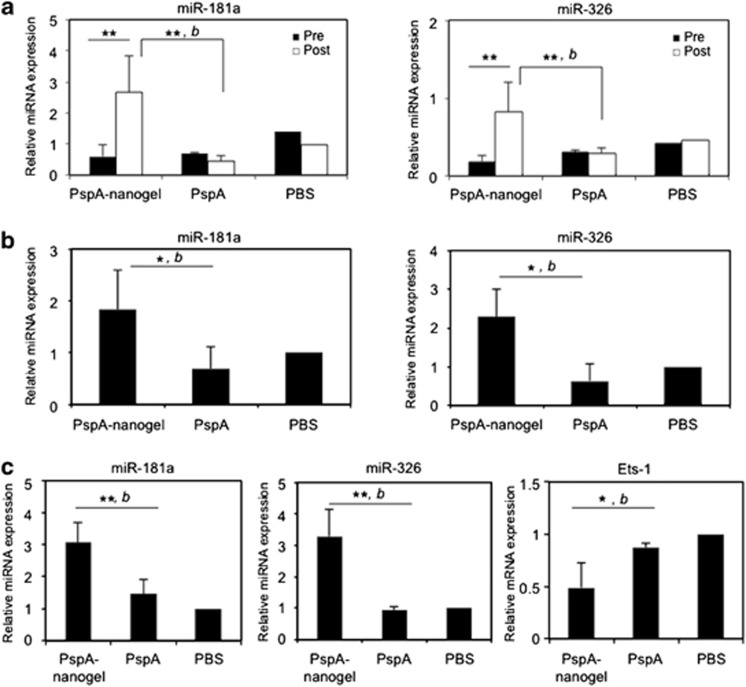
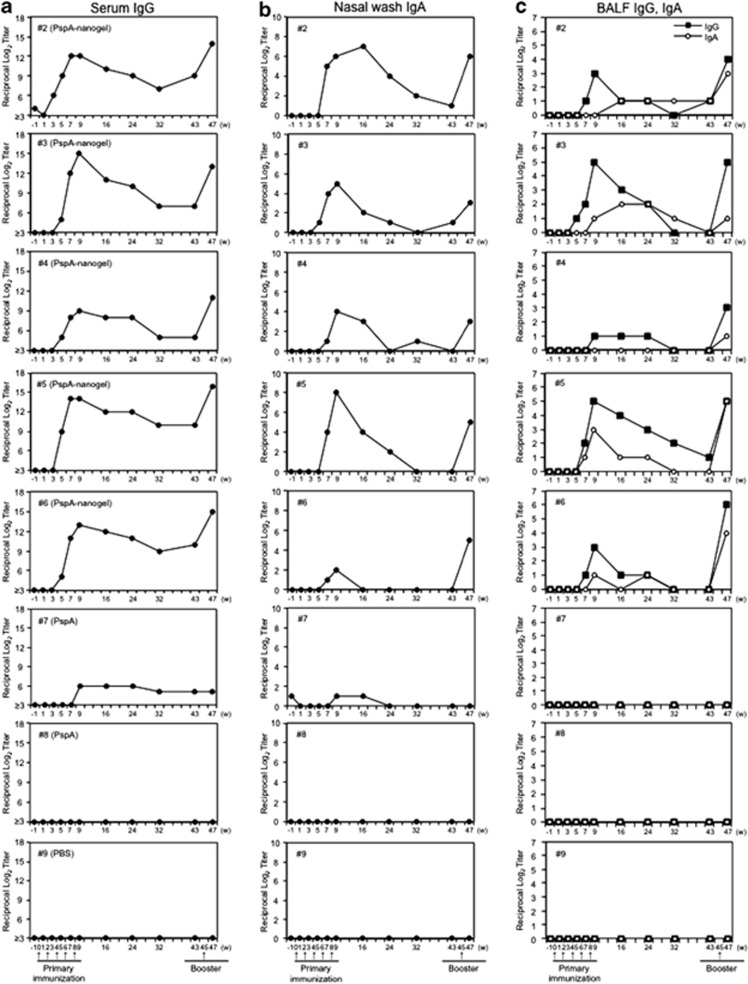
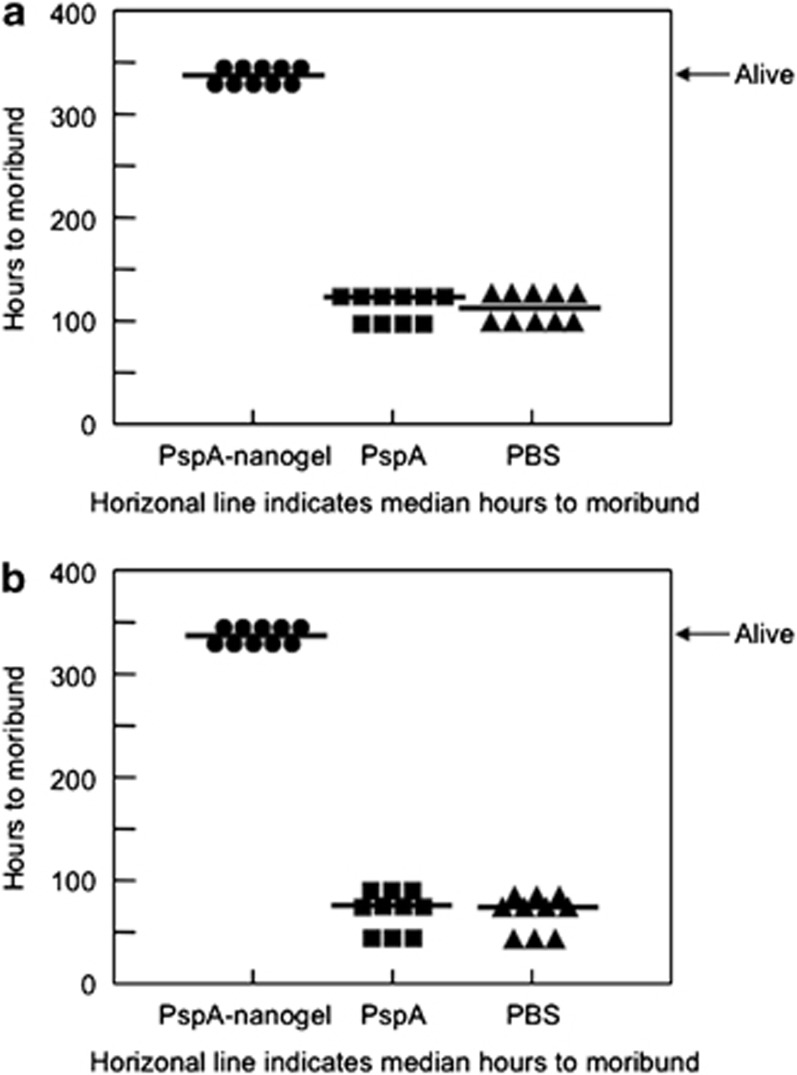
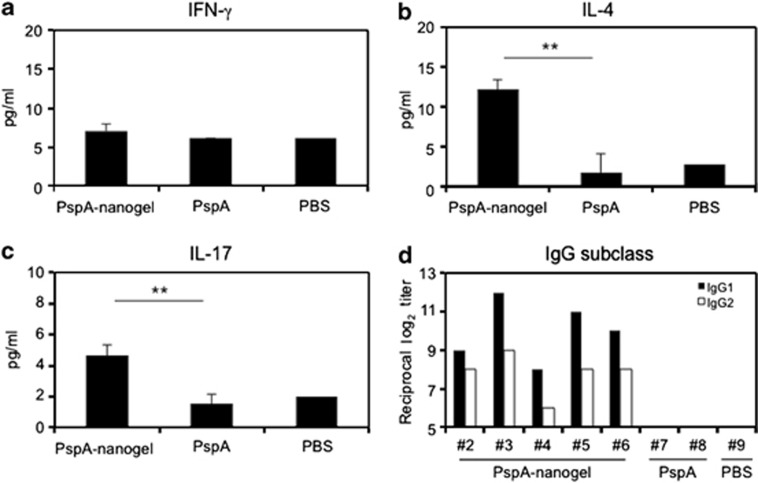
We previously established a nanosized nasal vaccine delivery system by using a cationic cholesteryl group-bearing pullulan nanogel (cCHP nanogel), which is a universal protein-based antigen-delivery vehicle for adjuvant-free nasal vaccination. In the present study, we examined the central nervous system safety and efficacy of nasal vaccination with our developed cCHP nanogel containing pneumococcal surface protein A (PspA-nanogel) against pneumococcal infection in nonhuman primates. When [(18)F]-labeled PspA-nanogel was nasally administered to a rhesus macaque (Macaca mulatta), longer-term retention of PspA was noted in the nasal cavity when compared with administration of PspA alone. Of importance, no deposition of [(18)F]-PspA was seen in the olfactory bulbs or brain. Nasal PspA-nanogel vaccination effectively induced PspA-specific serum IgG with protective activity and mucosal secretory IgA (SIgA) Ab responses in cynomolgus macaques (Macaca fascicularis). Nasal PspA-nanogel-induced immune responses were mediated through T-helper (Th) 2 and Th17 cytokine responses concomitantly with marked increases in the levels of miR-181a and miR-326 in the serum and respiratory tract tissues, respectively, of the macaques. These results demonstrate that nasal PspA-nanogel vaccination is a safe and effective strategy for the development of a nasal vaccine for the prevention of pneumonia in humans.
我们之前通过使用含阳离子胆固醇基团的支链淀粉纳米凝胶(cCHP纳米凝胶)建立了一种纳米级鼻腔疫苗递送系统,该系统是一种用于无佐剂鼻腔疫苗接种的通用蛋白质抗原递送载体。在本研究中,我们检测了用我们研发的含肺炎球菌表面蛋白A的cCHP纳米凝胶(PspA纳米凝胶)进行鼻腔疫苗接种在非人灵长类动物中预防肺炎球菌感染的中枢神经系统安全性和有效性。当将[¹⁸F]标记的PspA纳米凝胶经鼻给予恒河猴(猕猴)时,与单独给予PspA相比,鼻腔中PspA的保留时间更长。重要的是,在嗅球或大脑中未观察到[¹⁸F] - PspA的沉积。鼻腔PspA纳米凝胶疫苗接种有效地诱导了食蟹猴(食蟹猕猴)产生具有保护活性的PspA特异性血清IgG和黏膜分泌型IgA(SIgA)抗体反应。鼻腔PspA纳米凝胶诱导的免疫反应是通过辅助性T细胞(Th)2和Th17细胞因子反应介导的,同时猕猴血清和呼吸道组织中miR - 181a和miR - 326的水平分别显著升高。这些结果表明,鼻腔PspA纳米凝胶疫苗接种是开发用于预防人类肺炎的鼻腔疫苗的一种安全有效的策略。