Peter MacCallum Cancer Centre and the Sir Peter MacCallum Oncology Department, University Of Melbourne , Melbourne, Victoria, Australia ; Department of Pathology, University Of Melbourne , Melbourne, Victoria, Australia.
Clin Transl Immunology. 2015 Jan 9;4(1):e30. doi: 10.1038/cti.2014.29. eCollection 2015 Jan.
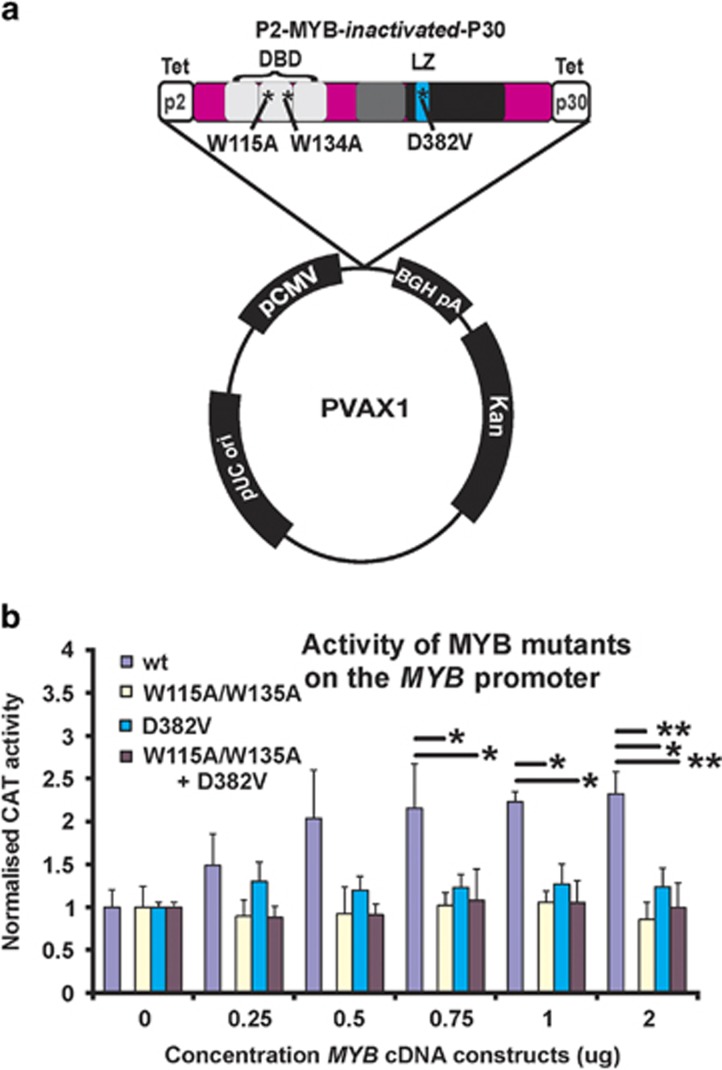
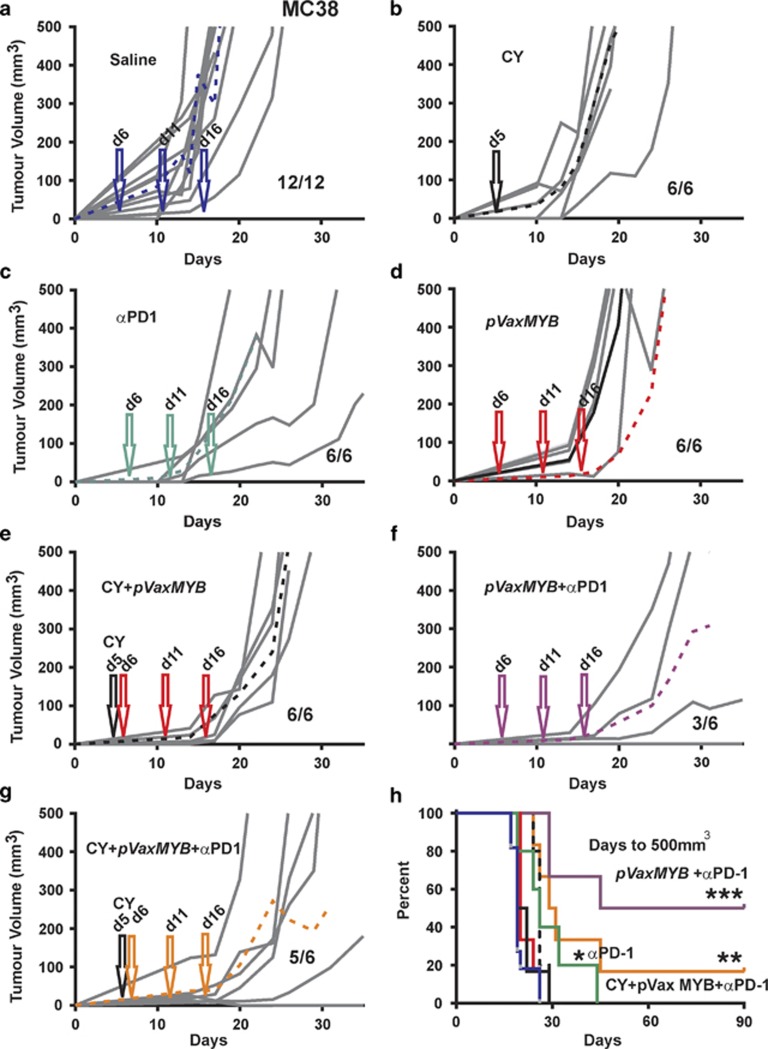
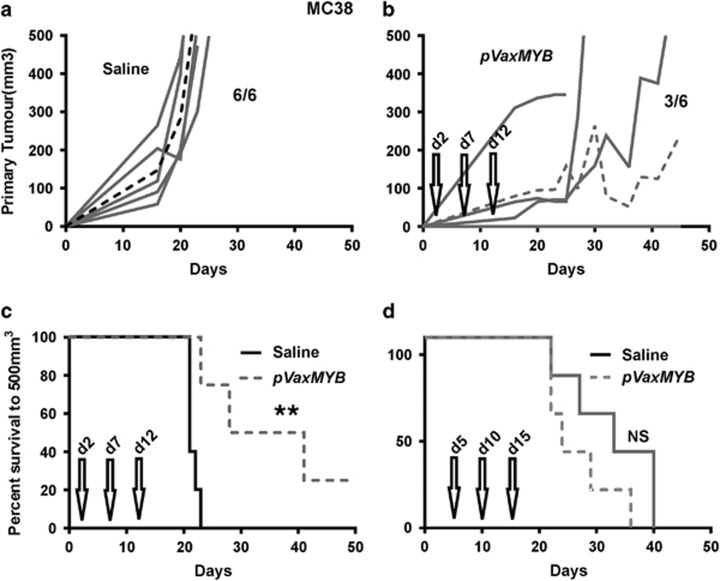
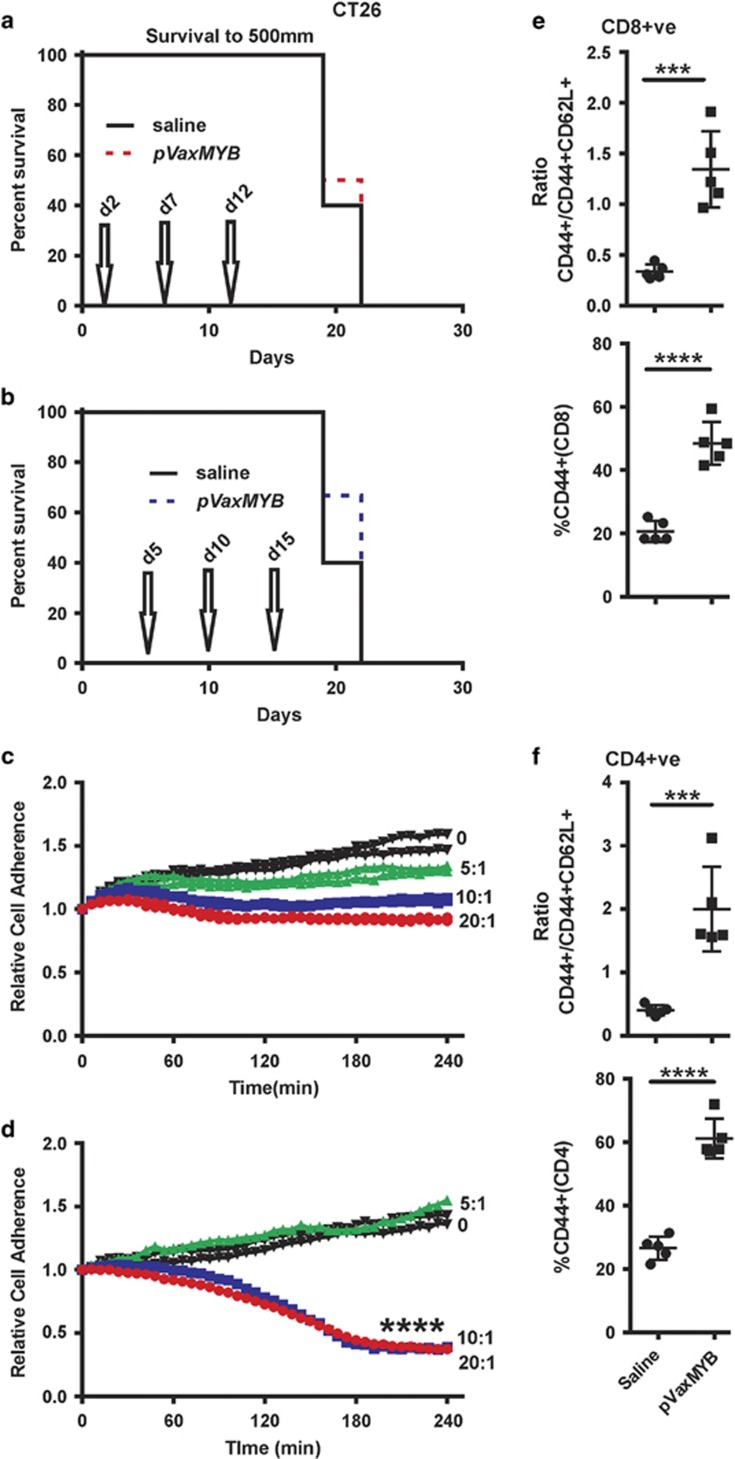
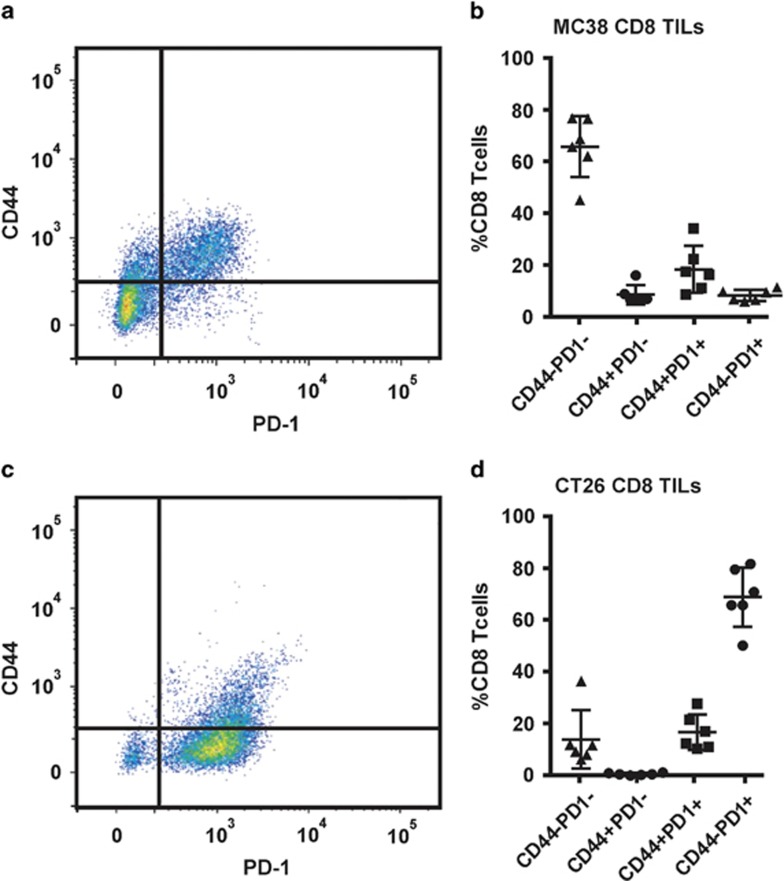
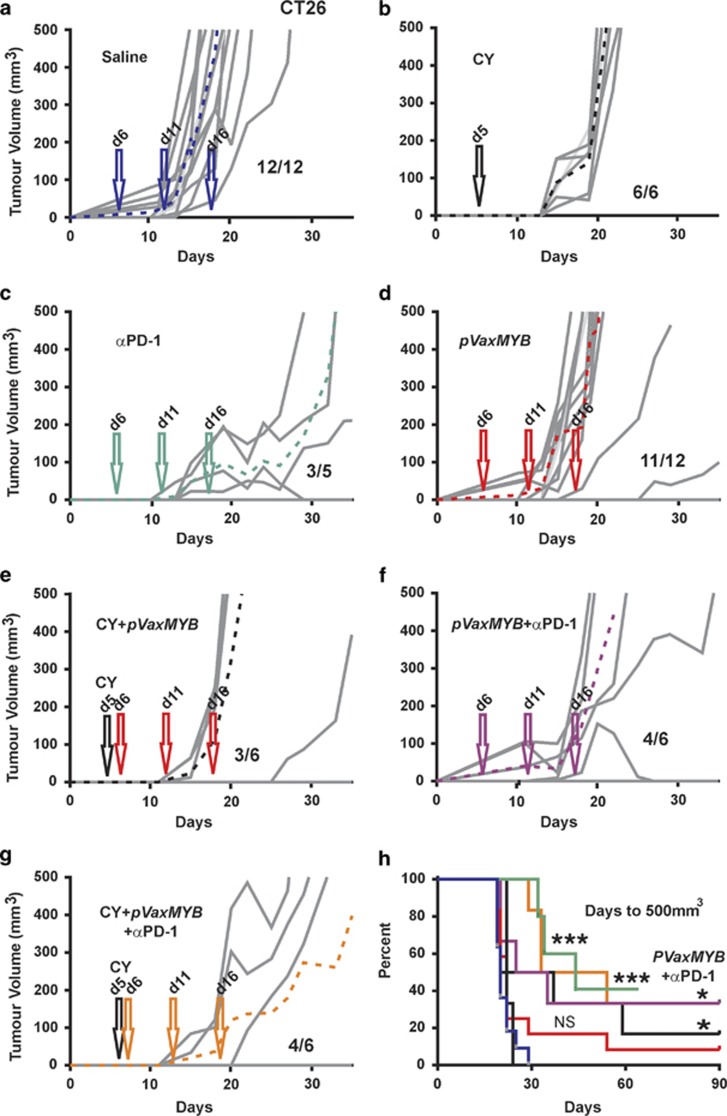
Cancers can be addicted to continued and relatively high expression of nuclear oncoproteins. This is evident in colorectal cancer (CRC) where the oncoprotein and transcription factor MYB is over expressed and essential to continued proliferation and tumour cell survival. Historically, targeting transcription factors in the context of cancer has been very challenging. Nevertheless, we formulated a DNA vaccine to generate a MYB-specific immune response in the belief MYB peptides might be aberrantly presented on the cell surface of CRC cells. MYB, like many tumour antigens, is weakly immunogenic as it is a 'self' antigen and is subject to tolerance. To break tolerance, a fusion vaccine was generated comprising a full-length MYB complementary DNA (cDNA) flanked by two potent CD4-epitopes derived from tetanus toxoid. Vaccination was achieved against tumours initiated by two distinct highly aggressive, syngeneic cancer cell lines (CT26 and MC38) that express MYB. This was done in BALB/c and C57BL/6 mouse strains respectively. We introduced multiple inactivating mutations into the oncogene sequence for safety and sub-cloned the cDNA into a Food and Drug Administration (FDA)-compliant vector. We used low dose cyclophosphamide (CY) to overcome T-regulatory cell immune suppression, and anti-program cell death receptor 1 (anti-PD-1) antibodies to block T-cell exhaustion. Anti-PD-1 administered alone slightly delayed tumour growth in MC38 and more effectively in CT26 bearing mice, while CY treatment alone did not. We found that therapeutic vaccination elicits protection when MC38 tumour burden is low, mounts tumour-specific cell killing and affords enhanced protection when MC38 and CT26 tumour burden is higher but only in combination with anti-PD-1 antibody or low dose CY, respectively.
癌症可能会对持续且相对高水平的核癌蛋白表达产生依赖。结直肠癌(CRC)中就存在这种情况,癌蛋白和转录因子 MYB 过表达,对持续增殖和肿瘤细胞存活至关重要。从历史上看,针对癌症中的转录因子具有很大的挑战性。尽管如此,我们还是设计了一种 DNA 疫苗,以在相信 MYB 肽可能在 CRC 细胞表面异常呈递的情况下产生针对 MYB 的特异性免疫反应。与许多肿瘤抗原一样,MYB 作为一种“自身”抗原,其免疫原性较弱,容易产生耐受。为了打破耐受,我们生成了一种融合疫苗,其中包含全长 MYB cDNA,两侧是来自破伤风类毒素的两个强效 CD4 表位。在 BALB/c 和 C57BL/6 两种小鼠品系中,针对表达 MYB 的两种不同的高侵袭性同源癌细胞系(CT26 和 MC38)引发的肿瘤进行了疫苗接种。我们对致癌基因序列进行了多次失活突变以确保安全性,并将 cDNA 亚克隆到符合食品和药物管理局(FDA)要求的载体中。我们使用低剂量环磷酰胺(CY)来克服 T 调节细胞的免疫抑制,并用抗程序性细胞死亡受体 1(抗 PD-1)抗体来阻断 T 细胞衰竭。单独使用抗 PD-1 略微延迟了 MC38 荷瘤小鼠的肿瘤生长,而在 CT26 荷瘤小鼠中则更有效,而单独使用 CY 则没有效果。我们发现,当 MC38 肿瘤负担较低时,治疗性疫苗会引发保护,会进行肿瘤特异性细胞杀伤,并在 MC38 和 CT26 肿瘤负担较高时提供增强的保护,但这仅分别在与抗 PD-1 抗体或低剂量 CY 联合使用时才有效。