Carriba P, Jimenez S, Navarro V, Moreno-Gonzalez I, Barneda-Zahonero B, Moubarak R S, Lopez-Soriano J, Gutierrez A, Vitorica J, Comella J X
1] Institut de Recerca de l'Hospital Universitari de la Vall d'Hebron (VHIR), Passeig Vall d'Hebron 119-129, Barcelona 08035, Spain [2] Institut de Neurociències, Departament de Bioquímica i Biologia Molecular, Facultat de Medicina, Universitat Autònoma de Barcelona, Campus de Bellaterra (Edifici M), Bellaterra 08193, Spain [3] Centro de Investigación Biomèdica en Red sobre Enfermedades Neurodegenerativas (CIBERNED), Spain.
1] Centro de Investigación Biomèdica en Red sobre Enfermedades Neurodegenerativas (CIBERNED), Spain [2] Instituto de Biomedicina de Sevilla (IBIS), Hospital Universitario Virgen del Rocio, Consejo Superior de Investigaciones Cientificas Universidad de Sevilla, c/ Manuel Siurot s/n, Sevilla 41013, Spain [3] Departamento Bioquimica y Biologia Molecular, Facultad de Farmacia, Universidad de Sevilla, Sevilla 41012, Spain.
Cell Death Dis. 2015 Feb 12;6(2):e1639. doi: 10.1038/cddis.2015.6.
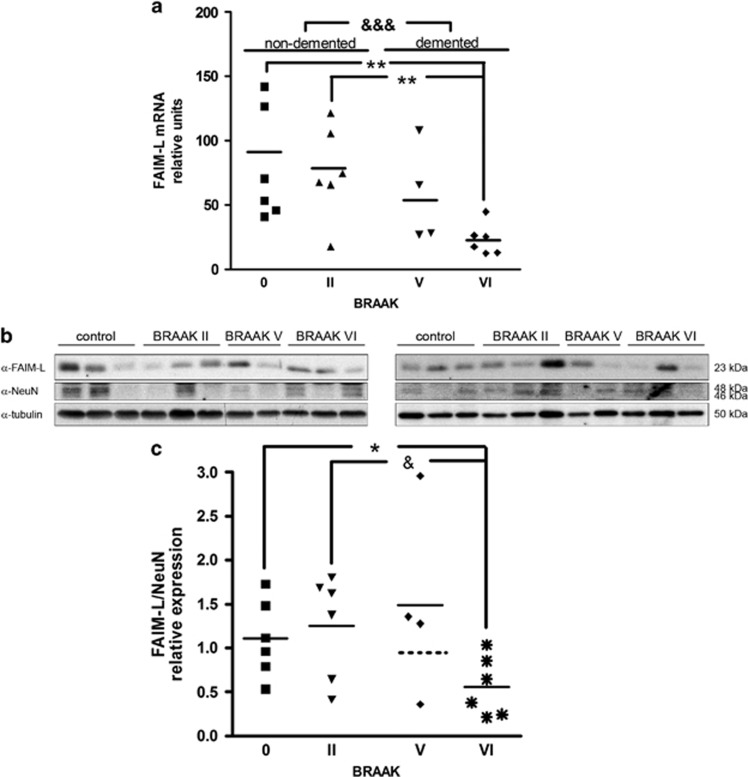
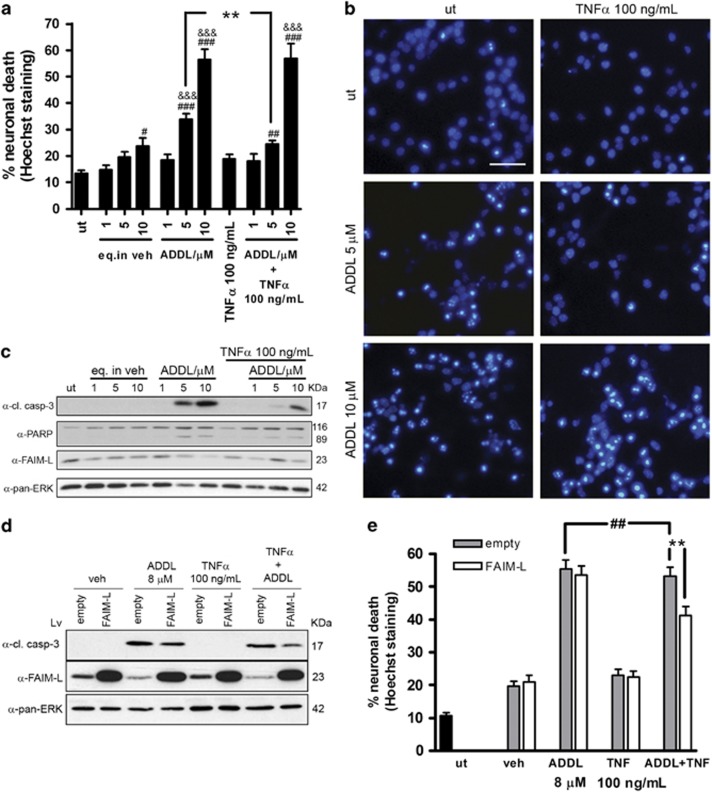
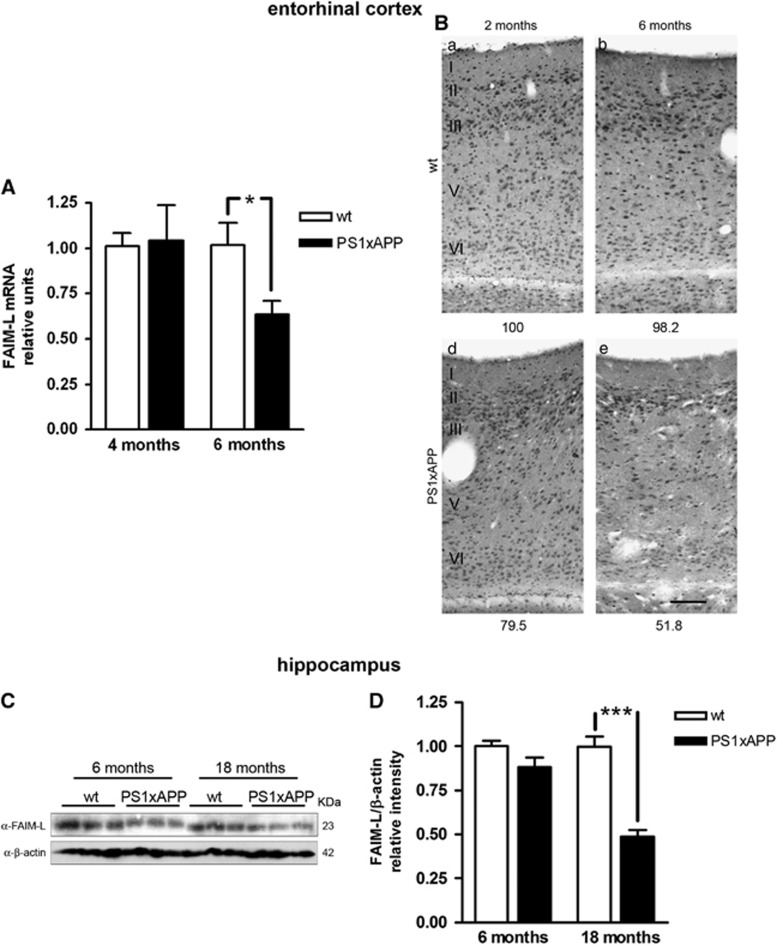
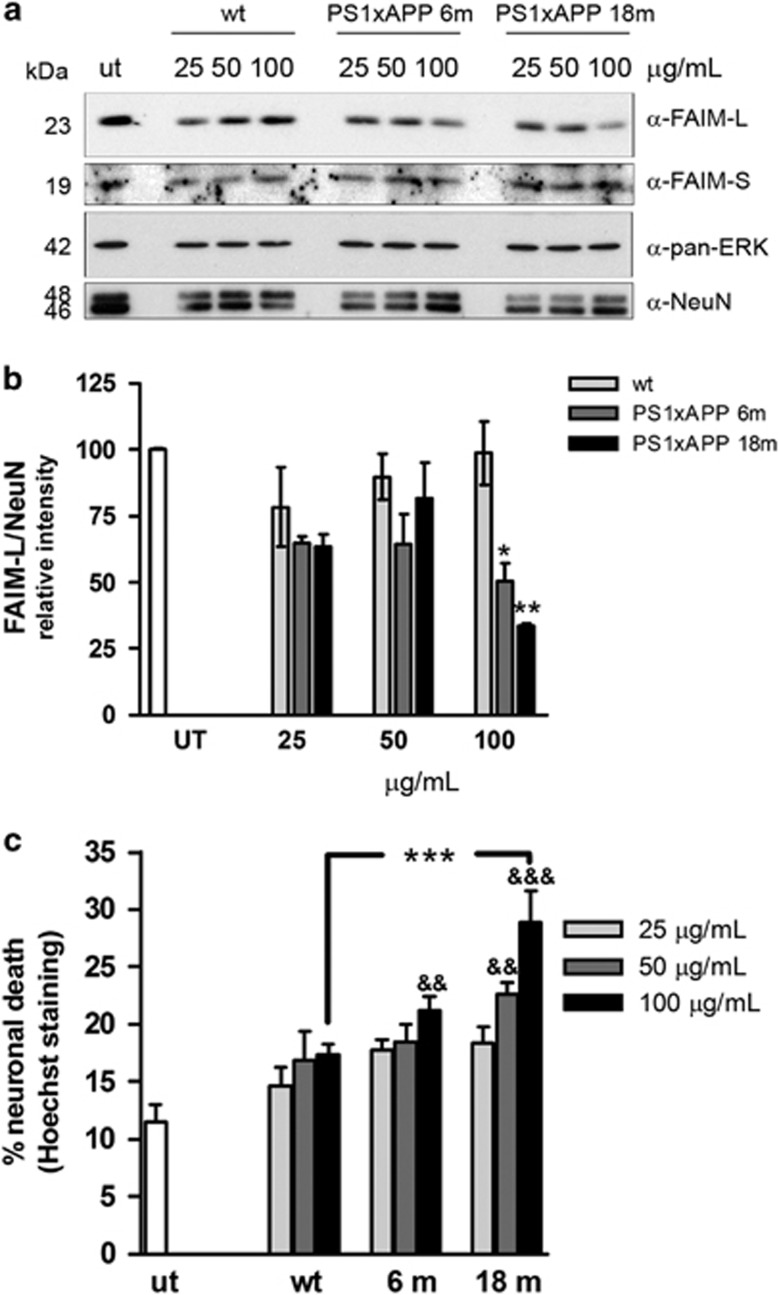
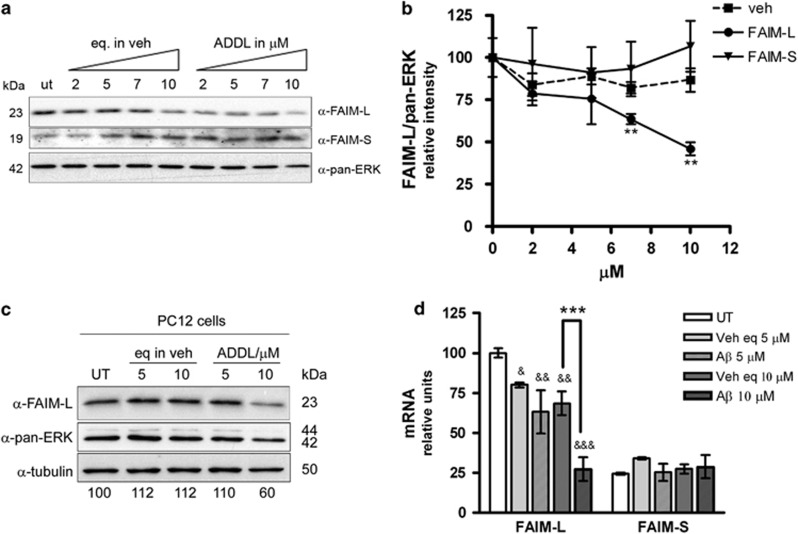
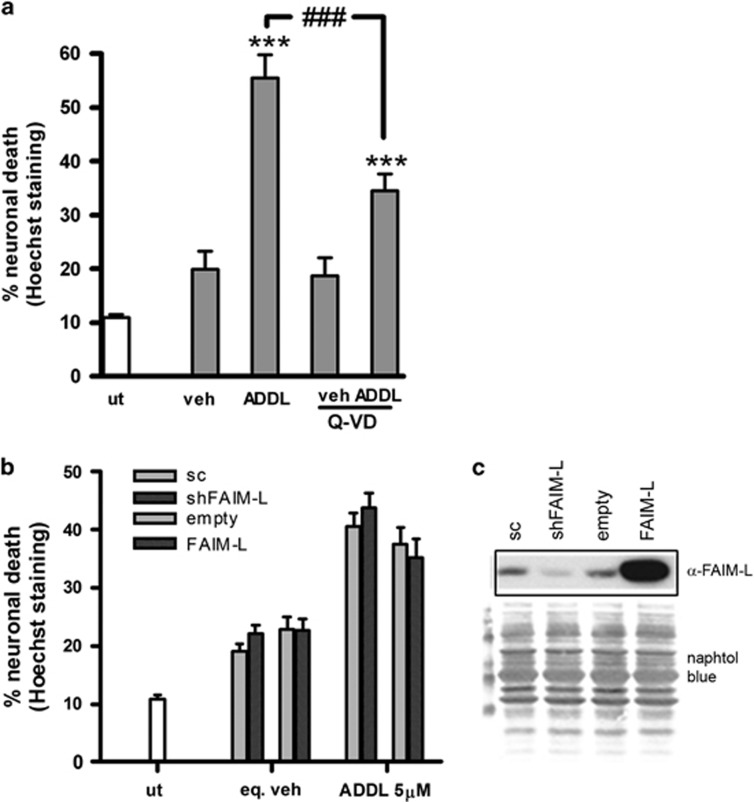
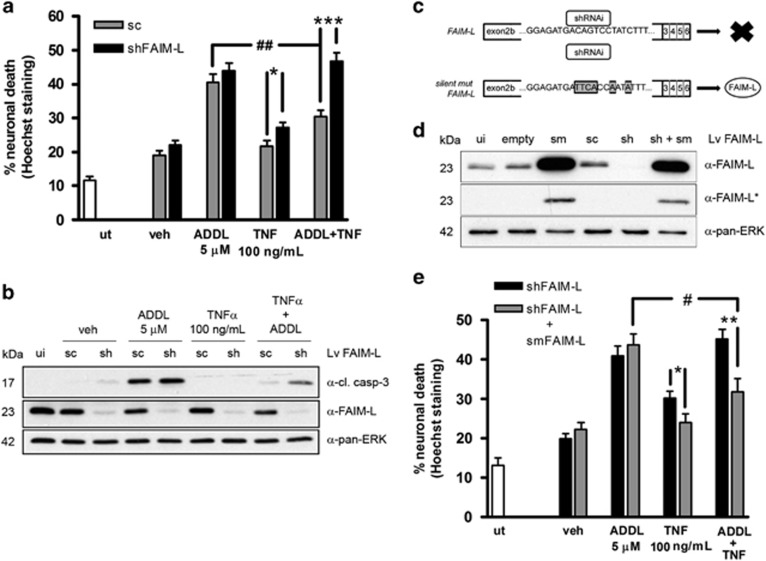
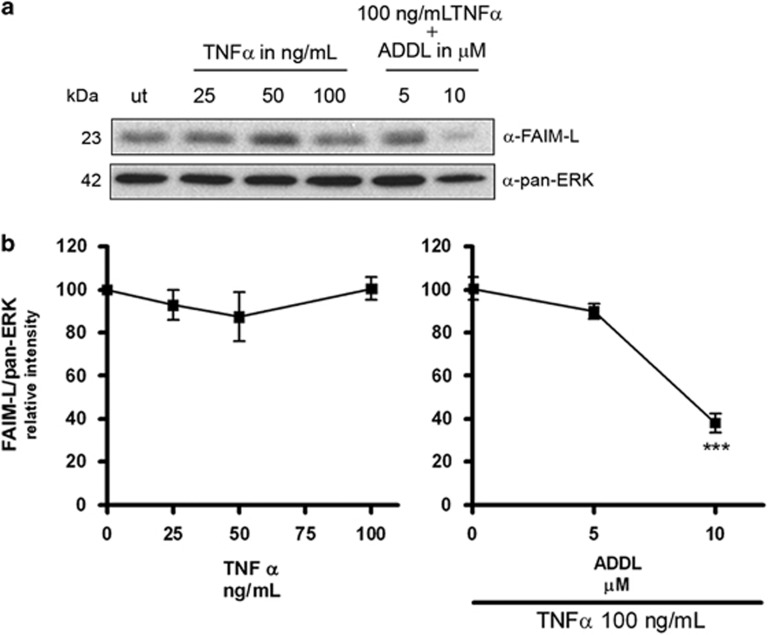
The brains of patients with Alzheimer's disease (AD) present elevated levels of tumor necrosis factor-α (TNFα), a cytokine that has a dual function in neuronal cells. On one hand, TNFα can activate neuronal apoptosis, and on the other hand, it can protect these cells against amyloid-β (Aβ) toxicity. Given the dual behavior of this molecule, there is some controversy regarding its contribution to the pathogenesis of AD. Here we examined the relevance of the long form of Fas apoptotic inhibitory molecule (FAIM) protein, FAIM-L, in regulating the dual function of TNFα. We detected that FAIM-L was reduced in the hippocampi of patients with AD. We also observed that the entorhinal and hippocampal cortex of a mouse model of AD (PS1(M146L)xAPP(751sl)) showed a reduction in this protein before the onset of neurodegeneration. Notably, cultured neurons treated with the cortical soluble fractions of these animals showed a decrease in endogenous FAIM-L, an effect that is mimicked by the treatment with Aβ-derived diffusible ligands (ADDLs). The reduction in the expression of FAIM-L is associated with the progression of the neurodegeneration by changing the inflammatory response mediated by TNFα in neurons. In this sense, we also demonstrate that the protection afforded by TNFα against Aβ toxicity ceases when endogenous FAIM-L is reduced by short hairpin RNA (shRNA) or by treatment with ADDLs. All together, these results support the notion that levels of FAIM-L contribute to determine the protective or deleterious effect of TNFα in neuronal cells.
阿尔茨海默病(AD)患者的大脑中肿瘤坏死因子-α(TNFα)水平升高,TNFα是一种在神经元细胞中具有双重功能的细胞因子。一方面,TNFα可激活神经元凋亡,另一方面,它可保护这些细胞免受淀粉样β蛋白(Aβ)毒性的影响。鉴于该分子的双重作用,关于其在AD发病机制中的作用存在一些争议。在此,我们研究了Fas凋亡抑制分子(FAIM)长链蛋白FAIM-L在调节TNFα双重功能中的相关性。我们检测到AD患者海马体中FAIM-L减少。我们还观察到AD小鼠模型(PS1(M146L)xAPP(751sl))的内嗅皮质和海马皮质在神经退行性变发作前该蛋白减少。值得注意的是,用这些动物的皮质可溶性组分处理的培养神经元显示内源性FAIM-L减少,用Aβ衍生的可扩散配体(ADDLs)处理也会产生类似效果。FAIM-L表达的减少与神经退行性变的进展相关,这是通过改变神经元中由TNFα介导的炎症反应实现的。从这个意义上说,我们还证明,当通过短发夹RNA(shRNA)或用ADDLs处理使内源性FAIM-L减少时,TNFα对Aβ毒性的保护作用就会消失。综上所述,这些结果支持这样一种观点,即FAIM-L的水平有助于确定TNFα在神经元细胞中的保护或有害作用。