Priedigkeit Nolan, Wolfe Nicholas, Clark Nathan L
Medical Scientist Training Program, University of Pittsburgh School of Medicine, Pittsburgh, Pennsylvania, United States of America; Department of Pharmacology and Chemical Biology, University of Pittsburgh, Pittsburgh, Pennsylvania, United States of America.
Department of Computational and Systems Biology, University of Pittsburgh, Pittsburgh, Pennsylvania, United States of America.
PLoS Genet. 2015 Feb 13;11(2):e1004967. doi: 10.1371/journal.pgen.1004967. eCollection 2015 Feb.
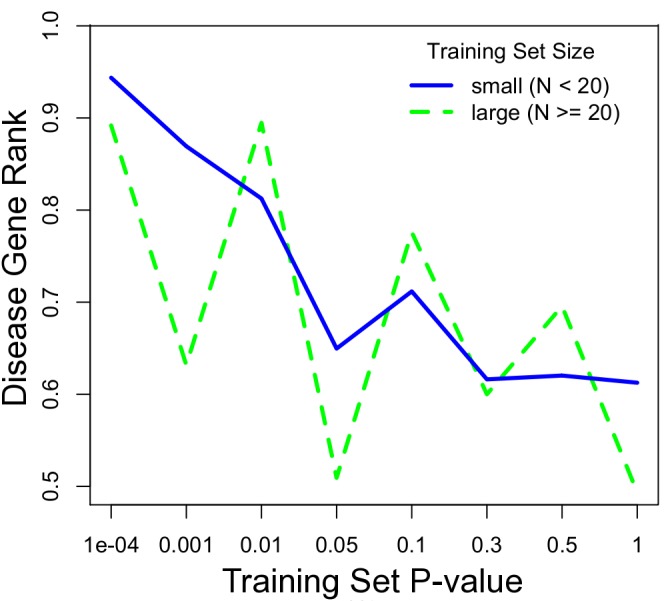
Genes involved in the same function tend to have similar evolutionary histories, in that their rates of evolution covary over time. This coevolutionary signature, termed Evolutionary Rate Covariation (ERC), is calculated using only gene sequences from a set of closely related species and has demonstrated potential as a computational tool for inferring functional relationships between genes. To further define applications of ERC, we first established that roughly 55% of genetic diseases posses an ERC signature between their contributing genes. At a false discovery rate of 5% we report 40 such diseases including cancers, developmental disorders and mitochondrial diseases. Given these coevolutionary signatures between disease genes, we then assessed ERC's ability to prioritize known disease genes out of a list of unrelated candidates. We found that in the presence of an ERC signature, the true disease gene is effectively prioritized to the top 6% of candidates on average. We then apply this strategy to a melanoma-associated region on chromosome 1 and identify MCL1 as a potential causative gene. Furthermore, to gain global insight into disease mechanisms, we used ERC to predict molecular connections between 310 nominally distinct diseases. The resulting "disease map" network associates several diseases with related pathogenic mechanisms and unveils many novel relationships between clinically distinct diseases, such as between Hirschsprung's disease and melanoma. Taken together, these results demonstrate the utility of molecular evolution as a gene discovery platform and show that evolutionary signatures can be used to build informative gene-based networks.
参与相同功能的基因往往具有相似的进化历史,因为它们的进化速率会随时间共同变化。这种共同进化特征,称为进化速率协变(ERC),仅使用一组密切相关物种的基因序列进行计算,并已证明作为推断基因间功能关系的计算工具具有潜力。为了进一步确定ERC的应用,我们首先确定大约55%的遗传疾病在其致病基因之间具有ERC特征。在错误发现率为5%的情况下,我们报告了40种此类疾病,包括癌症、发育障碍和线粒体疾病。鉴于疾病基因之间存在这些共同进化特征,我们随后评估了ERC从一系列不相关候选基因中对已知疾病基因进行优先排序的能力。我们发现,在存在ERC特征的情况下,真正的疾病基因平均能有效地被优先排到候选基因列表的前6%。然后,我们将这种策略应用于1号染色体上与黑色素瘤相关的区域,并确定MCL1为潜在的致病基因。此外,为了全面了解疾病机制,我们使用ERC预测了310种名义上不同疾病之间的分子联系。由此产生的“疾病图谱”网络将几种疾病与相关的致病机制联系起来,并揭示了临床上不同疾病之间的许多新关系,如先天性巨结肠病和黑色素瘤之间的关系。综上所述,这些结果证明了分子进化作为基因发现平台的实用性,并表明进化特征可用于构建信息丰富的基于基因的网络。