Palacios-García Ismael, Lara-Vásquez Ariel, Montiel Juan F, Díaz-Véliz Gabriela F, Sepúlveda Hugo, Utreras Elías, Montecino Martín, González-Billault Christian, Aboitiz Francisco
Departamento de Psiquiatría, Escuela de Medicina, and Centro Interdisciplinario de Neurociencia, Pontificia Universidad Católica de Chile, Santiago, Chile; Laboratory of Cell and Neuronal Dynamics (Cenedyn), Department of Biology, Faculty of Sciences, Universidad de Chile, Santiago, Chile.
Departamento de Psiquiatría, Escuela de Medicina, and Centro Interdisciplinario de Neurociencia, Pontificia Universidad Católica de Chile, Santiago, Chile.
PLoS One. 2015 Feb 13;10(2):e0117680. doi: 10.1371/journal.pone.0117680. eCollection 2015.
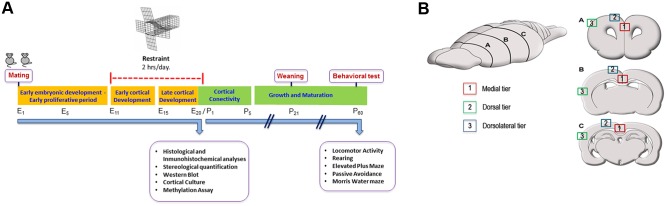
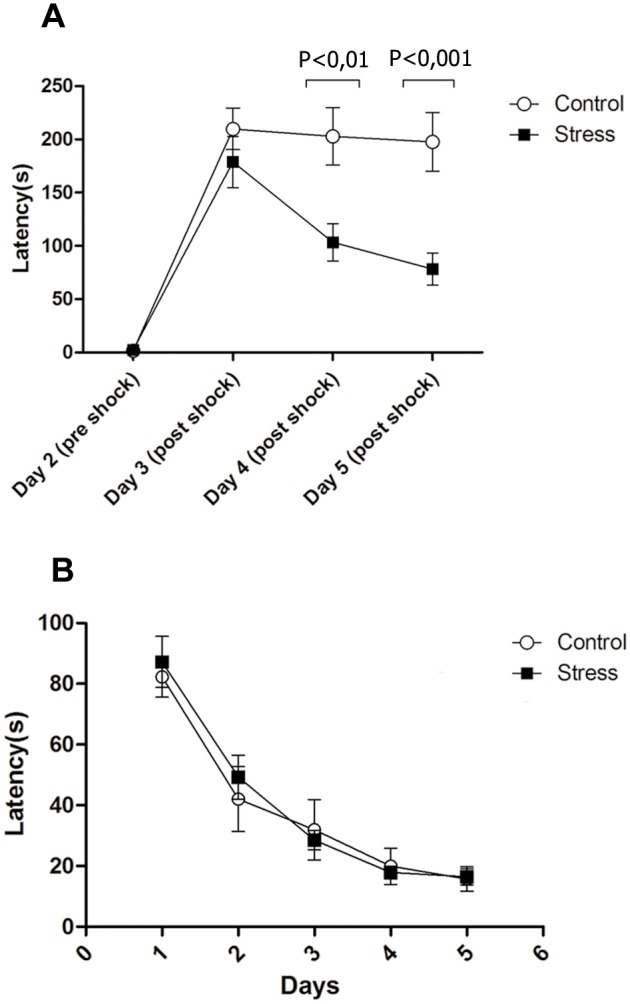
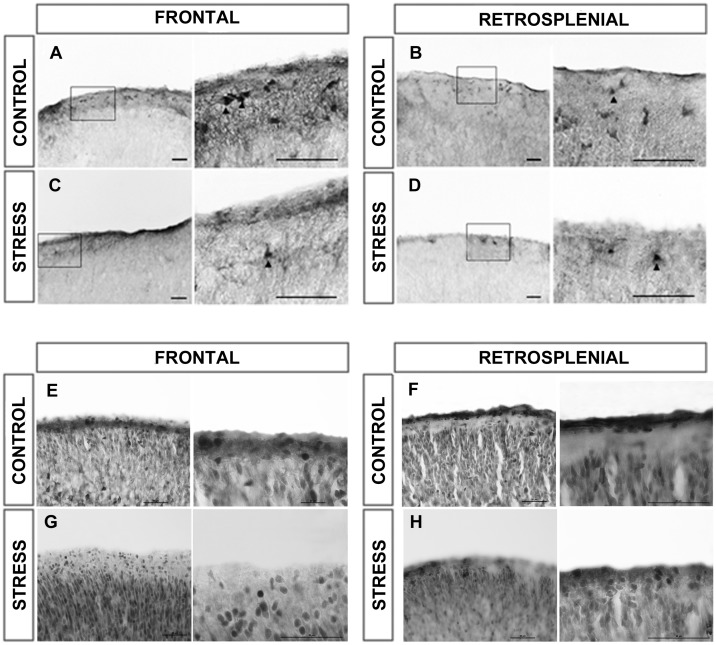
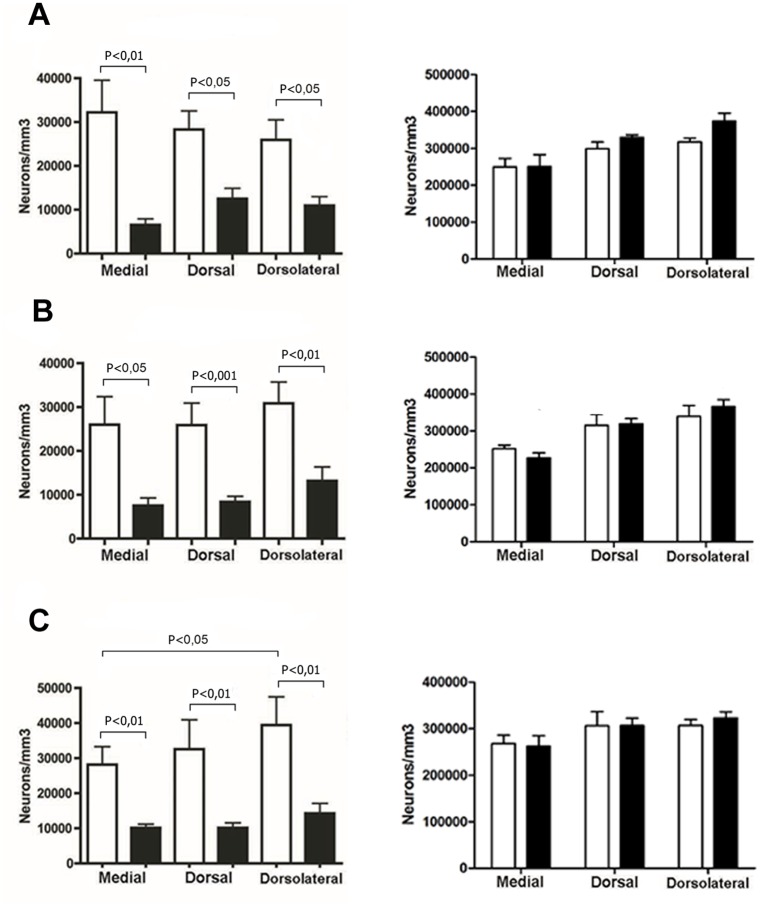
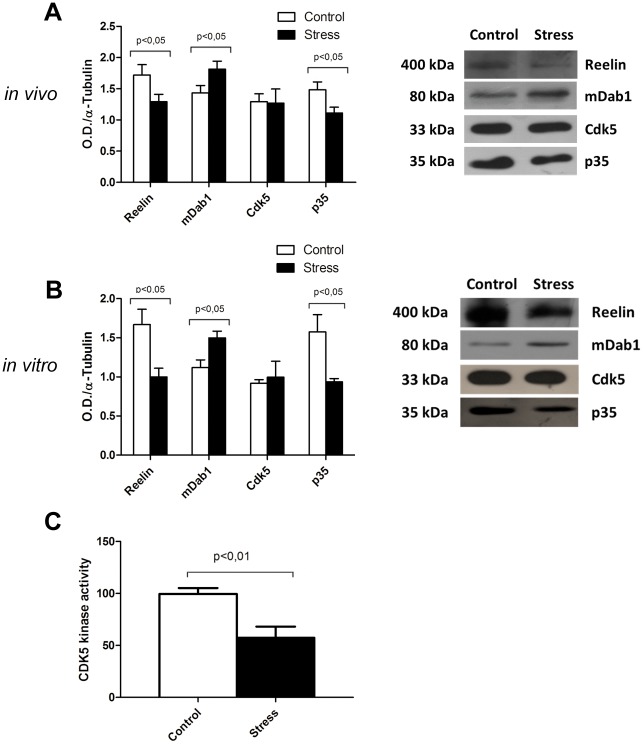
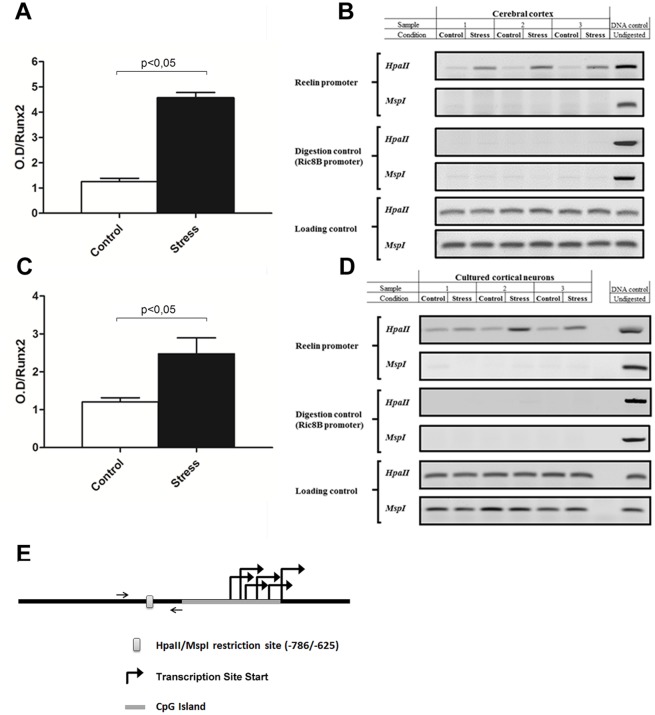
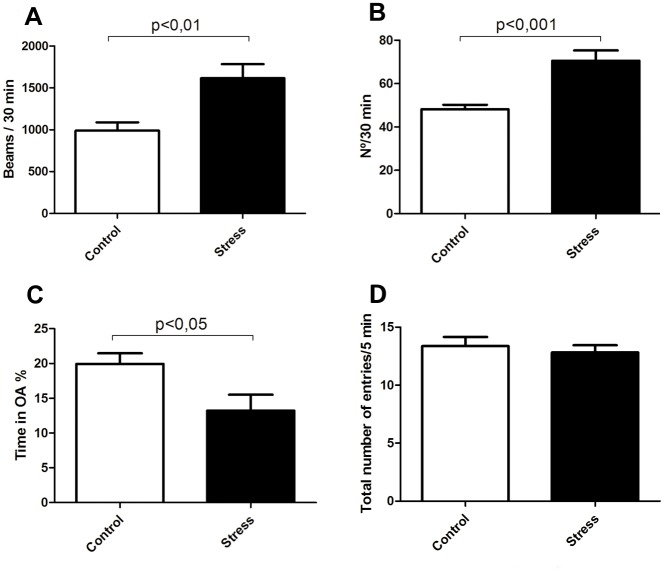
Prenatal stress causes predisposition to cognitive and emotional disturbances and is a risk factor towards the development of neuropsychiatric conditions like depression, bipolar disorders and schizophrenia. The extracellular protein Reelin, expressed by Cajal-Retzius cells during cortical development, plays critical roles on cortical lamination and synaptic maturation, and its deregulation has been associated with maladaptive conditions. In the present study, we address the effect of prenatal restraint stress (PNS) upon Reelin expression and signaling in pregnant rats during the last 10 days of pregnancy. Animals from one group, including control and PNS exposed fetuses, were sacrificed and analyzed using immunohistochemical, biochemical, cell biology and molecular biology approaches. We scored changes in the expression of Reelin, its signaling pathway and in the methylation of its promoter. A second group included control and PNS exposed animals maintained until young adulthood for behavioral studies. Using the optical dissector, we show decreased numbers of Reelin-positive neurons in cortical layer I of PNS exposed animals. In addition, neurons from PNS exposed animals display decreased Reelin expression that is paralleled by changes in components of the Reelin-signaling cascade, both in vivo and in vitro. Furthermore, PNS induced changes in the DNA methylation levels of the Reelin promoter in culture and in histological samples. PNS adult rats display excessive spontaneous locomotor activity, high anxiety levels and problems of learning and memory consolidation. No significant visuo-spatial memory impairment was detected on the Morris water maze. These results highlight the effects of prenatal stress on the Cajal-Retzius neuronal population, and the persistence of behavioral consequences using this treatment in adults, thereby supporting a relevant role of PNS in the genesis of neuropsychiatric diseases. We also propose an in vitro model that can yield new insights on the molecular mechanisms behind the effects of prenatal stress.
产前应激会导致认知和情绪障碍的易感性,是抑郁症、双相情感障碍和精神分裂症等神经精神疾病发展的危险因素。细胞外蛋白Reelin在皮质发育过程中由Cajal-Retzius细胞表达,在皮质分层和突触成熟中起关键作用,其失调与适应不良状况有关。在本研究中,我们探讨了产前束缚应激(PNS)对妊娠最后10天的怀孕大鼠中Reelin表达和信号传导的影响。使用免疫组织化学、生物化学、细胞生物学和分子生物学方法,对包括对照组和暴露于PNS的胎儿在内的一组动物进行处死和分析。我们对Reelin的表达、其信号通路及其启动子甲基化的变化进行了评分。第二组包括对照组和暴露于PNS的动物,将其饲养至成年进行行为学研究。使用光学分割器,我们发现暴露于PNS的动物的皮质I层中Reelin阳性神经元数量减少。此外,暴露于PNS的动物的神经元显示Reelin表达降低,这与体内和体外Reelin信号级联成分的变化平行。此外,PNS在培养物和组织学样本中诱导了Reelin启动子DNA甲基化水平的变化。PNS成年大鼠表现出过度的自发运动活动、高焦虑水平以及学习和记忆巩固问题。在莫里斯水迷宫中未检测到明显的视觉空间记忆损害。这些结果突出了产前应激对Cajal-Retzius神经元群体的影响,以及这种处理方式在成年动物中行为后果的持续性,从而支持了PNS在神经精神疾病发生中的相关作用。我们还提出了一种体外模型,该模型可以对产前应激影响背后的分子机制产生新的见解。