Reuter D, Schuh R, Jäckle H
Institut für Genetik und Mikrobiologie, Universität München, Federal Republic of Germany.
Proc Natl Acad Sci U S A. 1989 Jul;86(14):5483-6. doi: 10.1073/pnas.86.14.5483.
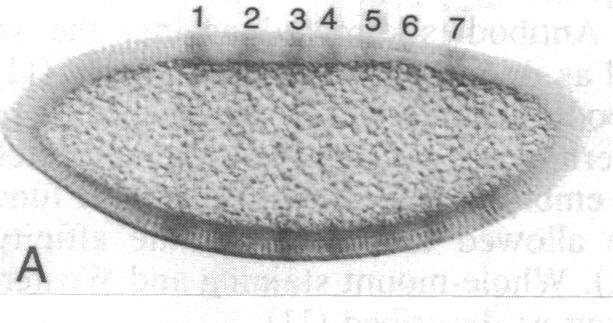
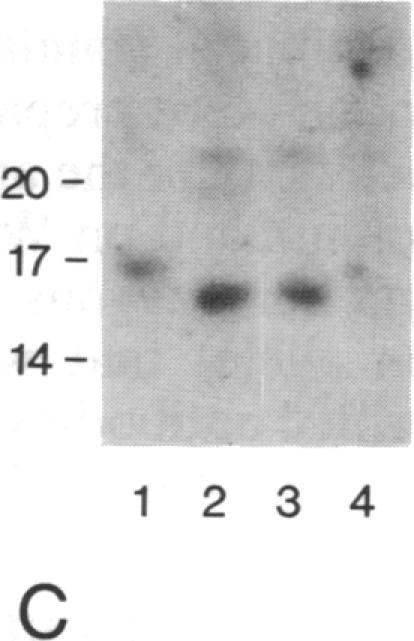
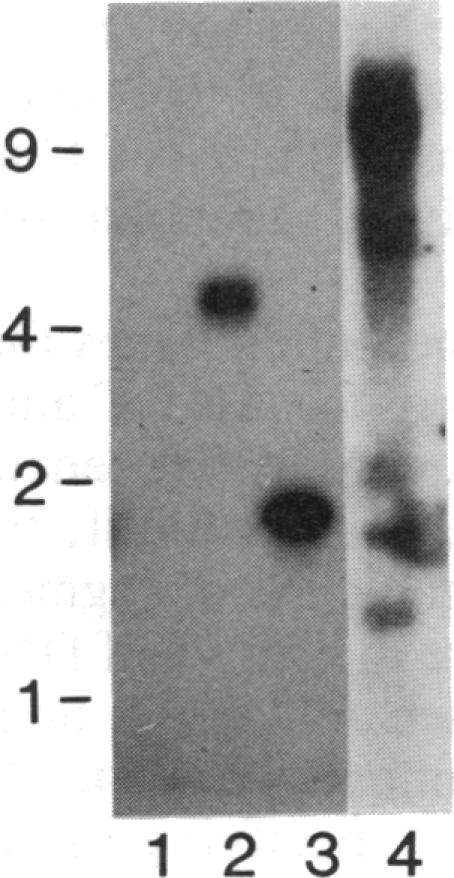
The region-specific homeotic gene spalt (sal) acts in two separate domains in the head and tail region of the Drosophila melanogaster embryo. Based on comparative morphology, sal is likely to be involved in the establishment of the head during the evolution of invertebrates and thus, it should be conserved. We have analyzed the conservation of the segmentation genes Krüppel (Kr) and even-skipped (eve) in parallel with sal coding sequences in several Drosophila species that are evolutionarily separated by up to 60 million years. To our surprise, sal sequences appear to be conserved in the Sophophora subgenus of the Drosophila genus but not in the Drosophila subgenus. On the other hand, the segmentation and other homeotic genes are conserved in the Drosophila subgroup as well. Our data suggest that sal encodes an accessory function that evolved relatively late during Drosophila speciation rather than playing a fundamental evolutionary role similar to that of other homeotic genes.
区域特异性同源异型基因spalt(sal)在黑腹果蝇胚胎的头部和尾部区域的两个独立区域发挥作用。基于比较形态学,sal可能在无脊椎动物进化过程中参与头部的形成,因此,它应该是保守的。我们分析了与sal编码序列平行的分节基因Krüppel(Kr)和偶数跳格基因(eve)在几种进化上相隔达6000万年的果蝇物种中的保守性。令我们惊讶的是,sal序列似乎在果蝇属的Sophophora亚属中保守,但在果蝇亚属中不保守。另一方面,分节基因和其他同源异型基因在果蝇亚组中也保守。我们的数据表明,sal编码一种在果蝇物种形成过程中相对较晚进化出来的辅助功能,而不是像其他同源异型基因那样发挥基本的进化作用。