Mourier Arnaud, Motori Elisa, Brandt Tobias, Lagouge Marie, Atanassov Ilian, Galinier Anne, Rappl Gunter, Brodesser Susanne, Hultenby Kjell, Dieterich Christoph, Larsson Nils-Göran
Max Planck Institute for Biology of Ageing, 50931 Cologne, Germany.
Max Planck Institute of Biophysics, 60438 Frankfurt, Germany.
J Cell Biol. 2015 Feb 16;208(4):429-42. doi: 10.1083/jcb.201411100.
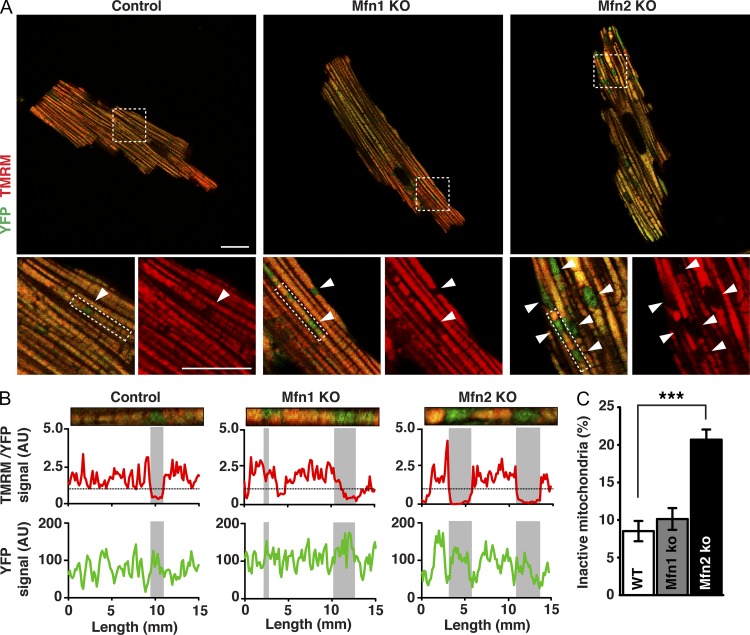
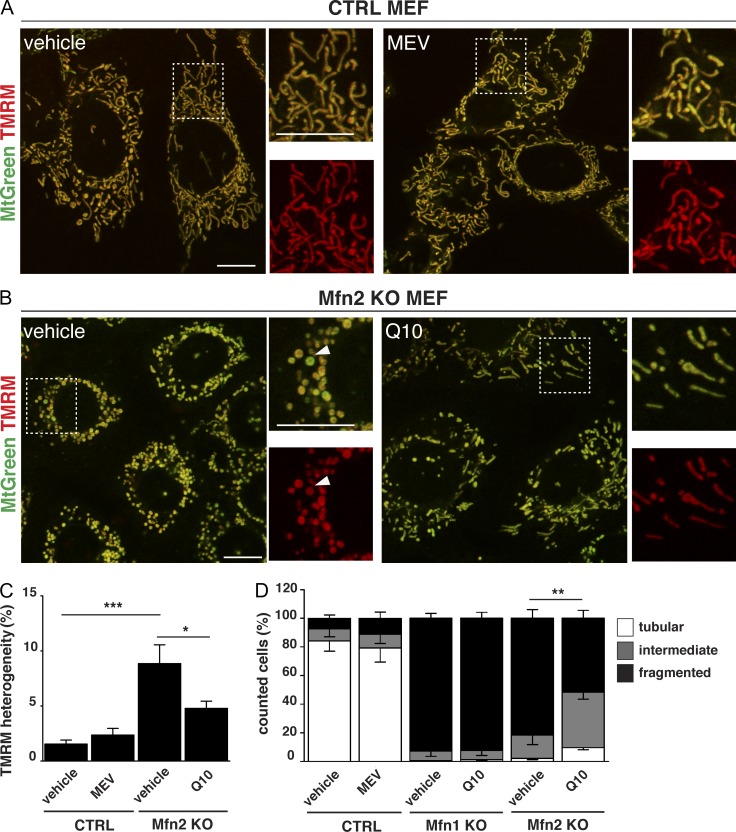
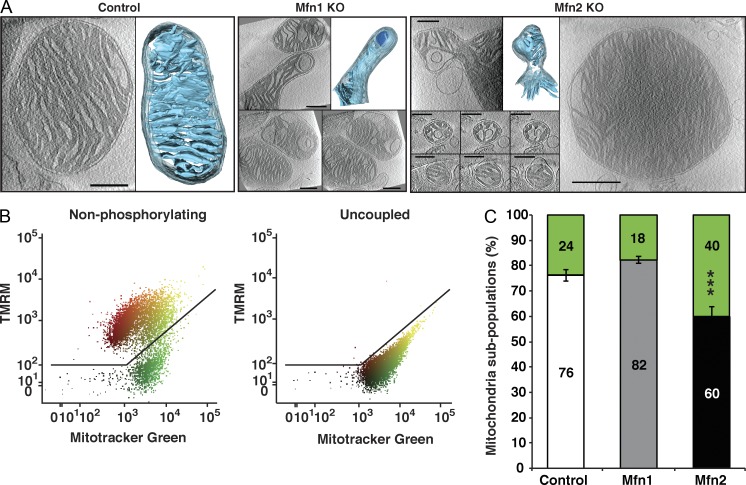
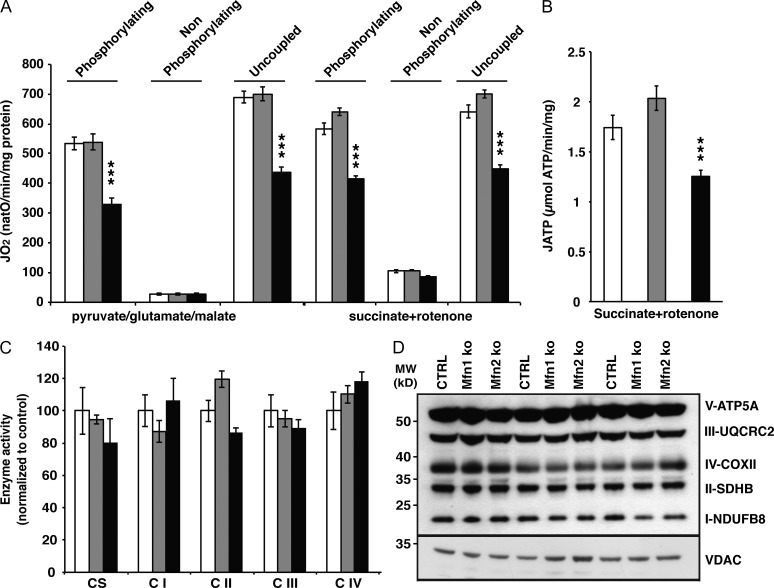
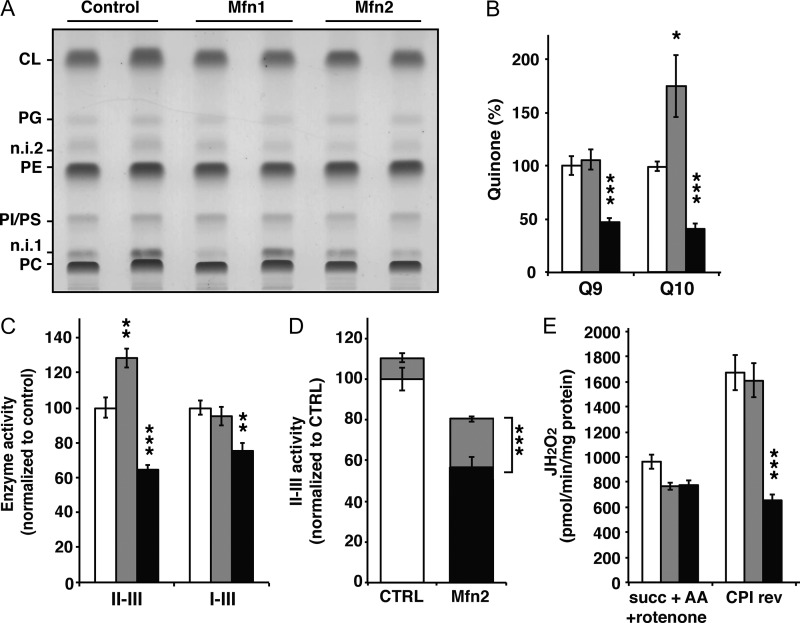
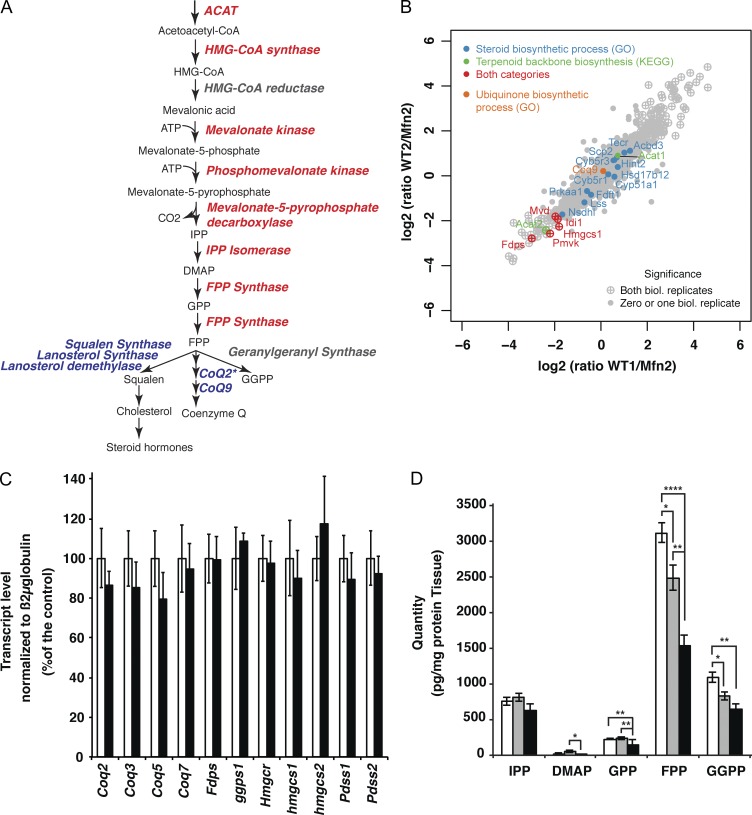
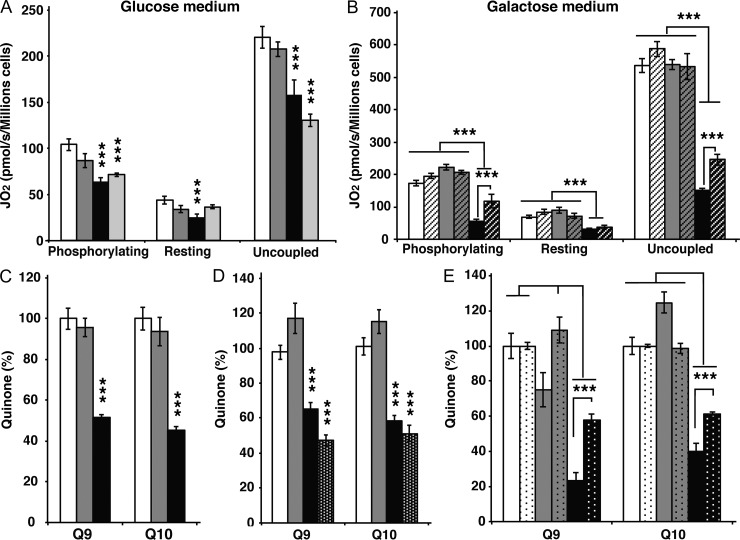
Mitochondria form a dynamic network within the cell as a result of balanced fusion and fission. Despite the established role of mitofusins (MFN1 and MFN2) in mitochondrial fusion, only MFN2 has been associated with metabolic and neurodegenerative diseases, which suggests that MFN2 is needed to maintain mitochondrial energy metabolism. The molecular basis for the mitochondrial dysfunction encountered in the absence of MFN2 is not understood. Here we show that loss of MFN2 leads to impaired mitochondrial respiration and reduced ATP production, and that this defective oxidative phosphorylation process unexpectedly originates from a depletion of the mitochondrial coenzyme Q pool. Our study unravels an unexpected and novel role for MFN2 in maintenance of the terpenoid biosynthesis pathway, which is necessary for mitochondrial coenzyme Q biosynthesis. The reduced respiratory chain function in cells lacking MFN2 can be partially rescued by coenzyme Q10 supplementation, which suggests a possible therapeutic strategy for patients with diseases caused by mutations in the Mfn2 gene.
由于融合与分裂达到平衡,线粒体在细胞内形成一个动态网络。尽管已经确定线粒体融合蛋白(MFN1和MFN2)在线粒体融合中发挥作用,但只有MFN2与代谢性疾病和神经退行性疾病相关,这表明维持线粒体能量代谢需要MFN2。在缺乏MFN2的情况下出现的线粒体功能障碍的分子基础尚不清楚。在这里,我们表明MFN2的缺失会导致线粒体呼吸受损和ATP生成减少,并且这种有缺陷的氧化磷酸化过程出乎意料地源于线粒体辅酶Q池的耗竭。我们的研究揭示了MFN2在维持萜类生物合成途径中的一个意想不到的新作用,而萜类生物合成途径是线粒体辅酶Q生物合成所必需的。通过补充辅酶Q10可以部分挽救缺乏MFN2的细胞中降低的呼吸链功能,这为患有由Mfn2基因突变引起的疾病的患者提出了一种可能的治疗策略。