Yang Ling, Li Liming, Lewington Sarah, Guo Yu, Sherliker Paul, Bian Zheng, Collins Rory, Peto Richard, Liu Yun, Yang Rong, Zhang Yongrui, Li Guangchun, Liu Shumei, Chen Zhengming
Clinical Trial Service Unit and Epidemiological Studies Unit (CTSU), University of Oxford, Richard Doll Building, Old Road Campus, Oxford OX3 7LF, UK
Chinese Academy of Medical Sciences, Dong Cheng District, Beijing, China Department of Epidemiology, School of Public Health, Peking University Health Science Centre, Beijing, China
Eur Heart J. 2015 May 14;36(19):1178-85. doi: 10.1093/eurheartj/ehv023. Epub 2015 Feb 16.
Blood pressure is a major cause of cardiovascular disease (CVD) and both may increase as outdoor temperatures fall. However, there are still limited data about seasonal variation in blood pressure and CVD mortality among patients with prior-CVD.
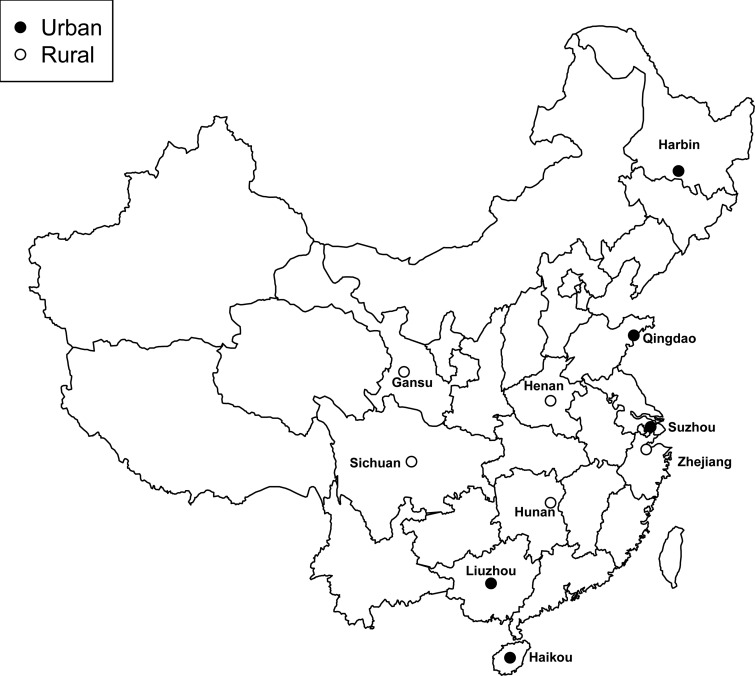
We analysed data on 23 000 individuals with prior-CVD who were recruited from 10 diverse regions into the China Kadoorie Biobank during 2004-8. After 7 years of follow-up, 1484 CVD deaths were recorded. Baseline survey data were used to assess seasonal variation in systolic blood pressure (SBP) and its association with outdoor temperature. Cox regression was used to examine the association of usual SBP with subsequent CVD mortality, and seasonal variation in CVD mortality was assessed by Poisson regression. All analyses were adjusted for age, sex, and region.
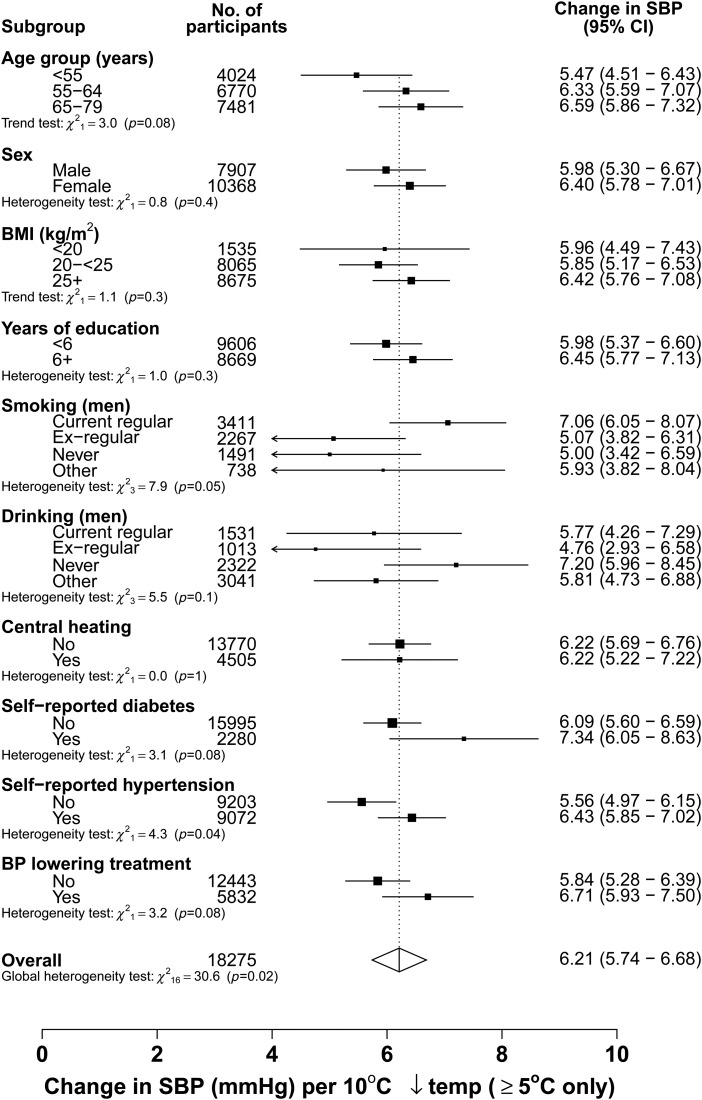
Mean SBP was significantly higher in winter than in summer (145 vs. 136 mmHg, P < 0.001), especially among those without central heating. Above 5°C, each 10°C lower outdoor temperature was associated with 6.2 mmHg higher SBP. Systolic blood pressure predicted subsequent CVD mortality, with each 10 mmHg higher usual SBP associated with 21% (95% confidence interval: 16-27%) increased risk. Cardiovascular disease mortality varied by season, with 41% (21-63%) higher risk in winter compared with summer.
Among adult Chinese with prior-CVD, there is both increased blood pressure and CVD mortality in winter. Careful monitoring and more aggressive blood pressure lowering treatment in the cold months are needed to help reduce the winter excess CVD mortality in high-risk individuals.
血压是心血管疾病(CVD)的主要病因,二者都可能随室外温度下降而升高。然而,关于既往有心血管疾病患者的血压季节性变化及心血管疾病死亡率的数据仍然有限。
我们分析了2004年至2008年期间从中国10个不同地区招募到中国嘉道理生物银行的23000名既往有心血管疾病患者的数据。经过7年的随访,记录了1484例心血管疾病死亡病例。基线调查数据用于评估收缩压(SBP)的季节性变化及其与室外温度的关联。采用Cox回归分析来检验通常收缩压与随后心血管疾病死亡率之间的关联,并通过泊松回归评估心血管疾病死亡率的季节性变化。所有分析均对年龄、性别和地区进行了校正。
冬季平均收缩压显著高于夏季(145 vs. 136 mmHg,P < 0.001),尤其是在没有集中供暖的人群中。室外温度在5°C以上时,每降低10°C,收缩压升高6.2 mmHg。收缩压可预测随后的心血管疾病死亡率,通常收缩压每升高10 mmHg,风险增加21%(95%置信区间:16 - 27%)。心血管疾病死亡率随季节变化,冬季风险比夏季高41%(21 - 63%)。
在既往有心血管疾病的中国成年人中,冬季血压升高且心血管疾病死亡率增加。在寒冷月份需要进行仔细监测并采取更积极的降压治疗,以帮助降低高危个体冬季心血管疾病额外死亡率。