Department of Human Evolutionary Biology, Harvard University 11 Divinity Avenue, Cambridge, Massachusetts, 02138.
Proyecto Conjunto Monumental de Atzompa Calle Reforma 501, esq. Constitución. Sala IV. Centro Histórico, Oaxaca, Oaxaca, 68000, Mexico.
Ecol Evol. 2015 Feb;5(3):607-17. doi: 10.1002/ece3.1398. Epub 2015 Jan 8.
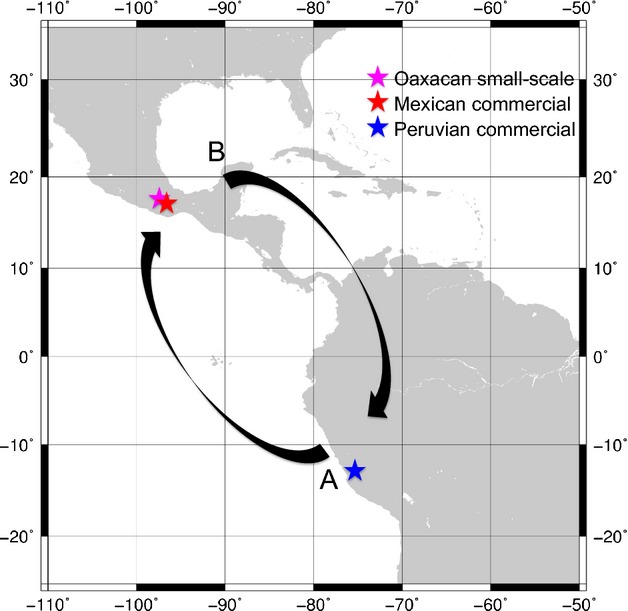
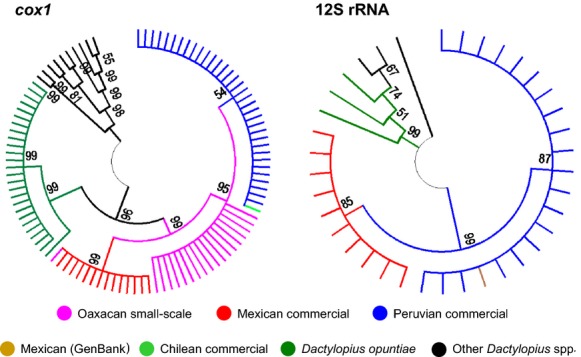
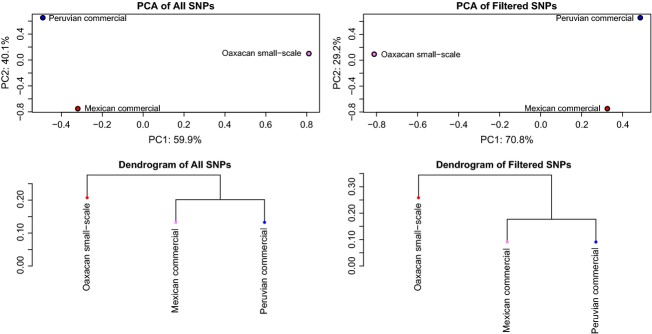
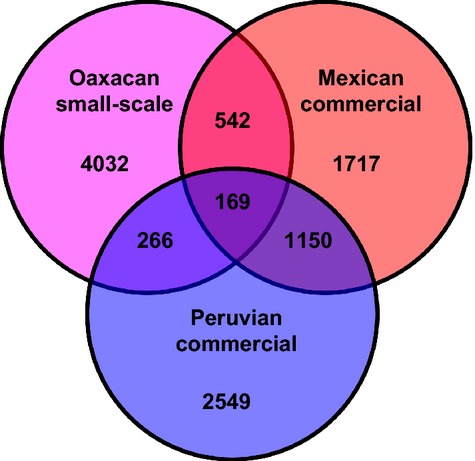
Cultivated cochineal (Dactylopius coccus) produces carminic acid, a valuable red dye used to color textiles, cosmetics, and food. Extant native D. coccus is largely restricted to two populations in the Mexican and the Andean highlands, although the insect's ultimate center of domestication remains unclear. Moreover, due to Mexican D. coccus cultivation's near demise during the 19th century, the genetic diversity of current cochineal stock is unknown. Through genomic sequencing, we identified two divergent D. coccus populations in highland Mexico: one unique to Mexico and another that was more closely related to extant Andean cochineal. Relic diversity is preserved in the crops of small-scale Mexican cochineal farmers. Conversely, larger-scale commercial producers are cultivating the Andean-like cochineal, which may reflect clandestine 20th century importation.
人工养殖的胭脂虫(Dactylopius coccus)能产生胭脂红酸,这是一种用于给纺织品、化妆品和食品上色的有价值的红色染料。现存的本地胭脂虫主要局限于墨西哥和安第斯高地的两个种群,尽管这种昆虫的最终驯化中心仍不清楚。此外,由于 19 世纪墨西哥胭脂虫养殖几乎灭绝,目前胭脂虫的遗传多样性尚不清楚。通过基因组测序,我们在墨西哥高地发现了两个不同的胭脂虫种群:一个是墨西哥特有的,另一个与现存的安第斯胭脂虫更为接近。小规模的墨西哥胭脂虫农民的作物中保留了古老的多样性。相反,大规模的商业生产商正在种植类似安第斯的胭脂虫,这可能反映了 20 世纪秘密进口的情况。