Saito I, Groves R, Giulotto E, Rolfe M, Stark G R
Imperial Cancer Research Fund, Lincoln's Inn Fields, London, England.
Mol Cell Biol. 1989 Jun;9(6):2445-52. doi: 10.1128/mcb.9.6.2445-2452.1989.
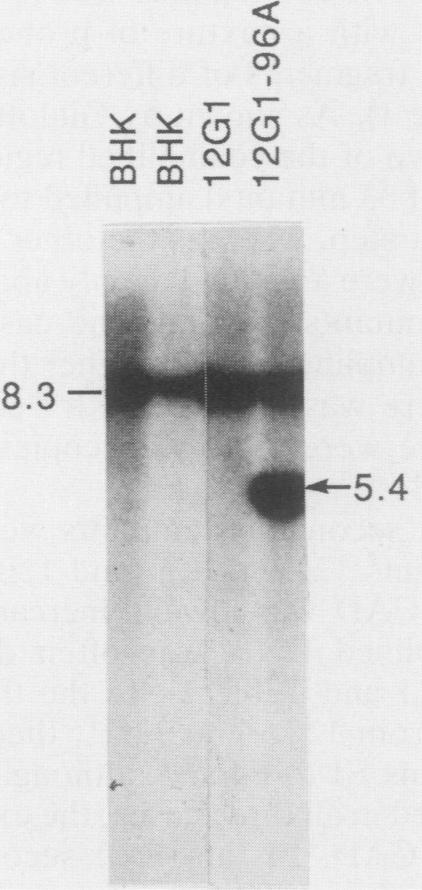
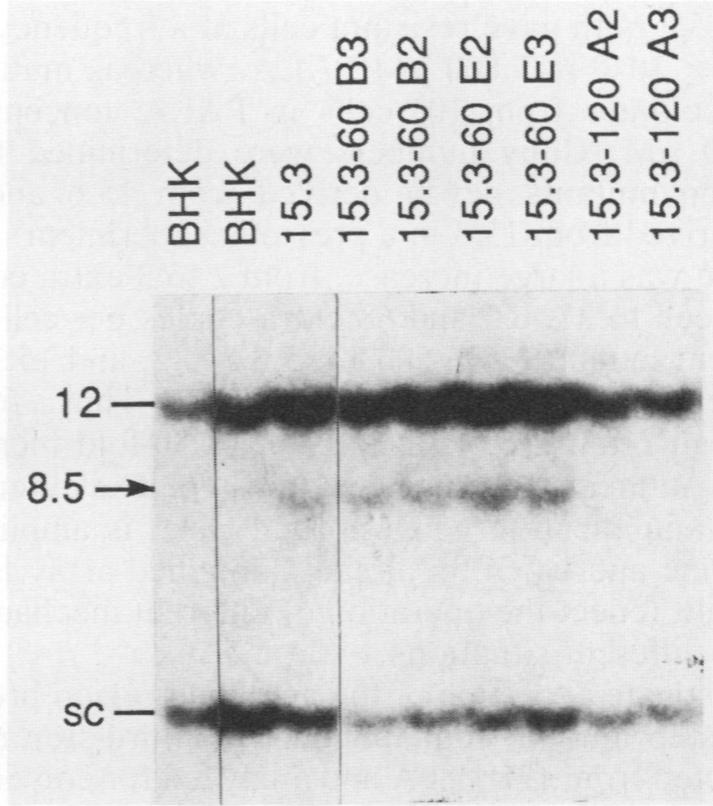
We have compared clones of Syrian hamster cells selected for the first amplification of the CAD gene with clones selected for further amplification. The large domain amplified initially was not reamplified as an intact unit. Instead, subregions were reamplified preferentially, and parts of the initial array were often lost. These events reduced the average amount of coamplified DNA accompanying each copy of the selected gene. The degree of amplification was small in the first step (about three extra copies of CAD per cell), but second-step amplifications to a high copy number (up to 60 extra copies per cell) occurred frequently. After several separate steps of amplification, highly condensed arrays that brought many CAD genes close together were formed. In striking contrast to the stability of these highly amplified arrays, the low-copy chromosomal arrays formed early were quite unstable and were often lost completely within 1 or 2 months of growth without selection. The results suggest that different mechanisms may be involved in the first step of amplification and in the later evolution of an already amplified array.
我们将选择用于CAD基因首次扩增的叙利亚仓鼠细胞克隆与选择用于进一步扩增的克隆进行了比较。最初扩增的大片段区域并未作为一个完整单元再次扩增。相反,亚区域被优先再次扩增,并且初始阵列的部分区域常常丢失。这些事件减少了伴随每个所选基因拷贝共扩增的DNA平均量。第一步扩增程度较小(每个细胞约有三个额外的CAD拷贝),但第二步扩增至高拷贝数(每个细胞多达60个额外拷贝)频繁发生。经过几个单独的扩增步骤后,形成了使许多CAD基因紧密聚集在一起的高度浓缩阵列。与这些高度扩增阵列的稳定性形成鲜明对比的是,早期形成的低拷贝染色体阵列相当不稳定,在无选择的生长1或2个月内常常完全丢失。结果表明,扩增的第一步和已扩增阵列的后期进化可能涉及不同机制。