Molitor Christian, Mauracher Stephan Gerhard, Pargan Sanela, Mayer Rupert L, Halbwirth Heidi, Rompel Annette
Institut für Biophysikalische Chemie, Fakultät für Chemie, Universität Wien, Althanstraße 14, 1090, Vienna, Austria.
Planta. 2015 Sep;242(3):519-37. doi: 10.1007/s00425-015-2261-0. Epub 2015 Feb 20.
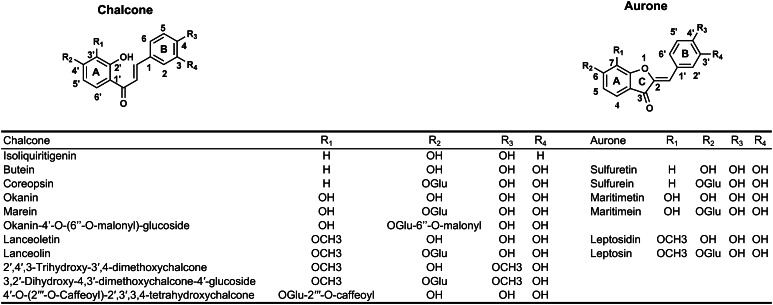
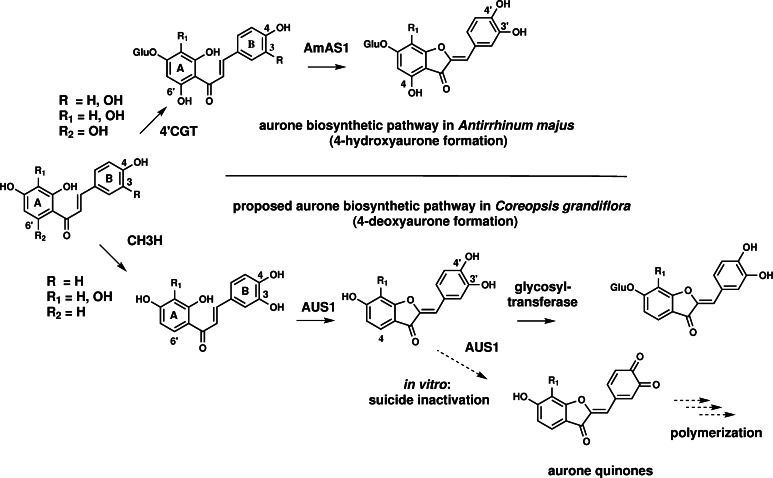
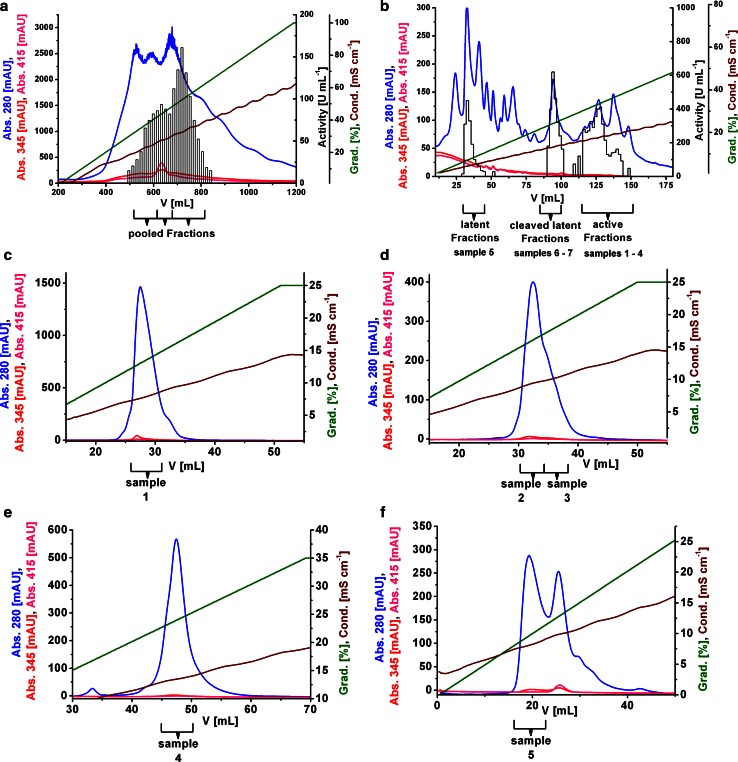
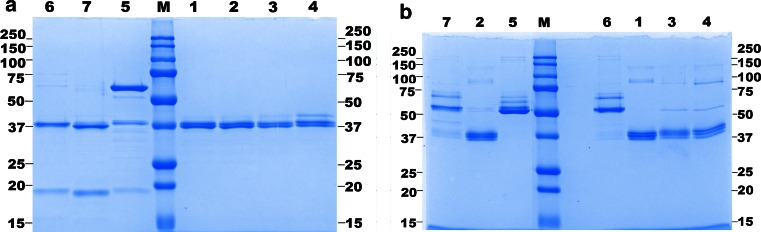
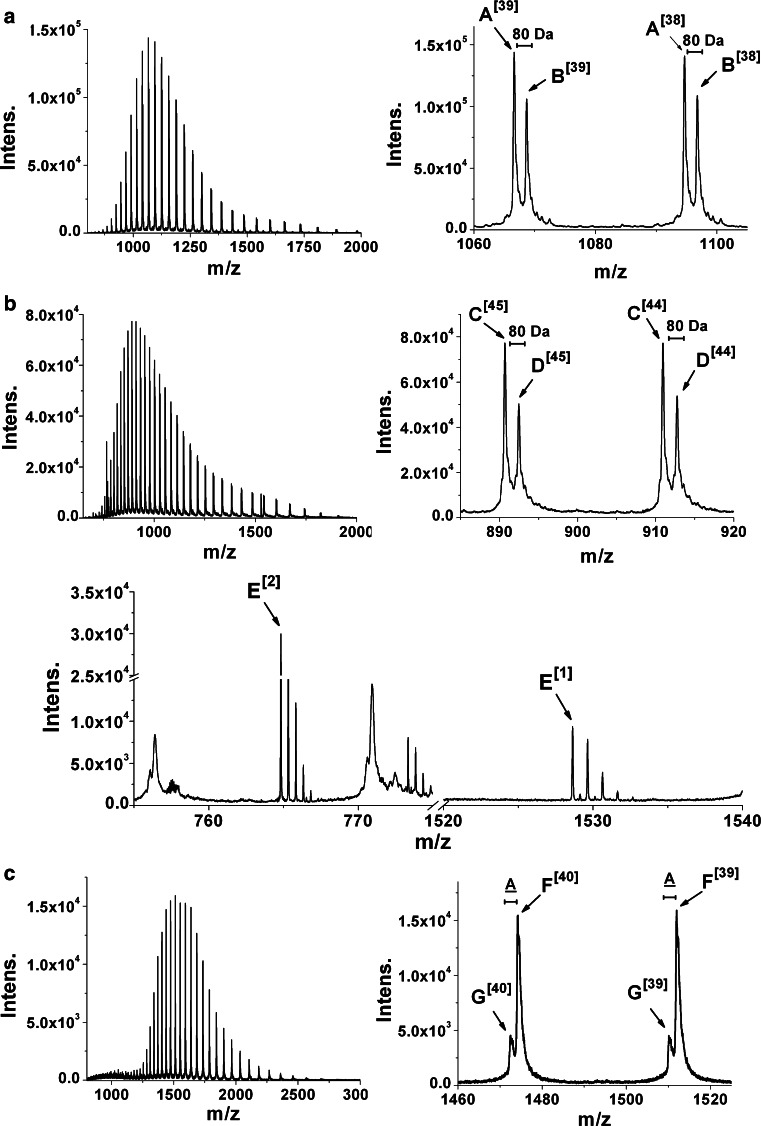
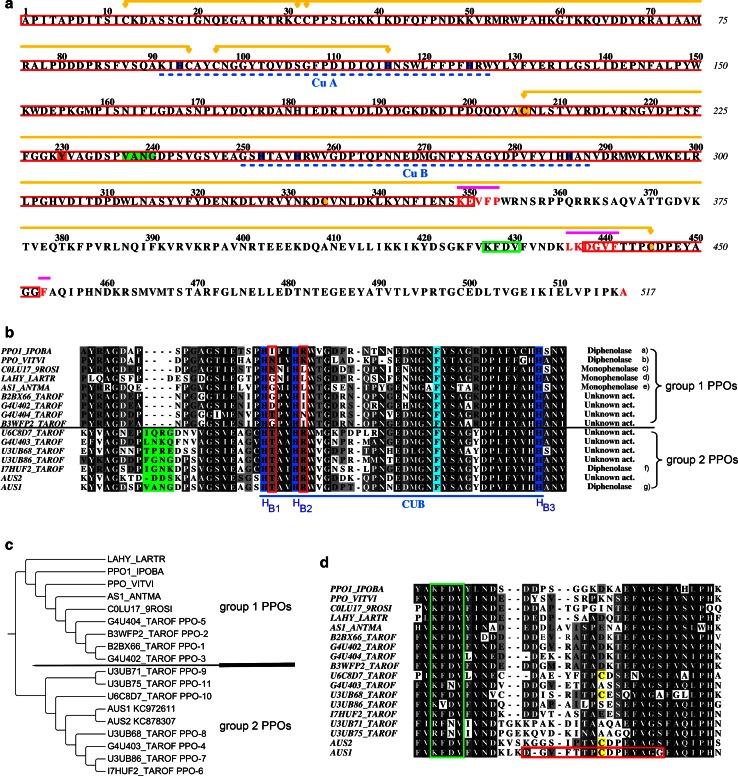
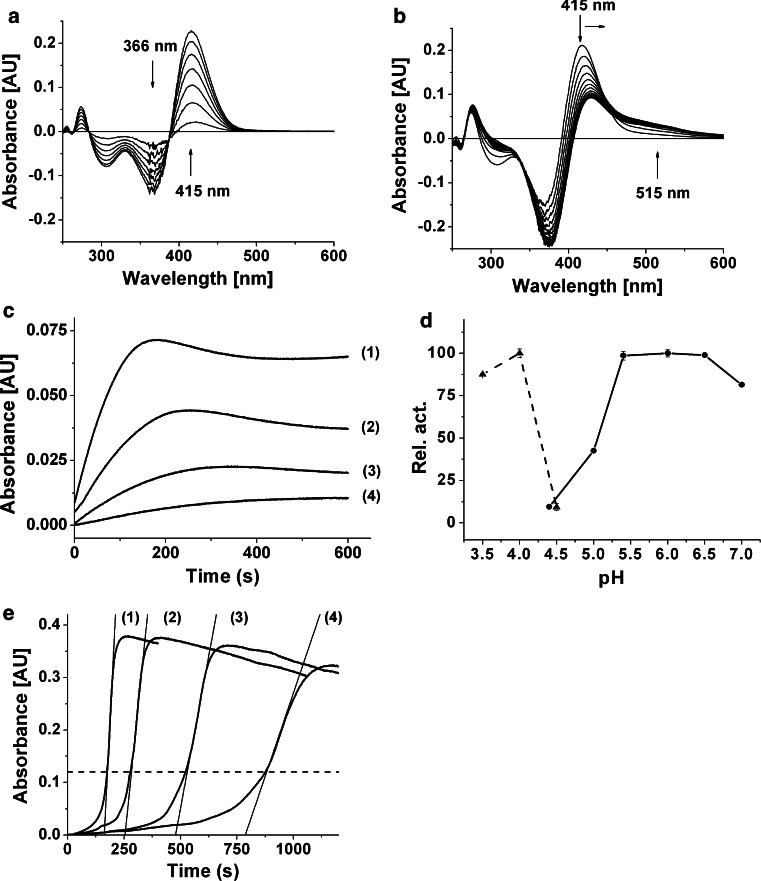
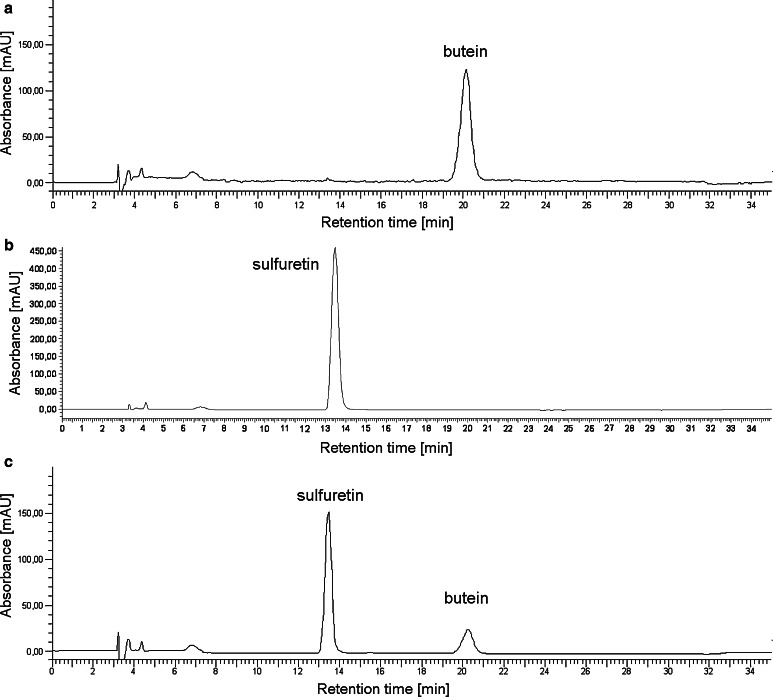
Aurone synthase belongs to the novel group 2 polyphenol oxidases and the presented kinetic characterization suggests a differing aurone biosynthesis in Asteraceae species compared to snapdragon. Aurone synthases (AUS) are polyphenol oxidases (PPO) physiologically involved in the formation of yellow aurone pigments in petals of various Asteraceae species. They catalyze the oxidative conversion of chalcones into aurones. Latent (58.9 kDa) and active (41.6 kDa) aurone synthase from petals of C. grandiflora was purified by a quantitative removal of pigments using aqueous two-phase separation and several subsequent chromatographic steps. The purified enzymes were identified as cgAUS1 (A0A075DN54) and sequence analysis revealed that cgAUS1 is a member of a new group of plant PPOs. Mass determination experiments of intact cgAUS1 gave evidence that the C-terminal domain, usually shielding the active site of latent polyphenol oxidases, is linked to the main core by a disulfide bond. This is a novel and unique structural feature of plant PPOs. Proteolytic activation in vivo leads to active aurone synthase possessing a residual peptide of the C-terminal domain. Kinetic characterization of purified cgAUS1 strongly suggests a specific involvement in 4-deoxyaurone biosynthesis in Coreopsis grandiflora (Asteraceae) that differs in various aspects compared to the 4-hydroxyaurone formation in Antirrhinum majus (Plantaginaceae): cgAUS1 is predicted to be localized in the thylakoid lumen, it possesses exclusively diphenolase activity and the results suggest that aurone formation occurs at the level of chalcone aglycones. The latent enzyme exhibits allosteric activation which changes at a specific product concentration to a constant reaction rate. The presented novel structural and functional properties of aurone synthase provide further insights in the diversity and role of plant PPOs.
橙酮合酶属于新型的第2类多酚氧化酶,目前的动力学特征表明,与金鱼草相比,菊科植物中的橙酮生物合成有所不同。橙酮合酶(AUS)是多酚氧化酶(PPO),在生理上参与各种菊科植物花瓣中黄色橙酮色素的形成。它们催化查耳酮氧化转化为橙酮。通过使用双水相分离定量去除色素以及随后的几个色谱步骤,从大花金鸡菊花瓣中纯化出了潜在的(58.9 kDa)和活性的(41.6 kDa)橙酮合酶。纯化后的酶被鉴定为cgAUS1(A0A075DN54),序列分析表明cgAUS1是植物PPO新组的成员。完整cgAUS1的质量测定实验证明,通常屏蔽潜在多酚氧化酶活性位点的C末端结构域通过二硫键与主核心相连。这是植物PPO的一种新颖独特的结构特征。体内蛋白水解激活导致具有C末端结构域残留肽的活性橙酮合酶。纯化的cgAUS1的动力学特征强烈表明其特异性参与大花金鸡菊(菊科)中4-脱氧橙酮的生物合成,这在各个方面与金鱼草(车前科)中4-羟基橙酮的形成有所不同:预测cgAUS1定位于类囊体腔,它仅具有双酚酶活性,结果表明橙酮的形成发生在查耳酮苷元水平。潜在酶表现出变构激活,在特定产物浓度下变为恒定反应速率。所呈现的橙酮合酶新颖的结构和功能特性为植物PPO的多样性和作用提供了进一步的见解。