Biundo A, Braunschmid V, Pretzler M, Kampatsikas I, Darnhofer B, Birner-Gruenberger R, Rompel A, Ribitsch D, Guebitz G M
Institute of Environmental Biotechnology, University of Natural Resources and Life Sciences (BOKU), Konrad Lorenz Straße 22, 3430, Tulln, Austria.
Department of Biosciences, Biotechnology and Biopharmaceutics, University of Bari, Via Edoardo Orabona, 70125, Bari, Italy.
Commun Chem. 2020 May 15;3(1):62. doi: 10.1038/s42004-020-0305-2.
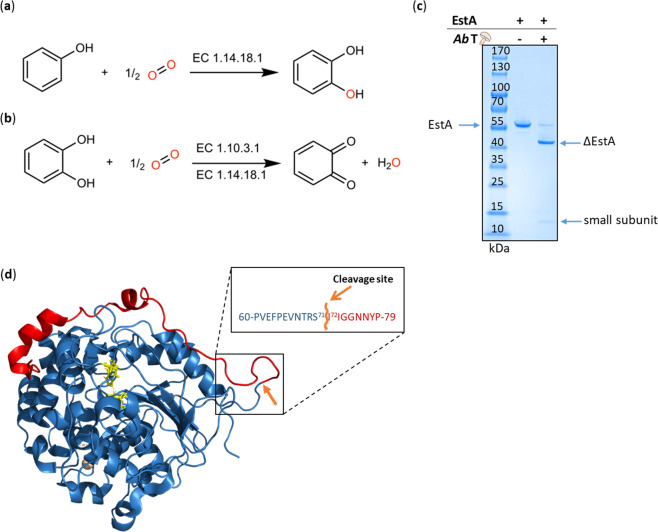
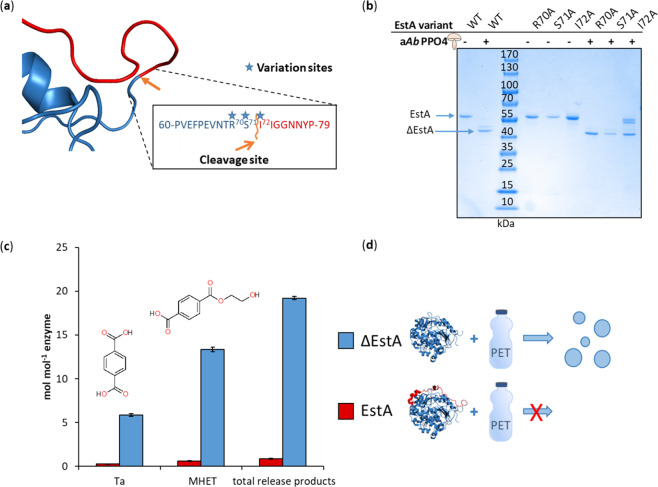
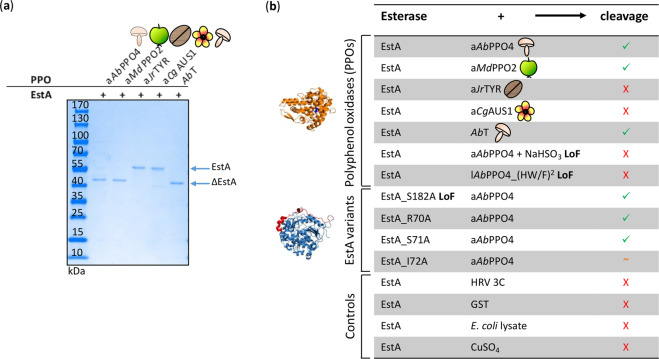
Tyrosinases catalyse both the cresolase and catecholase reactions for the formation of reactive compounds which are very important for industrial applications. In this study, we describe a proteolytic activity of tyrosinases. Two different tyrosinases originating from mushroom and apple are able to cleave the carboxylesterase EstA. The cleavage reaction correlates with the integrity of the active site of tyrosinase and is independent of other possible influencing factors, which could be present in the reaction. Therefore, the cleavage of EstA represents a novel functionality of tyrosinases. EstA was previously reported to degrade synthetic polyesters, albeit slowly. However, the EstA truncated by tyrosinase shows higher degradation activity on the non-biodegradable polyester polyethylene terephthalate (PET), which is a well-established environmental threat.
酪氨酸酶催化甲酚酶和儿茶酚酶反应以形成反应性化合物,这些化合物对工业应用非常重要。在本研究中,我们描述了酪氨酸酶的一种蛋白水解活性。两种分别源自蘑菇和苹果的不同酪氨酸酶能够切割羧酸酯酶EstA。切割反应与酪氨酸酶活性位点的完整性相关,并且独立于反应中可能存在的其他潜在影响因素。因此,EstA的切割代表了酪氨酸酶的一种新功能。此前有报道称EstA可降解合成聚酯,尽管速度较慢。然而,被酪氨酸酶截短的EstA对不可生物降解的聚酯聚对苯二甲酸乙二酯(PET)表现出更高的降解活性,PET是一种公认的环境威胁。