Srivastava Anup, Shinn Amanda S, Lee Patty J, Mannam Praveen
Pulmonary, Critical Care, and Sleep Medicine, Department of Internal Medicine, Yale University School of Medicine, New Haven, CT 06520-8057, USA.
Pulmonary, Critical Care, and Sleep Medicine, Department of Internal Medicine, Yale University School of Medicine, New Haven, CT 06520-8057, USA.
Free Radic Biol Med. 2015 Jun;83:139-48. doi: 10.1016/j.freeradbiomed.2015.01.035. Epub 2015 Feb 17.
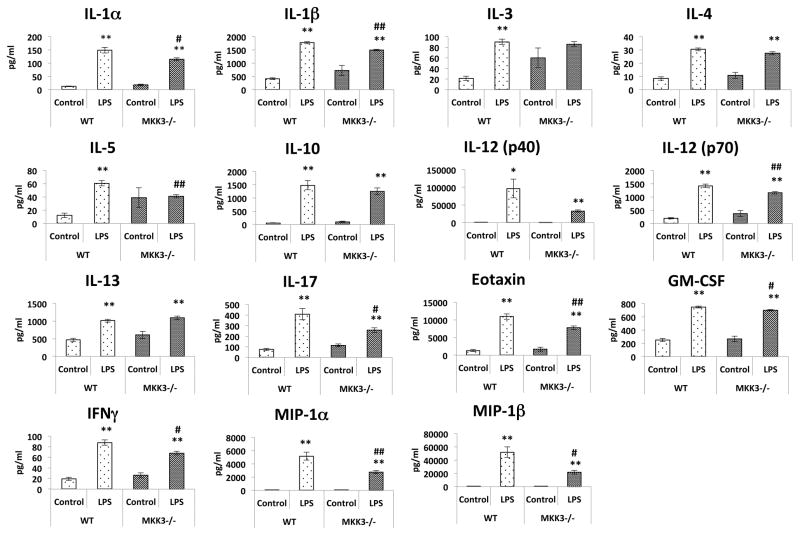
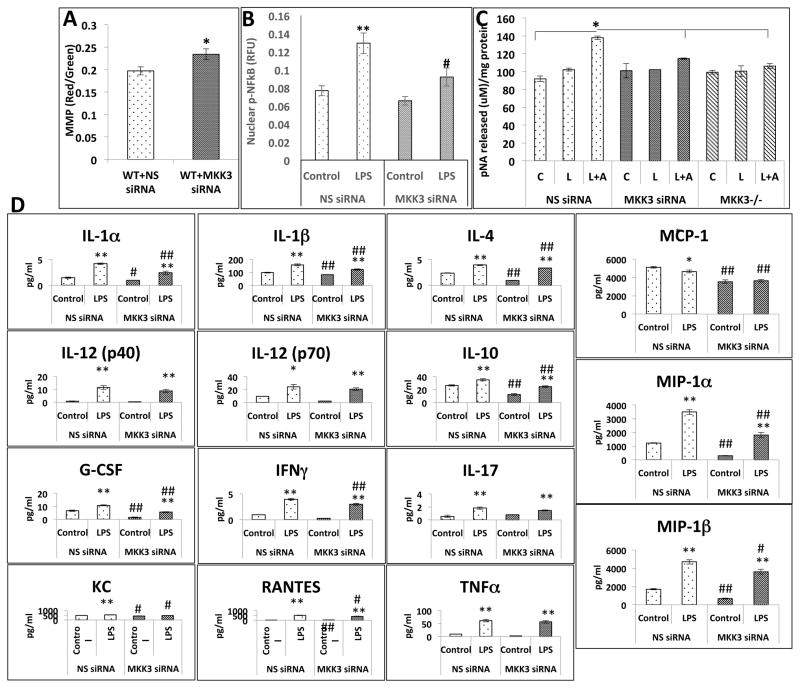
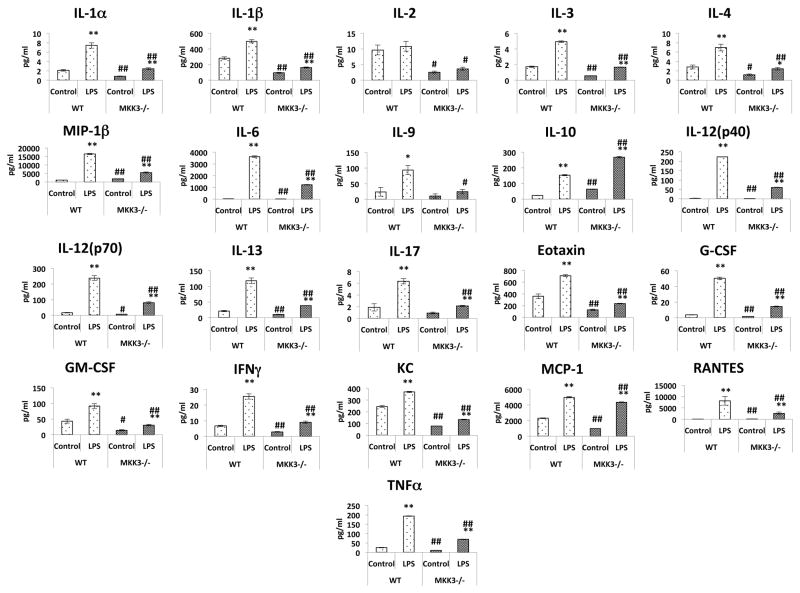
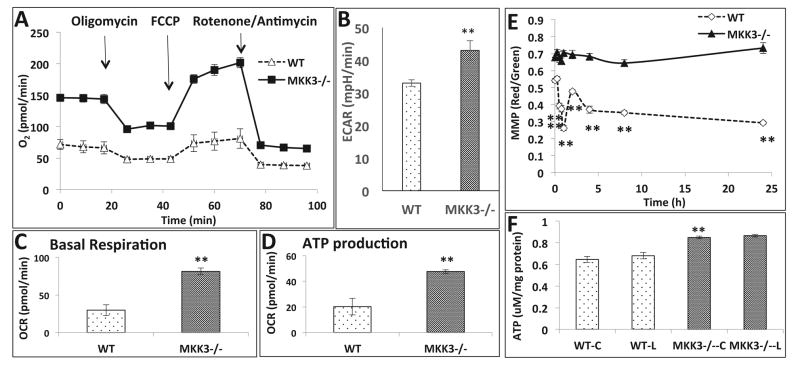
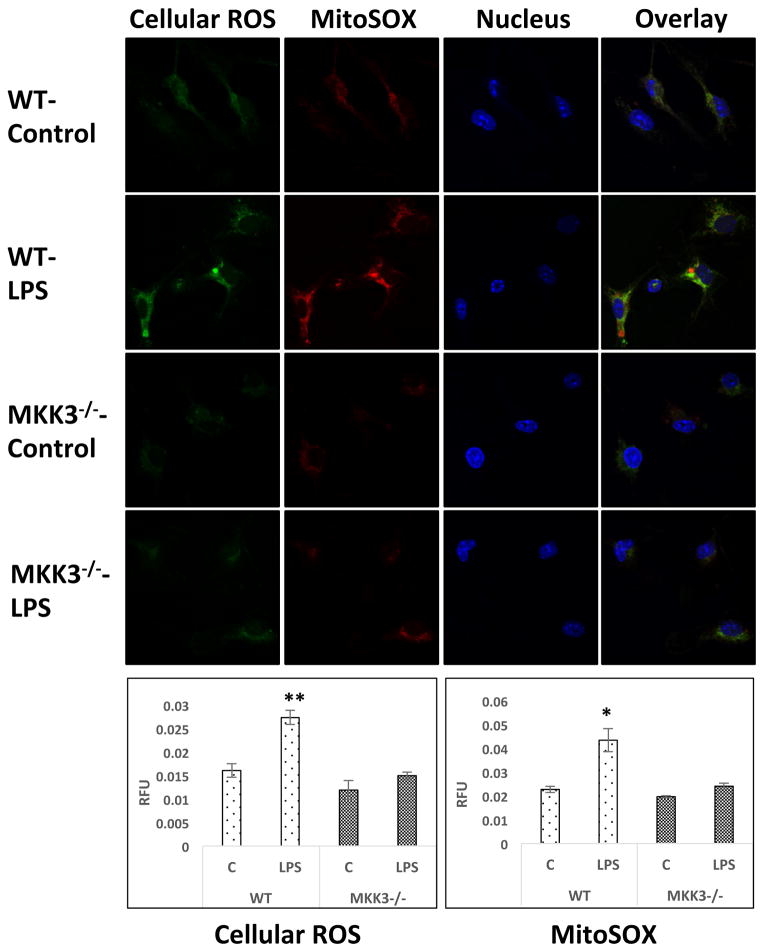
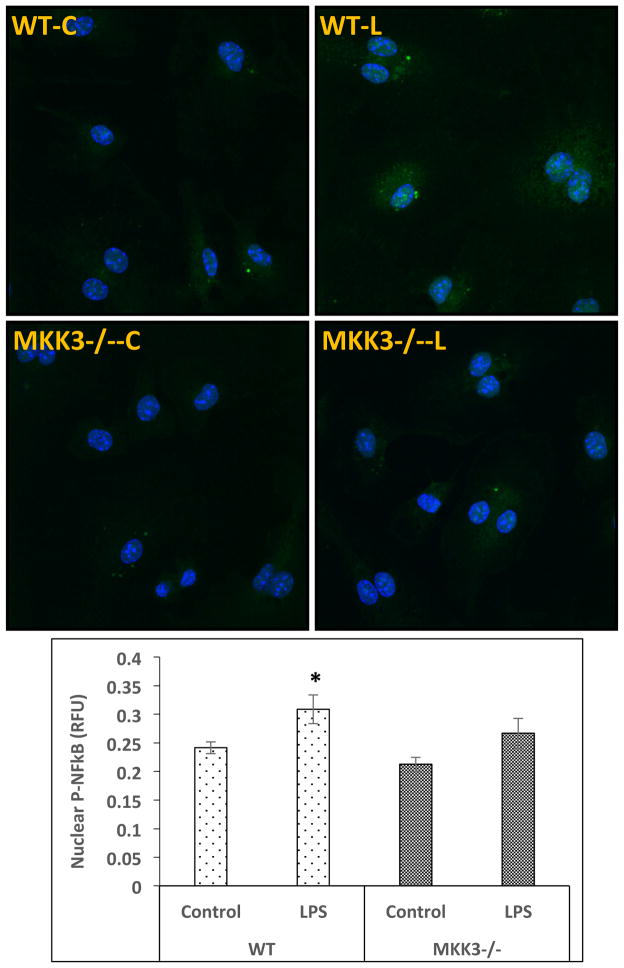
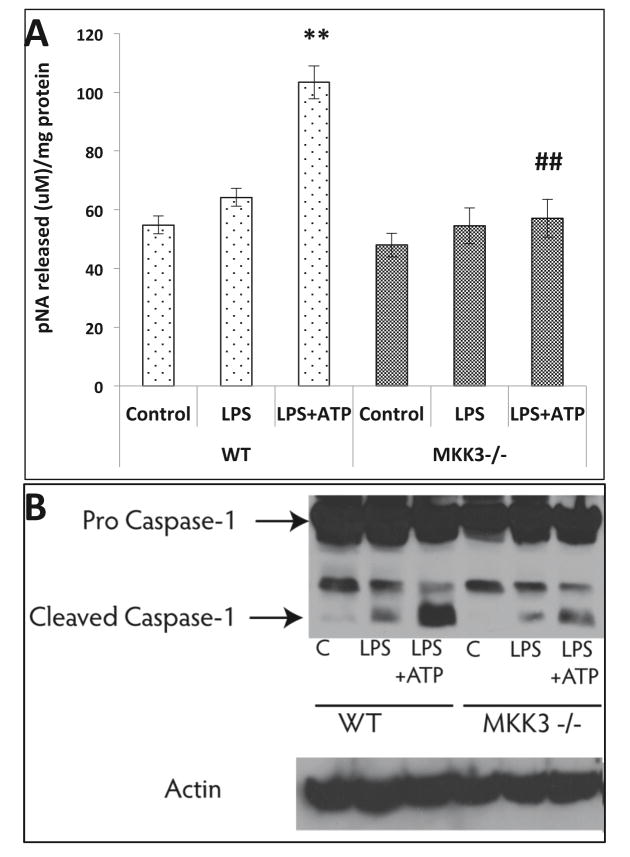
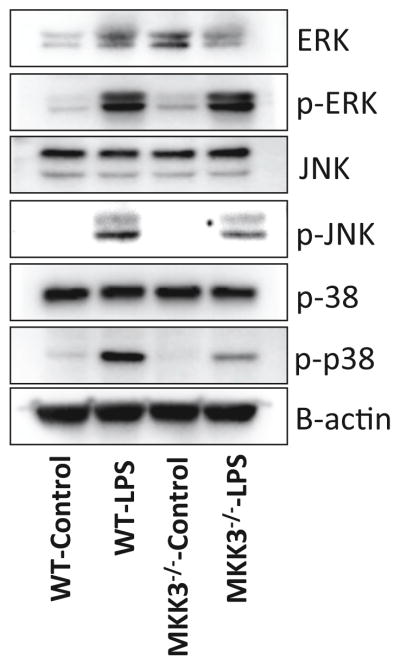
Mitochondria are increasingly recognized as drivers of inflammatory responses. MAP kinase kinase 3 (MKK3), a dual-specificity protein kinase, is activated in inflammation and in turn activates p38 MAP kinase signaling. Here we show that MKK3 influences mitochondrial function and acts as a critical mediator of inflammation. MKK3-deficient (MKK3(-/-)) mice and bone marrow-derived macrophages (BMDMs) secreted smaller amounts of cytokines than wild type (WT) after lipopolysaccharide (LPS) exposure. There was improved mitochondrial function, as measured by basal oxygen consumption rate, mitochondrial membrane potential, and ATP production, in MKK3(-/-) BMDMs. After LPS exposure, MKK3(-/-) BMDMs did not show a significant increase in cellular reactive oxygen species production or in mitochondrial superoxide compared to WT. Activation of two important inflammatory mediators, i.e., the nuclear translocation of NF-κB and caspase-1 activity (a key component of the inflammasome), was lower in MKK3(-/-) BMDMs. p38 and JNK activation was lower in MKK3(-/-) BMDMs compared to WT after exposure to LPS. Knockdown of MKK3 by siRNA in wild-type BMDMs improved mitochondrial membrane potential, reduced LPS-induced caspase-1 activation, and attenuated cytokine secretion. Our studies establish MKK3 as a regulator of mitochondrial function and inflammatory responses to LPS and suggest that MKK3 may be a therapeutic target in inflammatory disorders such as sepsis.
线粒体越来越被认为是炎症反应的驱动因素。丝裂原活化蛋白激酶激酶3(MKK3)是一种双特异性蛋白激酶,在炎症中被激活,进而激活p38丝裂原活化蛋白激酶信号通路。在此,我们表明MKK3影响线粒体功能,并作为炎症的关键介质发挥作用。与野生型(WT)小鼠相比,MKK3缺陷型(MKK3(-/-))小鼠和骨髓来源的巨噬细胞(BMDM)在暴露于脂多糖(LPS)后分泌的细胞因子量较少。通过基础氧消耗率、线粒体膜电位和ATP生成来衡量,MKK3(-/-) BMDM的线粒体功能得到改善。暴露于LPS后,与WT相比,MKK3(-/-) BMDM的细胞活性氧生成或线粒体超氧化物没有显著增加。在MKK3(-/-) BMDM中,两种重要的炎症介质即NF-κB的核转位和caspase-1活性(炎性小体的关键成分)的激活较低。暴露于LPS后,与WT相比,MKK3(-/-) BMDM中的p38和JNK激活较低。在野生型BMDM中通过siRNA敲低MKK3可改善线粒体膜电位,降低LPS诱导的caspase-1激活,并减弱细胞因子分泌。我们的研究确定MKK3是线粒体功能和对LPS炎症反应的调节因子,并表明MKK3可能是脓毒症等炎症性疾病的治疗靶点。