Zhao Mingrui, McGarry Laura M, Ma Hongtao, Harris Samuel, Berwick Jason, Yuste Rafael, Schwartz Theodore H
Department of Neurological Surgery, Brain and Mind Center, New York Presbyterian Hospital, Weill Medical College of Cornell University New York, NY, USA.
Department of Biological Sciences, Columbia University New York, NY, USA.
Front Neurosci. 2015 Feb 4;9:25. doi: 10.3389/fnins.2015.00025. eCollection 2015.
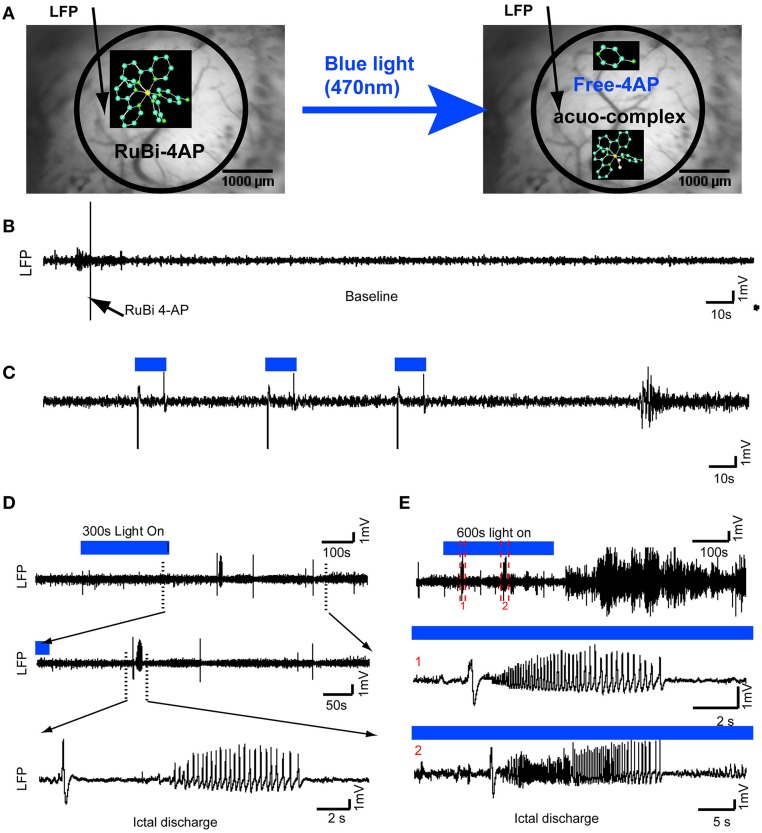
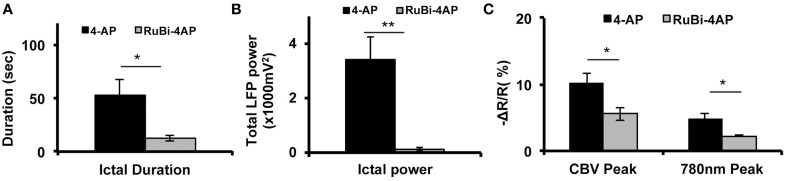
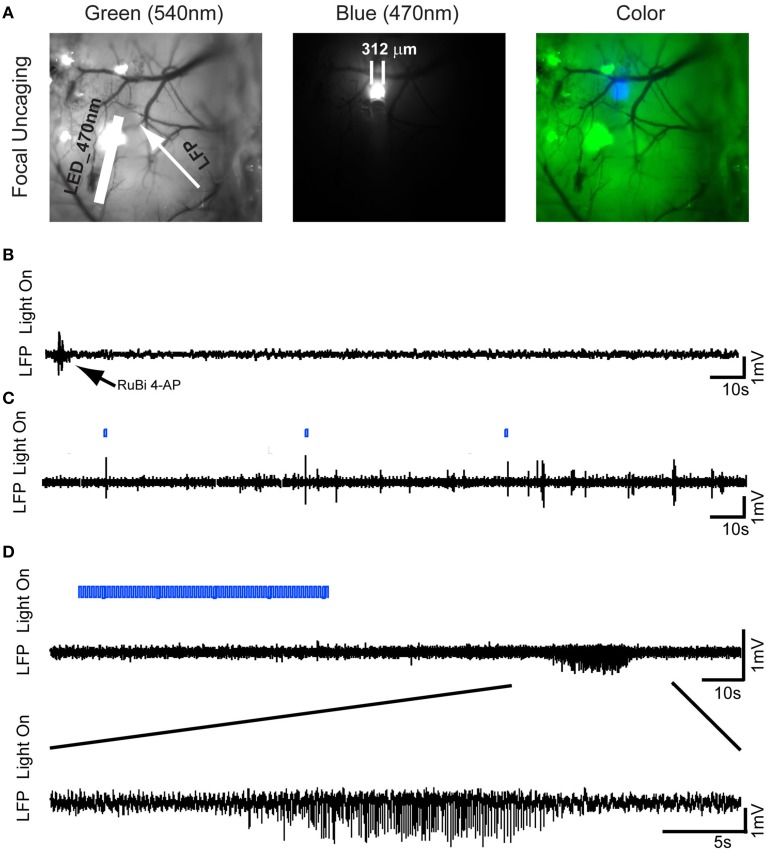
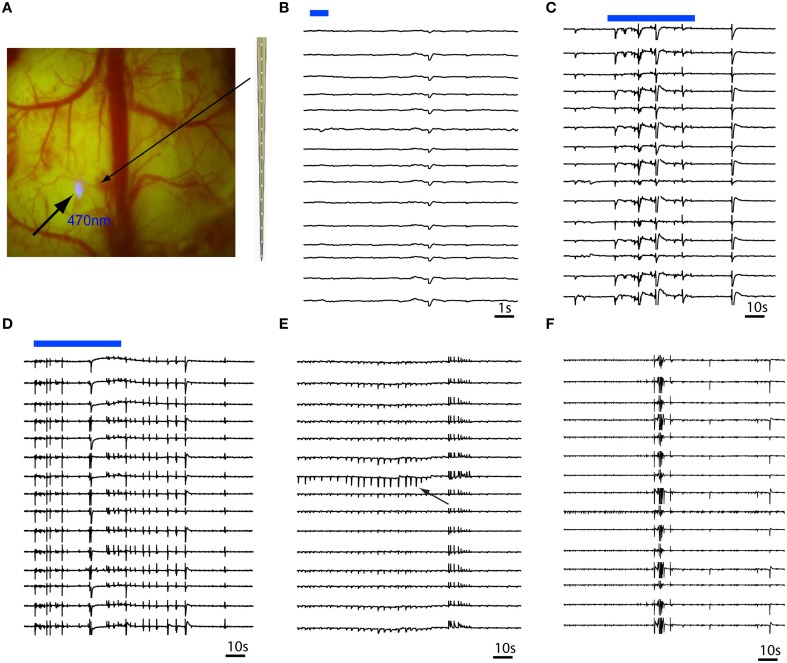
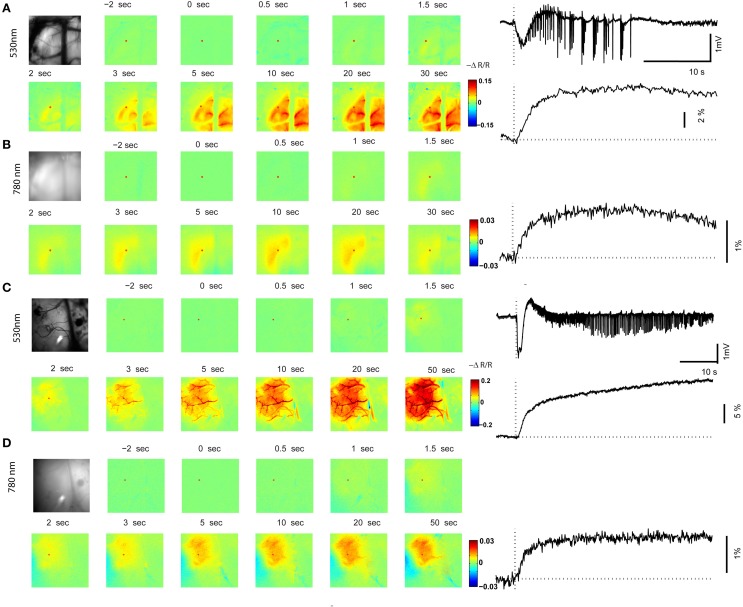
Animal models of epilepsy are critical not only for understanding the fundamental mechanism of epilepsy but also for testing the efficacy of new antiepileptic drugs and novel therapeutic interventions. Photorelease of caged molecules is widely used in biological research to control pharmacologic events with high spatio-temporal resolution. We developed a technique for in vivo optical triggering of neocortical seizures using a novel caged compound based on ruthenium photochemistry (RuBi-4AP). Epileptiform events in mouse cortex were induced with blue light in both whole brain and focal illumination. Multi-electrode array recording and optical techniques were used to characterize the propagation of these epileptic events, including interictal spikes, polyspikes, and ictal discharges. These results demonstrate a novel optically-triggered seizure model, with high spatio-temporal control, that could have widespread application in the investigation of ictal onset, propagation and to develop novel light-based therapeutic interventions.
癫痫动物模型不仅对于理解癫痫的基本机制至关重要,而且对于测试新型抗癫痫药物和新型治疗干预措施的疗效也至关重要。笼形分子的光释放被广泛应用于生物学研究中,以高时空分辨率控制药理事件。我们开发了一种利用基于钌光化学的新型笼形化合物(RuBi-4AP)在体内光学触发新皮层癫痫发作的技术。在全脑和局部光照下,用蓝光诱导小鼠皮层的癫痫样事件。使用多电极阵列记录和光学技术来表征这些癫痫事件的传播,包括发作间期棘波、多棘波和发作期放电。这些结果证明了一种具有高时空控制的新型光学触发癫痫发作模型,该模型可能在癫痫发作起始、传播的研究以及开发新型光基治疗干预措施方面具有广泛应用。