Xie Wanze, Richards John E, Lei Du, Lee Kang, Gong Qiyong
Department of Psychology, Institute for Mind and Brain, University of South Carolina Columbia, SC, USA ; Huaxi MR Research Center (HMRRC), Department of Radiology, West China Hospital of Sichuan University Chengdu, China.
Department of Psychology, Institute for Mind and Brain, University of South Carolina Columbia, SC, USA.
Front Syst Neurosci. 2015 Feb 2;8:249. doi: 10.3389/fnsys.2014.00249. eCollection 2014.
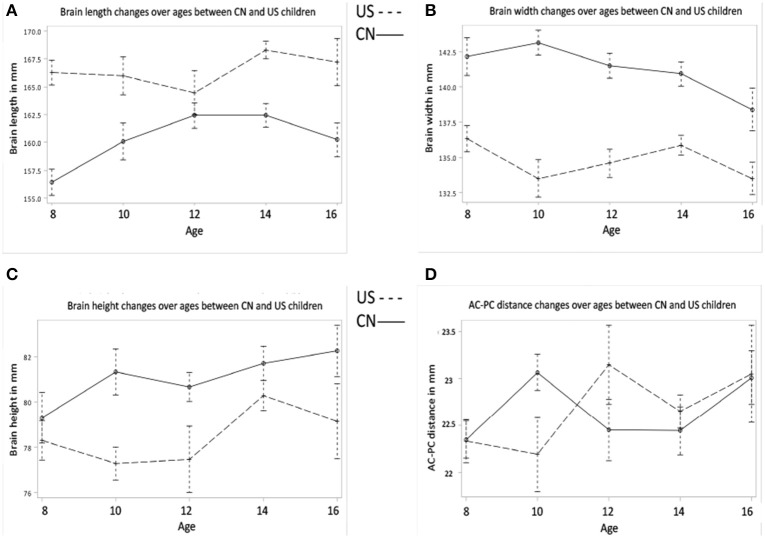
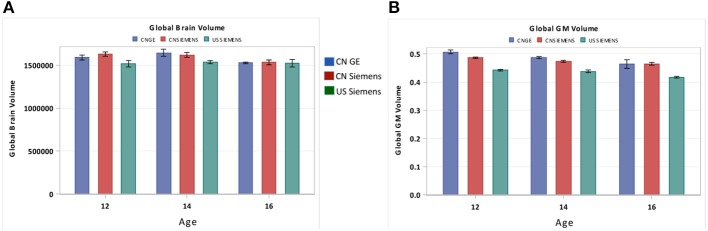
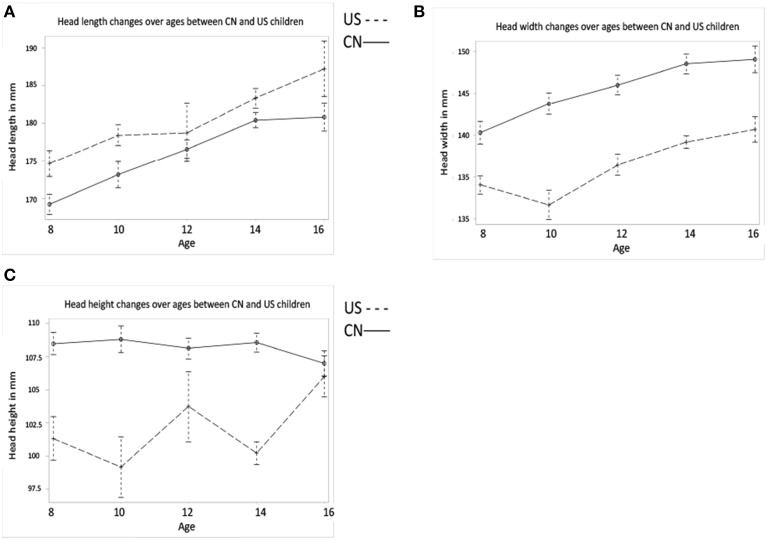
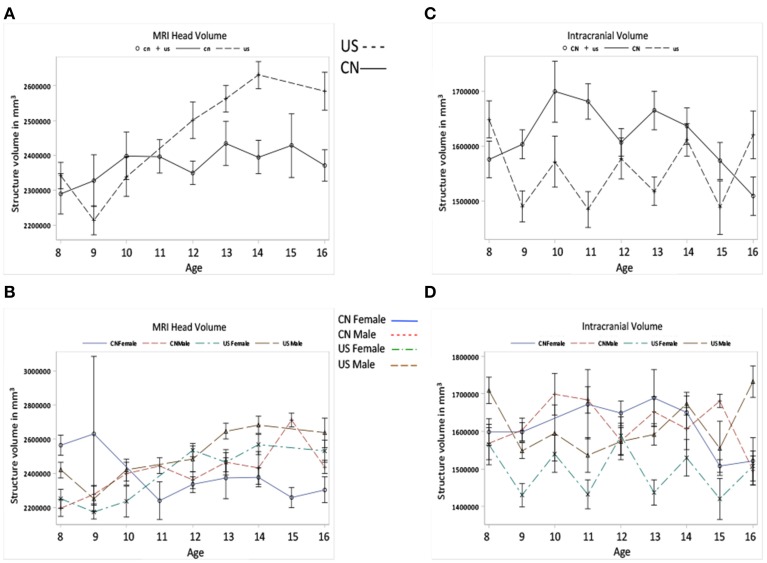
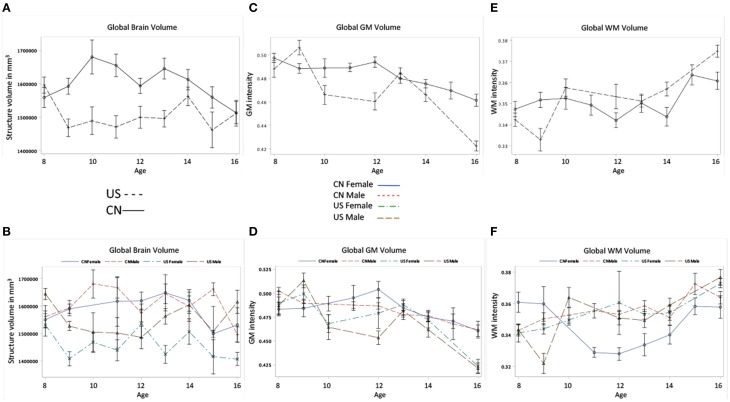
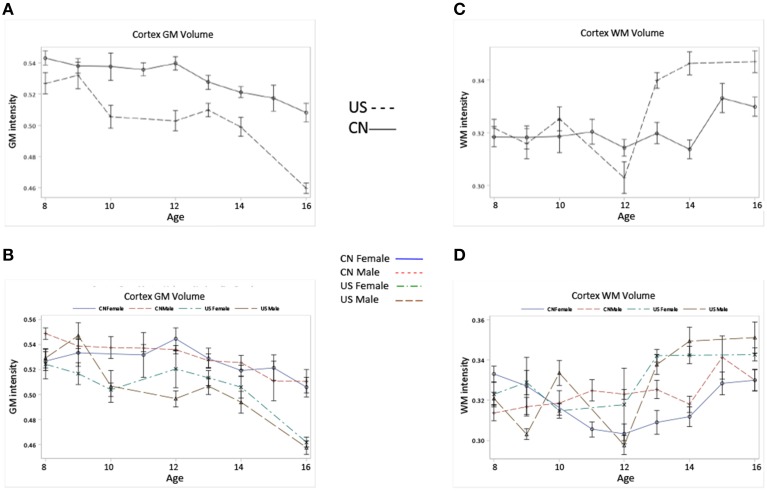
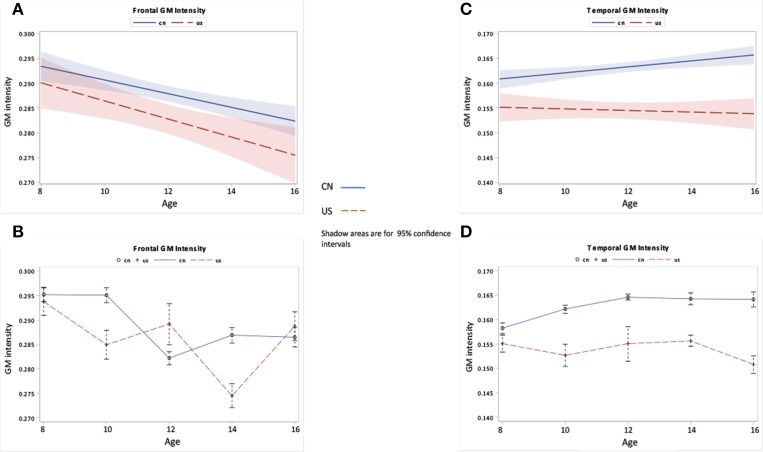
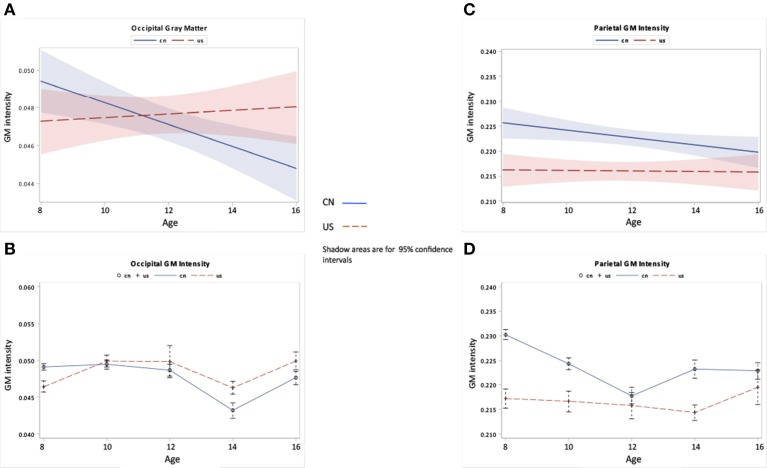
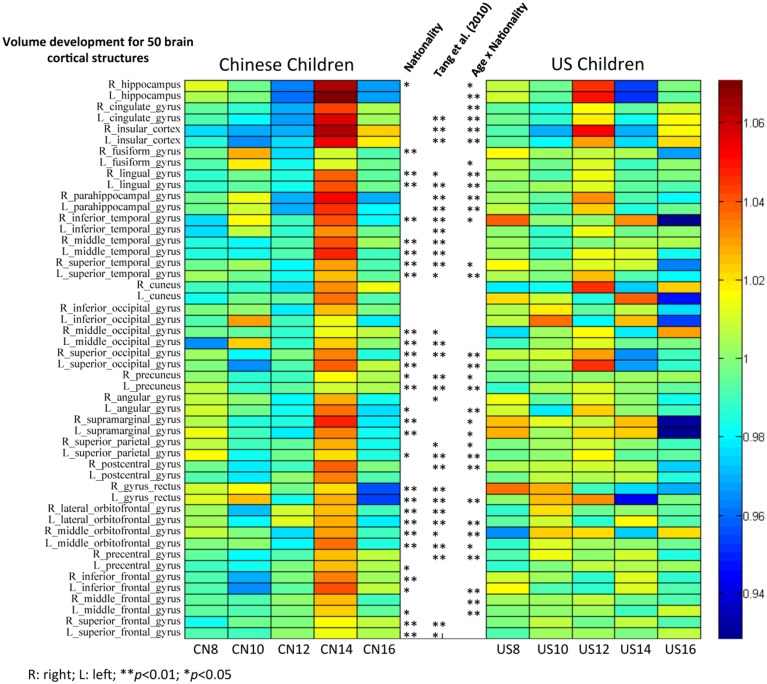
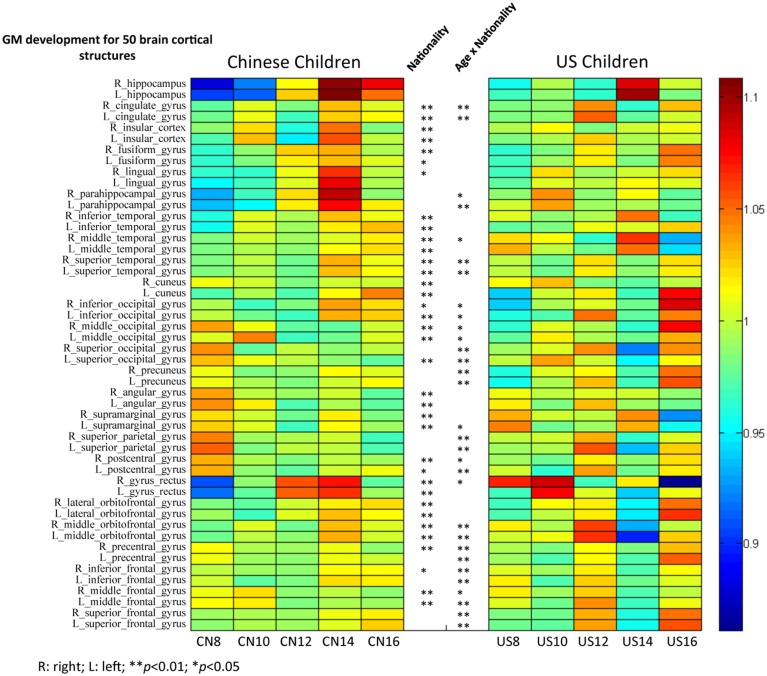
This current study investigated brain development of Chinese and American children and adolescents from 8 to 16 years of age using structural magnetic resonance imaging (MRI) techniques. Analyses comparing Chinese and U.S. children brain/head MR images were performed to explore similarities and differences in the trajectory of brain development between these two groups. Our results revealed regional and age differences in both brain/head morphological and tissue level development between Chinese and U.S. children. Chinese children's brains and heads were shorter, wider, and taller than those of U.S. children. There were significant differences in the gray matter (GM) and white matter (WM) intensity between the two nationalities. Development trajectories for cerebral volume, GM, and several key brain structures were also distinct between these two populations.
本研究采用结构磁共振成像(MRI)技术,对8至16岁的中国和美国儿童及青少年的大脑发育情况进行了调查。通过分析比较中国和美国儿童的脑/头部磁共振图像,探索这两组人群大脑发育轨迹的异同。我们的研究结果显示,中国和美国儿童在脑/头部形态和组织水平发育方面存在区域和年龄差异。中国儿童的大脑和头部比美国儿童的更短、更宽、更高。两国儿童在灰质(GM)和白质(WM)强度上存在显著差异。这两个人群在脑容量、GM和几个关键脑结构的发育轨迹上也有所不同。