Serino Andrea, Canzoneri Elisa, Marzolla Marilena, di Pellegrino Giuseppe, Magosso Elisa
Laboratory of Cognitive Neuroscience, Department of Life Science, Center for Neuroprosthetics, Ecole Polytechnique Fédérale de Lausanne Lausanne, Switzerland ; Dipartimento di Psicologia, Alma Mater Studiorum, Università di Bologna Bologna, Italy.
Laboratory of Cognitive Neuroscience, Department of Life Science, Center for Neuroprosthetics, Ecole Polytechnique Fédérale de Lausanne Lausanne, Switzerland ; Dipartimento di Psicologia, Centro Studi e ricerche in Neuroscienze Cognitive, Polo Scientifico Didattico di Cesena, Alma Mater Studiorum, Università di Bologna Bologna, Italy.
Front Behav Neurosci. 2015 Feb 2;9:4. doi: 10.3389/fnbeh.2015.00004. eCollection 2015.
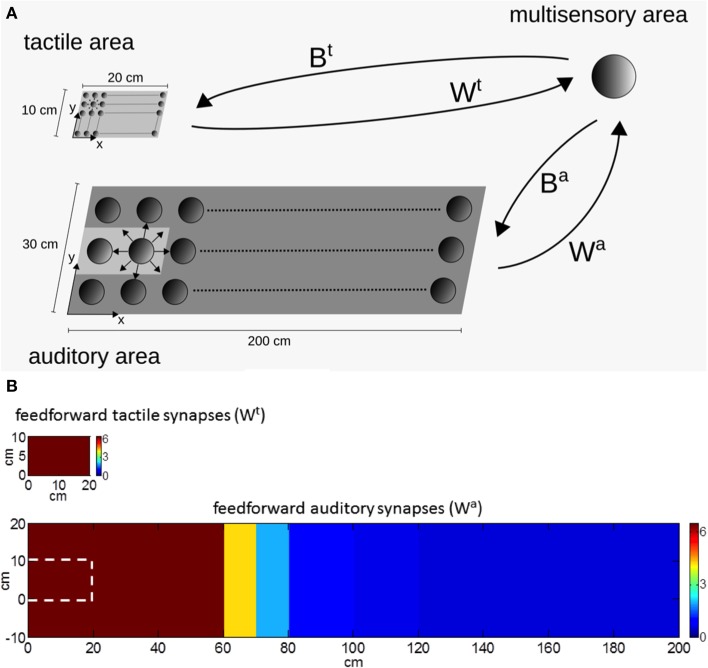
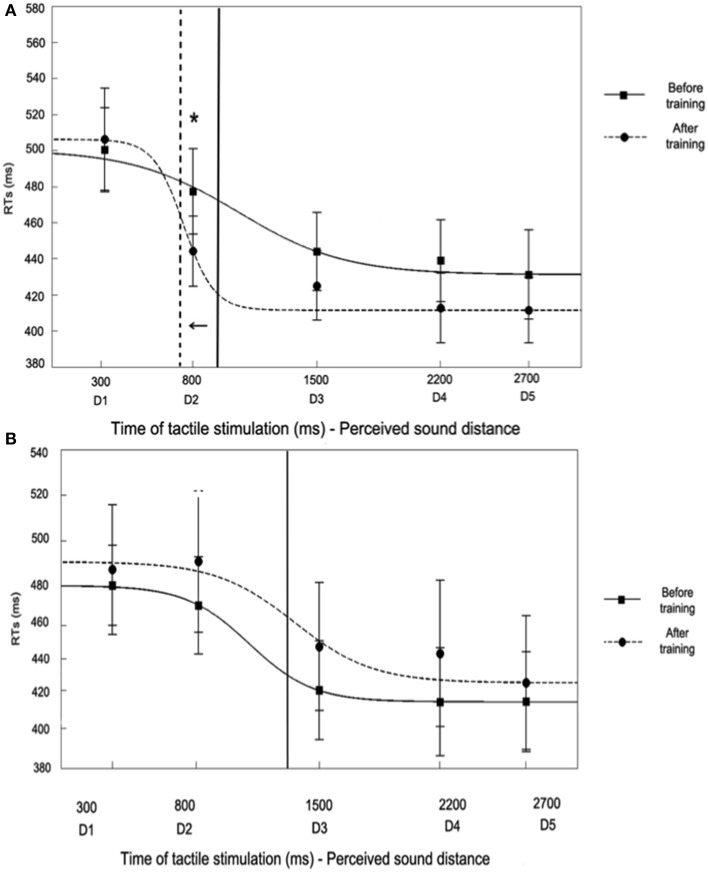
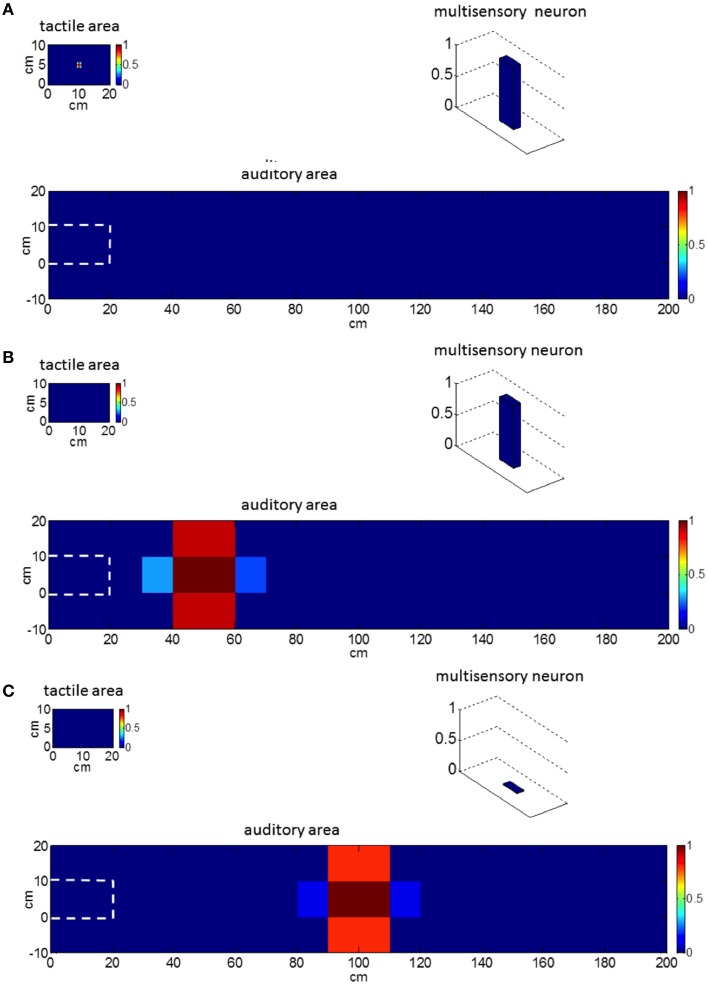
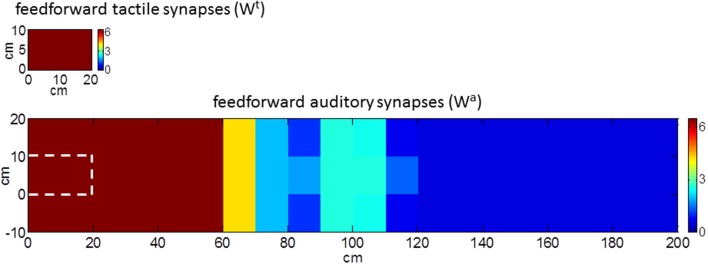
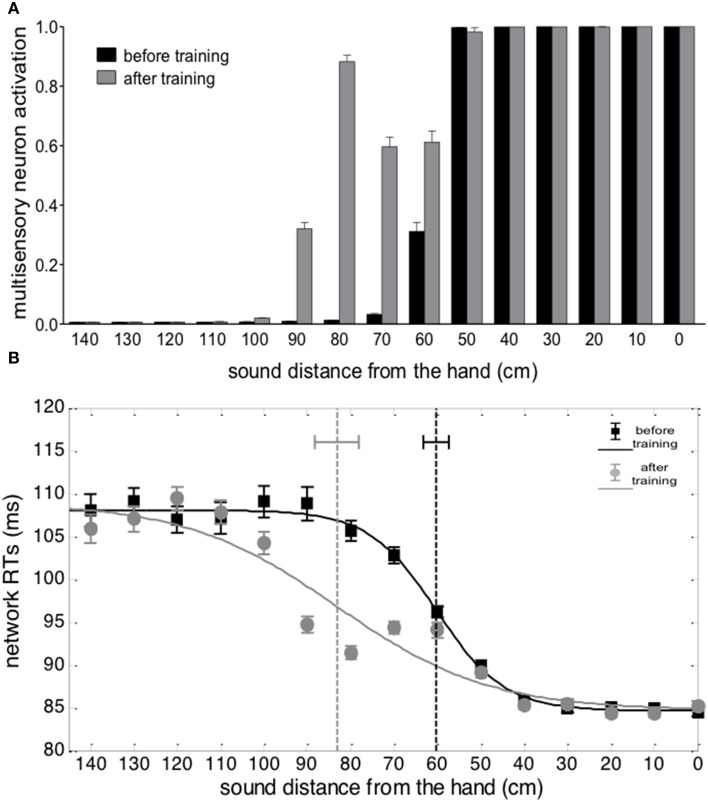
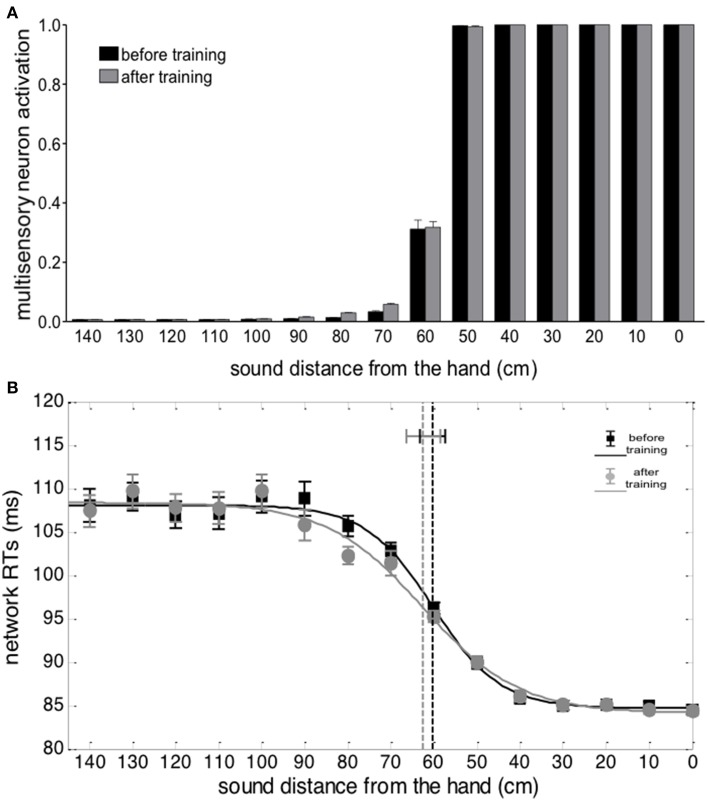
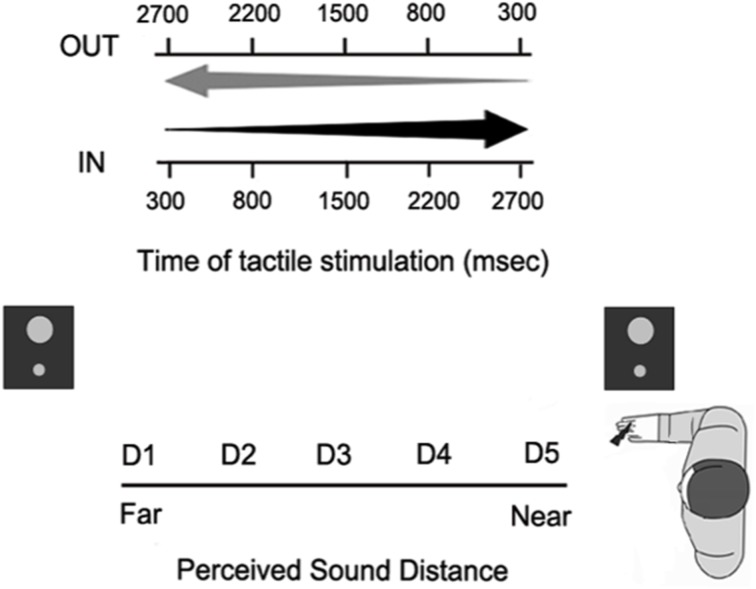
Stimuli from different sensory modalities occurring on or close to the body are integrated in a multisensory representation of the space surrounding the body, i.e., peripersonal space (PPS). PPS dynamically modifies depending on experience, e.g., it extends after using a tool to reach far objects. However, the neural mechanism underlying PPS plasticity after tool use is largely unknown. Here we use a combined computational-behavioral approach to propose and test a possible mechanism accounting for PPS extension. We first present a neural network model simulating audio-tactile representation in the PPS around one hand. Simulation experiments showed that our model reproduced the main property of PPS neurons, i.e., selective multisensory response for stimuli occurring close to the hand. We used the neural network model to simulate the effects of a tool-use training. In terms of sensory inputs, tool use was conceptualized as a concurrent tactile stimulation from the hand, due to holding the tool, and an auditory stimulation from the far space, due to tool-mediated action. Results showed that after exposure to those inputs, PPS neurons responded also to multisensory stimuli far from the hand. The model thus suggests that synchronous pairing of tactile hand stimulation and auditory stimulation from the far space is sufficient to extend PPS, such as after tool-use. Such prediction was confirmed by a behavioral experiment, where we used an audio-tactile interaction paradigm to measure the boundaries of PPS representation. We found that PPS extended after synchronous tactile-hand stimulation and auditory-far stimulation in a group of healthy volunteers. Control experiments both in simulation and behavioral settings showed that the same amount of tactile and auditory inputs administered out of synchrony did not change PPS representation. We conclude by proposing a simple, biological-plausible model to explain plasticity in PPS representation after tool-use, which is supported by computational and behavioral data.
来自身体上或靠近身体的不同感觉模态的刺激,会在身体周围空间的多感觉表征中进行整合,即个人周边空间(PPS)。PPS会根据经验动态变化,例如,在使用工具够取远处物体后它会扩展。然而,使用工具后PPS可塑性背后的神经机制在很大程度上尚不清楚。在这里,我们采用计算 - 行为相结合的方法来提出并测试一种可能解释PPS扩展的机制。我们首先提出一个神经网络模型,模拟一只手周围PPS中的听觉 - 触觉表征。模拟实验表明,我们的模型再现了PPS神经元的主要特性,即对靠近手部的刺激产生选择性多感觉反应。我们使用神经网络模型来模拟工具使用训练的效果。在感觉输入方面,工具使用被概念化为由于握住工具而来自手部的同步触觉刺激,以及由于工具介导的动作而来自远处空间的听觉刺激。结果表明,在接触这些输入后,PPS神经元也会对远离手部的多感觉刺激做出反应。该模型因此表明,手部触觉刺激与来自远处空间的听觉刺激的同步配对足以扩展PPS,比如在使用工具之后。这一预测通过一项行为实验得到了证实,在该实验中我们使用听觉 - 触觉交互范式来测量PPS表征的边界。我们发现,在一组健康志愿者中,同步的手部触觉刺激和远处听觉刺激后PPS扩展了。模拟和行为设置中的对照实验均表明,异步给予相同量的触觉和听觉输入不会改变PPS表征。我们通过提出一个简单的、具有生物学合理性的模型来解释使用工具后PPS表征的可塑性,该模型得到了计算和行为数据的支持。