Bahney Chelsea S, Hu Diane P, Miclau Theodore, Marcucio Ralph S
Orthopaedic Trauma Institute, San Francisco General Hospital, University of California San Francisco , San Francisco, CA , USA ; Department of Bioengineering and Material Science, University of California Berkeley , Berkeley, CA , USA.
Orthopaedic Trauma Institute, San Francisco General Hospital, University of California San Francisco , San Francisco, CA , USA.
Front Endocrinol (Lausanne). 2015 Feb 5;6:4. doi: 10.3389/fendo.2015.00004. eCollection 2015.
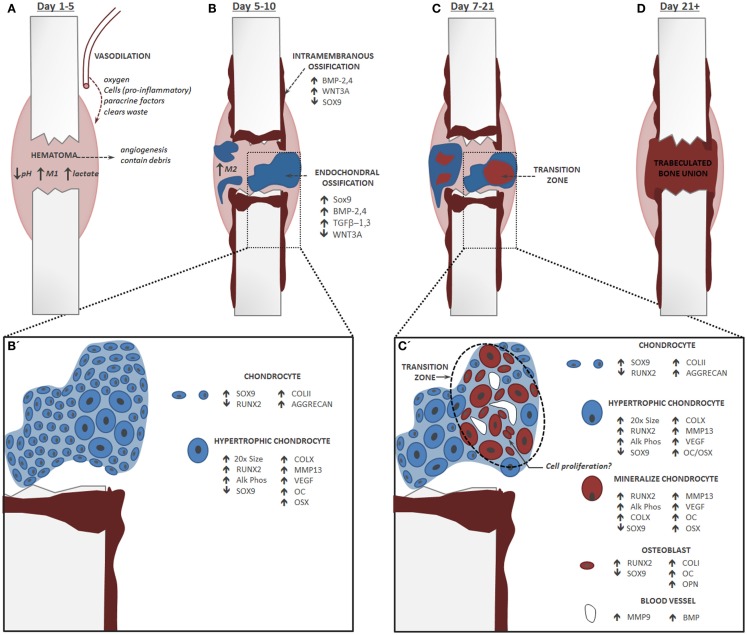
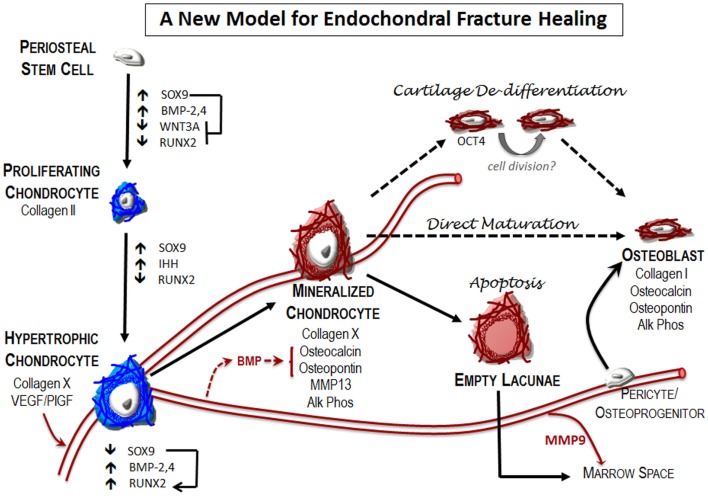
Fracture healing is critically dependent upon an adequate vascular supply. The normal rate for fracture delayed or non-union is estimated to be between 10 and 15%, and annual fracture numbers are approximately 15 million cases per year. However, when there is decreased vascular perfusion to the fracture, incidence of impaired healing rises dramatically to 46%. Reduction in the blood supply to the fracture can be the result of traumatic injuries that physically disrupt the vasculature and damage supportive soft tissue, the result of anatomical location (i.e., distal tibia), or attributed to physiological conditions such as age, diabetes, or smoking. The role of the vasculature during repair is multifaceted and changes during the course of healing. In this article, we review recent insights into the role of the vasculature during fracture repair. Taken together these data highlight the need for an updated model for endochondral repair to facilitate improved therapeutic approaches to promote bone healing.
骨折愈合严重依赖于充足的血管供应。据估计,骨折延迟愈合或不愈合的正常发生率在10%至15%之间,每年骨折病例数约为1500万例。然而,当骨折部位的血管灌注减少时,愈合受损的发生率会急剧上升至46%。骨折部位血液供应减少可能是由于外伤导致血管结构破坏和支持性软组织受损,也可能是由于解剖位置(如胫骨远端),或归因于年龄、糖尿病或吸烟等生理状况。血管系统在修复过程中的作用是多方面的,并且在愈合过程中会发生变化。在本文中,我们回顾了血管系统在骨折修复中作用的最新见解。综合这些数据凸显了需要一个更新的软骨内修复模型,以促进改进促进骨愈合的治疗方法。