Naviaux Jane C, Wang Lin, Li Kefeng, Bright A Taylor, Alaynick William A, Williams Kenneth R, Powell Susan B, Naviaux Robert K
Department of Psychiatry, University of California, San Diego School of Medicine, 214 Dickinson St., Bldg CTF, Rm C102, San Diego, CA 92103-8467 USA.
The Mitochondrial and Metabolic Disease Center, University of California, San Diego School of Medicine, 214 Dickinson St., Bldg CTF, Rm C102, San Diego, CA 92103-8467 USA ; Department of Medicine, University of California, San Diego School of Medicine, 214 Dickinson St., Bldg CTF, Rm C102, San Diego, CA 92103-8467 USA.
Mol Autism. 2015 Jan 13;6:1. doi: 10.1186/2040-2392-6-1. eCollection 2015.
This study was designed to test a new approach to drug treatment of autism spectrum disorders (ASDs) in the Fragile X (Fmr1) knockout mouse model.
We used behavioral analysis, mass spectrometry, metabolomics, electron microscopy, and western analysis to test the hypothesis that the disturbances in social behavior, novelty preference, metabolism, and synapse structure are treatable with antipurinergic therapy (APT).
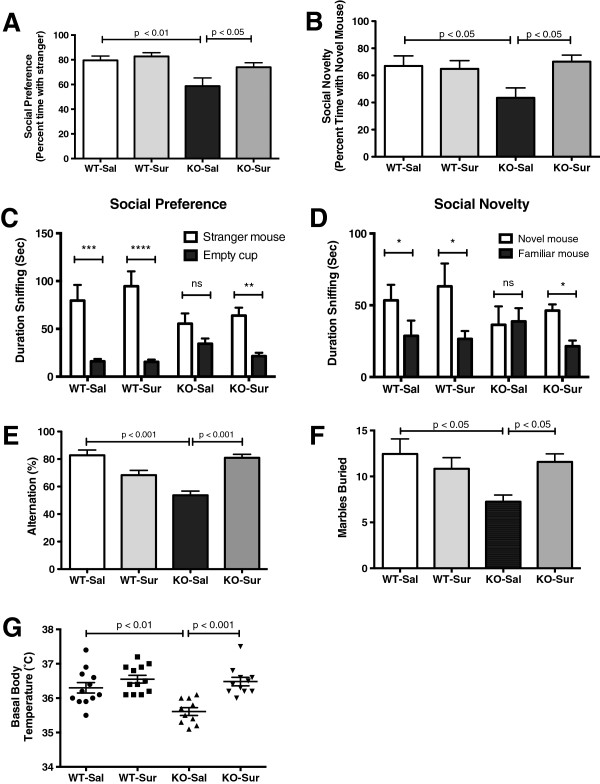
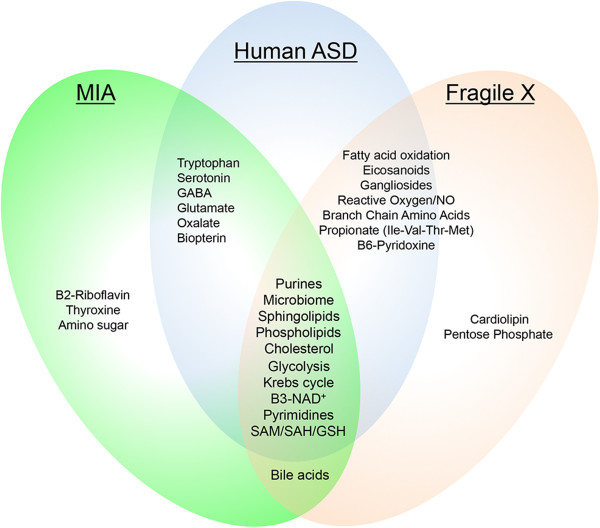
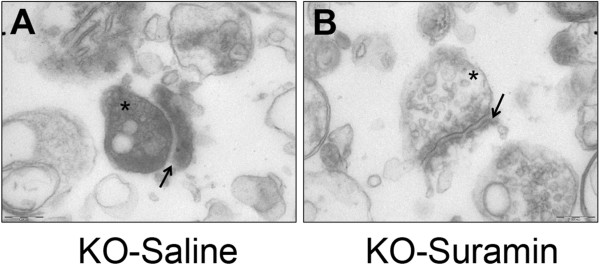
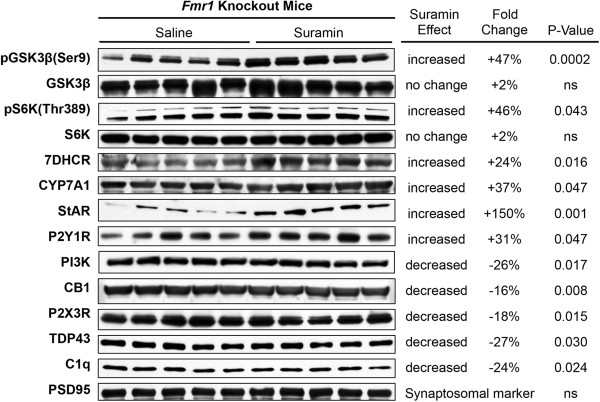
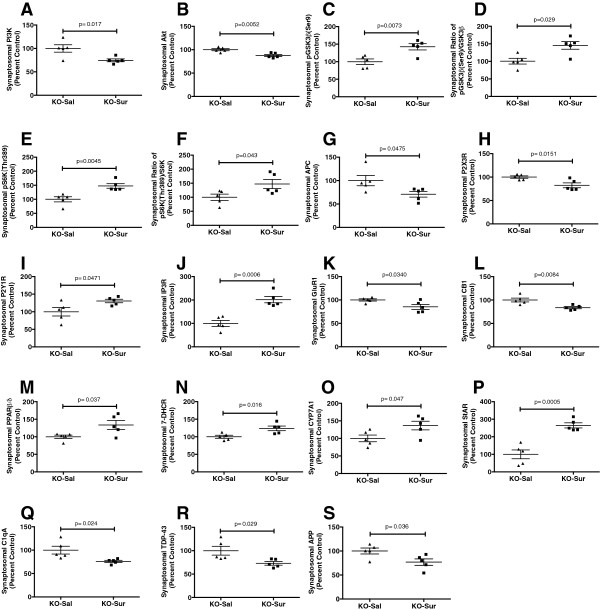
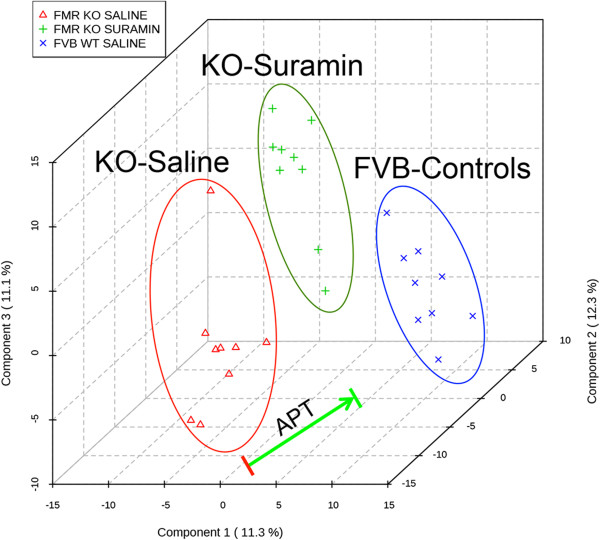
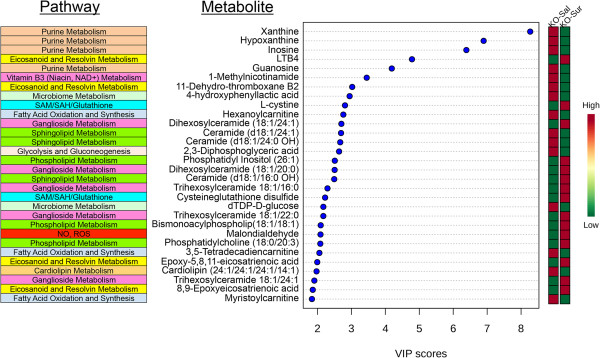
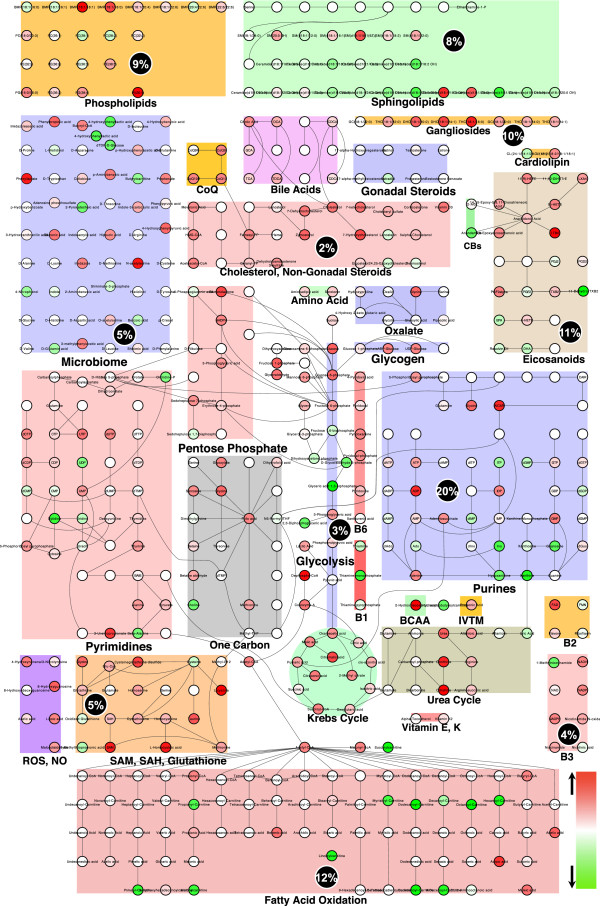
Weekly treatment with the purinergic antagonist suramin (20 mg/kg intraperitoneally), started at 9 weeks of age, restored normal social behavior, and improved metabolism, and brain synaptosomal structure. Abnormalities in synaptosomal glutamate, endocannabinoid, purinergic, and IP3 receptor expression, complement C1q, TDP43, and amyloid β precursor protein (APP) were corrected. Comprehensive metabolomic analysis identified 20 biochemical pathways associated with symptom improvements. Seventeen pathways were shared with human ASD, and 11 were shared with the maternal immune activation (MIA) model of ASD. These metabolic pathways were previously identified as functionally related mediators of the evolutionarily conserved cell danger response (CDR).
The data show that antipurinergic therapy improves the multisystem, ASD-like features of both the environmental MIA, and the genetic Fragile X models. These abnormalities appeared to be traceable to mitochondria and regulated by purinergic signaling.
本研究旨在测试在脆性X(Fmr1)基因敲除小鼠模型中治疗自闭症谱系障碍(ASD)的一种新的药物治疗方法。
我们使用行为分析、质谱分析、代谢组学、电子显微镜和蛋白质免疫印迹分析来检验以下假设,即社交行为、新奇偏好、代谢和突触结构的紊乱可用抗嘌呤能疗法(APT)治疗。
从9周龄开始每周用嘌呤能拮抗剂苏拉明(20毫克/千克腹腔注射)治疗,可恢复正常社交行为,改善代谢和脑突触体结构。突触体谷氨酸、内源性大麻素、嘌呤能和IP3受体表达、补体C1q、TDP43和淀粉样β前体蛋白(APP)的异常得到纠正。综合代谢组学分析确定了20条与症状改善相关的生化途径。其中17条途径与人类ASD共有,11条途径与ASD的母体免疫激活(MIA)模型共有。这些代谢途径先前被确定为进化保守的细胞危险反应(CDR)的功能相关介质。
数据表明,抗嘌呤能疗法改善了环境MIA模型和遗传性脆性X模型的多系统、ASD样特征。这些异常似乎可追溯到线粒体,并受嘌呤能信号调节。