The Mitochondrial and Metabolic Disease Center, University of California, San Diego School of Medicine, San Diego, CA, 92103-8467, USA.
Department of Medicine, University of California, San Diego School of Medicine, San Diego, CA, 92103-8467, USA.
Commun Biol. 2024 May 10;7(1):536. doi: 10.1038/s42003-024-06102-y.
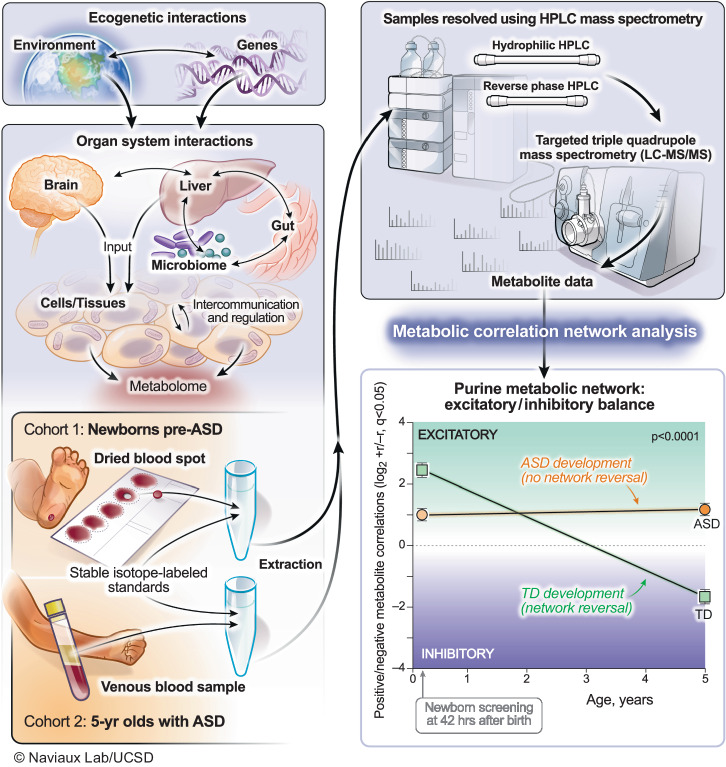
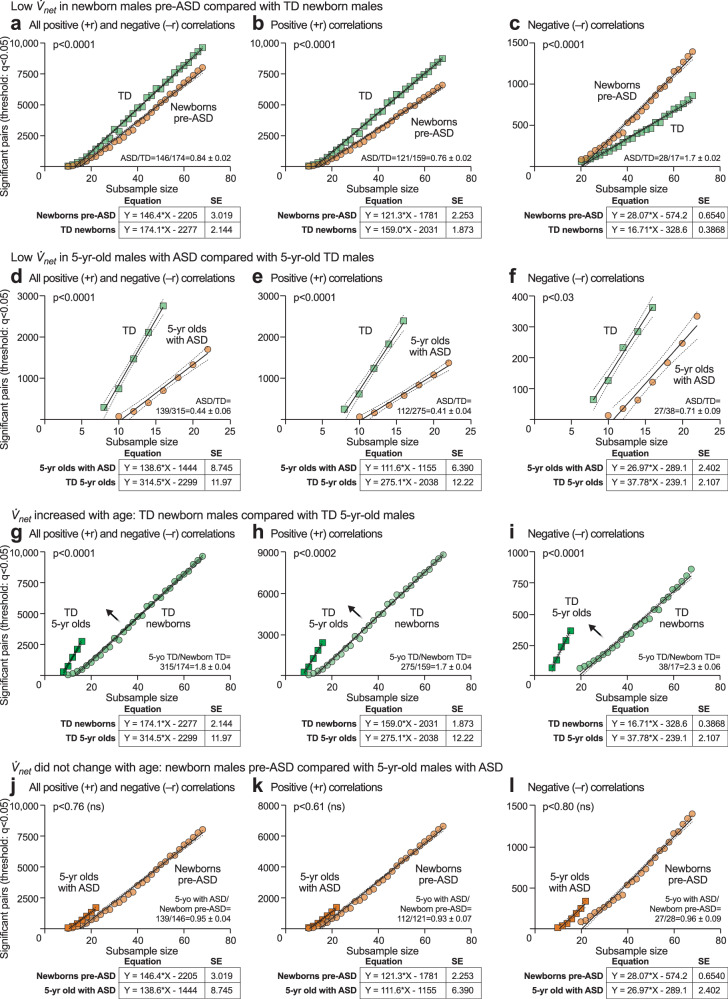
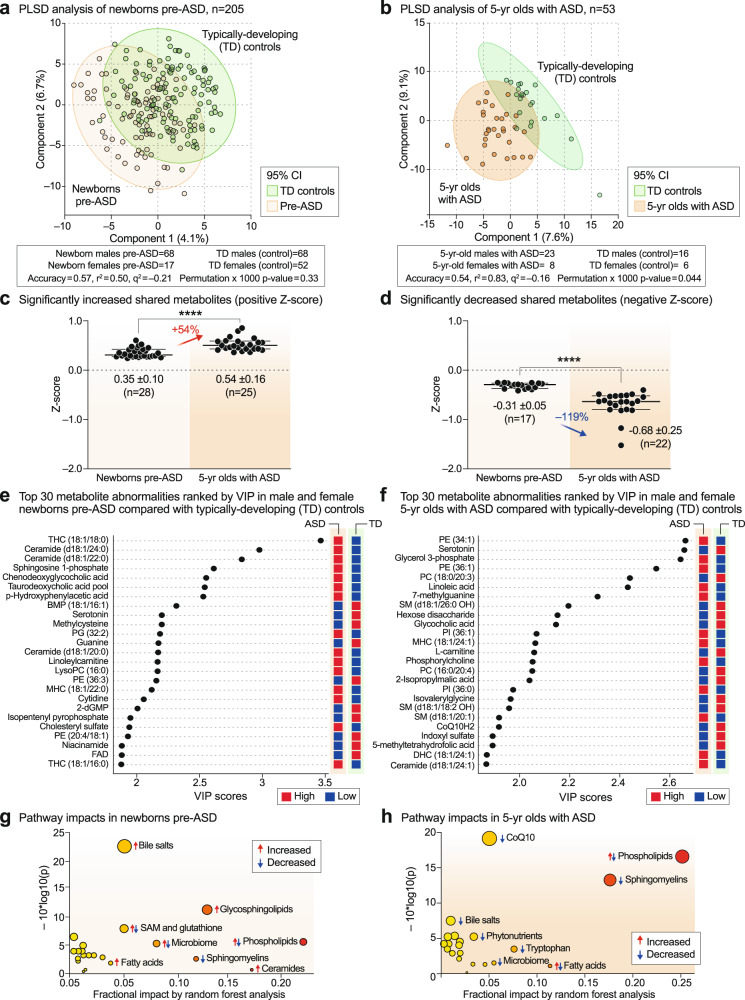
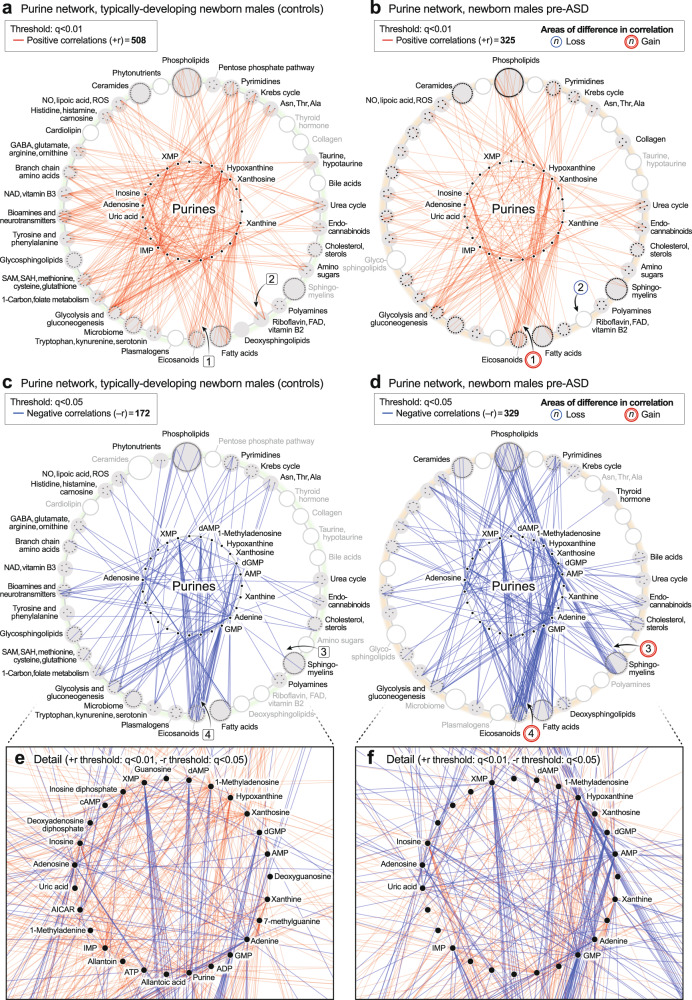
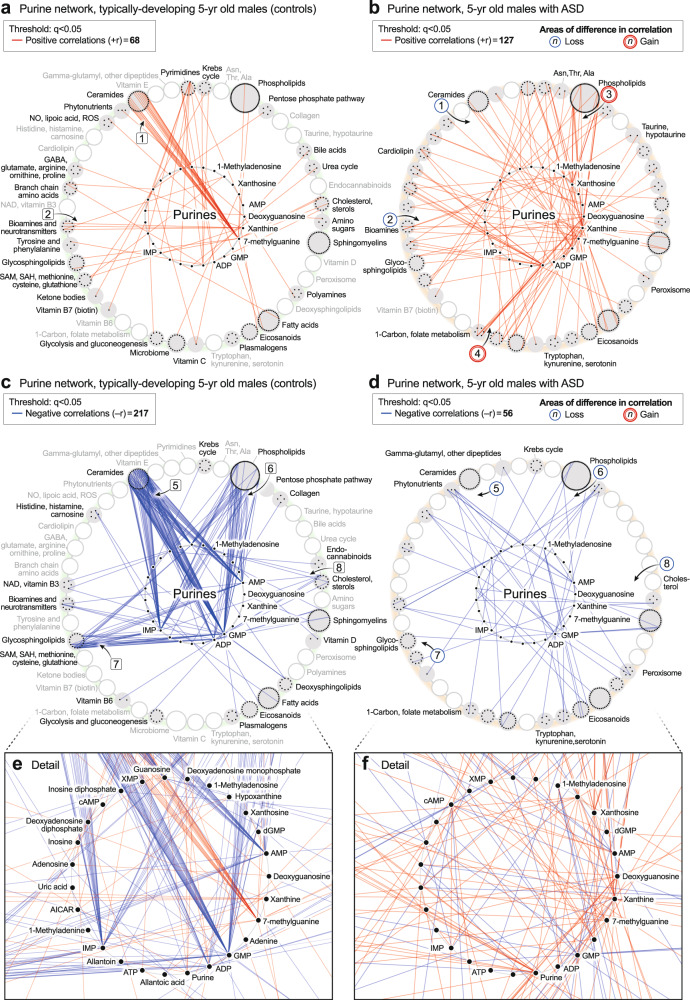
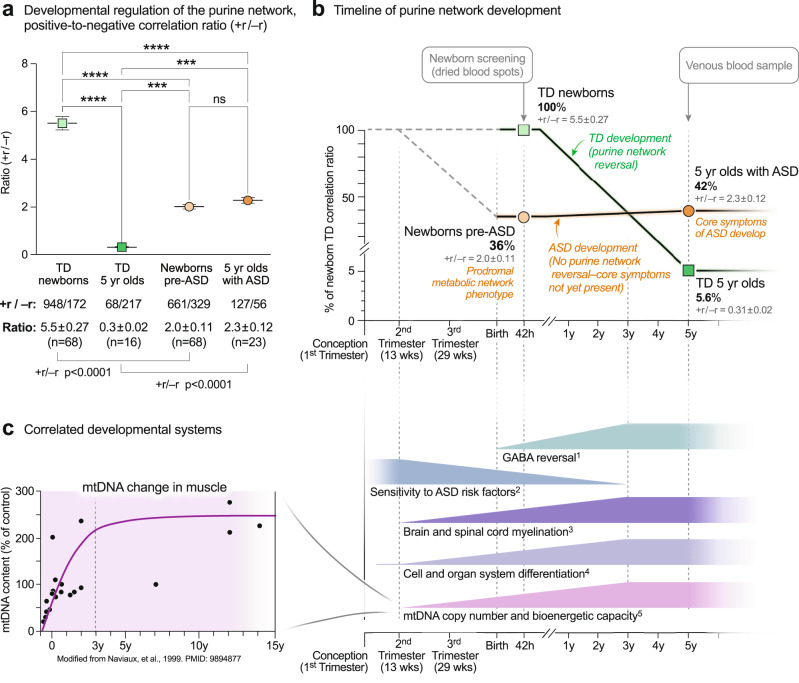
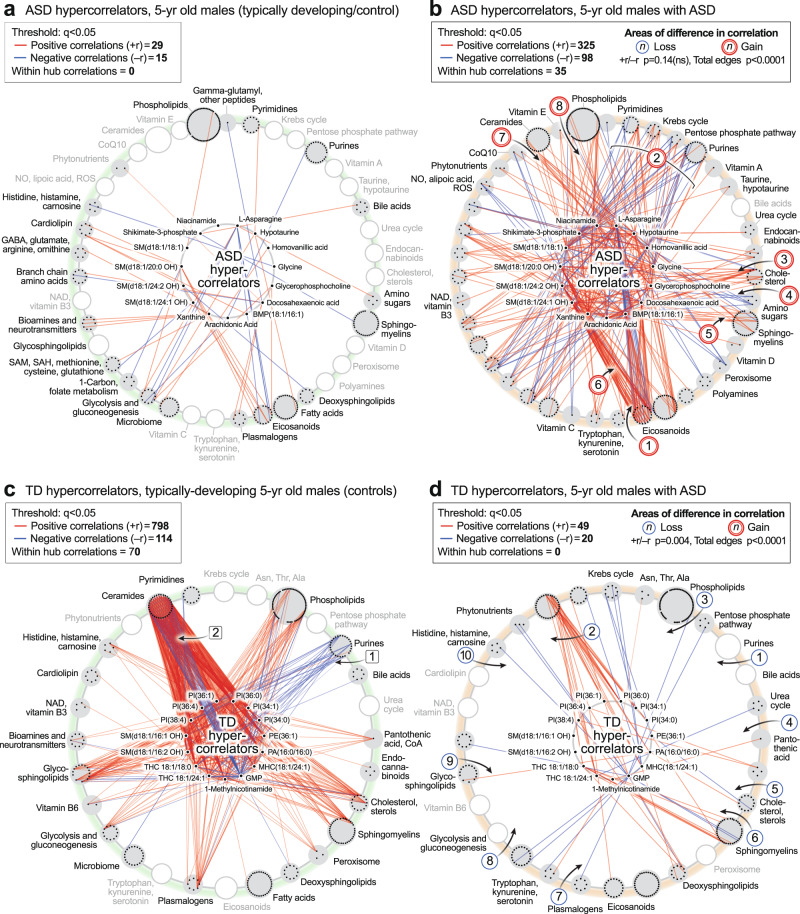
Classical metabolomic and new metabolic network methods were used to study the developmental features of autism spectrum disorder (ASD) in newborns (n = 205) and 5-year-old children (n = 53). Eighty percent of the metabolic impact in ASD was caused by 14 shared biochemical pathways that led to decreased anti-inflammatory and antioxidant defenses, and to increased physiologic stress molecules like lactate, glycerol, cholesterol, and ceramides. CIRCOS plots and a new metabolic network parameter, , revealed differences in both the kind and degree of network connectivity. Of 50 biochemical pathways and 450 polar and lipid metabolites examined, the developmental regulation of the purine network was most changed. Purine network hub analysis revealed a 17-fold reversal in typically developing children. This purine network reversal did not occur in ASD. These results revealed previously unknown metabolic phenotypes, identified new developmental states of the metabolic correlation network, and underscored the role of mitochondrial functional changes, purine metabolism, and purinergic signaling in autism spectrum disorder.
采用经典代谢组学和新的代谢网络方法,研究了新生儿(n=205)和 5 岁儿童(n=53)自闭症谱系障碍(ASD)的发育特征。80%的代谢影响是由 14 个共同的生化途径引起的,这些途径导致抗炎和抗氧化防御能力下降,以及生理应激分子如乳酸盐、甘油、胆固醇和神经酰胺增加。CIRCOS 图和新的代谢网络参数 揭示了网络连接的种类和程度的差异。在 50 个生化途径和 450 个极性和脂质代谢物的检查中,嘌呤网络的发育调节变化最大。嘌呤网络枢纽分析显示,在正常发育的儿童中,嘌呤网络出现了 17 倍的逆转。这种嘌呤网络的逆转在 ASD 中并没有发生。这些结果揭示了以前未知的代谢表型,确定了代谢相关网络的新发育状态,并强调了线粒体功能变化、嘌呤代谢和嘌呤能信号在自闭症谱系障碍中的作用。