Wan Feng, Cheng Chao, Wang Zongwei, Xiao Xingyuan, Zeng Hanqing, Xing Shian, Chen Xuepan, Wang Jin, Li Sen, Zhang Youpeng, Xiang Wei, Zhu Zhineng, Johnson Cameron, Zhu Zhaohui
Department of Urology, Union Hospital, Tongji Medical College, Huazhong University of Science and Technology, Wuhan 430022, Hubei, PR China.
Department of General Surgery, Union Hospital, Tongji Medical College, Huazhong University of Science and Technology, Wuhan 430022, Hubei, PR China.
PLoS One. 2015 Feb 23;10(2):e0117518. doi: 10.1371/journal.pone.0117518. eCollection 2015.
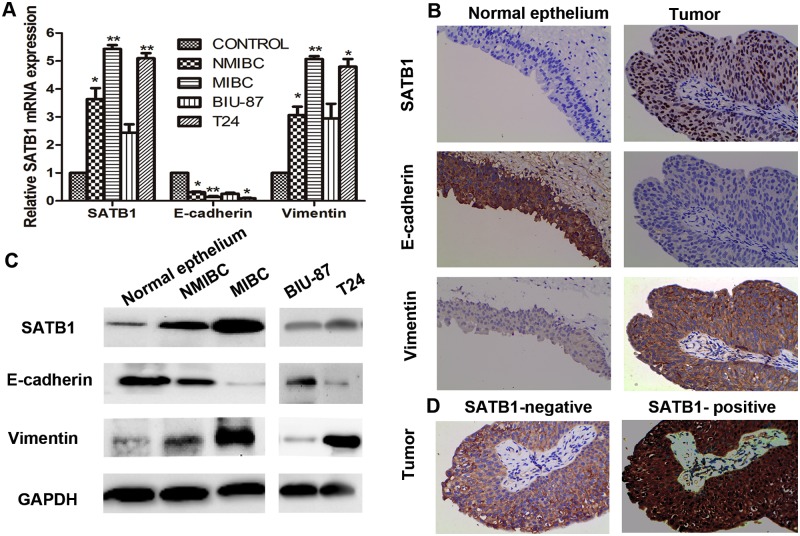
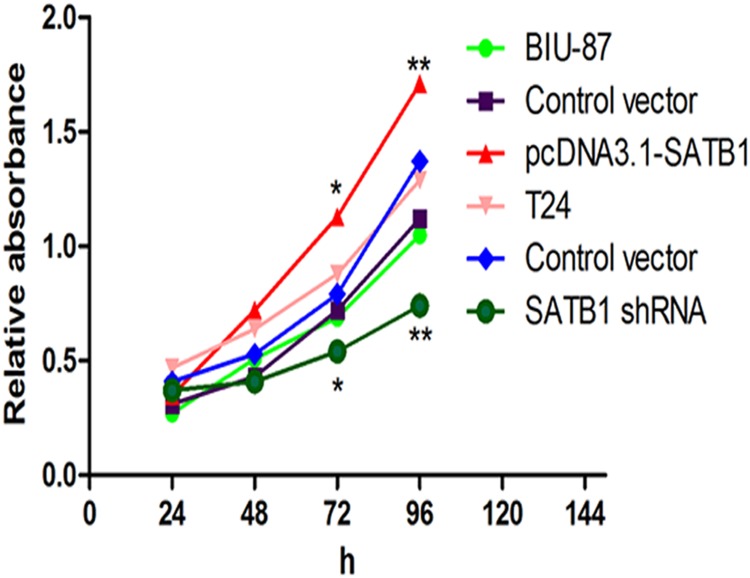
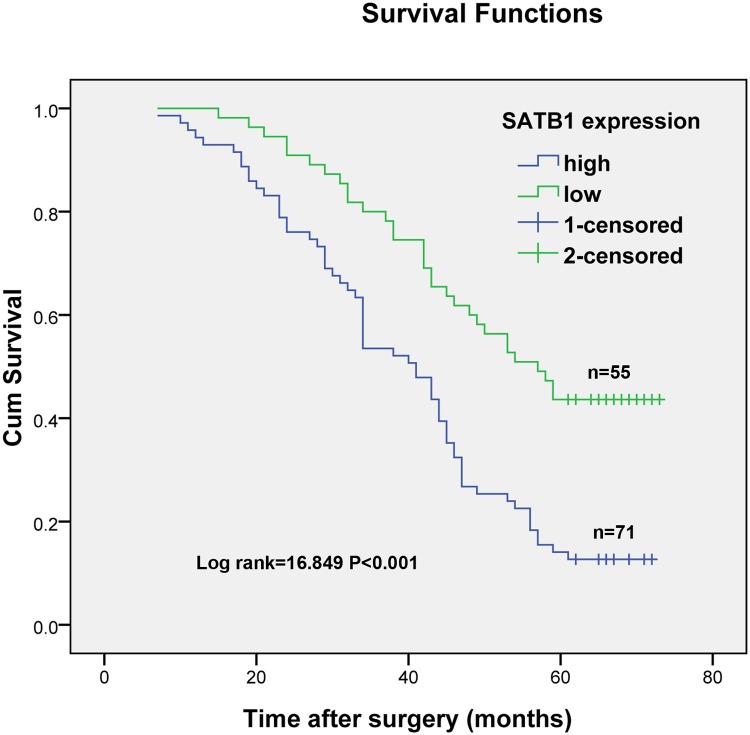
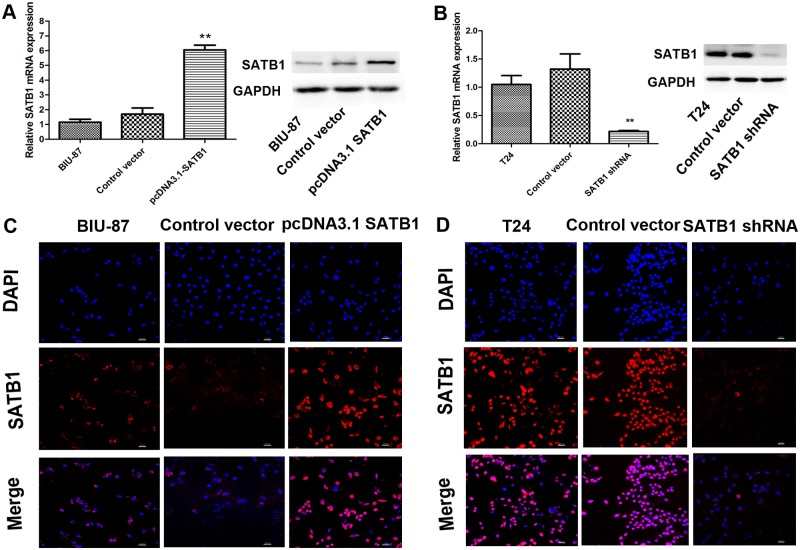
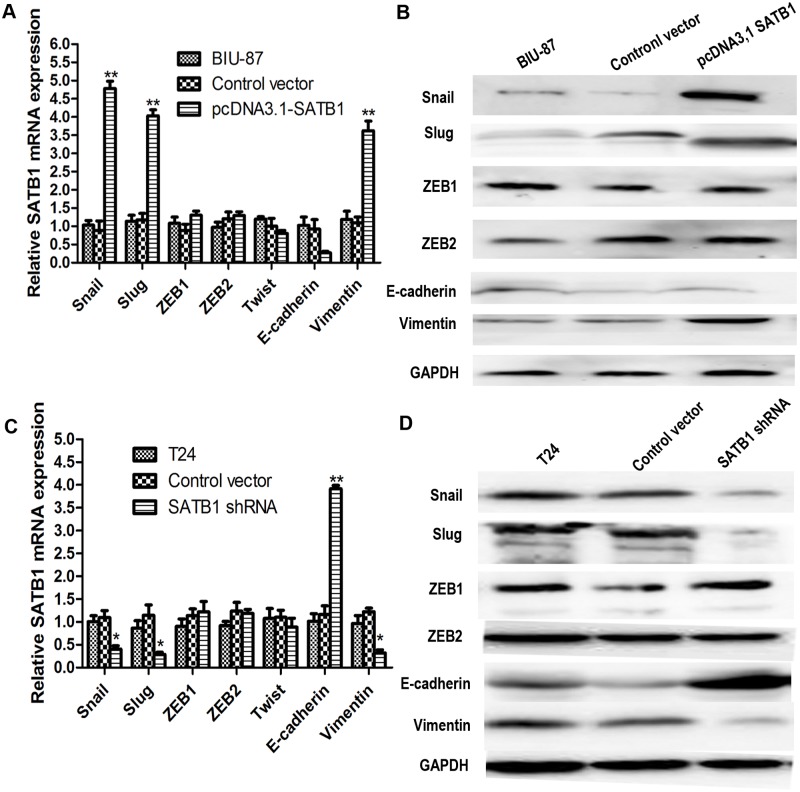
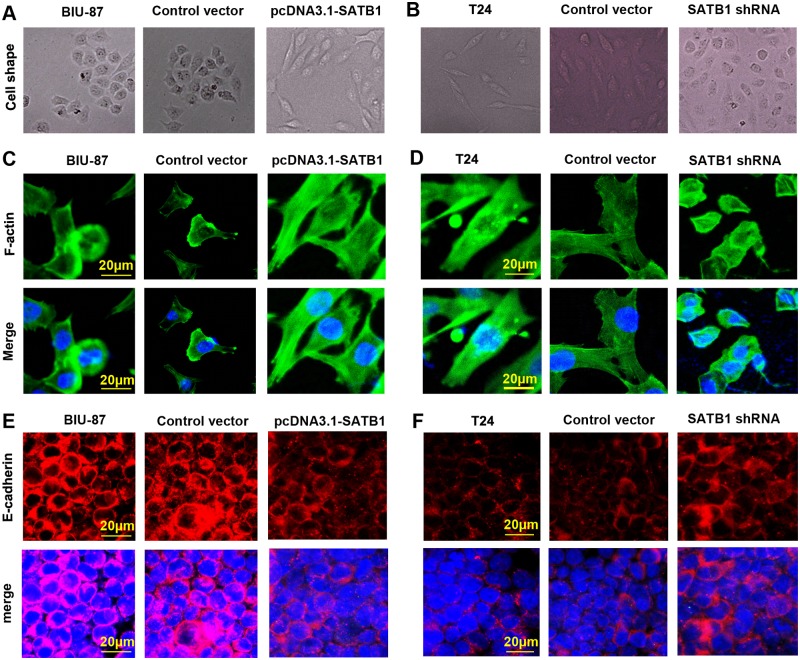
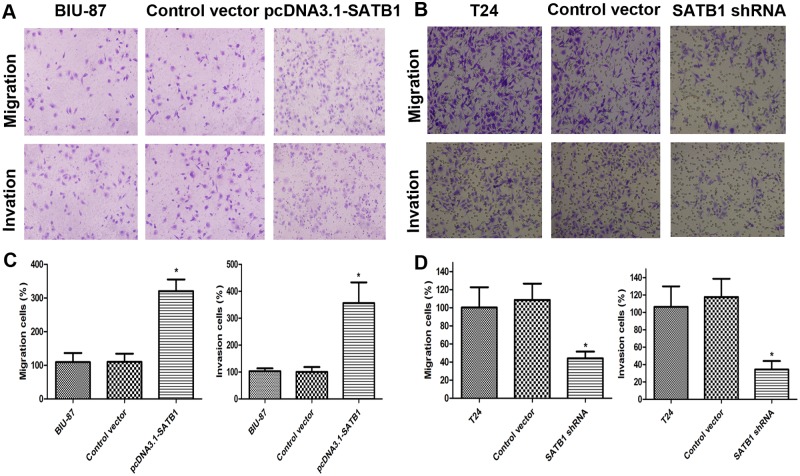
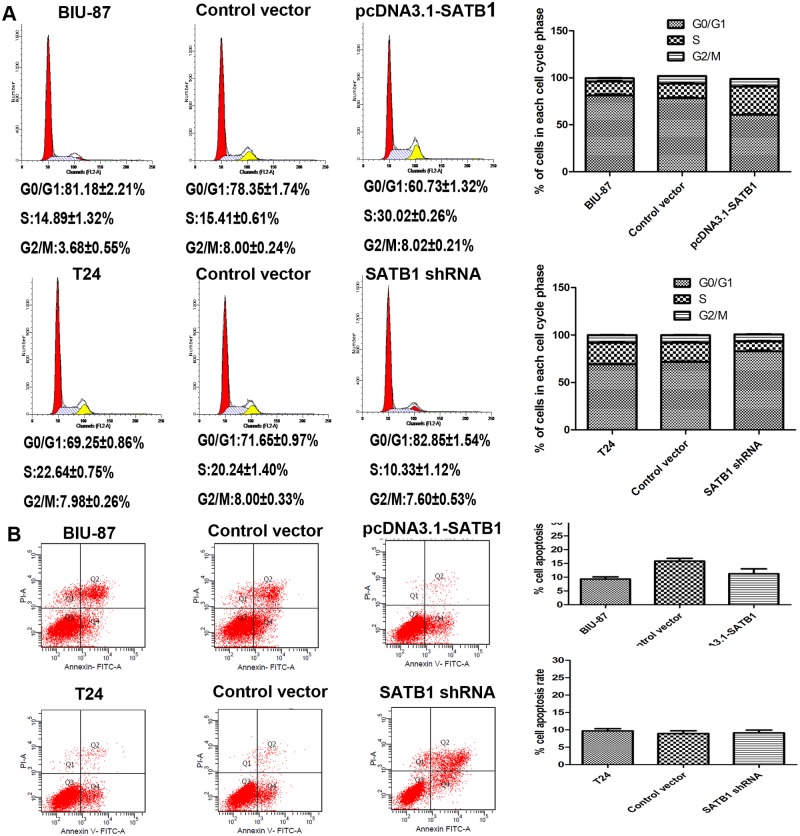
The global gene regulator Special AT-rich sequence-binding protein-1 (SATB1) has been reported to induce EMT-like changes and be associated with poor clinical outcome in several cancers. This study aims to evaluate whether SATB1 affects the biological behaviors of bladder transitional cell carcinoma (BTCC) and further elucidate if this effect works through an epithelial-mesenchymal transition (EMT) pathway. The expression of SATB1, E-cadherin (epithelial markers), vimentin (mesenchymal markers) in BTCC tissues and adjacent noncancerous tissues, as well as in two cell lines of bladder cancer were investigated. Whether the SATB1 expression is associated with clinicopathological factors or not was statistically analyzed. Cell invasion and migration, cell cycle, cell proliferation and apoptosis were evaluated in SATB1 knockdown and overexpressed cell lines. Our results showed that the expression of SATB1 was remarkably up-regulated both in BTCC tissues and in bladder cancer cell lines with high potential of metastasis. The results were also associated with EMT markers and poor prognosis of BTCC patients. Moreover, SATB1 induced EMT processes through downregulation of E-cadherin, upregulation of E-cadherin repressors (Snail, Slug and vimentin). SATB1 also promoted cell cycle progression, cell proliferation, cell invasion and cell migration, but did not alter cell survival. In conclusion, our results suggest that SATB1 plays a crucial role in the progression of bladder cancer by regulating genes controlling EMT processes. Further, it may be a novel therapeutic target for aggressive bladder cancers.
据报道,全球基因调节因子富含特殊AT序列结合蛋白1(SATB1)可诱导类似上皮-间质转化(EMT)的变化,并与多种癌症的不良临床预后相关。本研究旨在评估SATB1是否影响膀胱移行细胞癌(BTCC)的生物学行为,并进一步阐明这种影响是否通过上皮-间质转化(EMT)途径起作用。研究了SATB1、E-钙黏蛋白(上皮标志物)、波形蛋白(间质标志物)在BTCC组织、癌旁非癌组织以及两种膀胱癌细胞系中的表达情况。对SATB1表达与临床病理因素是否相关进行了统计学分析。在SATB1敲低和过表达的细胞系中评估了细胞侵袭、迁移、细胞周期、细胞增殖和凋亡情况。我们的结果显示,SATB1在BTCC组织和具有高转移潜能的膀胱癌细胞系中的表达均显著上调。这些结果还与EMT标志物以及BTCC患者的不良预后相关。此外,SATB1通过下调E-钙黏蛋白、上调E-钙黏蛋白抑制因子(Snail、Slug和波形蛋白)诱导EMT过程。SATB1还促进细胞周期进程、细胞增殖、细胞侵袭和细胞迁移,但不改变细胞存活情况。总之,我们的结果表明,SATB1通过调节控制EMT过程的基因在膀胱癌进展中起关键作用。此外,它可能是侵袭性膀胱癌的一个新的治疗靶点。